


Opal Cabochon Necklace
An opal cabochon necklace sets polished, unfaceted stones into silver, gold or platinum settings across Victorian, Edwardian and mid-century designs.
Opal Cabochon Necklace
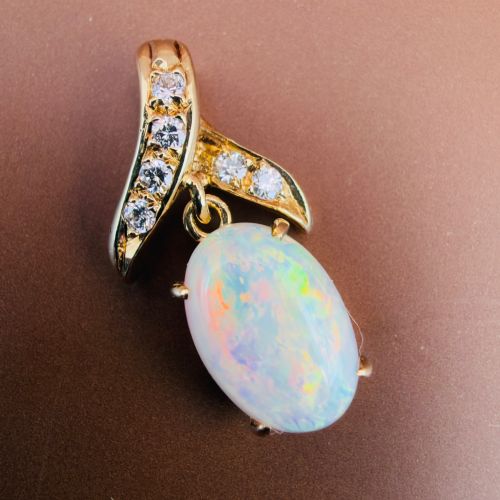
An opal cabochon necklace centres on a rounded, smooth-domed stone rather than a faceted gem, displaying the natural play of colour characteristic of opals. These pieces appear across Victorian, Edwardian, Arts and Crafts, Art Deco and mid-century periods, showing how jewellers adapted the form over decades.
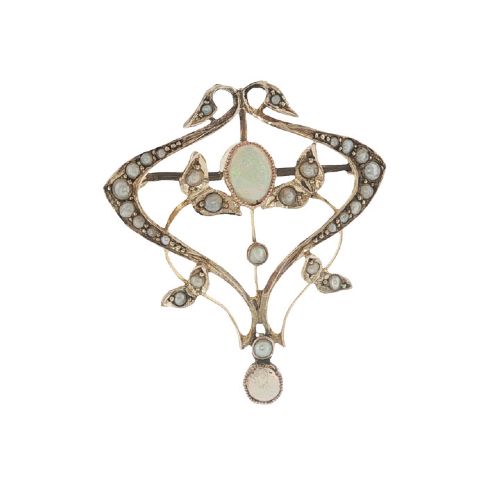
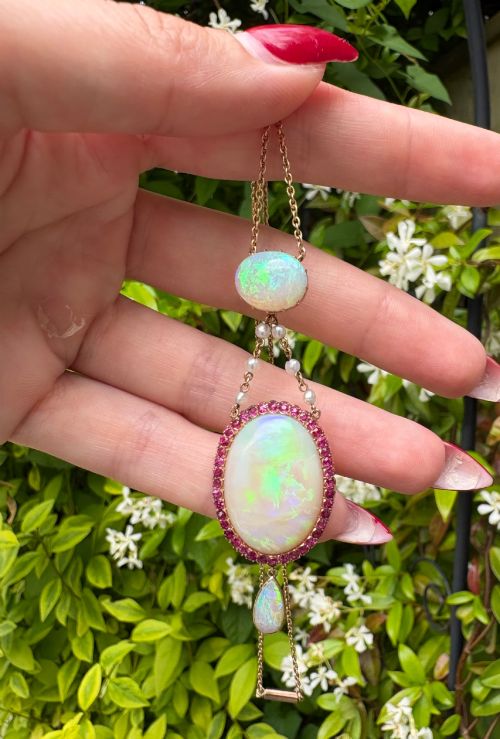
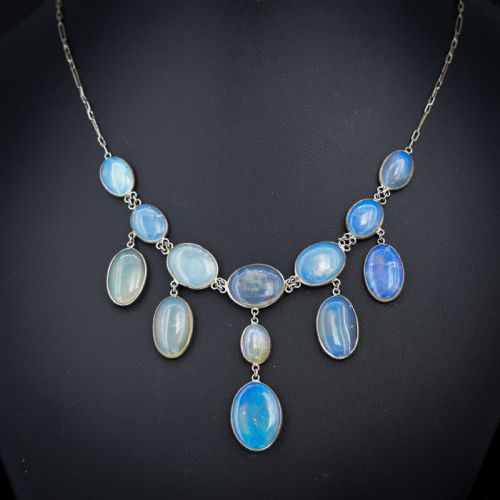
The selections span simple solitaire pendants in nine-carat or fourteen-carat gold alongside elaborate fringe festoons, cluster designs and silver works associated with Liberty and Co or the Gaskins. Buyers encounter both delicate seed pearl combinations and substantial diamond-accented statement pieces from the late nineteenth century onwards.
Pendants and necklaces utilise metals ranging from silver and standard gold to platinum and fifteen-carat gold, offering varied lengths and chain styles. The form suits daily wear as well as formal occasions, depending on the scale of the central stone and the intricacy of the surrounding metalwork.
How they were made
Goldsmiths and silversmiths shaped precious metals into filigree, bezels and prong settings to secure the domed opals, often incorporating platinum for durability in later pieces. Workers combined these central stones with diamonds, seed pearls, rubies and turquoise.
Craftsmen built structures ranging from delicate festival fringes to structured geometric Art Deco frames and hand-beaten Arts and Crafts silver mountings. The techniques reflect the prevailing aesthetic of each era, from Victorian sentimental clusters to mid-century solitaires.
Materials utilised across the items include silver, platinum, nine-carat, fourteen-carat, fifteen-carat and standard gold alongside diamonds and pearls.
What varies in quality
The intensity and distribution of the colour play within the opal dictate much of the visual impact, alongside the symmetry and polish of the cabochon dome. Stones with vibrant flashes across the entire surface command greater attention than muted examples.
The integrity and fineness of the metalwork, whether hand-wrought silver filigree, heavy fifteen-carat gold or platinum set with diamonds, establish the calibre of the piece. Maker attributions, such as signed works by known workshops, further distinguish exceptional examples from standard production.
The Gaskins·Liberty and Co·WH Haseler
The Opal Cabochon Necklace Glossary
- Cabochon
- A gemstone shaped and polished with a smooth, rounded dome rather than faceted edges. This cut highlights the internal play of colour in opals.
- Festoon
- A necklace featuring a curved chain or metal drop supporting suspended elements, popular during the Edwardian period. These designs drape gracefully across the neckline.
- Filigree
- Delicate openwork ornamentation formed with fine gold or silver wire, soldered into intricate patterns. This technique appears frequently in vintage and antique pendants.
- Solitaire
- A single gemstone set on its own in a piece of jewellery, focusing attention entirely on the central stone. Solitaire opal pendants highlight the individual character of the gem.
Opal Cabochon Necklace: Frequently Asked Questions
How do I care for my opal necklace?
Opals contain water and require gentle treatment, avoiding harsh chemicals, ultrasonic cleaners and sudden temperature changes. Store them separately to prevent scratching from harder gemstones.
Wipe the stone with a soft, damp cloth after wearing and avoid submerging antique settings in water for extended periods to protect the integrity of the mount.
Are these necklaces suitable for daily wear?
While many pieces are robust enough for regular use, care must be taken with softer stones like opals and pearls. Choosing secure settings and avoiding impact will preserve the jewellery.
Victorian and Edwardian pieces often benefit from gentle handling and occasional checks on the claws or bezels holding the stones in place.
What is the difference between a pendant and a necklace?
A necklace refers generally to any ornament worn around the neck, which may include integrated drops or continuous stone arrangements like a fringe. A pendant is a hanging ornament suspended from a separate chain.
Many antique pieces combine both terms, featuring detachable pendants or chains that form an integrated part of the design.
How can I tell the period of an opal pendant?
The choice of metal, such as fifteen-carat gold or platinum, combined with stylistic cues like Art Deco geometry or Arts and Crafts hand-beaten silver, indicates the era of manufacture. Hallmarks and construction methods provide further evidence.
Comparing the setting style and accompanying stones like seed pearls or old-cut diamonds helps narrow down the decade of production.