
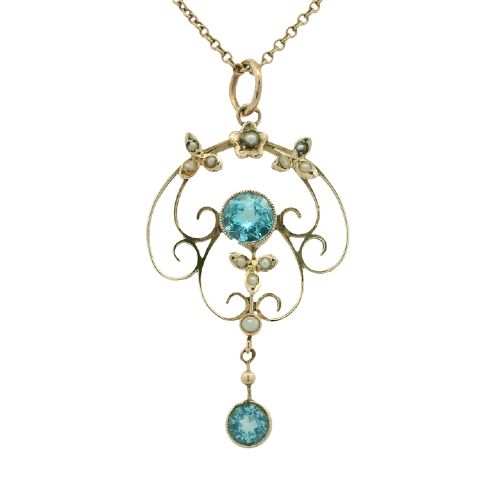
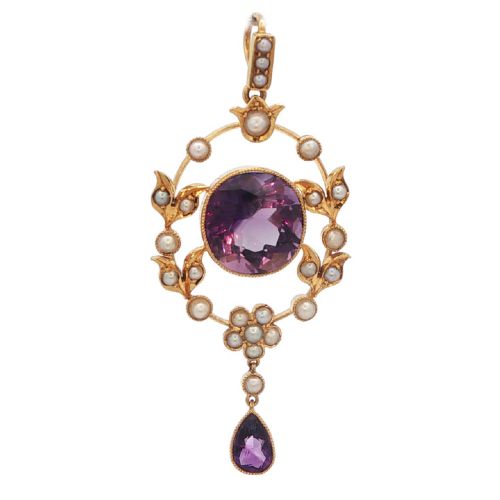
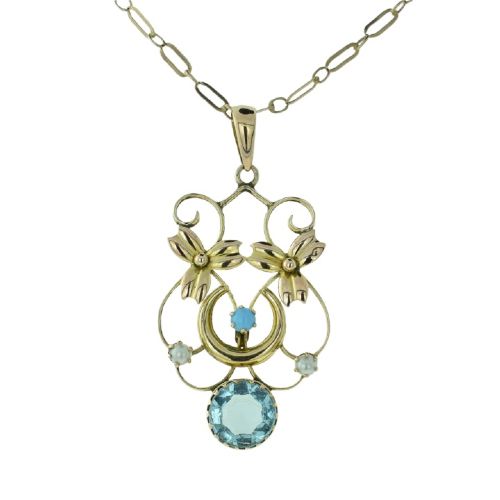
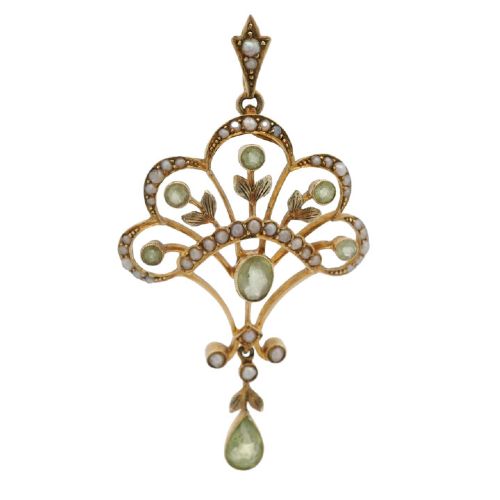
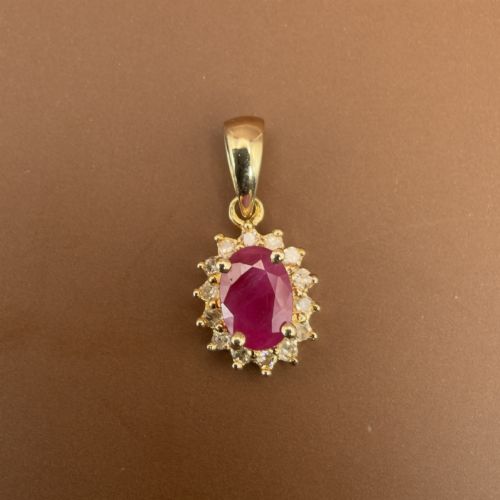
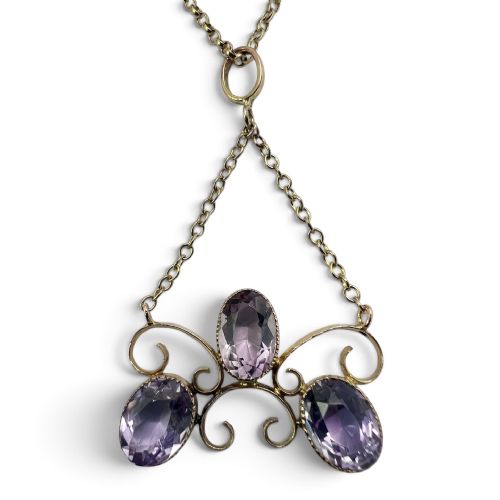
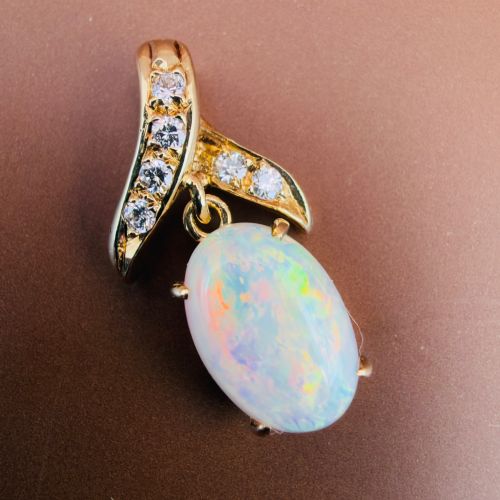
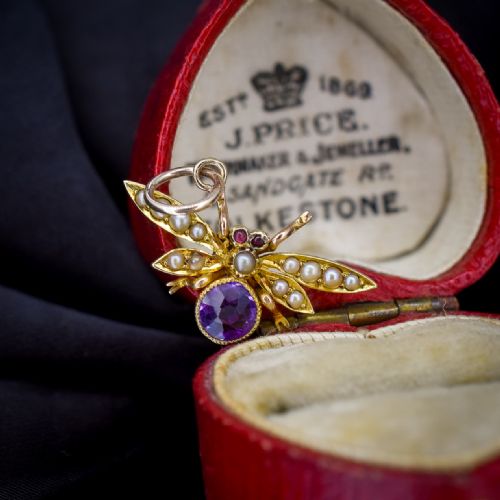
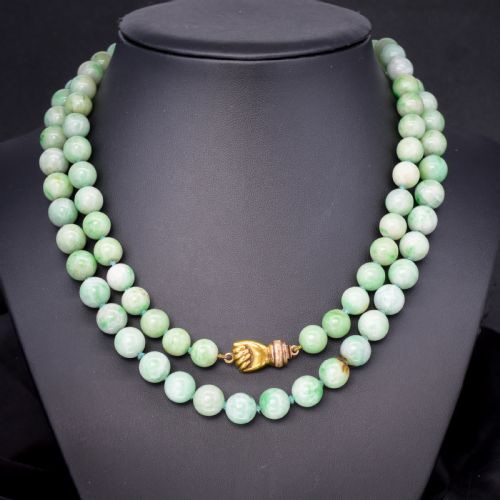
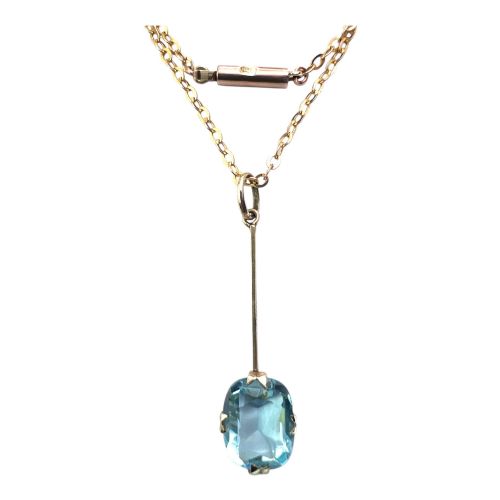
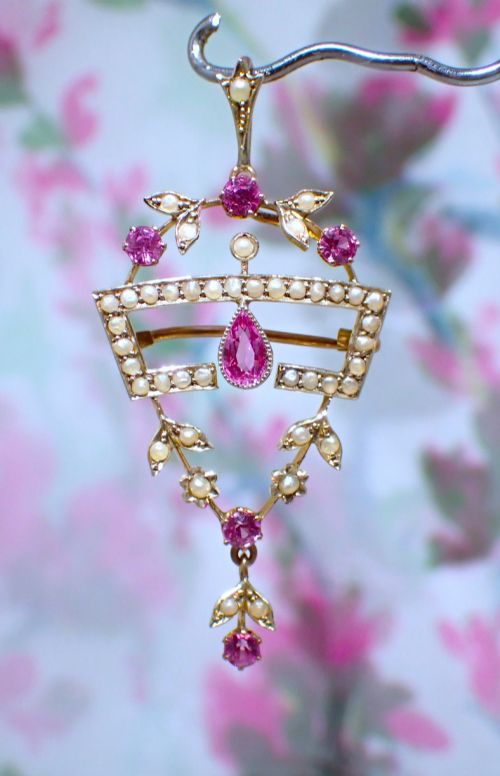
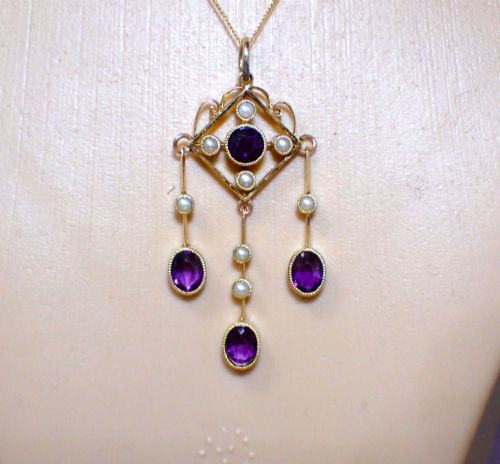
Vintage Gemstone Necklace
A vintage gemstone necklace brings together precious metals and colourful stones across periods from Victorian work to mid-century modern design.
What these necklaces are
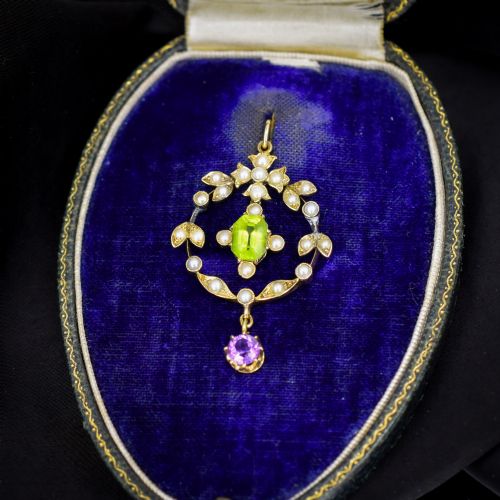
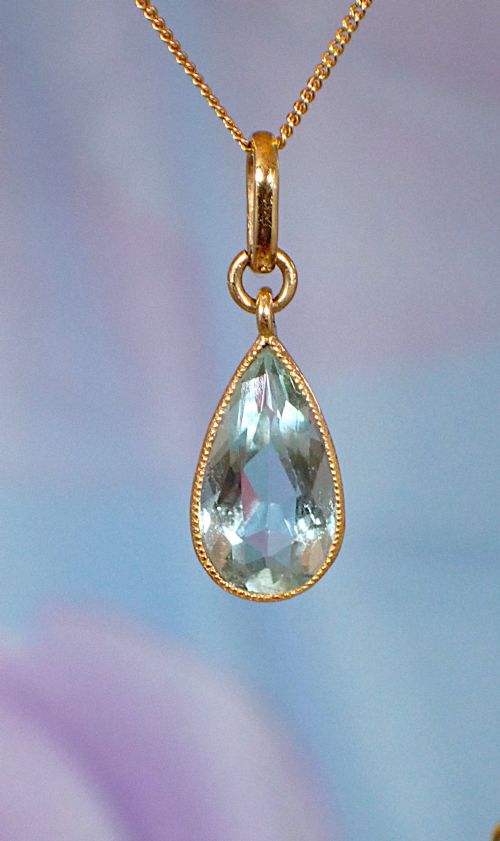
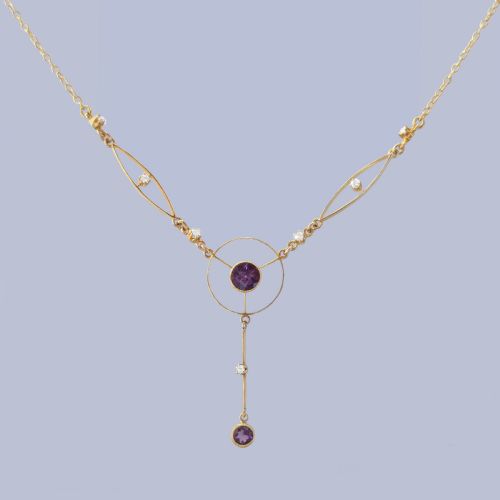
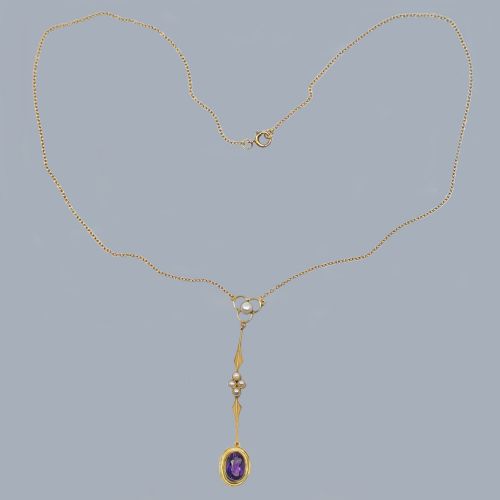
A vintage gemstone necklace encompasses diverse forms, from delicate pendants on chains to single strand pearls with decorative clasps. The pieces span periods including Victorian, Edwardian, Art Deco, and mid-century modern designs.
Buyers encounter settings in nine-carat gold, eighteen-carat white gold, yellow gold, platinum, and silver. Gemstones featured across the selection include sapphire, diamond, blue topaz, seed pearl, aquamarine, opal, ruby, citrine, tourmaline, and cultured pearl.
The configurations vary between simple pendant necklaces, elaborate floral designs, and beaded gemstone strands. Each example reflects the distinct aesthetic of its period, uniting precious metals with characteristic stones.
How they were made
Jewellers shaped precious metals such as nine-carat gold, eighteen-carat white gold, platinum, and silver into secure settings for diverse stones. Construction methods range from fine platinum mountings framing substantial diamonds and sapphires to yellow gold bezels holding opals and topaz.
Clasps and pendants incorporate detailed metalwork, including floral designs and articulated links that support stone weights from small seed pearls to large aquamarines. Selected pieces integrate certification and structured stringing techniques for cultured pearls and tourmaline beads.
Retail Price Guide 2026
Typical UK retail prices for vintage gemstone necklace, calculated from the Sellingantiques database of over a million retail prices indexed since 2003. This retail price guide relies exclusively on Sellingantiques data; no external sources or auction records are used, so the figures do not describe the wider market.
Current listings feature pieces spanning the Victorian period through to the 1960s, incorporating platinum, gold, silver, and stones from diamonds to opals.
What varies in quality
The standard of a vintage gemstone necklace rests on the integration between the metalwork and the specific stones employed. High-grade pieces feature substantial platinum or gold mountings that securely house significant carat weights of diamonds, sapphires, or aquamarines.
Design complexity and period execution distinguish individual pieces, particularly where floral motifs, certified clasps, or balanced gemstone proportions elevate the overall assembly.
The Vintage Gemstone Necklace Glossary
- Art Deco
- A design style spanning the 1920s and 1940s characterised by geometric precision and structured metalwork. It appears frequently in platinum and diamond pieces.
- Platinum
- A dense, durable white metal utilised in high-value twentieth-century jewellery for secure stone settings. It supports intricate geometric designs without adding excessive weight.
- Seed Pearl
- Tiny natural or cultured pearls used in Victorian and early twentieth-century jewellery. They create delicate, textured borders around central gemstones.
- Carat
- A unit of weight for gemstones and gold purity. Higher carat numbers indicate greater gold content in alloys or larger stone sizes.
Frequently Asked Questions
What periods do these necklaces come from?
The selection includes pieces from the Victorian era, the 1920s, the 1940s, the 1950s, and the 1960s. Each period introduces distinct styling and mounting techniques.
Designs range from early seed pearl pendants to mid-century modern gold and gemstone combinations.
Which metals are used in these pieces?
Makers utilised nine-carat gold, fourteen-carat yellow gold, eighteen-carat white gold, platinum, and silver. These metals provide the structural foundation for various gemstone settings.
White metals often pair with diamonds and sapphires, while yellow gold frequently houses opals, rubies, and citrines.
How do I care for a gemstone necklace?
Different stones require specific handling, particularly softer materials like opals, pearls, and tourmalines. Gentle cleaning avoids damaging delicate settings or organic gems.
Stored individually, these necklaces remain protected from scratching against other items.