
Retro Diamond Jewellery
Retro diamond jewellery spans robust 1940s statement pieces and sleek 1970s modernist designs, combining bold precious metals with sparkling gemstones.
Retro Diamond Jewellery
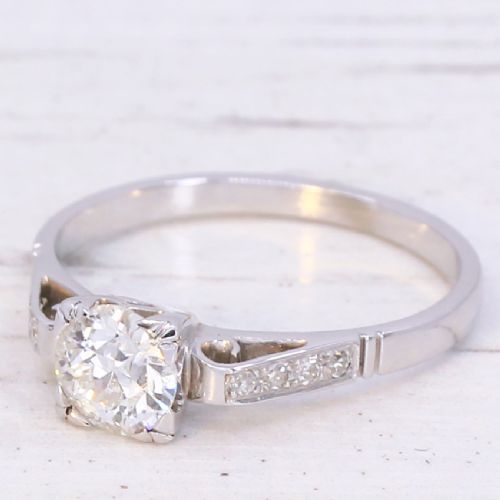
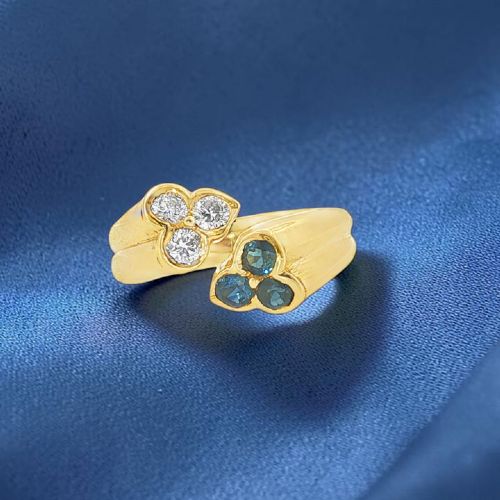
When searching for retro diamond jewellery, buyers encounter an eclectic mix of rings, necklaces, bracelets, earrings and brooches spanning the 1940s, 1950s, 1960s and later decades, alongside earlier Edwardian and Art Deco survivals. These pieces reflect distinct mid-century stylistic shifts, moving from architectural wartime designs to fluid floral clusters and structured geometric cocktail rings.
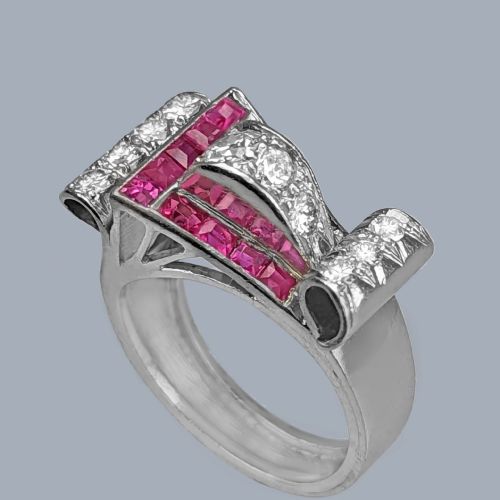
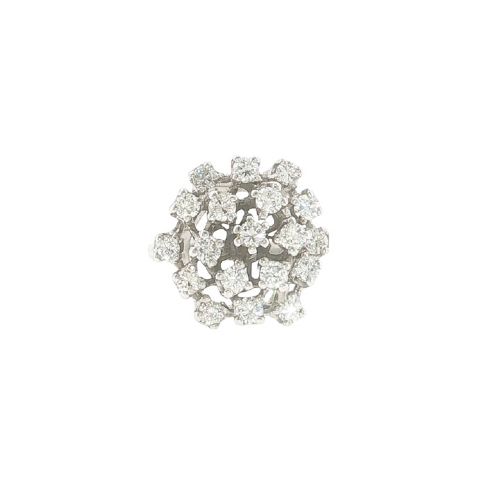
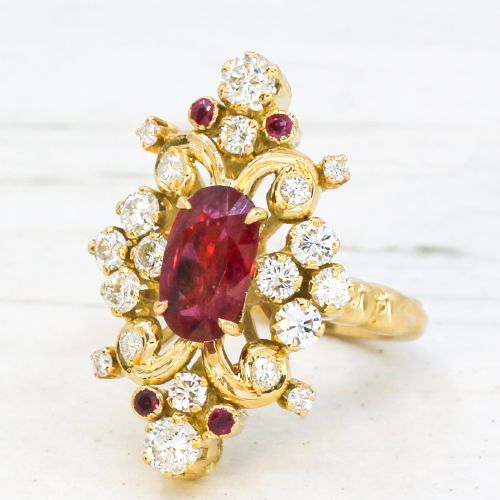
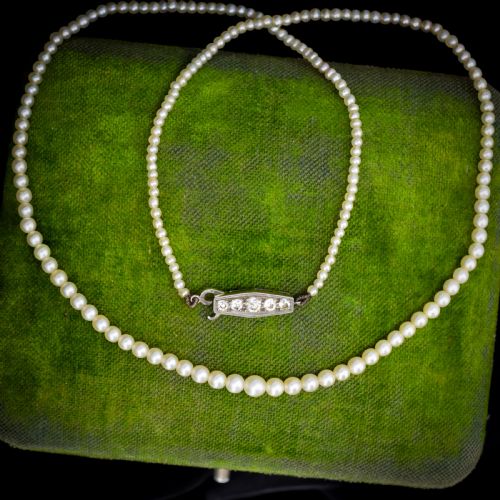
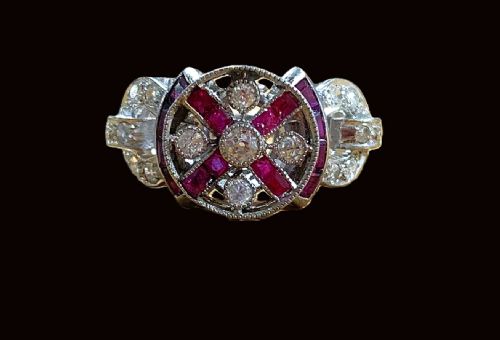
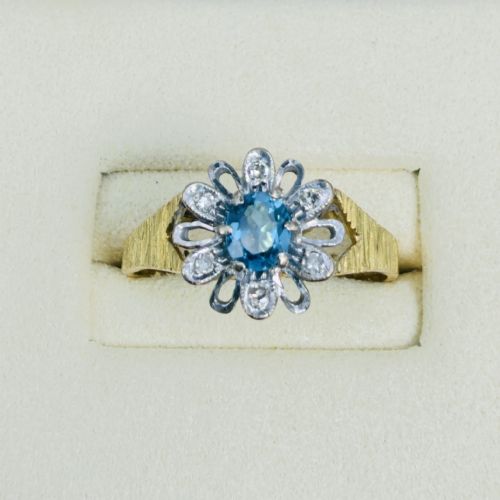
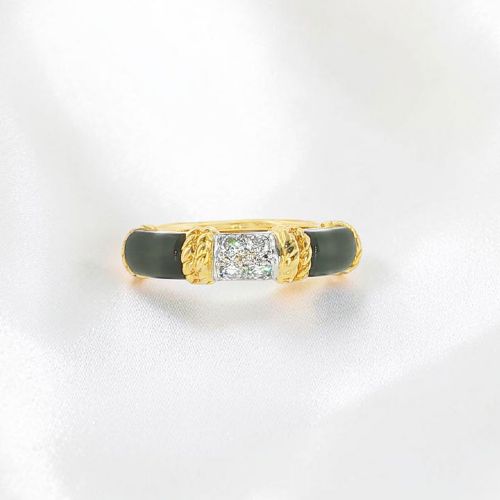
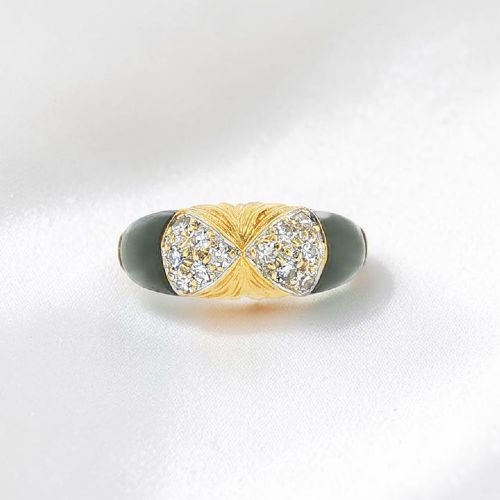
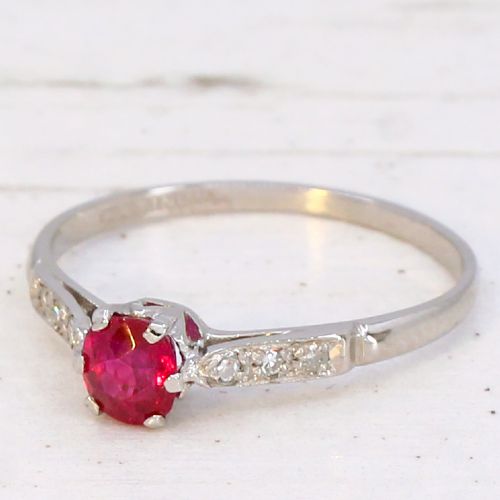
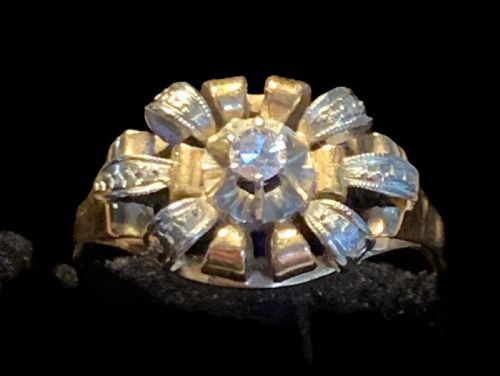
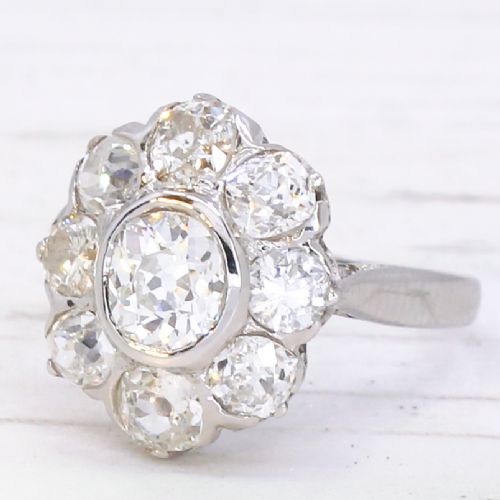
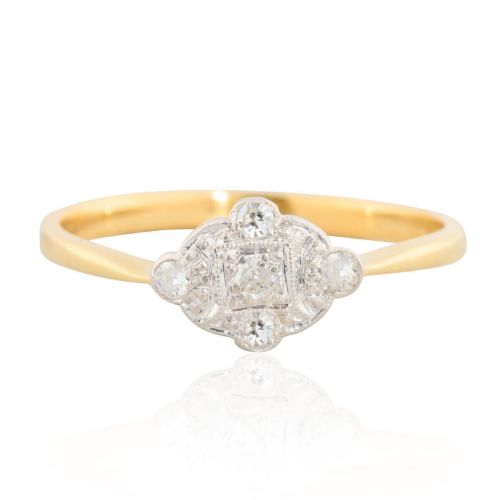
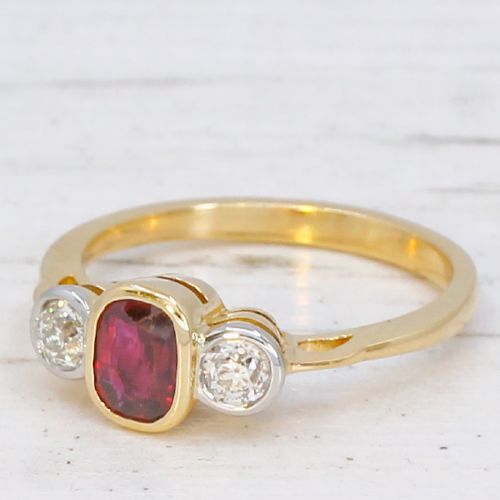
The objects on this page include diamond engagement rings, cluster rings, dress rings, drop earrings, clip-on earrings, beaded necklaces with diamond clasps, and heavy gemstone bracelets incorporating sapphires, rubies, aquamarines, opals and amethysts. Buyers are most likely to meet substantial cocktail rings and cluster arrangements featuring old cut or transitional cut diamonds set alongside coloured stones.
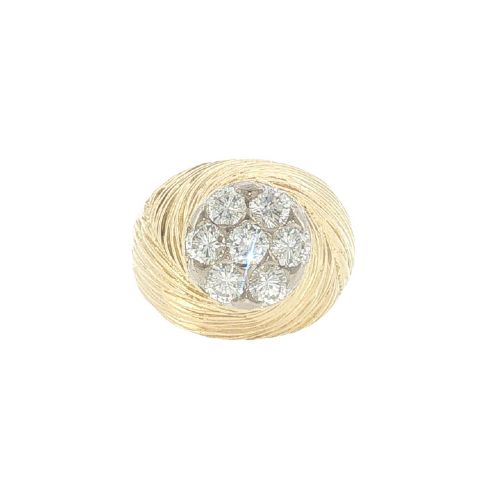
The selection ranges across traditional yellow gold, 18ct white gold, 14ct white gold and platinum settings, often bearing hallmarks from London or French workshops. Pieces frequently adopt mid-century modern, 1940s retro, or modernist lattice aesthetics alongside older decorative traditions.
How they were made
The construction of these pieces relies heavily on contrasting precious metals like platinum and 18ct white or yellow gold to securely house old cut, transitional cut and rose cut diamonds. Master goldsmiths employed robust casting, cluster grouping, and channel or prong settings to support sizable centre stones, including unheated Burmese rubies, Ceylon sapphires and large aquamarines.
Techniques from the era also incorporate complex detailing such as black onyx accents, enamel work, and structured wirework lattice forms. Gemstones are frequently paired with pearls, kunzite and structured step-cut stones within heavy, sculptural mountings typical of mid-century manufacturing.
Some mid-century cocktail rings are so delightfully hefty they practically double as knuckle dusters for vintage cocktail parties.
What varies in quality
Quality in these items is determined by the calibre of the central gemstones, such as the clarity and origin of unheated rubies, opals and sapphires, matched with the brilliance and cut style of the diamonds. Superior examples demonstrate exceptional stone matching, substantial metal weight, and precise gem-setting techniques that withstand decades of wear.
Design complexity and maker attribution also elevate certain pieces, particularly those originating from notable workshops or bearing specific city hallmarks. The integration of supplementary materials, such as well-executed enamel or cleanly contrasted black onyx, distinguishes standard commercial production from finer artistic output.
Kutchinsky
The Retro Diamond Jewellery Glossary
- Old cut
- A diamond cutting style prevalent in earlier periods featuring a small table, high crown and deep pavilion designed to catch candlelight. These stones display chunky facets and a distinct warm charm compared to modern brilliant cuts.
- Cocktail ring
- A large, prominent ring designed to draw attention during evening social events, often featuring a massive central gemstone surrounded by smaller diamonds. They became especially popular during the mid-twentieth century.
- Transition cut
- A diamond cut used during the shift from old European cuts to modern round brilliants, combining characteristics of both styles. It bridges antique and contemporary cutting techniques.
- Cluster ring
- A jewellery design where a central gemstone is encircled by a tight group of smaller diamonds or contrasting coloured stones. This layout maximises visual impact and perceived sparkle.
- Tank ring
- A bold, chunky style of jewellery originating in France during the 1940s, named for its resemblance to heavy military machinery. These pieces utilise broad bands of gold and structured geometric tiers.
Retro Diamond Jewellery: Frequently Asked Questions
What defines retro diamond jewellery?
Retro diamond jewellery typically encompasses designs from the 1940s through the 1970s, featuring bold metalwork, geometric or floral motifs, and prominent central diamonds.
These items reflect the transition from wartime economy styles to opulent post-war modernist aesthetics, often combining yellow or white gold with sapphires and rubies.
How do I care for my vintage ring?
Protect your vintage piece by removing it during heavy manual tasks, sports, or swimming to prevent metal wear and stone displacement. Regular professional cleaning helps maintain the brilliance of old cut diamonds and secure delicate settings.
Store items individually in soft pouches to avoid scratching softer accompanying gems like opals, pearls or kunzite.
Are these diamonds ethically sourced?
As antique and vintage items manufactured decades ago, these diamonds are recycled treasures from past eras. Purchasing them requires no newly mined materials, representing an inherently sustainable choice for modern collectors.
Each stone retains its original historical cutting characteristics and provenance from previous generations.
How can I tell the period of a piece?
Dating relies on examining the metal types, hallmark stamps, stone cutting styles and overarching design motifs present in the item. For instance, heavy yellow gold tank designs and old cut diamonds point towards the 1940s.
Later modernist rings from the 1960s and 1970s frequently incorporate white gold, abstract lattice work, and transitional or modern brilliant cut stones.