


Blue Sapphire Diamond Necklace
A blue sapphire diamond necklace brings together rich blue stones and sparkling diamonds in silver, platinum, and gold settings spanning the Victorian period to the mid-twentieth century.
Blue Sapphire Diamond Necklace
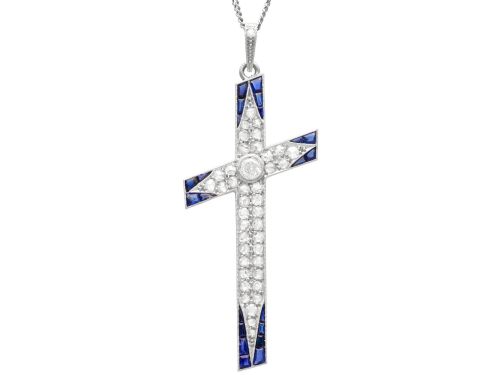
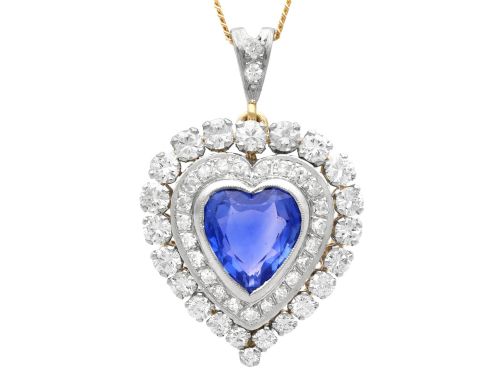
A blue sapphire diamond necklace encompasses pendant necklaces, convertible brooch pendants, and multi-stone cluster pieces spanning the Victorian, Edwardian, Art Deco, and mid-century eras. The selections on this page range from delicate yellow gold fan motifs and rose-cut diamond crosses to substantial platinum and silver Art Deco cluster pendants set with large basaltic and Ceylon sapphires.
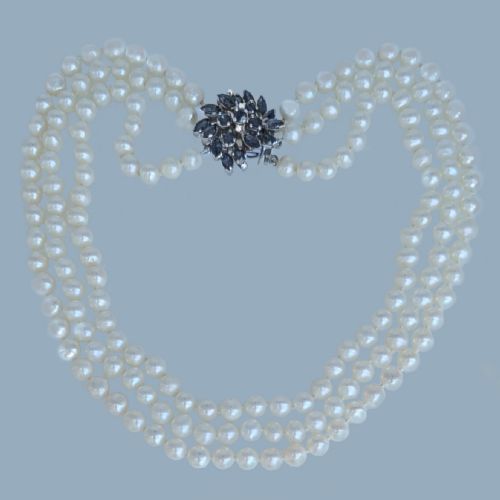
Buyers will encounter varied configurations, including classic negligee pendants, three-row pearl strands fastened with gem-set floral clasps, and geometric 14ct white gold clusters. These pieces draw upon historical periods from the 1880s through to the 1960s, reflecting changing lapidary techniques and mounting styles over eight decades of jewellery design.
Materials and construction
The mounting metals shift across the eras represented here, moving from early silver-topped gold and yellow gold towards platinum and white gold in the twentieth century. Early pieces integrate silver settings to enhance the brilliance of the diamonds, backed by gold for structural strength.
Gemstone selection pairs blue sapphires - including basaltic and Ceylon varieties - with diamonds in old cut, rose cut, and modern facets. Settings are hand-worked to secure cluster designs, floral motifs, and geometric Art Deco frameworks around the central stones.
Materials span platinum, silver, pearl, and gold, alongside 14ct white gold and 15ct yellow gold.
Quality and execution
The distinction between standard and exceptional pieces rests upon the saturation and origin of the sapphire, alongside the weight and cut of the diamond complement. Ceylon sapphires and significant carat weights command particular attention within platinum or silver settings.
Execution is visible in the fineness of the metalwork, whether in the delicate symmetry of an Edwardian negligee drop or the bold geometric precision of a mid-century platinum cluster. Harmonious stone matching and integrated gem reports elevate the standing of individual items.
The Blue Sapphire Diamond Necklace Glossary
- Ceylon sapphire
- A sapphire originating from Sri Lanka, noted for its bright and luminous blue coloration. These stones are frequently encountered in antique and vintage pendants.
- Negligee pendant
- A necklace style featuring two unequal drops suspended from a central motif, popular during the Edwardian period. This design creates a fluid line upon the neckline.
- Basaltic sapphire
- A sapphire originating from alkali basaltic deposits, typically displaying a deeper, more saturated tone. They appear in substantial twentieth-century cluster and Art Deco settings.
- Rose cut diamond
- An antique diamond cut featuring a flat base and a faceted dome that culminates in a point. This cut produces a softer, broader reflection than modern brilliant cuts.
Blue Sapphire Diamond Necklace: Frequently Asked Questions
What periods do these necklaces span?
The pieces available range from Victorian and Edwardian examples of the late nineteenth and early twentieth centuries through to Art Deco and mid-century designs up to the 1960s.
Each era introduces distinct metal choices and mounting styles, shifting from yellow gold and silver-topped settings towards platinum and white gold.
How were convertible brooch pendants worn?
Convertible pieces feature hidden or hinged fittings on the reverse that allow the central element to be detached from a chain and worn as a brooch.
This dual functionality was common in the Victorian and Edwardian periods, offering versatility for formal attire.
How do I care for antique gold and platinum settings?
Antique and vintage mountings require gentle handling, avoiding harsh chemical dips that can damage softer gems like pearls or weaken old metal alloys.
Regular inspection by a specialist ensures that prong settings and delicate silver-over-gold elements remain secure.