



Vintage Statement Necklace
A vintage statement necklace brings together bold metalwork, significant gemstones, and period character to anchor an outfit with distinct presence.
Vintage Statement Necklace
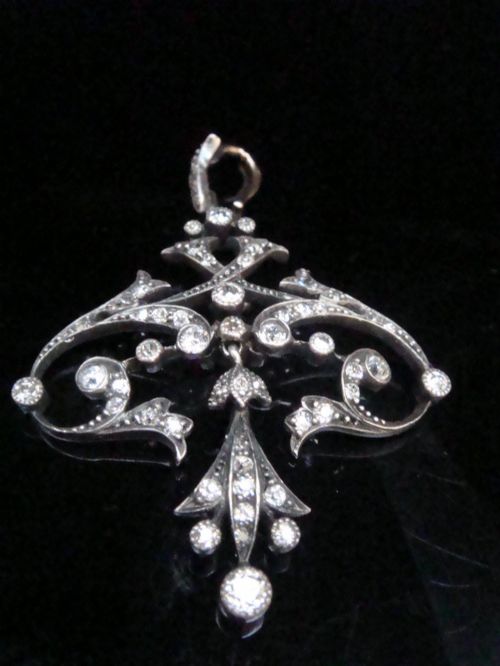
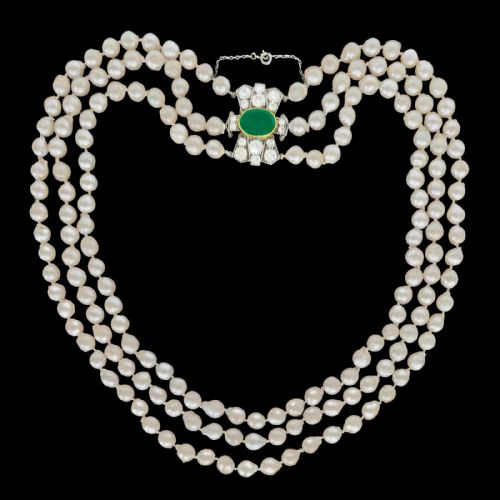
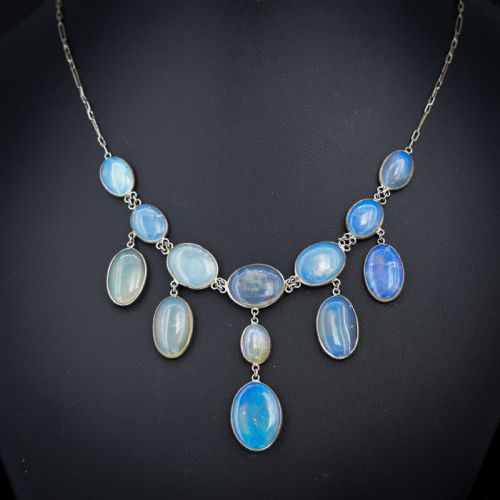
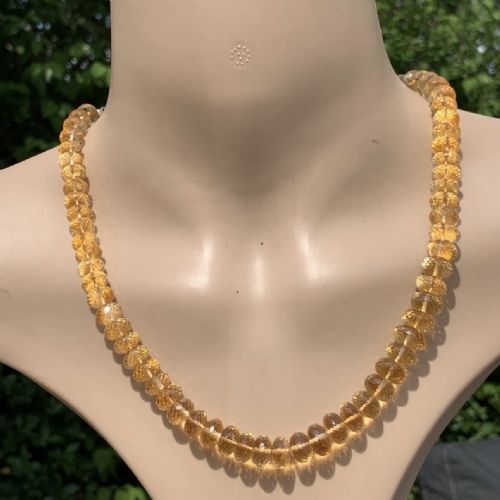
A vintage statement necklace encompasses striking collar designs, fringe drops, and multi-strand pearl arrangements designed to draw the eye. These pieces span the Edwardian era, the geometric lines of Art Deco, and the fluid forms of the mid-century period.
The selection here ranges from elaborate diamond and platinum festoon pieces to silver and amber suites, alongside coordinated parures featuring matching earrings or bracelets. Edwardian lavalieres and 1950s gem-set drops appear frequently among the listings.
Makers and designers from various European hubs contribute distinct aesthetic signatures, moving from intricate Edwardian goldwork to modernist chrome and galalith structures of the 1930s.
What varies in quality
The calibre of a vintage statement necklace depends on the purity and weight of the precious metals, the clarity and carat size of set gemstones, and the precision of the goldsmith's articulation. Pieces featuring certified natural stones or signed by known design houses demonstrate superior execution.
Design integrity and the completeness of matched sets, such as parures with surviving earrings or brooches, elevate a piece's standing. Finer examples maintain robust construction in the links and secure, integrated clasps that support heavy drop stones without compromising comfort.
Listings span from the 1900s Edwardian era through Art Deco designs to 1960s Mid-Century Modernist creations in silver and gold.
Christian Dior·Yves Saint Laurent
The Vintage Statement Necklace Glossary
- Festoon
- A necklace design featuring draped chains, swags of metal, or suspended drops that sit across the collarbone. This style gained prominence during the Edwardian period.
- Parure
- A matched set of jewellery intended to be worn together, typically comprising a necklace, earrings, and a brooch or ring. Complete suites appear across various mid-century and antique eras.
- Riviere
- A necklace composed of a continuous line of gemstones of identical or graduated size, usually individually collet-set. They remain a staple of refined evening wear.
- Lavaliere
- A pendant necklace featuring a central dangling stone or ornament, popular during the Edwardian and Art Nouveau eras. The design emphasises movement and vertical line.
Vintage Statement Necklace: Frequently Asked Questions
How do I date a vintage statement necklace?
Dating relies on material combinations, metal hallmarks, clasp types, and prevailing design motifs such as geometric Art Deco lines or mid-century modernist asymmetry.
Assay office reports and maker signatures also provide precise chronological markers for pieces originating from specific twentieth-century decades.
Are these necklaces comfortable for everyday wear?
Many pieces are engineered with articulated links and flexible fringe drops designed to contour naturally against the collarbone.
Heavier gem-set or multi-strand pearl configurations are generally suited to evening wear or special occasions due to their substantial weight.
What is the difference between antique and vintage?
Antique jewellery generally refers to pieces over a century old, encompassing Edwardian and Victorian creations found in the current selection.
Vintage pieces originate from the mid-twentieth century, including items from the 1940s, 1950s, and 1960s.
How should I store a heavy fringe necklace?
Store articulated fringe and multi-strand necklaces flat in a lined jewellery box to prevent the metal links and delicate chains from kinking or twisting.
Keeping pieces separated prevents softer gemstones and pearls from scratching against hard platinum or gold mountings.