


Cultured Pearl Necklace
A cultured pearl necklace brings together lustrous saltwater or freshwater pearls with precious metal clasps, offering a refined piece of jewellery from the Edwardian era through the mid-twentieth century.
Cultured Pearl Necklace
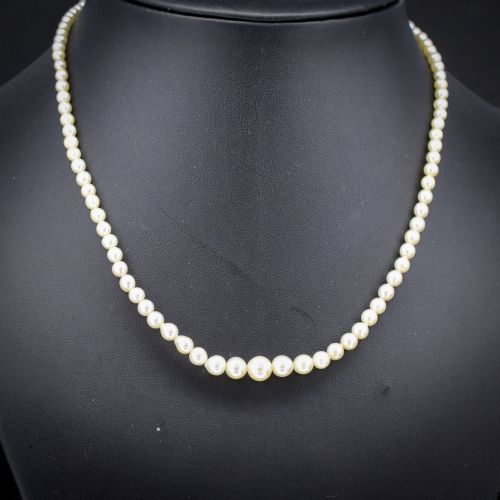
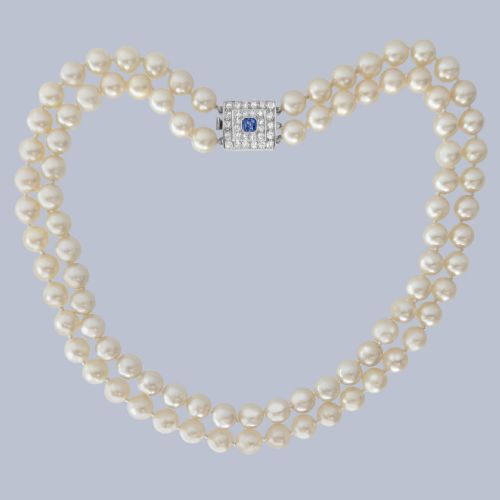
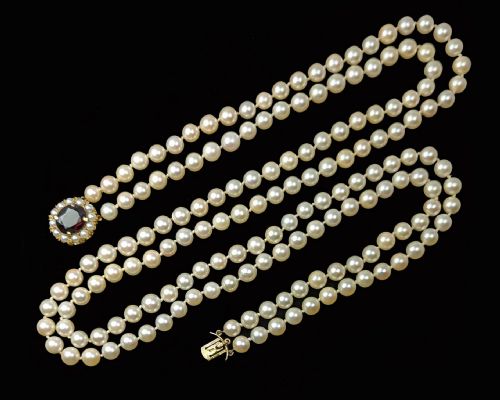
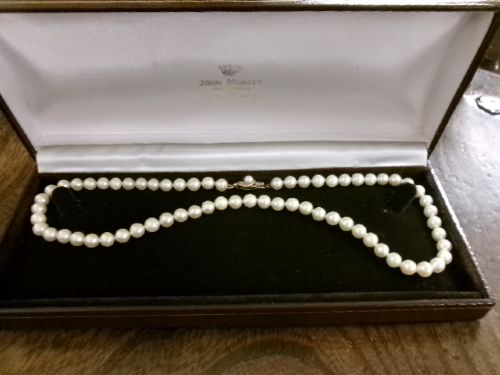
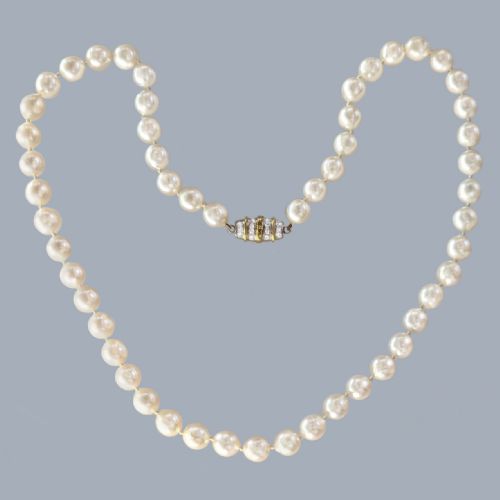
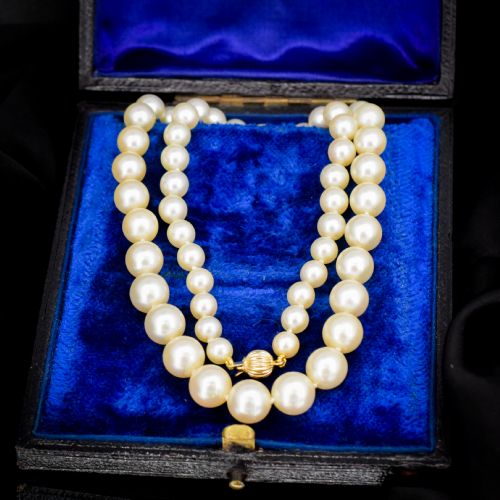
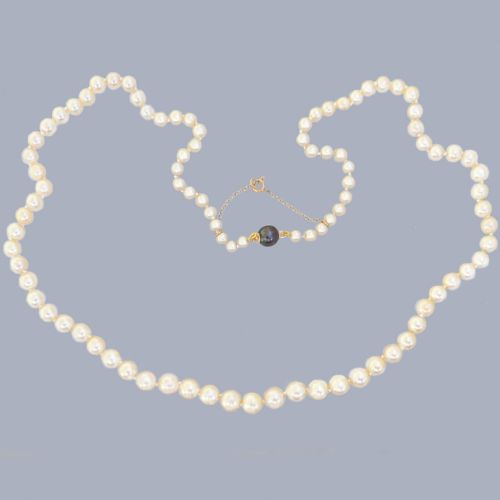
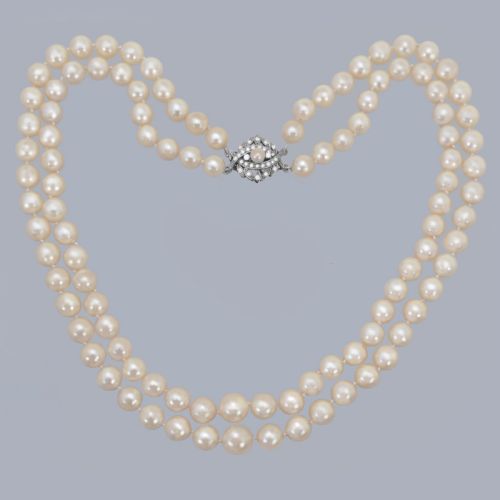
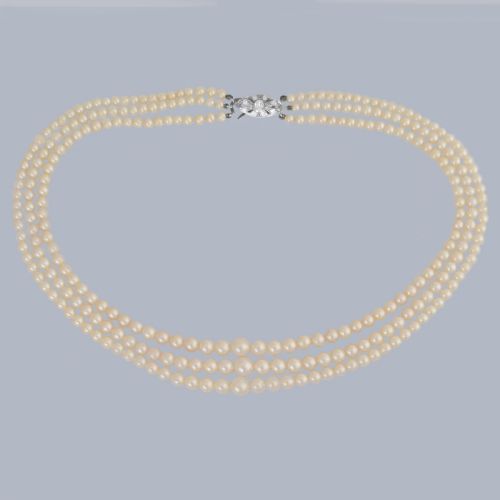
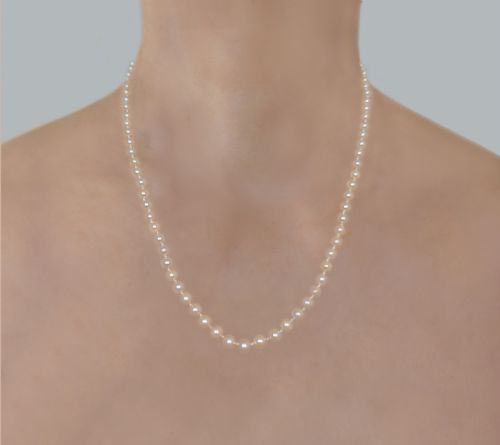
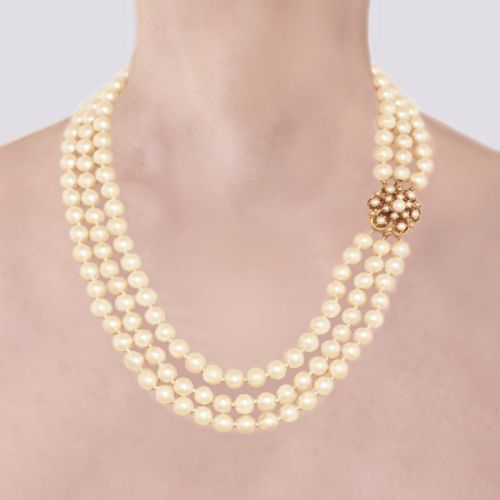
When searching for a cultured pearl necklace, collectors encounter single, double, triple, and multi-strand configurations spanning the Edwardian period, the 1920s Art Deco movement, and the post-war decades of the 1950s and 1960s. These pieces range from short choker lengths to long opera lengths, often secured by decorative clasps set with gemstones.
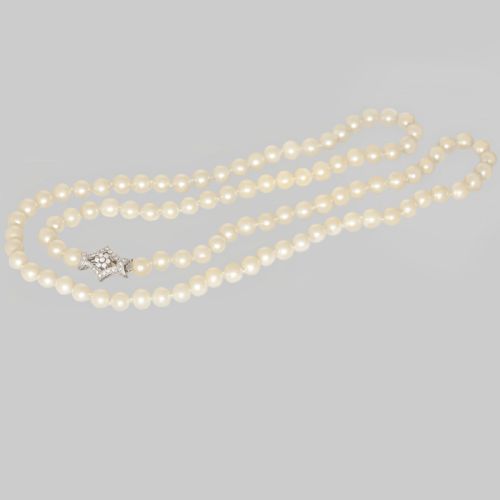
The single-strand graduated design and the multi-strand arrangement represent the forms most frequently encountered on this page. Many examples feature sophisticated clasps incorporating diamonds, sapphires, rubies, garnets, or amethysts mounted in 9ct gold, 14ct gold, 18ct white gold, or silver.
Origins stretch from early twentieth-century workshops to mid-century British hallmarked pieces and notable makers. Buyers select these necklaces for their classic versatility, historical periods, and the variety of precious metal and gemstone fastenings that double as decorative elements.
How They Were Made
The construction of a cultured pearl necklace relies on durable stringing materials, historically silk thread, threaded through carefully drilled pearls and secured with precious metal clasps in 9ct gold, 14ct gold, 18ct white gold, or silver. Many vintage and antique examples require periodic restringing to ensure the integrity of the strands.
Clasps utilise fine jewellery techniques from their respective periods, incorporating pavé, bezel, or prong settings for diamonds, sapphires, rubies, emeralds, garnets, amethysts, and tourmalines. Metalwork styles reflect Edwardian filigree, Art Deco geometric layouts, and Mid-Century floral or cluster motifs.
Pearl cultivation involves introducing an irritant into an oyster to encourage the formation of nacre layers around a bead nucleus. Craftsmen then sort the harvested pearls for size, lustre, and graduation before knotting the strand between individual pearls for security.
Cultured Pearl Necklace Retail Price Guide 2026
Typical asking prices for cultured pearl necklace among the pieces listed under this phrase on Sellingantiques today, from the lower quarter to the upper quarter. They describe what is for sale here now, not the wider market.
The archive and active inventory record pearl necklaces spanning the Edwardian period, 1920s, 1930s, and the mid-century decades up to 1969.
What Varies in Quality
The quality of a cultured pearl necklace depends heavily upon the lustre, orient, and surface uniformity of the pearls themselves. Finer strands display deep, reflective nacre with minimal surface blemishes and consistent matching in colour and size across the entire length.
Clasp craftsmanship and gemstone selection further differentiate pieces within the range. Elaborate mountings featuring certified diamonds, high-carat gold, or precious stones like sapphires and rubies elevate the piece beyond standard functional hardware.
Construction details such as hand-knotting between each pearl and the overall structural stability of the stringing material dictate the longevity and wearability of the necklace. Certifications from gemological laboratories add documented verification for saltwater pearls and significant diamonds.
Mikimoto·Cropp & Farr
The Cultured Pearl Necklace Glossary
- Cultured pearl
- A pearl formed when an irritant is inserted into an oyster, prompting the animal to secrete layers of nacre around the nucleus. This technique distinguishes farmed pearls from natural alternatives.
- Graduated
- A string of pearls arranged progressively by size, typically with the largest pearl centred at the front and smaller pearls tapering toward the clasp. This layout forms a traditional silhouette.
- Sautoir
- A long, multi-strand or single-strand necklace often featuring a tassel or terminating pendant. This style gained popularity during the Art Deco period.
- Nacre
- The iridescent organic-inorganic composite substance secreted by pearl oysters around a foreign particle. Thicker nacre layers contribute to enhanced durability and deeper lustre.
- Restrung
- The maintenance process of replacing weakened silk or synthetic thread holding the pearls together. Restringing ensures the necklace retains proper drape and security.
Cultured Pearl Necklace: Frequently Asked Questions
How do I care for my cultured pearl necklace?
Pearls are organic gems sensitive to chemicals, perfumes, and cosmetics. Wipe them gently with a soft cloth after wearing and store them flat away from other jewellery to prevent scratching.
Periodic restringing by a professional jeweller prevents strand breakage, especially with regular wear. Avoid submerging silk threads in water or ultrasonic cleaners.
What is the difference between saltwater and freshwater cultured pearls?
Saltwater pearls, including Akoya and Tahitian varieties, typically develop in marine environments and exhibit high lustre and smooth surfaces. Freshwater pearls grow in lakes and rivers, offering a wide array of natural colours and shapes.
Historical pieces from the Art Deco period often feature certified saltwater pearls, while mid-century strands utilise diverse cultured sources depending on the maker and origin.
How can I date a vintage pearl necklace?
Dating relies on stylistic clues in the clasp design, metal hallmarks, and assembly techniques. Edwardian pieces feature delicate platinum and yellow gold with filigree work, while Art Deco examples showcase geometric platinum or white gold mounts with rose-cut diamonds.
Mid-century and 1950s or 1960s necklaces often bear specific British hallmarked 9ct or 18ct gold components that record exact assay office years.
Why are pearls hand-knotted on a string?
Individual knots between each pearl prevent them from rubbing against one another and causing surface damage. Knots also ensure that if the main strand breaks, only a single pearl falls off rather than the entire necklace scattering.