


1960s Pearl Necklace
A 1960s pearl necklace brings mid-century elegance with secure clasps in gold and precious stones.
1960s Pearl Necklace
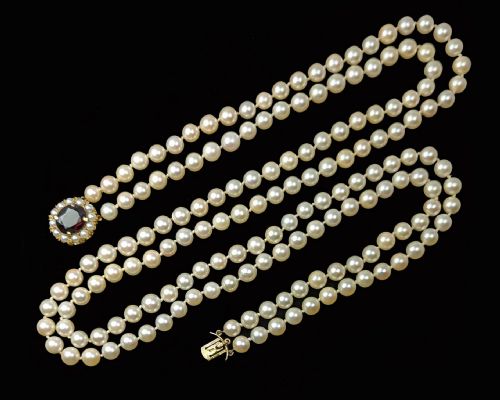
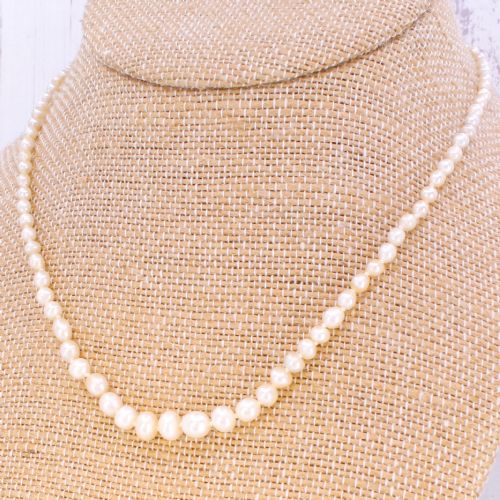
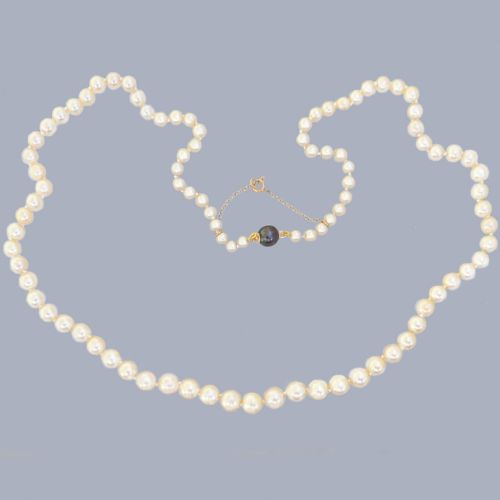
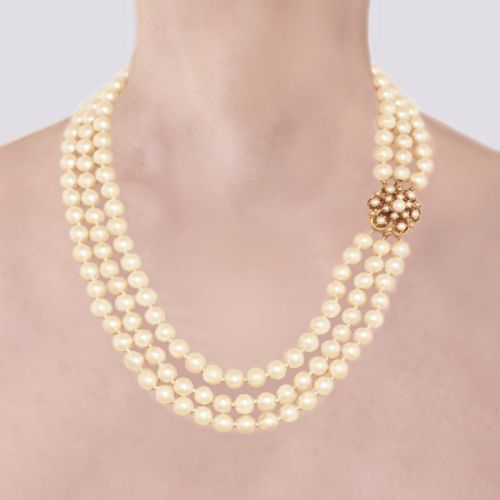
A 1960s pearl necklace spans single, double, triple, and multi-strand configurations including long sautoirs and chokers. Cultured pearls dominate the offerings alongside natural saltwater, seed, South Sea, and Tahitian specimens.
Makers set these pearls with clasps in 9ct and 18ct yellow and white gold, platinum, and incorporate gems such as diamonds, garnets, sapphires, rubies, citrines, and amethysts.
Mid-century examples frequently feature hand-knotted silk threads and decorative cluster, floral, or abstract clasps designed to be worn visibly at the front.
Materials and construction
Craftsmen built these necklaces using cultured or natural pearls strung individually on silk thread, ensuring each bead remains separated by a knot to prevent friction loss.
Clasps utilise cast or fabricated 9ct and 18ct gold, sometimes set with platinum accents, securing diamonds, sapphires, garnets, or rubies in floral, abstract, or cluster arrangements.
1960s Pearl Necklace Retail Price Guide 2026
Typical asking prices for 1960s pearl necklace among the pieces listed under this phrase on Sellingantiques today, from the lower quarter to the upper quarter. They describe what is for sale here now, not the wider market.
Listings feature 9ct and 18ct gold alongside platinum, combining cultured pearls with garnets, sapphires, diamonds, rubies, citrines, and amethysts.
Quality factors in mid-century pearls
Quality rests upon the lustre, surface uniformity, and matching of the pearls across multiple strands, alongside the weight and complexity of the gold and gem-set clasp.
Signatures from established workshops and official hallmarks provide stronger evidence of origin, while uniform graduation and secure hand-knotting complete the standard of manufacture.
Cropp and Farr·Unoaerre·Kutchinsky
The 1960s Pearl Necklace Glossary
- Cultured pearl
- Pearls farmed by introducing an irritant into an oyster or mollusc. They form the majority of mid-century pieces.
- Sautoir
- A very long necklace, often exceeding fifty inches, designed to be worn looped or knotted. Mid-century examples allow versatile styling.
- Clasp
- The fastening mechanism. In this era, clasps double as decorative brooches set with diamonds, garnets, or sapphires.
- Hand-knotted
- Individual knots tied between each pearl on the silk thread. This technique prevents pearls from rubbing together or scattering if the strand breaks.
1960s Pearl Necklace: Frequently Asked Questions
How do I wear a multi-strand necklace?
Multi-strand necklaces sit close to the collarbone as chokers or rest lower depending on the strand length. Position the decorative gold and gem clasp at the front or side to display the craftsmanship.
Secure the clasp firmly before wearing, as many mid-century designs use box or tongue fasteners intended to be shown rather than hidden at the nape.
Are these pearls natural or cultured?
The pieces include both cultured pearls and natural saltwater, South Sea, or Tahitian varieties. Cultured pearls feature prominently in double and triple strand configurations.
Laboratory certificates occasionally accompany pieces to verify the origin and treatment of the pearls and set gemstones.
How do I care for silk-strung pearls?
Store necklaces flat in a fabric-lined box to prevent the silk thread from stretching under tension. Avoid exposing the pearls to perfumes, cosmetics, or hairsprays.
Have a jeweller check the silk thread periodically, especially on multi-strand necklaces that show wear near the clasp.
What clasp metals were used?
Makers utilised 9ct and 18ct yellow and white gold, alongside platinum. These metals often hold diamonds, sapphires, garnets, rubies, or citrines in floral and abstract motifs.
Hallmarks stamped on the metal provide assay office marks and date letters corresponding to the 1960s.