
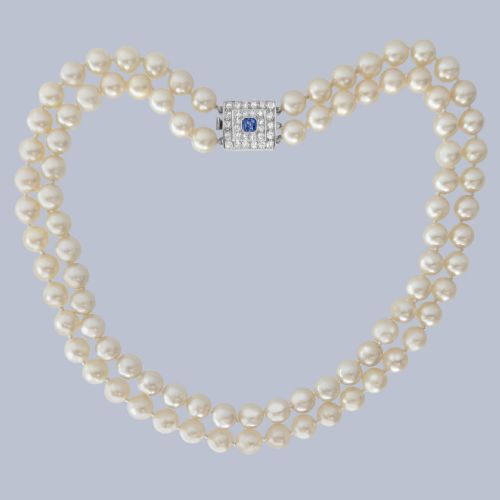
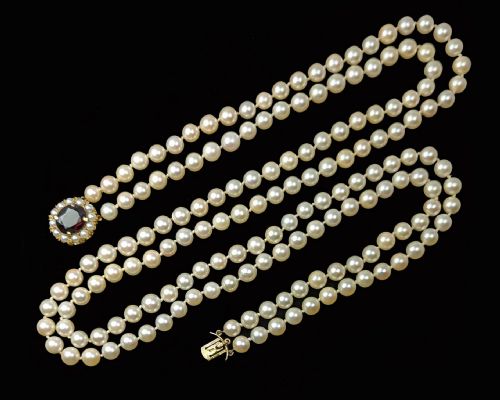
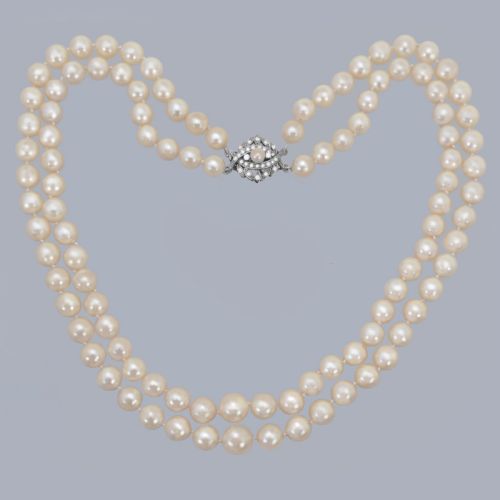


Double Row Pearl Necklace
A double row pearl necklace offers layered elegance, featuring dual strands of pearls secured with gemstone clasps from periods like the Art Deco era and the mid-century years.
Double Row Pearl Necklace
A double row pearl necklace comprises two parallel strands of pearls, often paired with precious metal clasps set with stones like diamond, garnet, sapphire and tourmaline. These necklaces appear in lengths ranging from short chokers to longer vintage designs.
Buyers browsing this selection most frequently encounter mid-century pieces from the 1950s and 1960s alongside earlier Art Deco examples from the 1920s. These items showcase cultured pearls or certified pearls secured by gold or white gold clasps.
The form spans various decades including the 1940s and the nineteenth century, reflecting enduring interest in multi-strand pearl jewellery. Each piece uses the double row format to create a distinct presence around the neck.
What varies in quality
Quality differences stem from the selection of the pearls, where uniform lustre and matching size across both strands elevate a piece. The presence of gem lab certificates also distinguishes finer examples by confirming origin and quality.
The craftsmanship of the clasp contributes significantly to overall standard, particularly when intricate precious metalwork combines with superior diamonds, rubies or sapphires. Hallmarks and certification add demonstrable authority to the materials utilised.
Double Row Pearl Necklace Retail Price Guide 2026
Typical asking prices for double row pearl necklace among the pieces listed under this phrase on Sellingantiques today, from the lower quarter to the upper quarter. They describe what is for sale here now, not the wider market.
Listings feature items from the nineteenth century through to the 1960s, constructed with pearl, gold, diamond, garnet and sapphire.
The Double Row Pearl Necklace Glossary
- Cultured pearl
- A pearl created by the introduction of an irritant into an oyster or mollusc by human intervention. This process guides the development of the pearl layers.
- Choker
- A short necklace style designed to sit snugly around the base of the neck. These pieces often feature two strands of pearls.
- Clasp
- A mechanical fastener used to join the ends of a necklace together. In these pieces, clasps frequently incorporate gold or silver set with diamonds or coloured gemstones.
- Hallmark
- An official stamp applied to precious metals indicating purity and origin. These marks provide evidence of metal content and assay office verification.
- Strand
- A single line or row of strung pearls. A double row necklace consists of two parallel strands.
Double Row Pearl Necklace: Frequently Asked Questions
How do I care for my double row pearl necklace?
Pearls require gentle handling because organic gems are sensitive to chemicals, perfumes and cosmetics. Wipe them softly with a clean cloth after wearing and store them flat to prevent stretching the silk or thread.
Periodic professional restrangling keeps the dual strands secure, especially if the silk between the pearls shows wear or stretching over time.
What periods do these pearl necklaces come from?
The pieces span multiple eras including the nineteenth century, the Edwardian period, the Art Deco 1920s and mid-century decades like the 1940s, 1950s and 1960s. Each era brings distinct clasp designs and mounting styles.
Mid-century examples from the fifties and sixties appear frequently, often showcasing nine carat gold clasps set with garnets or diamonds.
Are the clasps made of solid gold?
Many clasps utilise nine carat gold or eighteen carat white gold, frequently stamped with hallmarks that confirm the metal standard. These mountings often incorporate platinum or silver elements depending on the gemstone settings.
Gemstones such as diamonds, sapphires, rubies and tourmalines are regularly flush-set or prong-set into these precious metal clasps.
What is the difference between pearls and cultured pearls?
Cultured pearls are grown with human assistance by placing a nucleus inside the oyster, whereas natural pearls form entirely without human intervention. Both types appear across the historical periods represented in these necklaces.
Gem lab certificates sometimes accompany certified pearls to verify their origin and classification for the buyer.