


Double Strand Pearl Necklace
A double strand pearl necklace offers a classic two-row design with secure clasps in gold and silver, spanning periods from the Edwardian era to the mid-twentieth century.
What they are
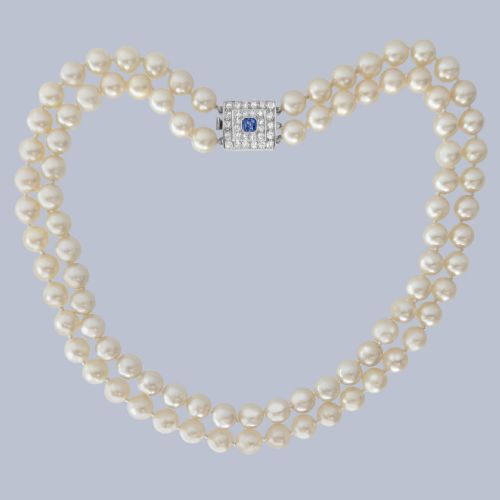
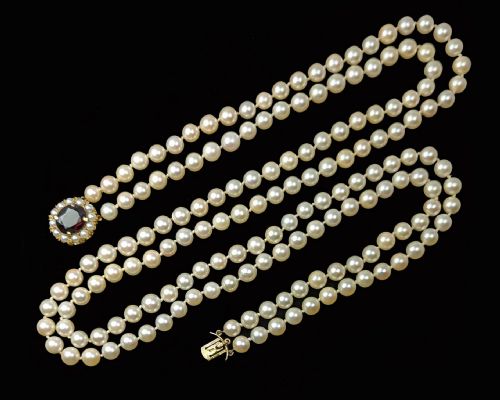
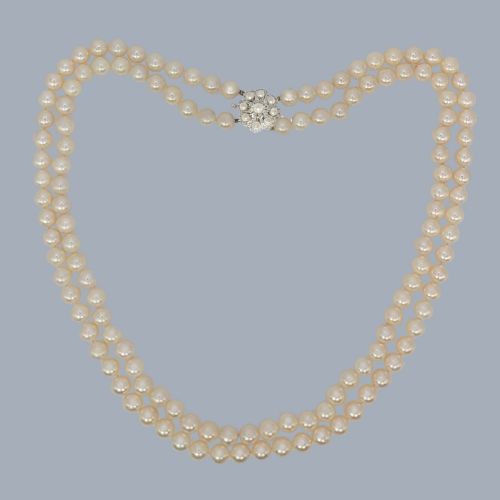
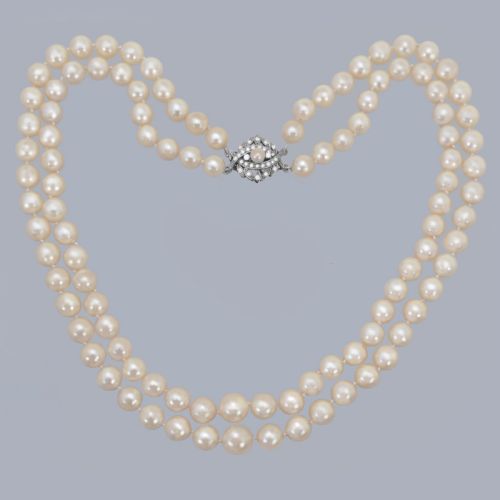
A double strand pearl necklace consists of two parallel rows of pearls matched for lustre and size, typically secured with an ornamental clasp. These necklaces range from Edwardian designs to mid-twentieth century vintage pieces.
The most common version met on this page is the mid-twentieth century piece featuring cultured pearls and a nine-carat gold clasp set with garnets or diamonds. These items combine traditional elegance with period hardware.
Earliest examples include Edwardian silver settings, while later iterations stretch through the 1940s, 1950s, and 1960s. Formats remain centred on necklaces, often complete with original boxes or hallmarked components.
How they were made
Construction relies on drilled pearls strung in double rows, paired with clasps forged from nine-carat gold, nine-carat white gold, eighteen-carat gold, or silver. Metals provide the structural security for the dual strands.
Clasps incorporate gemstones such as garnets, diamonds, rubies, sapphires, amethyst, turquoise, and marcasite. Many pieces show evidence of historic restrung maintenance to preserve the integrity of the strands.
Retail Price Guide 2026
Typical UK retail prices for double strand pearl necklace, calculated from the Sellingantiques database of over a million retail prices indexed since 2003. This retail price guide relies exclusively on Sellingantiques data; no external sources or auction records are used, so the figures do not describe the wider market.
Listings feature cultured pearls, natural pearls, and freshwater pearls mounted with nine-carat gold, silver, and diamond elements across mid-century periods.
What varies in quality
Quality rests in the matching of the pearls and the complexity of the clasp metalwork. Gemstone integration, such as multi-stone diamond and ruby clusters set in higher carat gold, elevates the piece above standard configurations.
Hallmarking and original packaging provide documentary proof of origin, distinguishing standard vintage items from hallmarked examples originating from specific assay offices like London or Birmingham.
Mikimoto
The Double Strand Pearl Necklace Glossary
- Cultured pearl
- Pearls formed through human intervention by inserting a nucleus into an oyster, widely seen across mid-twentieth-century pieces.
- Clasp
- The mechanical fastening mechanism, frequently ornate and set with gemstones such as garnet or diamond.
- Restrung
- The maintenance process of replacing degraded silk or thread to secure the pearls safely along the double strand.
- Hallmark
- Official stamps punched into precious metal items denoting purity and origin, often found on gold and silver clasps.
- Foliate
- A decorative style employing leaf motifs, seen on gold and white gold clasp designs.
Frequently Asked Questions
How do I wear a double strand pearl necklace?
Wear the necklace with the decorative clasp positioned at the back or rotated to the side as a feature pendant element. The two rows sit flush against the collarbone for traditional evening or daytime attire.
Ensure the safety chain, if present, is fastened securely alongside the main clasp mechanism to prevent loss during wear.
How do I care for vintage pearls?
Wipe pearls with a soft, damp cloth after wearing to remove oils and cosmetics. Avoid submerging them in water or exposing them to harsh chemicals.
Store them flat in a lined box to prevent scratching and strain on the silk thread connecting the double strands.
How can I tell the period of a pearl necklace?
Examine the clasp style, metal purity marks, and accompanying box design. Edwardian pieces often feature silver work, while 1950s and 1960s items frequently utilise nine-carat gold with garnet or diamond clusters.
Hallmarks stamped on the metal components provide precise assay office indicators and dating letters where applicable.
What is the difference between cultured and natural pearls?
Cultured pearls are grown with human assistance by introducing a bead into the mollusc, forming a consistent nacre layer over time. Natural pearls develop entirely without human intervention in the wild.
Most items from the mid-twentieth century utilise cultured pearls matched in size for double strand configurations.