


1950s Pearl Necklace
A 1950s pearl necklace brings mid-century elegance to the neckline through multi-strand designs fastened with diamond and gold clasps.
1950s Pearl Necklace
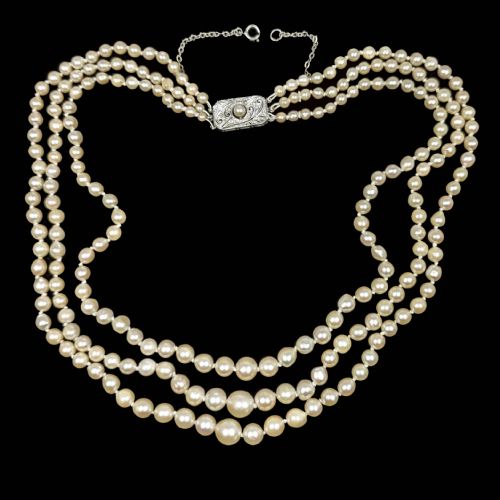
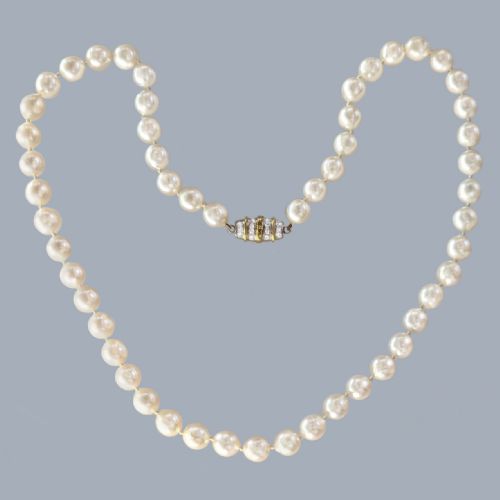
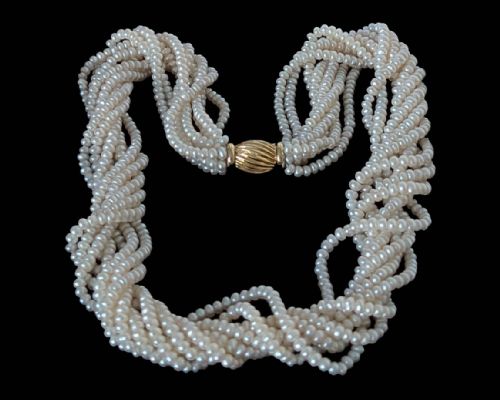
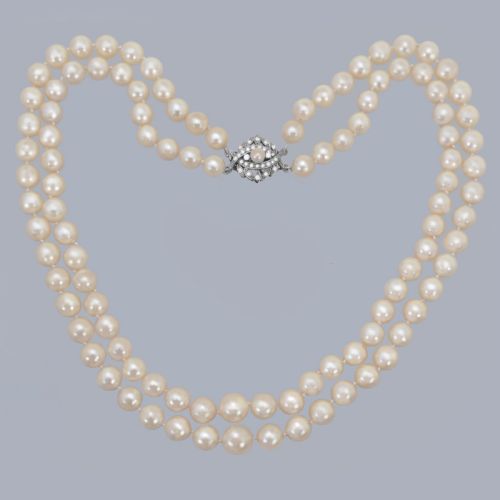
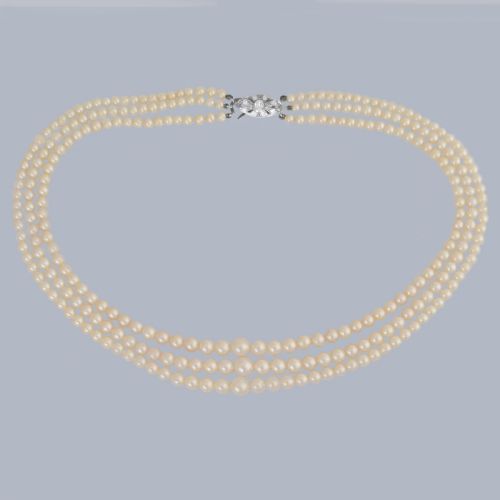
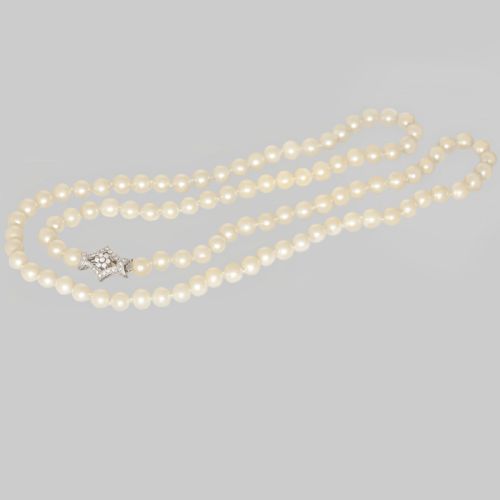
A 1950s pearl necklace typically appears as a single, double, triple, or multi-strand piece from the mid-century period. These items range from simple single-strand lengths to elaborate multi-strand formations incorporating freshwater seed pearls or cultured varieties.
The construction of a 1950s pearl necklace often includes a decorative clasp functioning as a focal point at the back or side of the neck. Clasps in this group utilise precious metals set with diamonds, sapphires, emeralds, rubies, garnets, or amethyst.
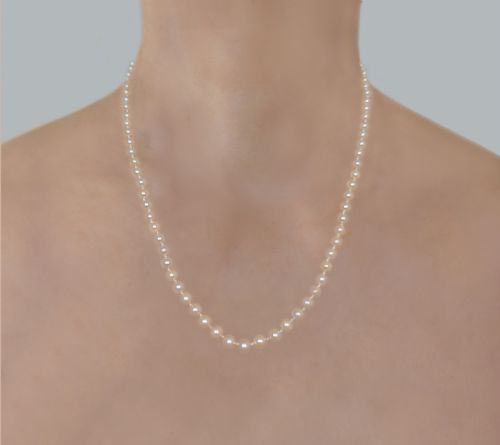
Many examples from this era reflect mid-century modern design sensibilities, pairing classic white or cream pearls with intricate gold or platinum mountings. Lengths vary from standard sixteen-inch choker styles to much longer multi-row configurations.
Materials and construction
The materials recorded in these pieces combine organic pearls and cultured pearls with 9ct yellow gold, 9ct white gold, 18ct gold, and platinum settings. Gemstone accents incorporate diamonds, sapphires, rubies, emeralds, garnets, citrine, and marcasite.
Techniques involve hand-knotting silk threads between individual pearls to secure spacing and protect the nacre from friction. Secure box or cluster clasps anchor the multi-strand layouts, frequently hallmarked from mid-century assay offices such as Birmingham.
1950s Pearl Necklace Retail Price Guide 2026
Typical asking prices for 1950s pearl necklace among the pieces listed under this phrase on Sellingantiques today, from the lower quarter to the upper quarter. They describe what is for sale here now, not the wider market.
Listings feature 9ct gold, 18ct gold, white gold, and platinum alongside cultured pearls, freshwater seed pearls, diamonds, sapphires, emeralds, rubies, garnets, and citrine.
Factors of quality
Quality separates through the uniformity, lustre, and nacre thickness of the pearls utilised in each strand, alongside the complexity of the gemstone clasp. Fine specimens display matched pearl sizing and high-grade diamond or coloured gemstone settings in higher carat gold or platinum.
The integrity of the stringing also defines the standard of the piece, with professional recent re-stringing and independent gemological reports like AnchorCert adding verifiable provenance to the assembly.
The 1950s Pearl Necklace Glossary
- Cultured pearl
- A pearl formed with human assistance by inserting a nucleus into an oyster or mollusc, resulting in cultivated layers of nacre. These form the majority of mid-century strand components.
- Seed pearl
- Very small natural or freshwater pearls often utilised in clusters or multiple strands during the mid-century period. They create delicate, intricate floral or geometric patterns on the clasp.
- Old cut diamond
- A diamond cut popular before modern brilliant cuts, featuring a smaller table, higher crown, and open culet. These stones frequently secure mid-century gold and platinum clasps.
- Clasp
- The mechanical fastener at the terminus of a necklace, which in this period doubles as an ornamental jewel set with precious stones. It allows the wearer to secure the multi-strand layout.
- AnchorCert
- An independent gemological testing and certification service providing reports on pearl authenticity and gemstone grades. Such certificates accompany select high-end mid-century pieces.
1950s Pearl Necklace: Frequently Asked Questions
How do I wear a multi-strand pearl necklace?
Multi-strand configurations sit closely around the collarbone or drape lower depending on the total length of the rows. They pair naturally with evening wear or formal attire where the decorative clasp can be worn visible at the side or back.
Because these necklaces often feature precious stone clasps containing diamonds or sapphires, positioning the clasp intentionally can alter the entire look of the jewellery.
How can I tell a cultured pearl from a seed pearl?
Cultured pearls are generally larger, cultivated pearls grown with a nucleus, whereas seed pearls are tiny, often fraction-of-a-millimetre pearls used in dense clusters. Seed pearls create a textured, vintage floral appearance on smaller clasp mounts.
Examining the individual pearl sizes across the strand reveals whether the necklace uses uniform cultured specimens or fine seed pearl rows.
Do these necklaces require special care?
Pearl necklaces benefit from periodic re-stringing to maintain the integrity of the silk threads holding the pearls together. Keeping the pearls away from perfumes, cosmetics, and hairsprays protects the delicate organic nacre from chemical damage.
Storing them flat in a lined jewellery box prevents scratching against harder gemstones set within the gold or platinum clasps.