
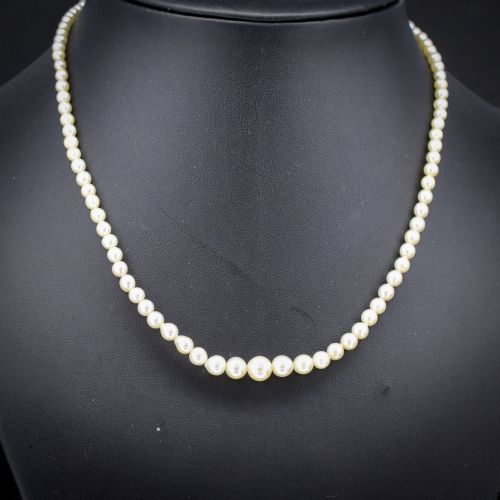
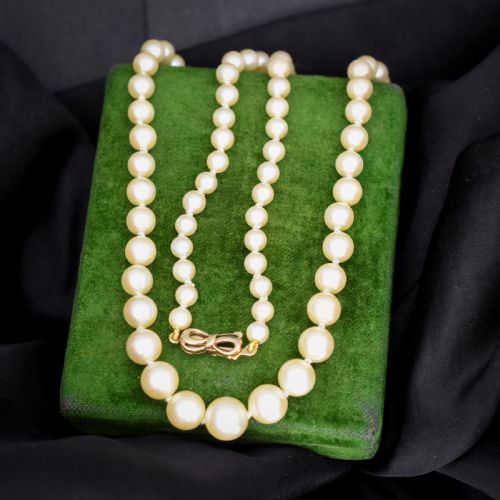
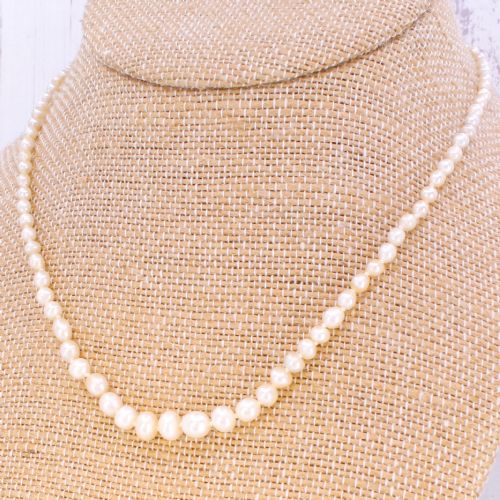
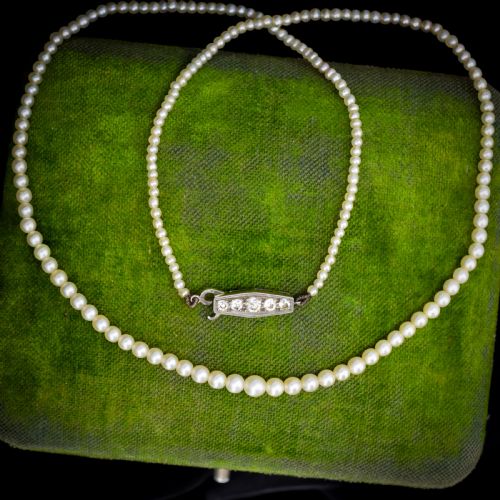
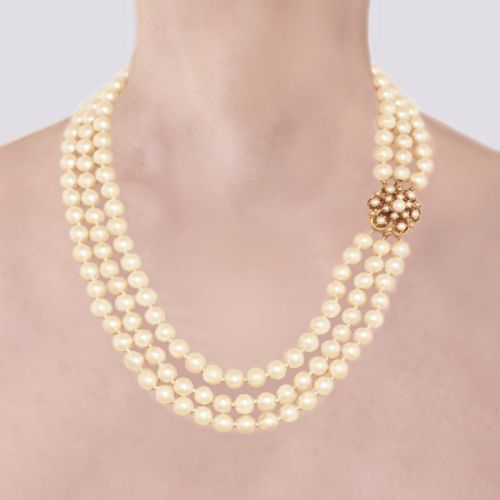


Graduated Pearl Strand
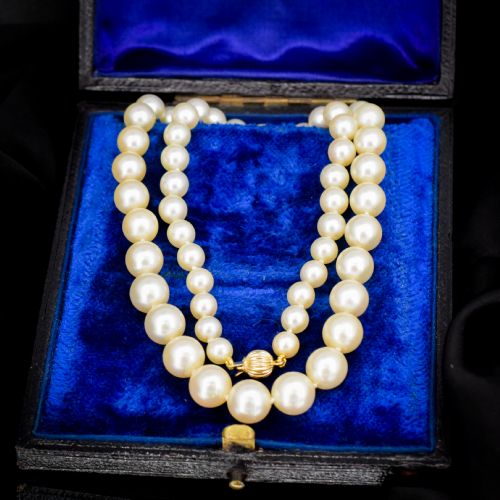
A graduated pearl strand moves gracefully from smaller pearls to a larger centrepiece, offering timeless elegance across eras from Georgian to Mid-Century.
Graduated Pearl Strand
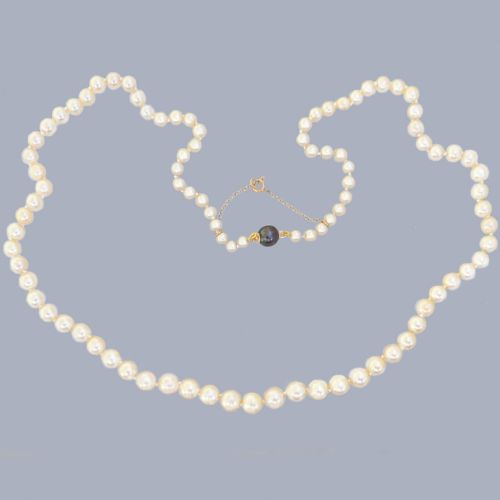
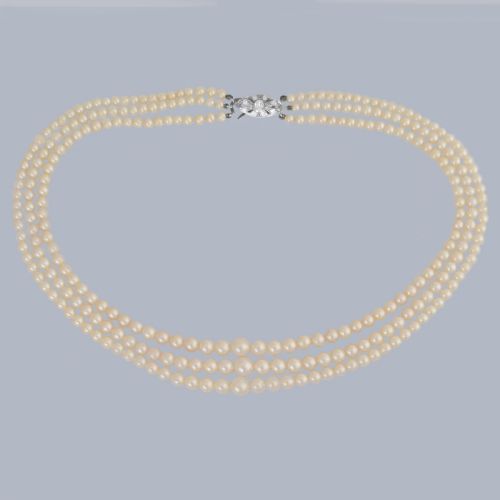
A graduated pearl strand presents a continuous line of pearls that increase in size toward the front or centre. The selections span single, double, and triple strand necklaces, alongside long ropes.
Most examples originate from the Edwardian period and the decades spanning the 1920s to the 1960s, reflecting Art Deco and Mid-Century styles. Single and multi-strand pieces appear frequently in gold, white gold, and silver settings.
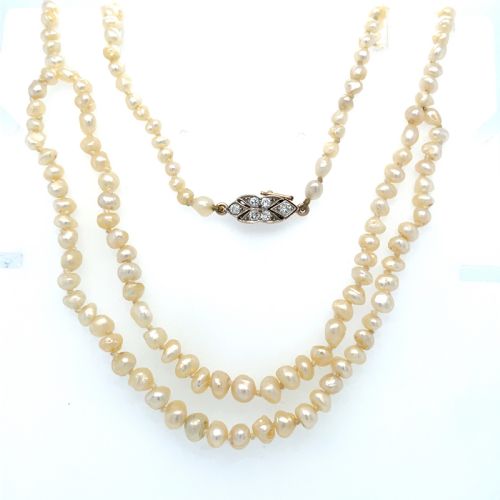
Earliest origins reach back to the Georgian era, while later pieces incorporate cultured pearls alongside natural saltwater varieties. Each necklace fastens with clasps ranging from simple gold barrels to elaborate diamond, sapphire, and ruby clusters.
Materials and Construction
Construction relies on durable silk or silk thread to string the pearls individually, often featuring knots between each pearl to protect the surface and maintain tension.
Metal components utilise 9ct gold, 18ct white gold, silver, and 14ct gold for secure clasps. These clasps frequently incorporate diamonds, sapphires, emeralds, garnets, and additional seed pearls.
Graduated Pearl Strand Retail Price Guide 2026
Typical asking prices for graduated pearl strand among the pieces listed under this phrase on Sellingantiques today, from the lower quarter to the upper quarter. They describe what is for sale here now, not the wider market.
Current listings feature pearls strung on silk thread, paired with 9ct gold, 18ct white gold, and silver clasps.
Assessing Quality
Quality rests in the uniformity of the pearl lustre, surface smoothness, and the precise graduation of size along the strand. Natural saltwater pearls generally command higher regard than cultured alternatives.
The sophistication of the clasp elevates a piece significantly, particularly when set with old-cut diamonds, sapphires, or emeralds in precious white gold or yellow gold mounts. Original boxes and maker signatures add further distinction.
Mikimoto
The Graduated Pearl Strand Glossary
- Cultured pearl
- A pearl formed with human intervention by inserting a nucleus into an oyster or mollusc. These appear widely across twentieth-century pieces.
- Natural saltwater pearl
- A pearl grown naturally in marine molluscs without human prompting. These specimens feature in Edwardian and earlier Georgian items.
- Clasp
- The fastening mechanism at the back or side of the necklace. Many include decorative gemstones such as diamonds, rubies, and sapphires.
- Strand
- A single continuous line of strung pearls. Necklaces frequently combine multiple strands for a fuller effect.
- Graduated
- Describing pearls arranged in order of increasing size towards the centre. This design creates a balanced focal point.
Graduated Pearl Strand: Frequently Asked Questions
Are these pearls natural or cultured?
The listings include both natural saltwater pearls and cultured pearls. Edwardian and Georgian examples tend to feature natural saltwater specimens.
Mid-century pieces more commonly utilise cultured pearls. Check individual descriptions for specific details regarding origin and gemological reports.
What lengths are available?
Lengths vary from shorter sixteen-inch necklaces sitting close to the collarbone to eighteen-inch strands and longer rope designs. Multi-strand configurations offer layered elegance.
Selecting a length depends on personal style and neckline preferences. Shorter strands suit tailored collars, while longer ropes allow for doubling.
How are the pearls secured?
Pearls are traditionally threaded on silk or silk thread with knots tied between each individual pearl. This prevents loss if the strand breaks.
Securing the necklace relies on various clasps, ranging from simple gold barrels to elaborate diamond, emerald, and sapphire floral clusters.
How do I date a pearl strand?
Dating relies on the style of the clasp, the mounting metals, and the manufacturing technique. Art Deco geometric clasps point to the 1920s and 1930s.
Mid-century pieces often feature 9ct or 18ct gold with cultured pearls. Original boxes and hallmarks help confirm the exact period of origin.