
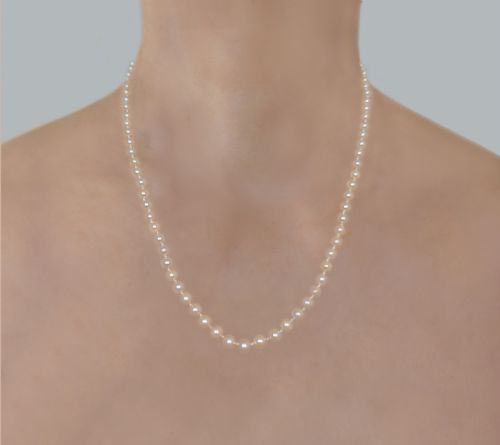
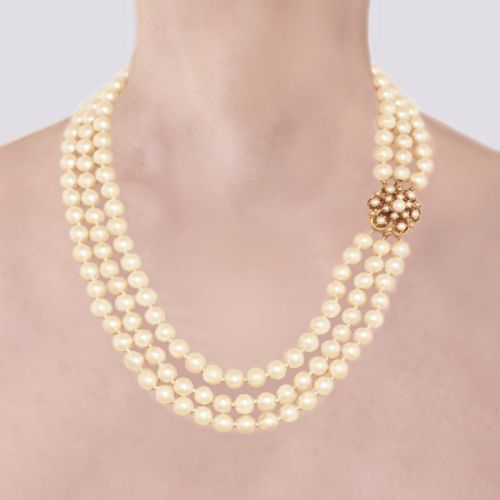


Cultured Pearl Choker
A cultured pearl choker sits close to the throat, combining lustrous nacre with precious metal and gemstone clasps.
Cultured Pearl Choker
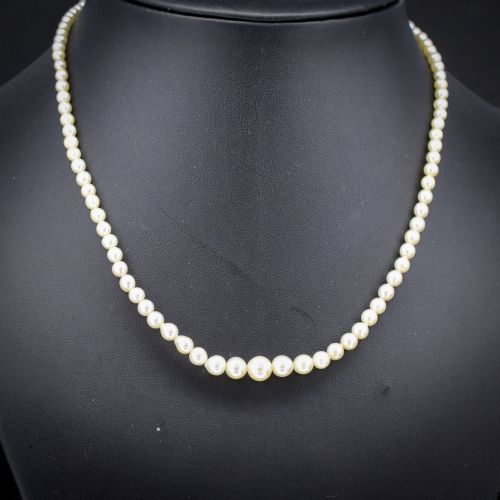
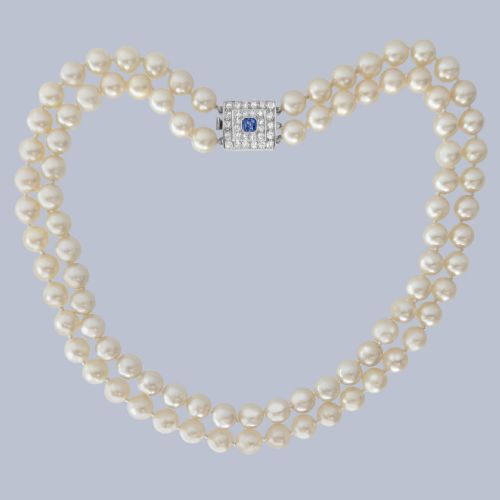
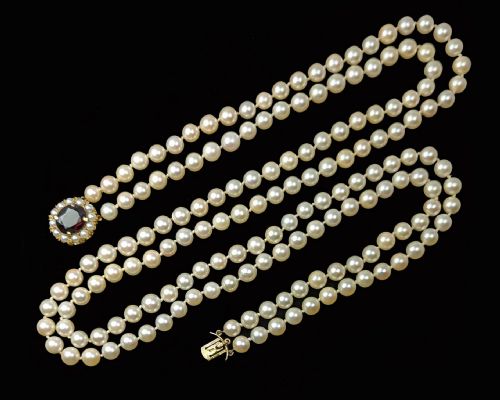
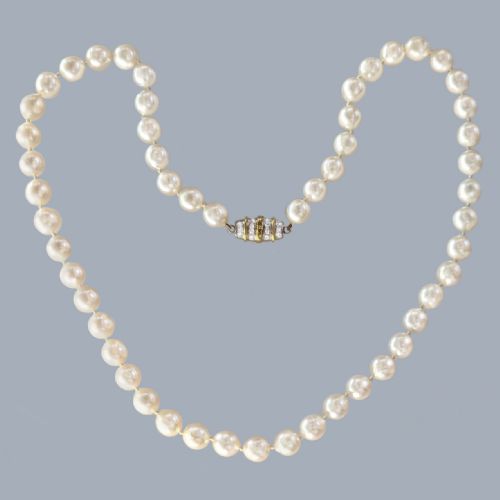
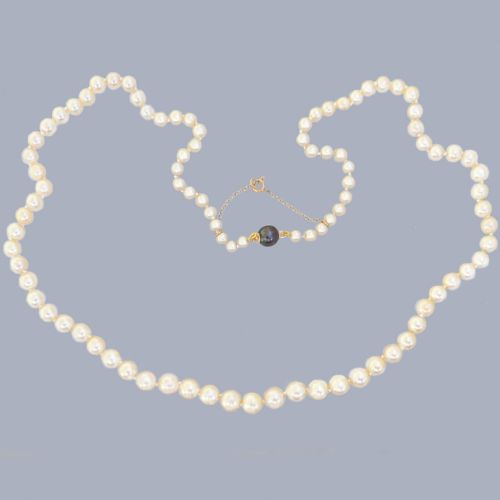
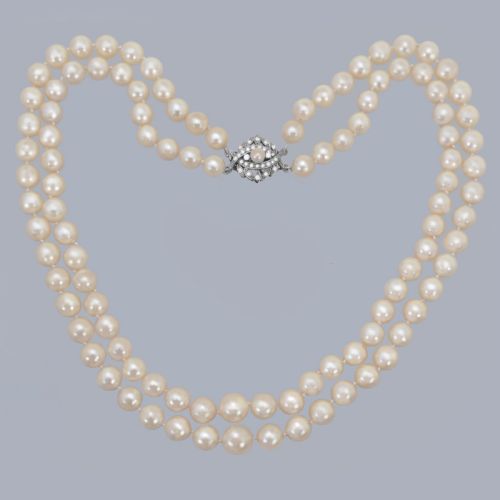
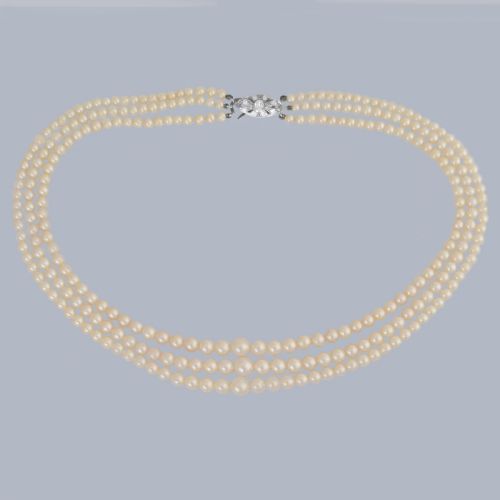
A cultured pearl choker draws the eye with its classic proportions, typically resting neatly at the base of the neck. When searching for a cultured pearl choker, buyers encounter single, double, and multi-strand arrangements gathered securely by decorative metal clasps.
The pieces available span several distinct decades, with the nineteen-fifties and nineteen-sixties providing the majority of multi-strand examples. Earlier specimens from the Edwardian era and the Art Deco period appear alongside these mid-century designs, often showing geometric or foliate clasps set with diamonds and sapphires.
Factors of quality
Quality rests in the uniformity, lustre, and orient of the pearls themselves, alongside the complexity and gem-setting of the clasp. Graduated strands require careful sorting for consistent colour and size, while multi-strand layouts depend on balanced tension across every line.
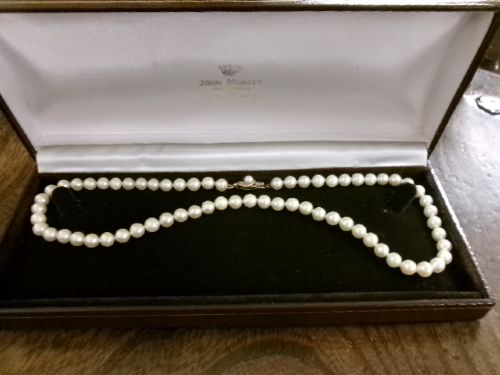
The presence of certified pearls and original fitted boxes adds historical substance to individual pieces. Furthermore, the choice of precious metal in the clasp, ranging from nine-carat gold to heavy platinum or eighteen-carat white gold set with rose-cut diamonds, elevates the overall standing of the necklace.
Cultured Pearl Choker Retail Price Guide 2026
Typical asking prices for cultured pearl choker among the pieces listed under this phrase on Sellingantiques today, from the lower quarter to the upper quarter. They describe what is for sale here now, not the wider market.
Listings feature pearls strung alongside nine-carat gold, eighteen-carat gold, and silver, secured with diamond, sapphire, and garnet clasps.
Mikimoto
The Cultured Pearl Choker Glossary
- Cultured pearl
- A pearl formed by the introduction of a nucleus into an oyster, allowing the mollusc to secrete layers of nacre over time. These organic gems form the primary material of these necklaces.
- Choker
- A short necklace designed to fit closely around the neck, typically measuring sixteen inches or less. This length places the strand directly across the collarbone.
- Graduated
- Describing a strand where the pearls increase steadily in size from the ends toward the centre. This traditional arrangement distributes visual weight evenly.
- Nacre
- The iridescent organic substance secreted by oysters that builds up around the irritant to form a pearl. Thick nacre provides durability and deep lustre.
- Orient
- The shimmering play of rainbow colours seen on or just beneath the surface of a fine pearl. This optical phenomenon arises from the light interference of overlapping nacre layers.
Cultured Pearl Choker: Frequently Asked Questions
How do I wear a choker?
A cultured pearl choker pairs naturally with open necklines and evening wear where the collarbone remains unobstructed. The shorter length draws focus upward toward the face.
For daily wear, a single strand complements tailored blouses and knitwear, while multi-strand versions lend presence to formal attire.
How should I store my pearls?
Pearls require gentle handling and benefit from storage away from hard gemstones that might scratch their delicate nacre. A soft fabric pouch or a lined jewellery box keeps them safe from dust and friction.
Because silk thread stretches and weakens over time, laying the necklace flat rather than hanging it prevents unnecessary strain on the cord.
Are these pearls natural or cultured?
The items listed on this page consist of cultured pearls rather than natural saltwater finds. Culturing involves human intervention to start the nacre-producing process inside the oyster.
Gemological certificates accompanying specific pieces often detail the exact nature and origin of the saltwater or freshwater pearls used.
Why do clasps feature gemstones?
Historically, clasps on multi-strand necklaces were designed to be worn visibly at the side or front of the neck rather than hidden at the nape. Goldsmiths adorned these mechanisms with diamonds, rubies, and sapphires to turn a functional fastener into an ornamental centrepiece.
This versatility allowed the wearer to display the clasp as part of the overall jewellery ensemble.