


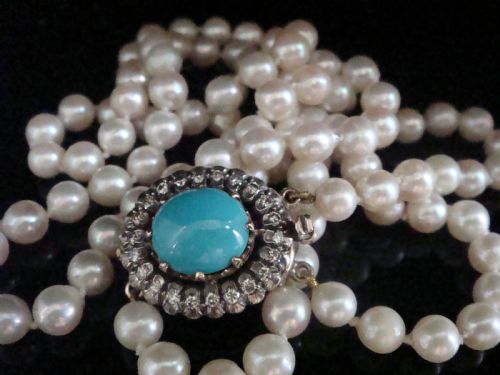
Gemstone Clasp Necklace
These gemstone clasp necklace designs place striking mineral and diamond fastenings at the centre of pearl and beaded strands.
Gemstone Clasp Necklace
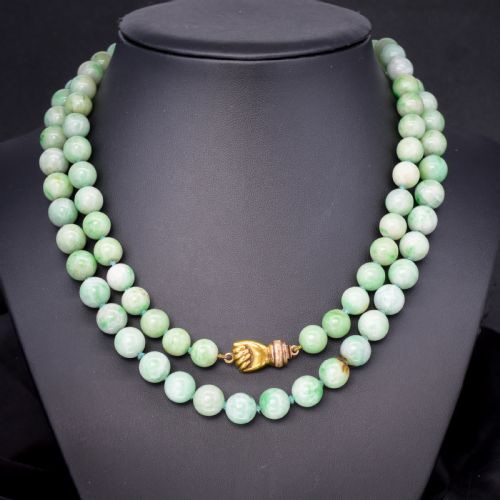
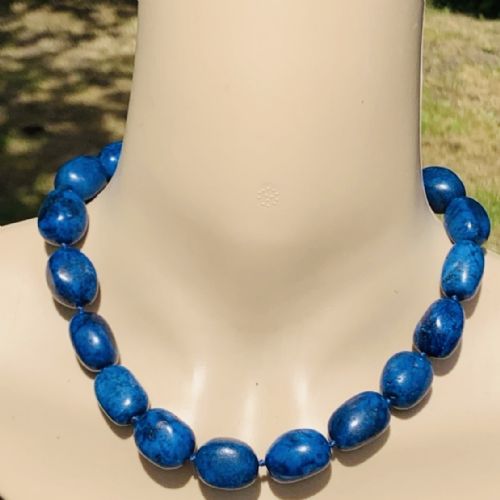
A gemstone clasp necklace combines beaded strands of pearls, jade, lapis lazuli or nephrite with an ornate decorative fastening set with stones. These pieces range from Victorian strands and Edwardian multi-gem creations to Art Deco designs and mid-century multi-strand pearl chokers.
Originating across various historical periods, these necklaces demonstrate how jewellers transformed a functional closure into a prominent ornamental feature. Pieces span from the nineteenth century through the 1920s, 1940s, 1950s and 1960s.
Materials and construction
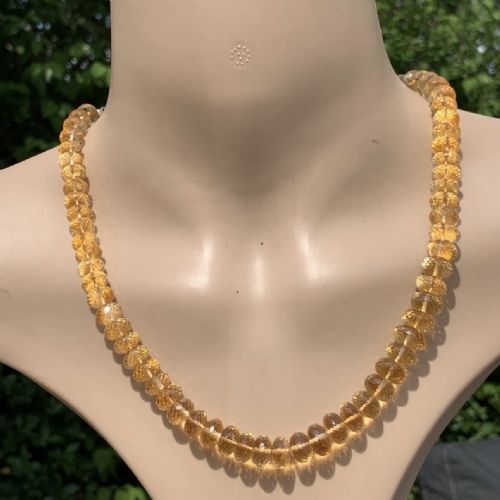
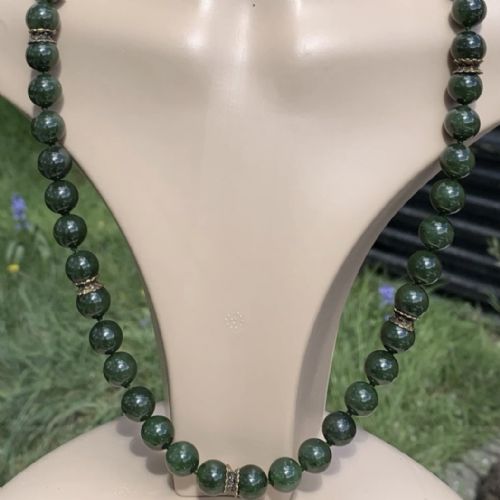
Goldsmiths utilised 9ct gold, 14ct gold, 18ct gold, platinum and silver to mount gemstones into secure settings for the fastenings. Strands consist of strung pearls, cultured pearls, jade beads, lapis lazuli, nephrite and faceted citrine.
Techniques combine traditional bead stringing with fine metalwork, incorporating diamond daisy motifs, floral designs and carved gemstone elements into the clasps. Precious stones are precision-set in gold or silver to anchor the weighted beaded strands safely.
Quality factors in design and materials
The sophistication of the clasp design and the quality of the set gemstones separate standard pieces from finer examples. Intricate floral motifs, multi-stone diamond and ruby arrangements, and certified stones elevate the standing of a piece.
The uniformity and lustre of the pearls or the carving depth of jade and nephrite beads also determine the grade of the necklace. Heavier stone bead counts and substantial precious metal weight in the clasp indicate superior manufacture.
The Gemstone Clasp Necklace Glossary
- Clasp
- The mechanical fastening device securing the necklace ends together, which in these pieces is embellished with gemstones and precious metals. It functions as both a secure closure and a decorative centrepiece.
- Cultured pearl
- An organic gem formed when an irritant is intentionally placed inside an oyster or mollusc to encourage pearl production. These pearls form the uniform strands found paired with gemstone fastenings.
- Nephrite jade
- A dense, tough amphibole mineral utilised for carved beads and heavy necklace strands. It exhibits a smooth, waxy lustre when polished.
- Faceting
- The process of cutting flat polished surfaces onto a gemstone to maximise light reflection. Citrine and other transparent stones are shaped this way for clasps and beads.
- Strand
- A continuous line of threaded pearls, beads or gemstones forming the main body of the necklace. Pieces often feature single, double or six-strand configurations.
Gemstone Clasp Necklace: Frequently Asked Questions
How do I secure a gemstone clasp necklace?
Most of these clasps utilise a tongue-in-box mechanism or a secure box catch integrated into the ornamental metalwork. The mechanism holds firmly while remaining hidden beneath the design.
Additional safety chains sometimes accompany older 19th-century and Edwardian pieces to prevent accidental loss during wear.
Can I wear these necklaces every day?
Pearl and gemstone necklaces require careful handling, particularly regarding cosmetics, perfumes and hairsprays that can damage pearl nacre over time. Storing them flat and separate from harder jewellery prevents surface scratching.
While robustly made in gold and silver, vintage and antique pieces benefit from occasional re-stringing to maintain the integrity of the cord.
How do I date a gemstone clasp necklace?
Dating relies on stylistic clues, metal hallmarks, and the specific cut of the gemstones set into the clasp. Art Deco pieces display geometric symmetry, while 1950s and 1960s examples often pair multi-strand pearls with amethyst or tourmaline.
Hallmarks stamped on gold or silver components provide official registration years for mid-century pieces.
What is the difference between jade and nephrite?
Jade is a term encompassing two distinct mineral species, one of which is nephrite. Nephrite is particularly known for its dense, fibrous structure and heavy weight in antique strands.
Both materials were utilised across the 19th and early 20th centuries for carved beads and statement clasps.