


Classic Pearl Necklace
A classic pearl necklace is a timeless neckpiece of cultured or natural pearls, offering quiet elegance and enduring wardrobe versatility.
Classic Pearl Necklace
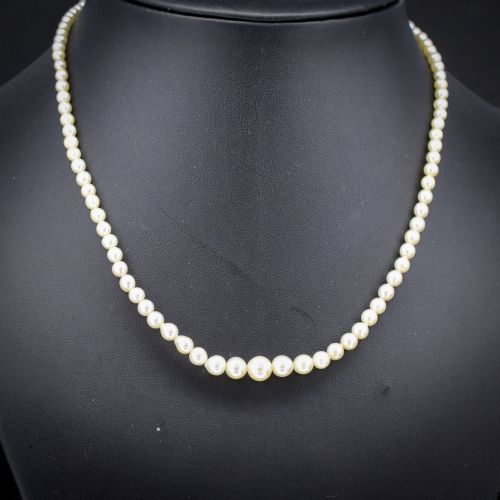
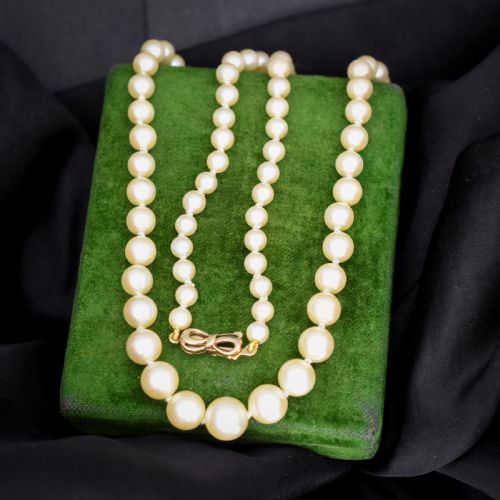
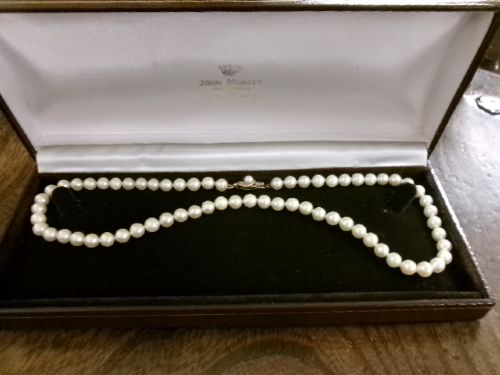
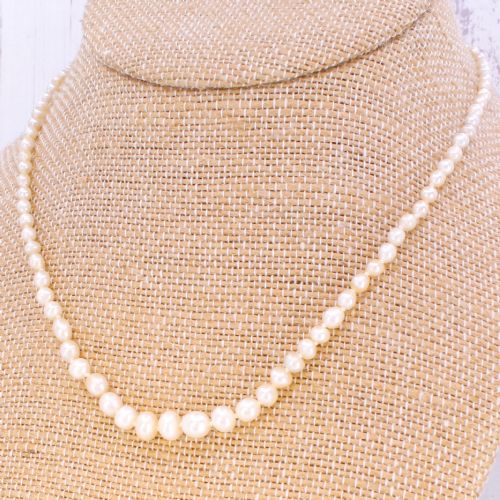
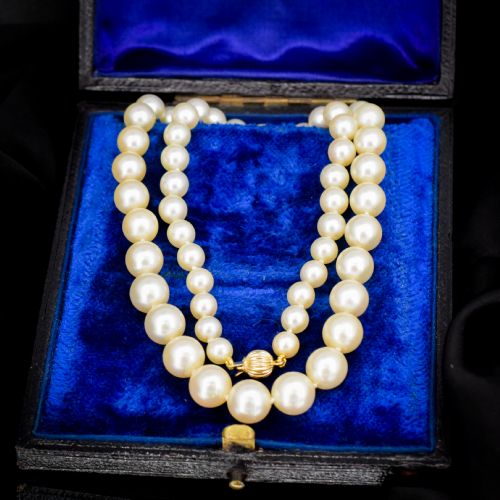
A classic pearl necklace brings together traditional strands and secure precious metal clasps, spanning eras from the Edwardian period through to the mid-twentieth century. Buyers encounter single and double strands featuring carefully graduated or uniform pearls alongside gemstone-set fastenings.
The selection ranges from shorter lengths up to long opera ropes and multi-strand designs. Pearls are paired with gold, diamond, sapphire, and occasionally rose quartz or turquoise, reflecting classic fine jewellery and mid-century styles.
How They Were Made
Makers threaded pearls onto silk thread, frequently employing hand knotting between individual beads to protect the nacre from friction and preserve the drape of the strand. Clasps in nine-carat or eighteen-carat gold, silver, and white gold were hand-set with diamonds or sapphires to secure the ends.
Cultured and natural saltwater or freshwater pearls were selected for consistent lustre and matching overtone before being assembled into finished necklaces.
Classic Pearl Necklace Retail Price Guide 2026
Typical asking prices for classic pearl necklace among the pieces listed under this phrase on Sellingantiques today, from the lower quarter to the upper quarter. They describe what is for sale here now, not the wider market.
The selection spans Edwardian, Art Deco, and Mid-Century periods.
What Varies in Quality
Quality rests in the depth of the nacre, the uniformity of lustre across the strand, and the precision of the graduating sizes. Pearls with a deep, reflective skin outshine those with a chalky or thin surface layer.
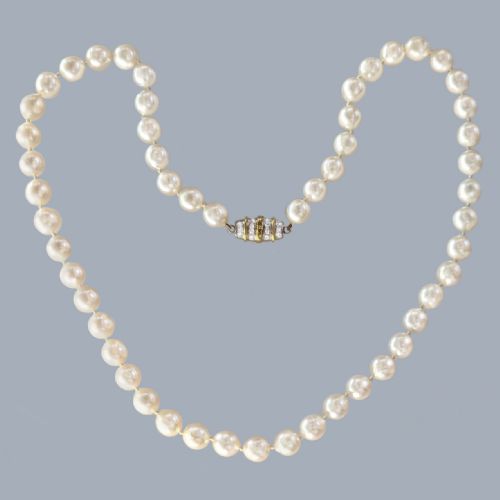
The craftsmanship of the clasp also elevates the piece, particularly where goldsmiths incorporated pavé-set diamonds, sapphires, or intricate floral goldwork rather than simple box fasteners.
Cropp & Farr
The Classic Pearl Necklace Glossary
- Cultured pearl
- An oyster-produced pearl grown through human intervention by the introduction of a bead nucleus. This method became standard for mid-century jewellery production.
- Graduated
- A strand design where pearls increase in size progressively towards the centre front. This arrangement draws the eye downwards and sits comfortably on the collarbone.
- Nacre
- The iridescent organic-inorganic composite substance secreted by molluscs to form pearls. Thicker nacre produces a deeper and more durable lustre.
- Opera length
- A long necklace measuring between twenty-eight and thirty-six inches. It can be worn as a single long strand or doubled up.
- Silk thread
- The traditional cord used for stringing fine pearls because of its flexibility and strength. Individual knots are tied between pearls to secure them.
Classic Pearl Necklace: Frequently Asked Questions
How do I care for my pearls?
Wipe pearls gently with a soft, damp cloth after wearing to remove cosmetic residues and natural oils. Avoid exposing them to harsh chemicals, perfumes, or ultrasonic cleaners.
Store them flat in a soft pouch rather than hanging them, which can stretch the silk thread over time.
How should a pearl necklace fit?
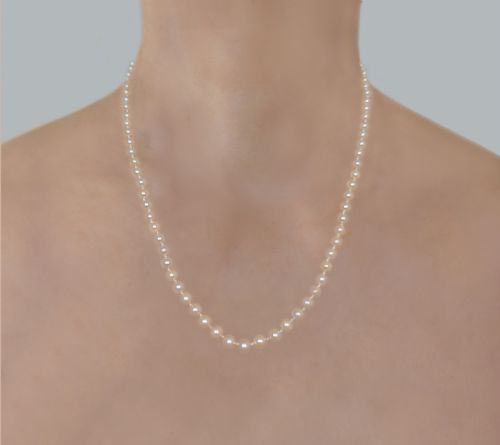
A standard single strand typically measures sixteen to eighteen inches, resting neatly just at or below the collarbone. Longer rope and opera lengths hang lower down the chest.
Choose your length based on your usual necklines and whether you prefer a traditional choker style or a longer draped silhouette.
Are these pearls natural or cultured?
Most twentieth-century pieces utilise cultured pearls, which are grown organically within oysters around a prepared nucleus. Natural saltwater pearls appear less frequently, primarily in earlier Edwardian or antique pieces.
Both types exhibit genuine nacre, but natural saltwater varieties carry distinct historical rarity.
How can I tell the period of a clasp?
Clasps often feature hallmarks indicating the metal purity, maker's mark, and assay office location or date letter. Stylistic cues like floral goldwork, white gold settings, or diamond and sapphire arrangements also point to specific decades such as the thirties or fifties.
Examining the integration of the box clasp provides strong clues to the manufacturing era.