
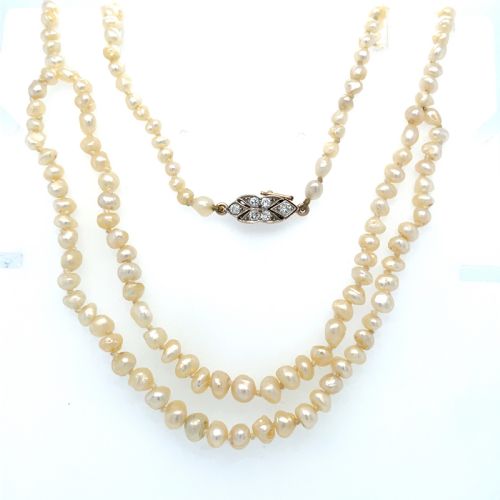


Art Deco Pearl Necklace
An art deco pearl necklace brings together lustrous pearls and geometric diamond clasps from the early twentieth century.
What They Are
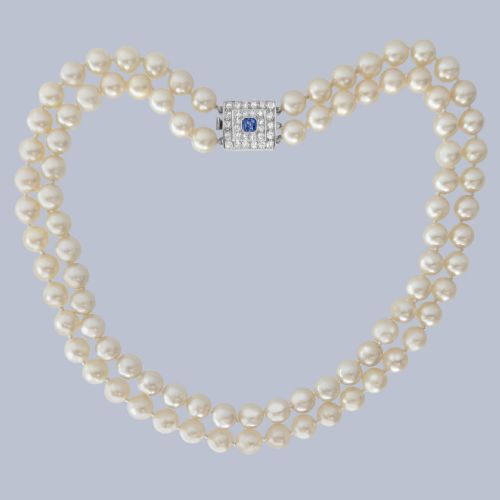
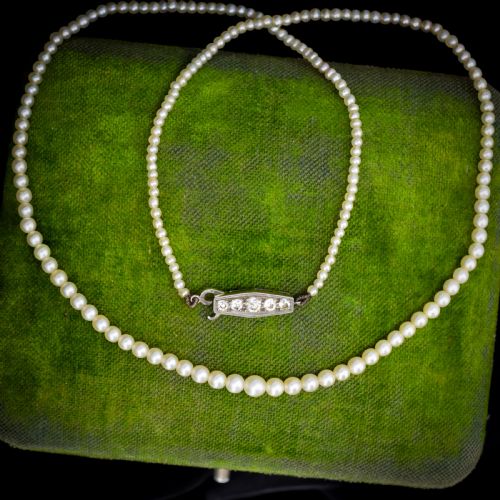
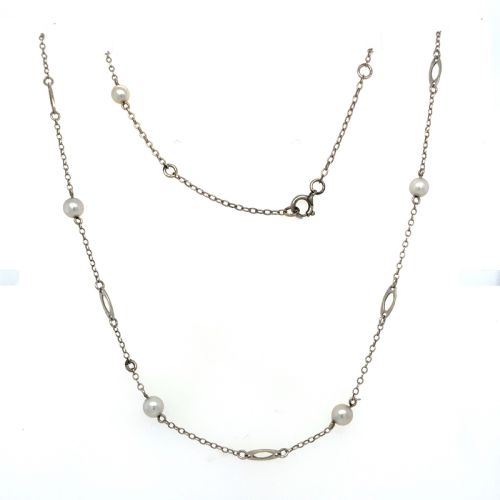
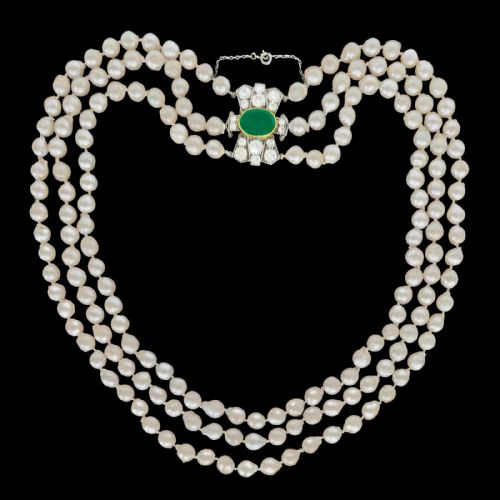
An art deco pearl necklace is a piece of period neckwear defined by its pearls and characteristic geometric clasp work. These items appear across single, double, and triple strand formats alongside pendant and lavaliere configurations.
The selections span Edwardian origins through the nineteen-thirties and nineteen-fifties, drawing on styles labelled as vintage classic and mid-century alongside the core aesthetic. Buyers frequently encounter silver or gold clasps set with diamonds, emeralds, jadeite, sapphires, and rubies.
Origin points range from general antique productions to specific French workshops, reflecting the diverse material combinations recorded in the archive. Natural, saltwater, cultured, blister, freshwater, and simulated pearls form the primary bodies of these necklaces.
How They Were Made
Metals such as platinum, silver, nine-carat white gold, and eighteen-carat yellow gold form the structural mounts and box clasps. Gemstones including diamonds, emeralds, jadeite, peridot, turquoise, and paste stones are integrated into these metal housings.
Pearls are strung individually, often featuring natural or cultured origins, alongside variations incorporating mother of pearl and seed pearls. Metal components show hand-finished detailing consistent with Edwardian and twentieth-century bench jewellers.
Retail Price Guide 2026
Typical UK retail prices for art deco pearl necklace, calculated from the Sellingantiques database of over a million retail prices indexed since 2003. This retail price guide relies exclusively on Sellingantiques data; no external sources or auction records are used, so the figures do not describe the wider market.
The archive records single, double, and triple strand configurations incorporating natural, saltwater, cultured, freshwater, and simulated pearls.
What Varies in Quality
The choice of pearl grades creates a distinct tiering, moving from simulated and freshwater variations up to certified natural saltwater specimens. Lustre, surface uniformity, and strand matching dictate the visual weight of the central necklace body.
Clasp complexity separates standard productions from high-tier examples, particularly where platinum or white gold mounts carry pavé-set diamonds and calibrated precious gems like sapphires or emeralds. Official gem reports and assay documentation further elevate the standing of specific pieces.
The Art Deco Pearl Necklace Glossary
- Cultured pearl
- A pearl formed with human intervention by inserting a nucleus into an oyster. These stones dominate twentieth-century jewellery production.
- Saltwater pearl
- Pearls harvested from marine oysters, prized for their deep orient and durability. They appear frequently in certified natural configurations.
- Paste stones
- Faceted glass cut to imitate precious gemstones. They provide colour and sparkle in silver and metal-set costume pieces.
- Lavaliere
- A pendant necklace featuring a central drop suspended from a chain or bar. Edwardian examples often incorporate seed pearls and peridots.
Frequently Asked Questions
How do I care for my pearls?
Wipe pearls gently with a soft damp cloth after wearing to remove oils and cosmetic residue. Store them flat away from other jewellery to prevent scratching the delicate nacre.
Keep pearls away from harsh chemicals, perfumes, and ultrasonic cleaning devices. Periodic restringing by a specialist ensures the silk cord remains secure between each bead.
Are these pearls natural or cultured?
The archive includes both natural and cultured pearls alongside simulated versions. Natural pearls grew organically without human nucleation, while cultured pearls developed around an inserted bead.
Certification reports from assay offices or gem laboratories often accompany high-value pieces to confirm origin. Examining the lustre and surface under magnification helps differentiate natural growth from simulated coatings.
What metal is used in the clasps?
Clasps utilise a range of metals including platinum, silver, nine-carat white gold, and eighteen-carat yellow gold. Platinum and white gold commonly house diamond and gemstone settings characteristic of the period.
Silver appears frequently in standard and simulated pieces, sometimes paired with enamel or marcasite. Hallmarks and assay marks assist in identifying the specific metal purity.
How do I date an art deco necklace?
Dating relies on stylistic markers such as geometric platinum clasps, symmetrical gemstone arrangements, and documented hallmarks. Pieces span from Edwardian transitions through the nineteen-thirties and later mid-century revivals.
Accompanying documentation like assay reports provide precise chronological markers. Material combinations, such as seed pearls with peridots, point towards specific early twentieth-century workshops.