


Victorian Opal Brooch
A victorian opal brooch brings together shimmering play-of-colour stones and warm period gold in versatile pieces designed to pin to a lapel or suspend from a chain.
Victorian Opal Brooch
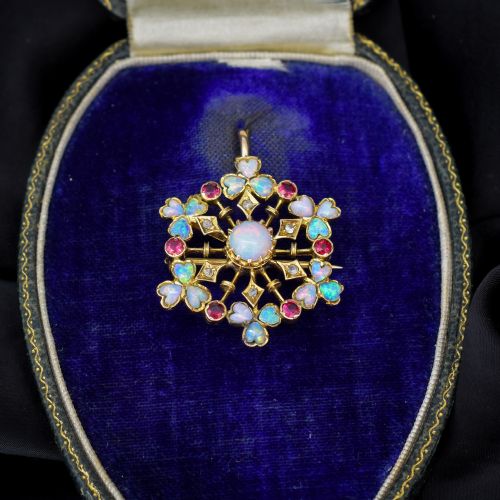
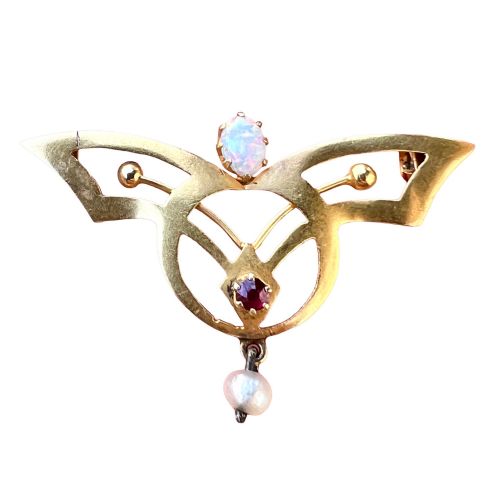
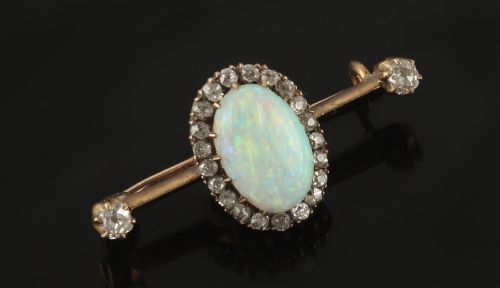
A victorian opal brooch spans varied forms including bar brooches, floral clusters, lovers knots, hearts, stars, and butterflies. These jewels frequently double as pendant brooches, offering two ways to wear them.
The materials paired with opals in these pieces include diamonds, rubies, pearls, and various purities of gold such as 9ct rose gold, 9ct yellow gold, 18ct gold, and 15ct yellow gold.
The periods and styles represented stretch from the 19th century and Victorian era into the early twentieth century, taking in Edwardian and Art Nouveau aesthetics.
How they were made
Maker's hands combined opals with old-cut diamonds, rose-cut diamonds, rubies, and seed pearls, mounting them securely in yellow, rose, and eighteen-carat gold settings.
Versatility was built into the construction of many pieces, integrating hidden loops or bails alongside pin mechanisms so a single jewel functioned as both brooch and pendant.
Victorian Opal Brooch Retail Price Guide 2026
Typical asking prices for victorian opal brooch among the pieces listed under this phrase on Sellingantiques today, from the lower quarter to the upper quarter. They describe what is for sale here now, not the wider market.
Listings for a victorian opal brooch frequently incorporate accompanying diamonds, rubies, and pearls set into 9ct, 15ct, and 18ct gold.
What varies in quality
The intensity and play of colour across the opal face separates standard stones from exceptional ones, alongside the brilliance and matching of surrounding diamond and ruby accents.
The finesse of the metalwork, whether casting a delicate clover leaf, forming a intricate butterfly, or executing a precise lovers knot, dictates the overall refinement of the jewel.
The Victorian Opal Brooch Glossary
- Bar brooch
- A narrow horizontal pin of metal, often mounted with a central cluster of gems. This form was exceptionally popular during the nineteenth century.
- Pendant brooch
- A dual-purpose ornament featuring a folding bail or loop on the reverse. This allows the piece to transition easily from lapel pin to necklace pendant.
- Old-cut diamond
- A hand-faceted diamond shape typical of nineteenth-century jewellery. These stones exhibit smaller tables and deeper pavilions than modern brilliant cuts.
- Play-of-colour
- The optical phenomenon where internal flashes of spectral hues shift across an opal when viewed from different angles. This visual property defines the stone's appeal.
- Lovers knot
- A decorative motif formed of interlaced ribbons or cords symbolising affection. Jewellers rendered this design in gold wire, often accented with gems.
Victorian Opal Brooch: Frequently Asked Questions
How do I wear a pendant brooch?
These versatile jewels feature both a secure pin mechanism on the reverse and a hidden loop or bail. You can fasten the pin directly to a lapel or collar, or thread a chain through the loop to wear it as a pendant.
Ensure the pin catch is fully secure when wearing it on fabric, and check that any bail folds down neatly if you prefer to wear it against clothing.
Are these brooches fragile?
While gold and diamonds are durable, opals contain moisture and require thoughtful handling. Avoid wearing them during rigorous physical tasks and protect them from sharp impacts and harsh chemicals.
Store each piece in a lined box or separate compartment to prevent scratching against other jewellery.
How do I care for antique opals?
Opals are sensitive to sudden temperature changes and extreme dryness. Clean them gently with a soft, damp cloth rather than submerging them in water or using ultrasonic jewellery cleaners.
Allowing the stone to maintain its natural moisture balance helps preserve its play-of-colour over decades of wear.
What styles appear in this collection?
The selection includes classic Victorian bar brooches, romantic hearts and lovers knots, floral clusters, and celestial star motifs. Pieces from later periods also show flowing Art Nouveau lines and Edwardian gemstone pairings.
Each style reflects the prevailing decorative tastes of its manufacturing era, from botanical realism to geometric symmetry.