


Gold Opal Pin
A gold opal pin brings together rich precious metals and iridescent stones, offering a classic accessory that collectors prize for its distinct play of colour.
Gold Opal Pin
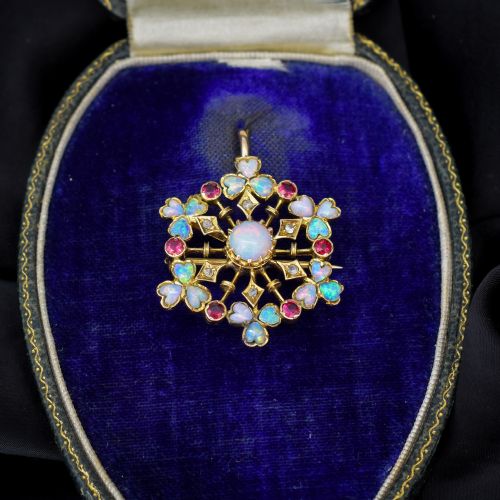
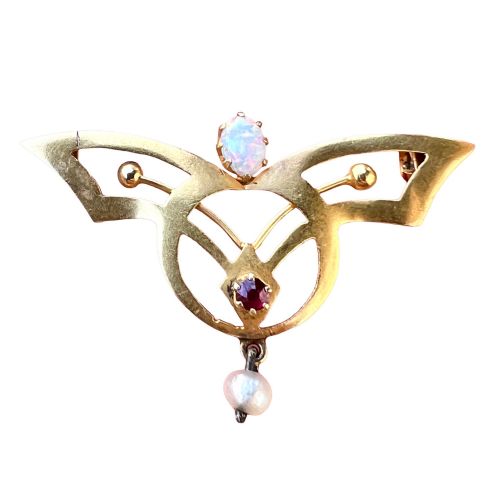
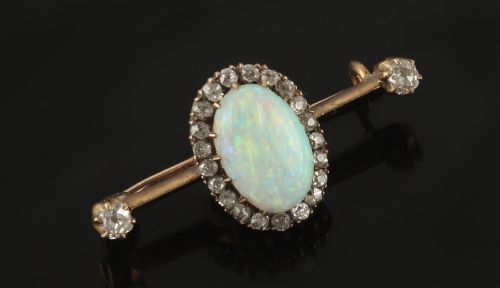
When you search for a gold opal pin, you find a range of brooches, stick pins, and convertible pendant brooches that span the Victorian, Edwardian, and Art Nouveau periods, alongside vintage pieces from later decades. The most common form on this page is the bar brooch or cluster pin, frequently combining opal with diamonds, rubies, or pearls.
These items originate primarily from the nineteenth and early twentieth centuries, capturing the distinct aesthetic shifts from Victorian sentimentality to the flowing lines of Art Nouveau and the refined symmetry of the Edwardian era. You also encounter mid-century vintage designs utilising sturdy nine-carat and eighteen-carat gold settings.
Makers utilised versatile formats that allowed items to function both as fastenings and as pendants, demonstrating the practical elegance demanded by past wearers. The survival of original boxed pieces further highlights how these ornaments were cherished as gifts.
How they were made
Artisans constructed these items using distinct gold purities, notably nine-carat rose gold, fifteen-carat yellow gold, and eighteen-carat yellow or white gold, alongside cast and chased metalwork. Stones were meticulously set by hand into bespoke mounts designed to showcase the play of colour in natural opals.
Techniques varied from delicate millegrain edges and openwork wire frames in Edwardian pieces to robust cluster settings and structural bar frames in Victorian examples. Accompanying gems such as diamonds, rubies, and seed pearls were integrated to frame the central opal securely.
The site archives record stick pins, cluster rings, and pendant brooches spanning the Victorian to mid-century periods.
What varies in quality
The standard of an item rests upon the intensity and spectral range of the opal's play of colour, alongside the optical clarity and cut of any accompanying diamonds or rubies. Higher-grade examples feature lively fire within the stone and substantial gold weight in the mount.
Craftsmanship also distinguishes finer pieces, evident in the precision of stone setting, the delicacy of gold wirework, and the structural integrity of the pin mechanism. Original boxes and verifiable hallmarks, such as Chester assay marks, further elevate the standing of a piece.
The Gold Opal Pin Glossary
- Bar brooch
- A narrow horizontal pin featuring central ornamentation such as an opal cluster or floral motif. This form was widely worn on lapels and collars.
- Assay mark
- A stamped symbol indicating the purity of the precious metal and the office that tested it. Chester assay marks frequently appear on regional British gold pieces.
- Millegrain
- A decorative technique involving a row of tiny raised metal beads along the edge of a setting. It creates a soft, textured border typical of Edwardian jewellery.
- Stick pin
- A long pin topped with a decorative head, originally designed to secure cravats or lapels. The head often mirrors the cluster design found on larger brooches.
- Play of colour
- The optical phenomenon where flashes of spectral colours move across an opal as the angle of light shifts. This visual property determines the primary appeal of the stone.
Gold Opal Pin: Frequently Asked Questions
How do I wear a gold opal pin?
These pieces suit heavier fabrics such as wool coats, tweed jackets, or structured scarves where the weight of the gold and stones is adequately supported. Convertible pendant brooches offer the added versatility of hanging from a chain.
Ensure the safety catch or C-clasp fastens securely before wearing the piece out. Storing the item in a dedicated box prevents friction against other jewellery.
Were these items used as everyday wear?
Victorian and Edwardian wearers utilised these ornaments daily to fasten garments, secure lace collars, or adorn hats. Stick pins specifically anchored neckties and cravats in place.
Over time, changing fashions shifted these accessories from functional fasteners to purely decorative statement pieces. Many survived because previous owners kept them stored in fitted presentation cases.
How do I tell Victorian from Edwardian pieces?
Victorian examples often display heavier yellow or rose gold settings, organic motifs like clover or floral clusters, and sentimental design elements. Edwardian pieces tend to favour lighter gold or white gold, delicate openwork, and garlands.
Assay marks and accompanying hallmarks can provide a more precise date of manufacture. Stylistic cues like flowing asymmetry point towards Art Nouveau rather than strict period borders.
How should I care for my opal pin?
Opals contain natural water content and require gentle handling away from harsh chemicals, ultrasonic cleaners, and extreme temperature shifts. Wipe the gold and stones softly with a dry cloth after wearing.
Keep the piece away from prolonged direct sunlight and dry environments. Storing it separately protects the softer opal surface from scratches caused by diamonds.