


Opal Diamond Pendant
An opal diamond pendant brings together fiery play-of-colour and crisp sparkle, offering a wearable piece of history.
Opal Diamond Pendant
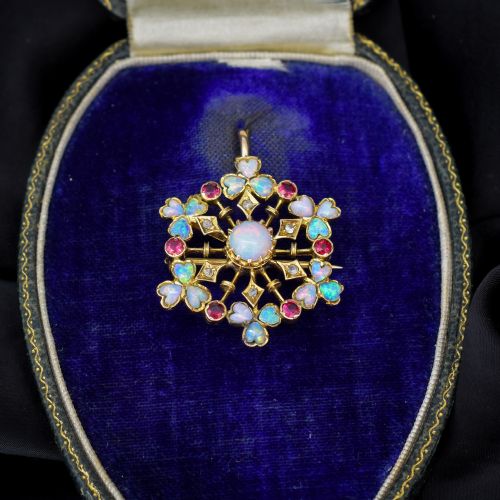
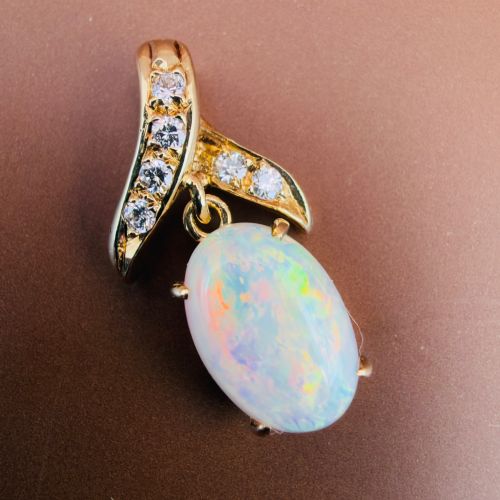
An opal diamond pendant combines central iridescent stones with surrounding diamond work, forming pieces designed to hang from the neck or convert from brooches. When searching for an opal diamond pendant, buyers encounter examples ranging from late nineteenth-century Victorian designs to mid-century creations.
The selections span distinct historical eras, including Edwardian, Art Deco, and mid-century periods. Common configurations include cluster arrangements, heart shapes, and floral or insect motifs.
Materials vary across the inventory, featuring standard white opals, dark black opals, and bright fire opals paired with diamonds set in gold, silver, platinum, or white gold.
How they were made
Goldsmiths and jewellers utilised precious metals such as yellow gold, 18ct white gold, silver, and platinum to form the secure settings required for softer gemstones. Stones were shaped into high cabochons or faceted cuts, depending on the optical properties of the specific opal.
Diamonds were hand-set in clusters or geometric patterns around the central stone, often utilising older cutting styles like old cuts or baguettes in period pieces. Combinations frequently integrated silver top-layers over gold bases in earlier Victorian and Edwardian examples to enhance the brightness of the diamond work.
Several Victorian makers transformed natural insect and clover motifs into diamond-set amulets.
What varies in quality
Quality rests significantly upon the play-of-colour and flash exhibited by the opal itself, alongside the stability and clarity of the stone. Vibrant spectral flashes across the surface elevate an example above specimens with muted or dull colour play.
The standard of metalwork and the uniformity of the surrounding diamonds define the upper tier of execution. Heavier gold weights, secure claw or bezel settings, and well-matched diamond accents indicate careful manufacturing.
The Opal Diamond Pendant Glossary
- Cabochon
- A gemstone shaped and polished with a smooth, rounded domed surface rather than faceted. This style highlights the internal play-of-colour in opals.
- Play-of-colour
- The optical phenomenon where a gemstone displays flashes of shifting spectral colours when moved in the light. This effect determines the visual appeal of an opal.
- Cluster pendant
- A jewellery design featuring a prominent central gemstone encircled by a ring of smaller stones, typically diamonds. This arrangement maximises overall sparkle.
- Old cut
- A diamond facet style popular in antique jewellery, characterised by a smaller table, higher crown, and deep pavilion. These cuts produce a softer, candlelit sparkle.
Opal Diamond Pendant: Frequently Asked Questions
How do I care for an antique opal pendant?
Opals contain water within their structure and score lower on the hardness scale than diamonds, requiring gentle handling. Avoid exposing them to harsh chemicals, ultrasonic cleaners, or sudden temperature changes.
Store the pendant separately in a soft pouch to prevent scratching from harder gems like diamonds. Wipe clean with a soft, damp cloth after wearing.
Can these pendants be worn every day?
Many period pieces survive from the Victorian and Edwardian eras, yet their delicate settings and softer stones require mindful wear. Frequent impacts can damage both the opal and the surrounding gold or platinum work.
Reserve the pendant for occasional wear or special evenings to protect the integrity of the antique mountings. Regular inspection by a jeweller helps secure the stones.
What is the difference between black opal and white opal?
Black opals feature a dark body tone, ranging from dark grey to black, which intensifies the vibrant flashes of red, green, and blue. White opals display a lighter, milky body colour with softer spectral play.
Both varieties appear across different historical periods in our records, offering distinct visual contrasts against diamond settings.
How can I tell if a piece is Edwardian or Art Deco?
Edwardian pieces often utilise platinum and yellow gold with flowing, delicate garland or floral motifs. Art Deco examples transition to geometric lines, symmetrical shapes, and heavy use of white gold and platinum.
Examining the metal choice and overarching design style provides clear clues to the manufacturing era of the pendant.