



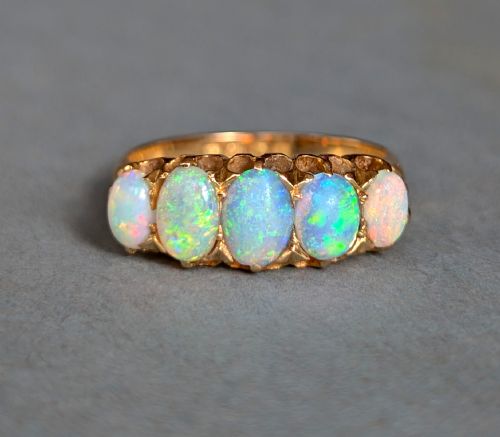
Vintage Opal Ring
A vintage opal ring brings together shifting plays of colour and precious metal from the Victorian, Edwardian, and mid-century periods.
Vintage Opal Ring
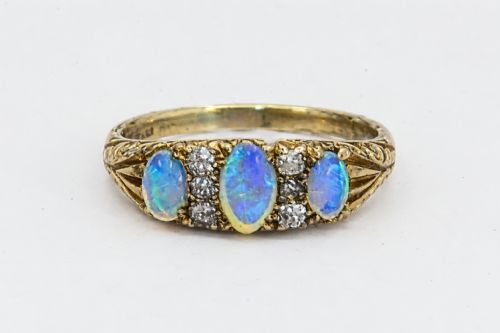
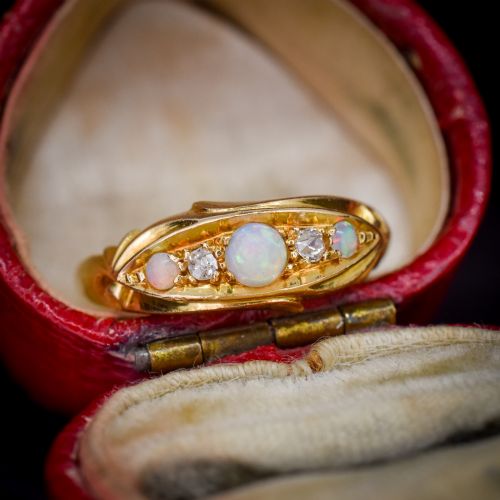
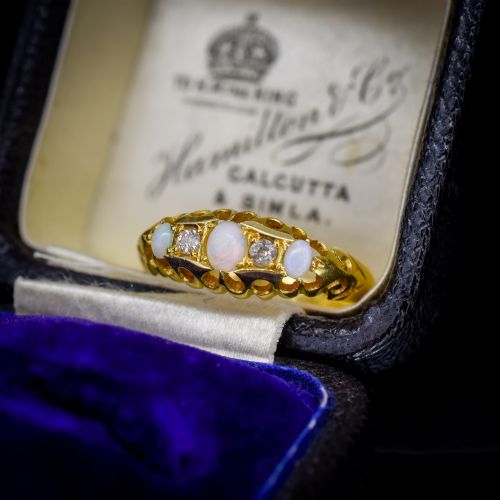
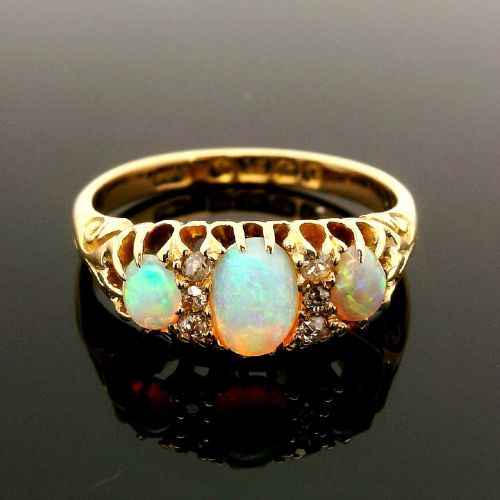
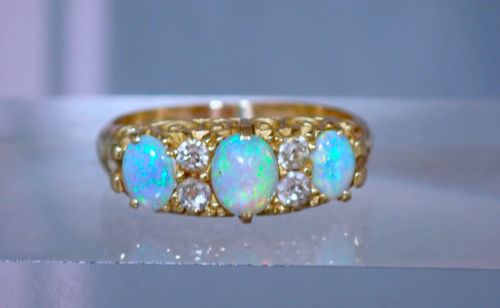
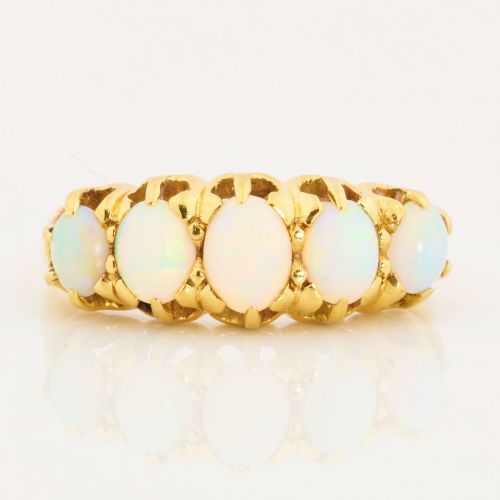
A vintage opal ring encompasses a wide range of finger adornments spanning from the nineteenth century through the mid-twentieth century. The selection on this page is dominated by nineteenth-century, Victorian, Edwardian, and mid-century designs, featuring everything from delicate boat shapes to substantial cluster rings.
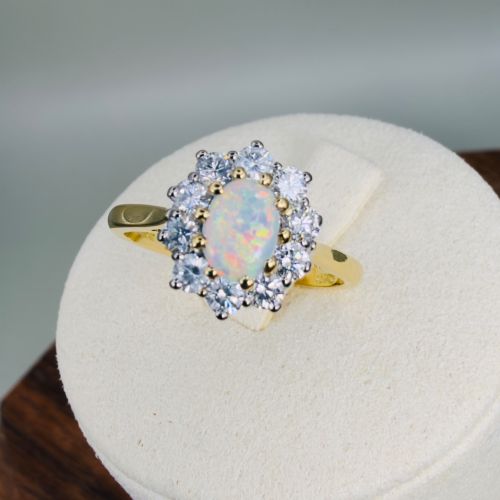
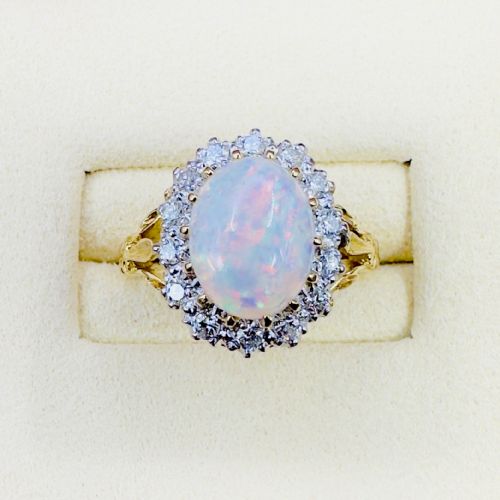
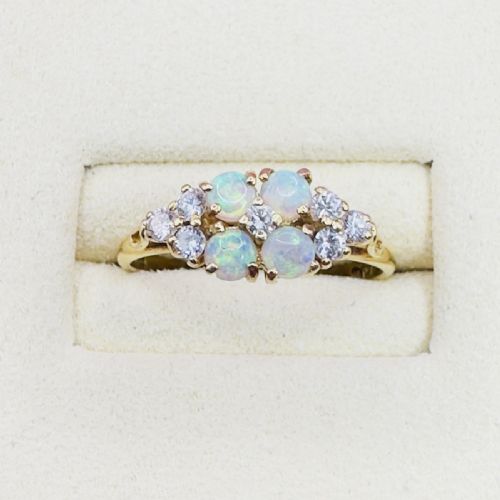
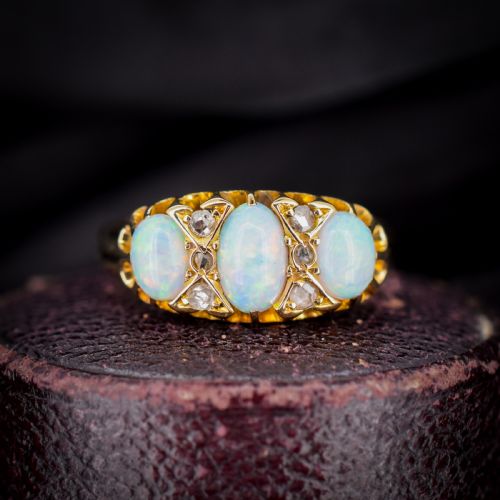
The forms vary considerably across the eras, with traditional five-stone arrangements, trilogy settings, and intricate diamond-accented clusters appearing frequently. Alongside these, buyers encounter solitaire pieces and multi-gem configurations incorporating rubies, sapphires, garnets, and emeralds.
Origins stretch from domestic British assay offices, such as Birmingham and Chester, to continental workshops. While the inventory focuses predominantly on finger rings, occasional domestic items with metal rings also surface.
How they were made
Goldsmiths utilised 18ct yellow gold, 9ct gold, 14ct gold, and platinum as the primary foundations for mounting the stones. White gold and platinum settings gained particular prominence during the Edwardian and Art Deco periods to frame diamonds alongside the central gem.
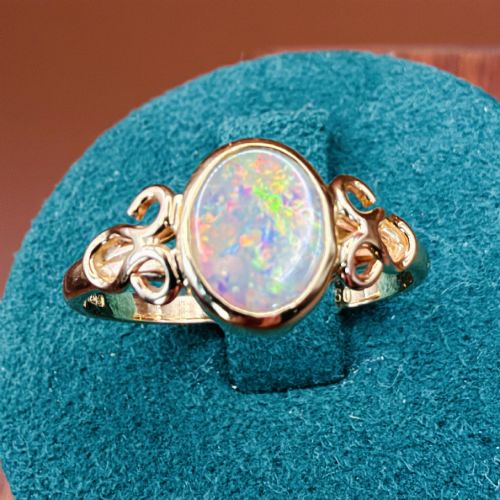
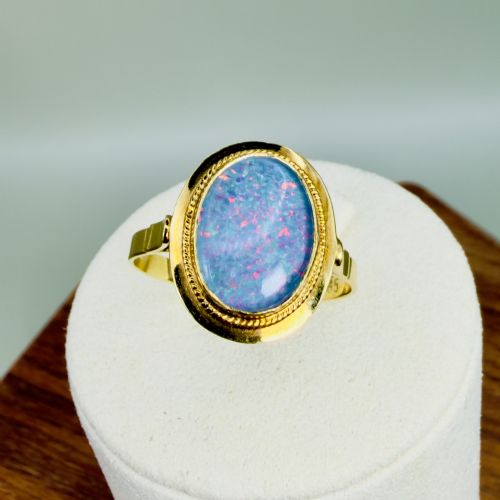
Stones are secured through various techniques, including traditional claw settings, bezel settings, and flush mountings. Opals are predominantly cut in cabochon forms to maximise the play of light across the curved surface, often paired with rose-cut or brilliant-cut diamonds.
Vintage Opal Ring Retail Price Guide 2026
Typical asking prices for vintage opal ring among the pieces listed under this phrase on Sellingantiques today, from the lower quarter to the upper quarter. They describe what is for sale here now, not the wider market.
Listings feature periods spanning from the nineteenth century through the 1960s, constructed in yellow gold, white gold, 9ct, 14ct, 18ct, and platinum.
What varies in quality
The play of colour and internal fire within the opal itself largely determines the distinction between standard and exceptional examples. Stones displaying vibrant, multi-coloured flashes across the entire surface command greater attention than those with muted or localized colour play.
The accompanying materials and structural execution also dictate worth, particularly the weight and purity of the gold or platinum, alongside the presence, size, and cut quality of supporting diamonds or coloured gemstones. Hallmark clarity and period-specific craftsmanship further elevate the standing of a piece.
The Vintage Opal Ring Glossary
- Cabochon
- A gem cut with a smooth, rounded, convex upper surface rather than faceted edges. This style is standard for opals to highlight their internal play of colour.
- Boat ring
- A ring setting shaped like an elongated boat, typically featuring a row of graduating stones. This configuration is especially common in Edwardian and late Victorian pieces.
- Cluster ring
- A central stone surrounded by a border of smaller gems, frequently diamonds. This arrangement was widely utilised across Victorian, Edwardian, and mid-century jewellery.
- Trilogy
- A ring featuring three main stones set in a row, often symbolising the past, present, and future. These frequently combine opals with side diamonds.
- Assay mark
- An official stamp indicating the metal purity and the office where a piece was tested and hallmarked. British pieces often display town marks for Birmingham or Chester.
Vintage Opal Ring: Frequently Asked Questions
How do I care for my opal ring?
Opals contain natural water content and possess a softer mineral structure than diamonds. Avoid exposing them to harsh chemicals, ultrasonic cleaners, and sudden temperature shifts.
Store the ring in a separate fabric pouch to prevent scratching from harder gemstones. Regular, gentle cleaning with a soft, damp cloth preserves the lustre of the stone.
Can I wear an antique opal ring daily?
Daily wear is possible with mindful handling, though older settings require regular inspection by a jeweller. Because opals sit lower on the Mohs hardness scale, tasks involving manual labour or heavy impacts put the stone at risk.
Selecting a bezel setting offers more protection to the edges of the opal than a high claw mount. Removing the ring during vigorous activities extends the lifespan of the mounting and the gem.
What is the difference between solid opals and doublets?
A solid opal consists of a single piece of natural opal material cut and polished to form the display face. These are prized for their depth and natural composition.
Doublets feature a thin slice of natural opal adhered to a darker backing material, such as ironstone or onyx, to enhance the apparent body colour. Examining the side profile under magnification reveals the dividing line between the layers.
How do I date an antique opal ring?
Hallmarks stamped inside the band provide the most reliable dating evidence for British pieces. Assay office symbols, maker marks, and date letters narrow the year of creation down to a specific decade or exact year.
Stylistic markers also help determine the period. Edwardian designs often lean towards delicate platinum-topped openwork, while Victorian pieces favour robust yellow gold claws and rose-cut diamond accents.