
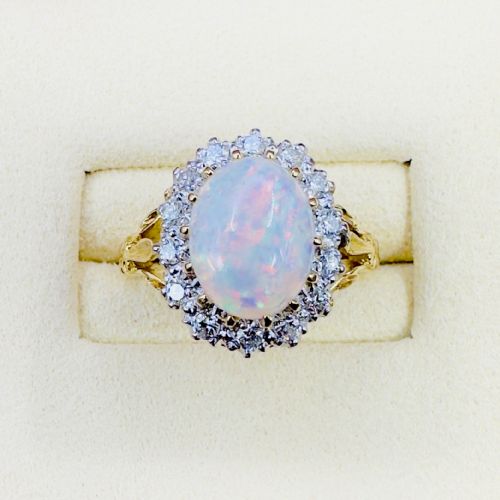
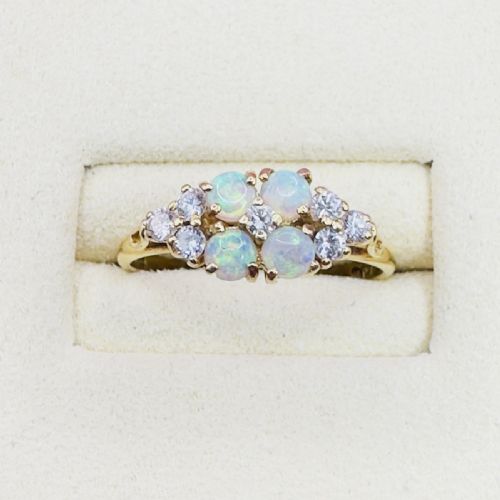

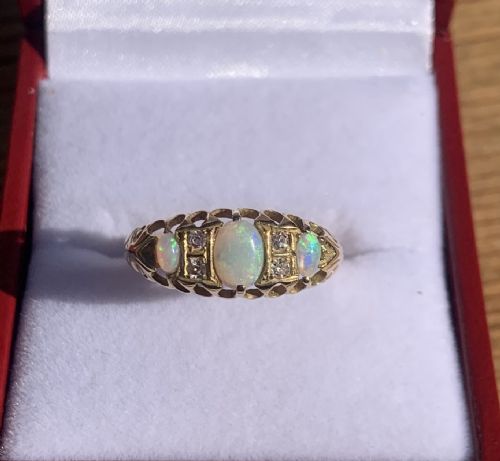


Opal Cluster Ring
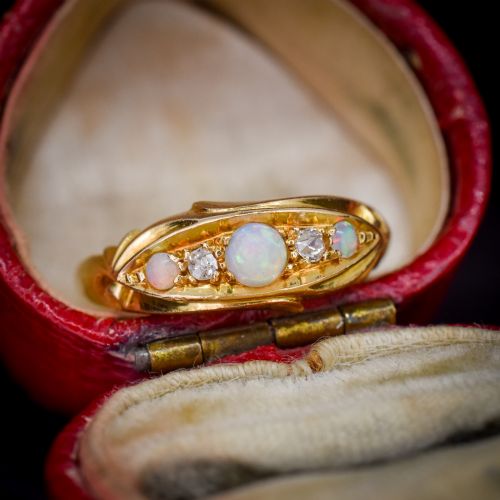
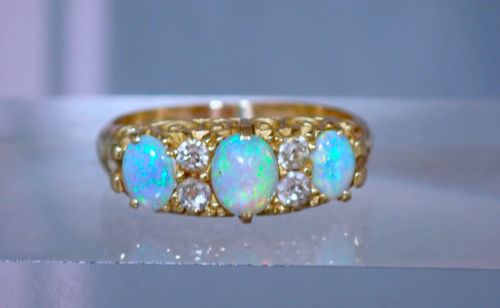
An opal cluster ring brings together iridescent fire and surrounding stones, offering a classic finger piece drawn from Edwardian, Victorian, and mid-century periods.
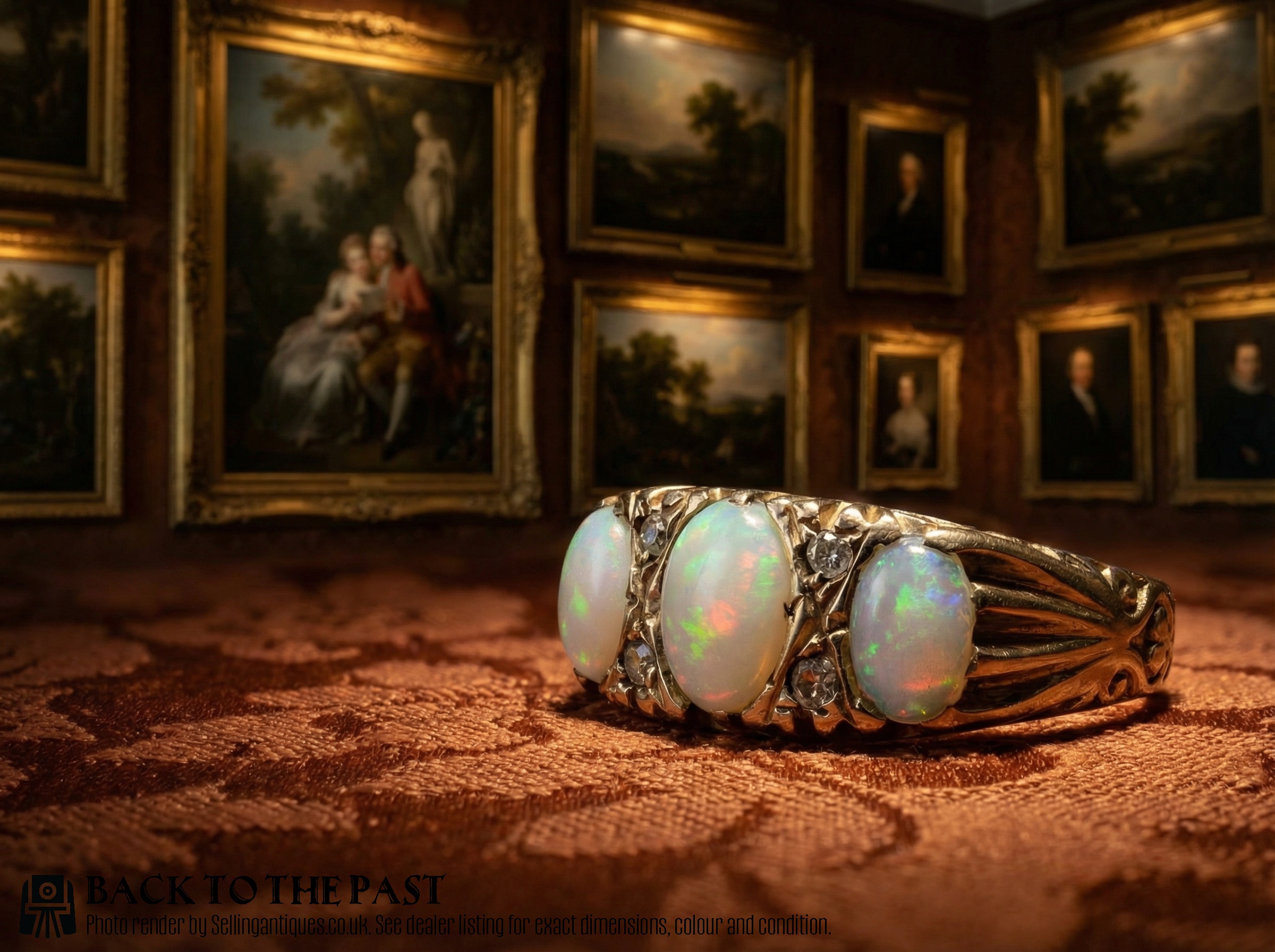
What an opal cluster ring is
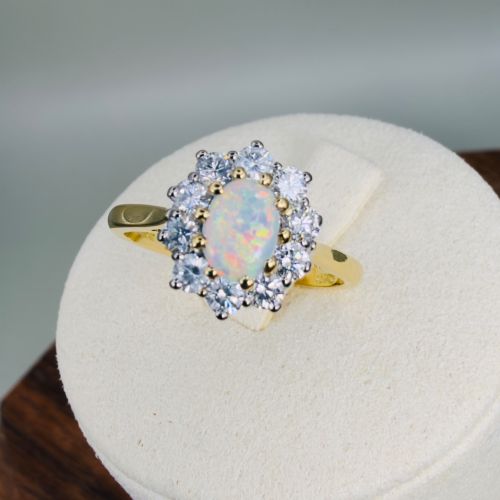
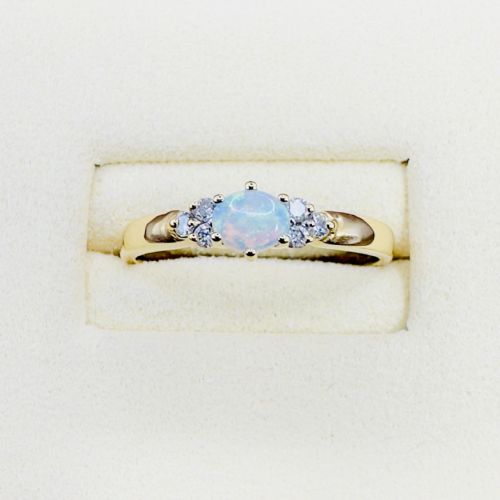
An opal cluster ring centres on a central opal surrounded by accent gems, typically diamonds, rubies, sapphires, emeralds, or garnets. These pieces appear in Edwardian, Victorian, Retro, Art Deco, and mid-century styles, capturing historic designs ranging from heart halos to marquise arrangements.
The version most commonly met on this page is mounted in either 9ct gold, 18ct gold, or platinum. Gemstone cuts span round cabochon, pear, and rose cut configurations, reflecting a tradition of cluster jewellery spanning over a century.
Buyers seek out these rings for their play of colour, where individual stones display shifting hues within yellow gold, white gold, or platinum settings. The selection includes delicate child sizes alongside bolder vintage statements.
How they were made
Goldsmiths utilised precious metals including 9ct gold, 18ct gold, and platinum to form the structural mounts for these circular, oval, and heart-shaped clusters. Metalwork ranges from simple polished bands to detailed filigree settings that secure the outer rim of smaller accent stones.
Central opals are predominantly cut as cabochons to display their internal play of colour, while surrounding diamonds and coloured gems utilise round, old cut, or rose cut facets. These stones are held closely together in claw or bezel settings to create a dense floral or geometric visual effect.
Retail Price Guide 2026
Typical UK retail prices for opal cluster ring, calculated from the Sellingantiques database of over a million retail prices indexed since 2003. This retail price guide relies exclusively on Sellingantiques data; no external sources or auction records are used, so the figures do not describe the wider market.
One surviving piece is a scaled-down Edwardian child's ring, proving that tiny fingers once sparkled with fiery cabochons too.
What varies in quality
The calibre of an opal cluster ring rests heavily on the optical liveliness of the central stone and the matching quality of the border gems. Top-tier examples display vibrant flashes of spectral colour across the cabochon face without dead spots.
Structural integrity also dictates worth, seen in the weight and purity of the gold or platinum mount and the precision of the setting work. Heavier gold shank construction and secure, flush claw work separate everyday production from finer workshop output.
The Opal Cluster Ring Glossary
- Cabochon
- A gemstone shaped and polished with a smooth, rounded surface rather than faceted. This style allows opals to exhibit their play of colour to maximum effect.
- Cluster ring
- A ring design featuring a prominent central stone encircled by a tighter group of smaller gemstones. This configuration was especially favoured during the Victorian and Edwardian eras.
- Play of colour
- The optical phenomenon where spectral colours shift and flash across an opal as the viewing angle changes. It forms the primary measure of the stone's visual appeal.
- Old cut diamond
- An early diamond cutting style characterised by a smaller table, higher crown, and open culet. These stones appear frequently in antique Edwardian and Victorian clusters.
- Filigree
- Openwork metal decoration formed from fine twisted wires soldered together in delicate patterns. This technique frequently frames the stones in Edwardian rings.
Frequently Asked Questions
How do I care for my opal cluster ring?
Opals contain natural water content and possess a softer Mohs hardness than diamonds, making them sensitive to sharp impacts, extreme temperature shifts, and harsh chemical cleaning solutions. Regular wear requires gentle cleaning with a soft, damp cloth.
Store the piece separately from harder gemstone jewellery to prevent surface scratching on the central opal or surrounding accent stones.
Are these rings suitable for daily wear?
Historic opal cluster rings can be worn daily provided they receive thoughtful care, given that opals require more protection than harder stones like diamonds or sapphires. Removing the ring during heavy manual tasks safeguards the setting and the softer central stone.
Checking the claws periodically ensures that the surrounding diamonds, rubies, or opals remain firmly secured within their gold or platinum mounts.
What does a halo setting mean?
A halo setting arranges a continuous ring of smaller accent stones, such as diamonds or white spinels, directly around the larger central opal. This arrangement enhances the perceived scale and brilliance of the overall cluster.
Victorian and Edwardian jewellers frequently utilised this method to create distinct floral or geometric silhouettes upon the finger.