



18ct Opal Diamond Ring
An 18ct opal diamond ring brings together the play of colour in natural opal with the bright flash of cut diamonds in solid gold.
18ct Opal Diamond Ring
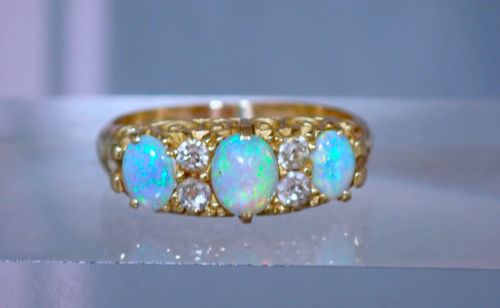
An 18ct opal diamond ring bridges late nineteenth-century craftsmanship and mid-century design, offering buyers a choice of distinct historical periods. The most common survivors on this page date from the Victorian and Edwardian eras, alongside later pieces from the nineteen-fifties and nineteen-sixties.
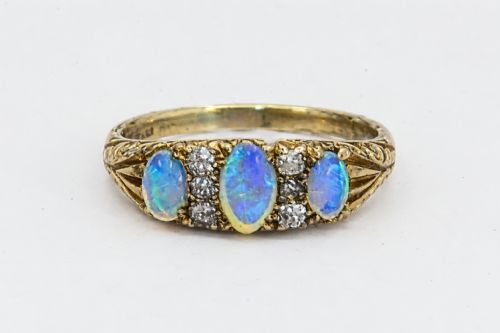
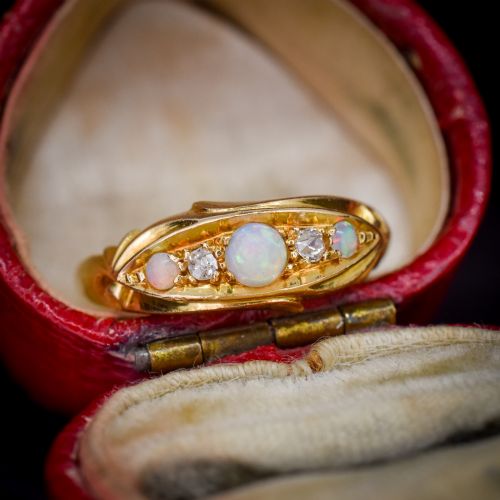
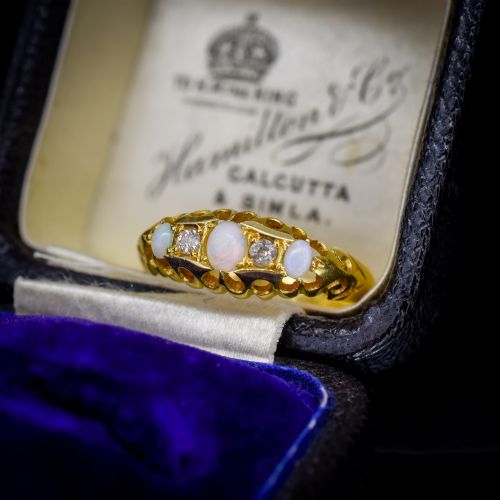
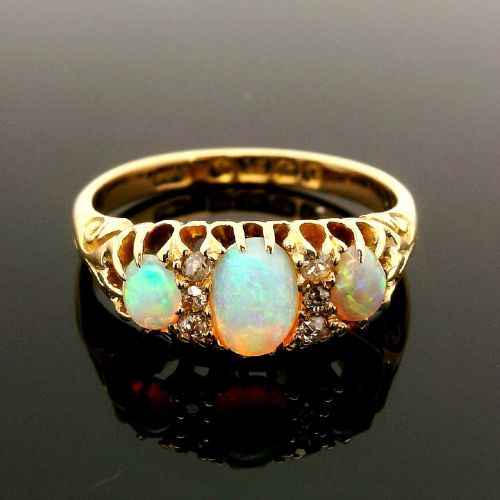
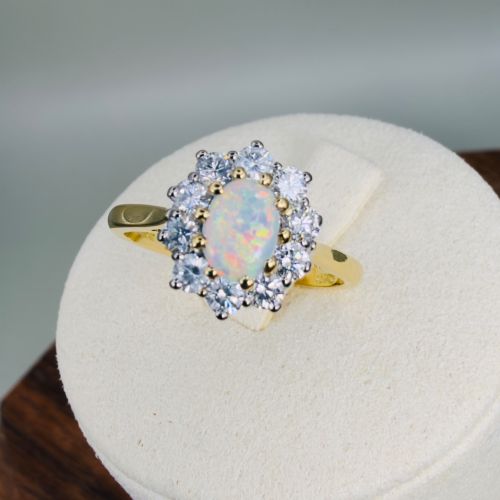
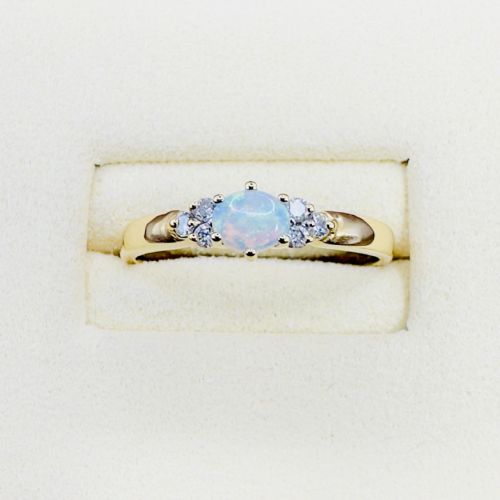
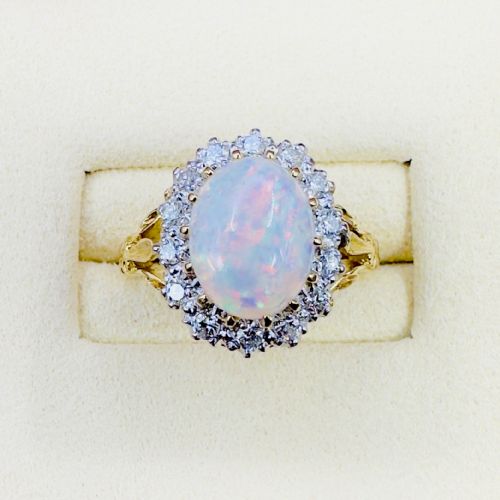
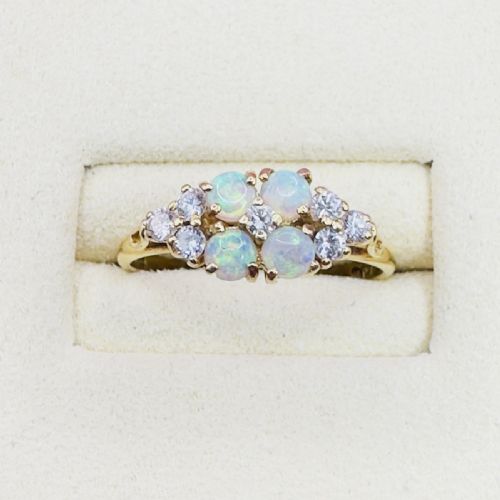
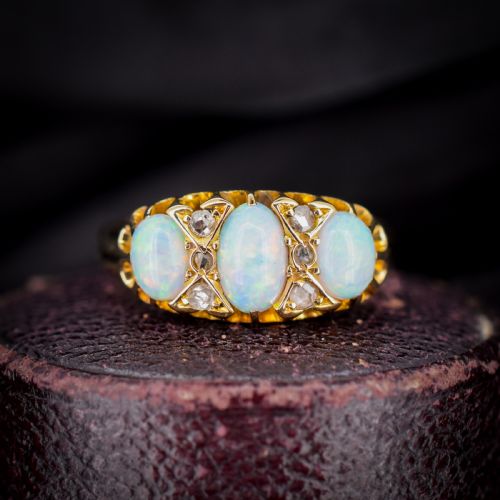
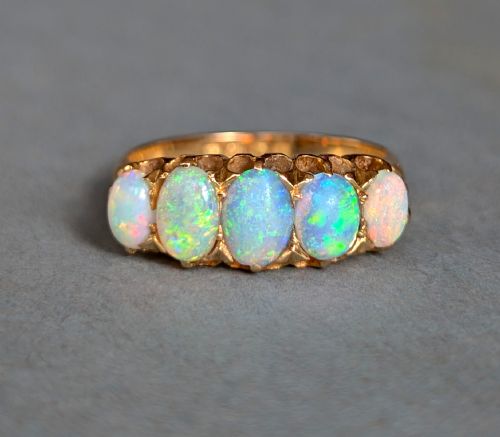
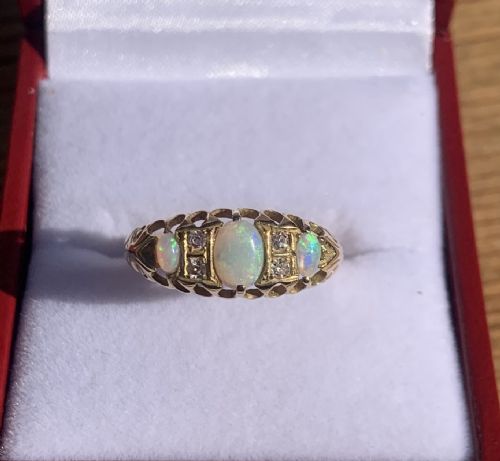
Makers set these stones in several traditional formats, most notably the boat ring, the cluster, the trilogy and the five-stone band. These configurations showcase the central cabochon opal flanked or framed by smaller diamonds, often mounted on yellow or white gold.
Occasional variations include platinum settings from the Edwardian and Art Deco periods, plus multi-gem arrangements featuring emeralds, rubies or bloodstone alongside the primary opal and diamonds.
How they were made
Goldsmiths worked primarily with 18ct yellow or white gold, occasionally combining the metal with platinum during the Edwardian and Art Deco periods to create secure, fine settings for small stones. Hallmarks stamped into the shanks frequently record British assay office marks from towns such as Birmingham and Chester.
The opals are almost exclusively cut as cabochons to display their internal play of colour, secured within claw or bezel settings alongside old-cut or round-cut diamonds. Jewelers arranged these gems by hand, balancing the milky or dark body of the opal against the clean facets of the diamonds.
Materials span 18ct yellow gold, 18ct white gold, and platinum, paired with natural opals, diamonds, and occasional rubies or bloodstones.
What varies in quality
The intensity and spread of the play of colour across the opal surface dictate much of the visual merit of the piece. Stones displaying vibrant flashes of green, red and blue across the entire cabochon elevate the standard of the ring above those with muted or flat appearance.
The weight, cut and matching of the diamonds also separate standard examples from finer specimens. Well-matched old-cut diamonds with clean facets and secure, undamaged gold or platinum claw work indicate superior workshop execution.
The 18ct Opal Diamond Ring Glossary
- Cabochon
- A gemstone shaped and polished with a smooth, rounded dome rather than faceted edges. This cut is standard for opals to display their internal play of colour.
- Boat ring
- A ring setting featuring a curved, boat-like silhouette that tapers towards the shoulders. This form was especially popular during the Edwardian period.
- Trilogy ring
- A ring featuring three principal stones set in a row, traditionally symbolising the past, present and future. In these pieces, an opal typically sits between two diamonds.
- Old-cut diamond
- A vintage diamond cut characterised by a small table, high crown and open culet, hand-faceted before modern machine precision. These stones appear frequently in Victorian and Edwardian mounts.
- Play of colour
- The optical phenomenon where spectral colours shift and flash across the surface of an opal as the viewing angle changes. It arises from the interference and diffraction of light within the stone's internal silica spheres.
18ct Opal Diamond Ring: Frequently Asked Questions
How do I care for an opal ring?
Opals contain water within their structure and score lower on the Mohs hardness scale than diamonds. Avoid exposure to harsh chemicals, ultrasonic cleaners and sudden temperature changes to protect the stone.
Remove the ring when engaging in manual work or sports to prevent scratching the gold band and damaging the cabochon surface.
What periods do these rings represent?
The selections span from the late nineteenth century through the Edwardian era and Art Deco years into the mid-twentieth century. Victorian and Edwardian examples make up a large portion of the available pieces.
Later items from the nineteen-fifties and nineteen-sixties offer different cluster and twist designs while maintaining the 18ct gold standard.
Are the opals natural?
The listings consist of natural solid opals mined during the nineteenth and twentieth centuries. These stones display organic variations in body colour and play of light.
Examining the stone under magnification reveals natural growth patterns and inclusions that distinguish them from synthetic alternatives.
Can these rings be resized?
Most 18ct gold bands can be adjusted by a skilled jeweller, though the presence of shoulders, delicate basket settings or adjacent side stones requires care. It is wise to consult a professional who can assess the shank thickness near the hallmark.
Resizing vintage platinum-topped or heavily engraved bands needs specialist attention to preserve the integrity of the original metalwork.