
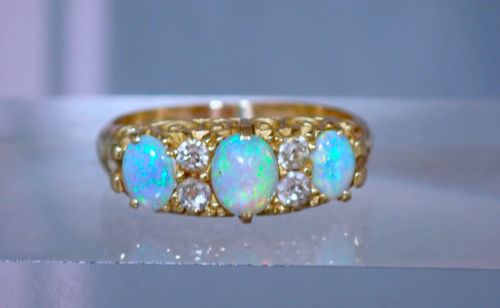
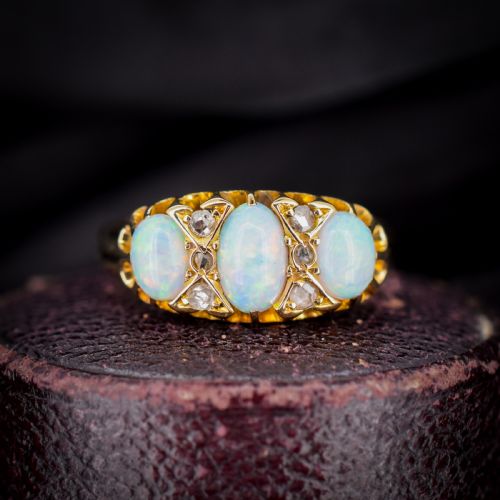
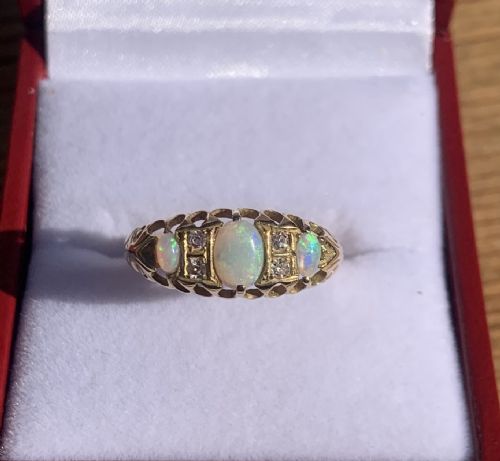


Opal Trilogy Ring
An opal trilogy ring gathers three shimmering stones upon the finger, offering a classic arrangement of colour that collectors prize for its quiet brilliance.
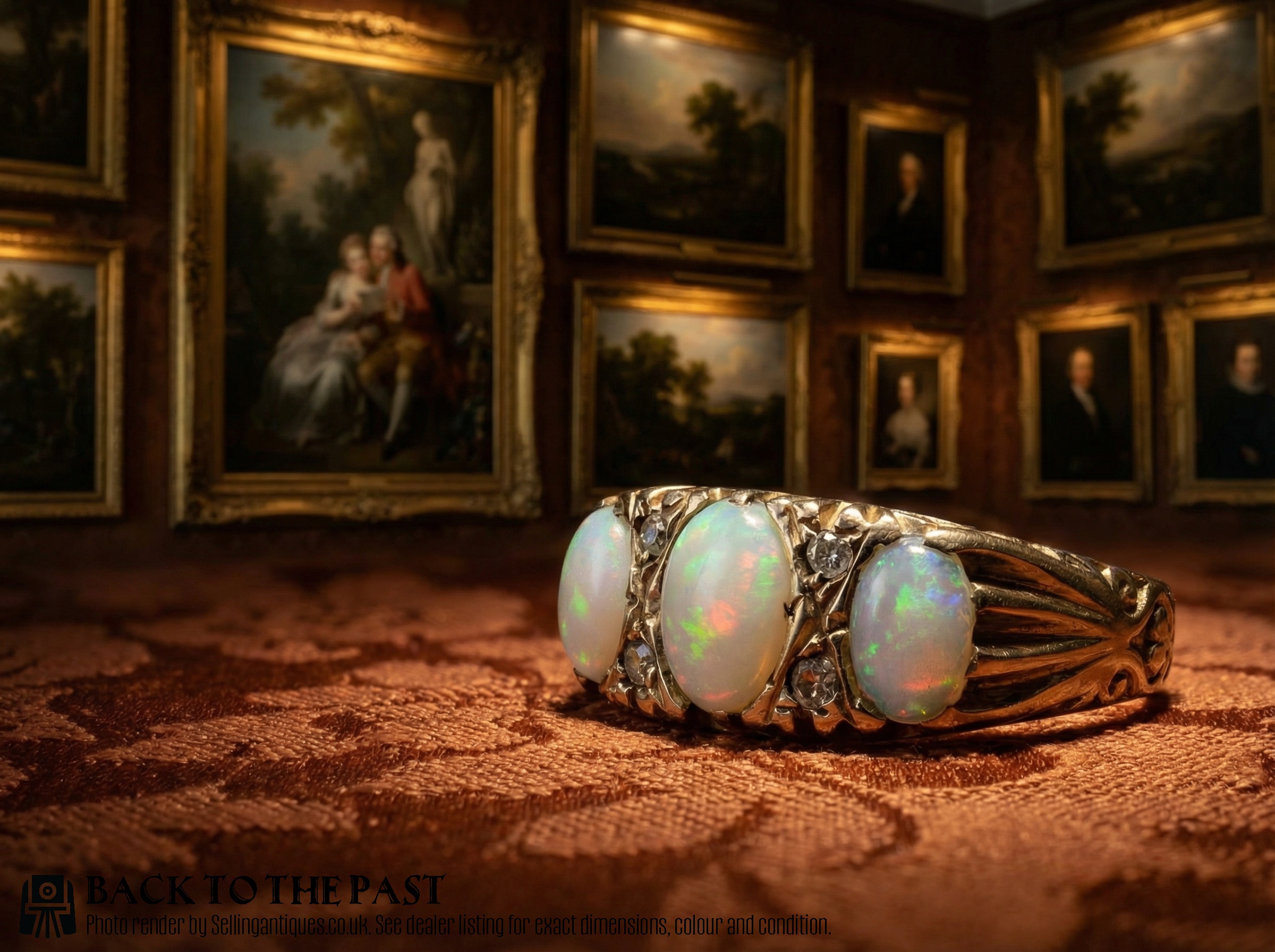
Opal Trilogy Ring
The most common form on this page pairs a central opal with flanking diamonds, mounted in either yellow gold, white gold, or platinum. The traditional layout places the largest gem in the centre, flanked by two smaller matched stones.
Makers fashioned these rings during distinct decorative phases, ranging from ornate Victorian scrollwork to cleaner mid-century lines. Buyers encounter pieces hallmarked across various years, including specific dates from the early twentieth century.
How they were made
Goldsmiths utilised eighteen-carat yellow gold, eighteen-carat white gold, nine-carat gold, and platinum to form the bands and settings of an opal trilogy ring. Precious metals were cast and hand-finished to hold each gemstone securely.
Craftsmenship involved setting natural opals alongside old-cut diamonds or sapphires using traditional claw or secure bezel techniques. Ornate filigree and engraved details often embellished the shoulders and galleries of nineteenth-century and Edwardian examples.
Opal Trilogy Ring Retail Price Guide 2026
Typical asking prices for opal trilogy ring among the pieces listed under this phrase on Sellingantiques today, from the lower quarter to the upper quarter. They describe what is for sale here now, not the wider market.
The archive includes fire opals alongside traditional white opals paired with old-cut diamonds and sapphires.
What varies in quality
Quality rests primarily on the optical performance of the opal and the cut of its companion stones. Stones displaying a vibrant play-of-colour across the entire surface elevate a piece above those with muted or dead patches.
The integrity of the metalwork and the preservation of original old-cut diamonds also dictate distinction. Pieces retaining crisp hallmarking and unblemished settings demonstrate superior heritage.
The Opal Trilogy Ring Glossary
- Trilogy ring
- A ring set with three stones in a horizontal line, symbolising the past, present, and future. This layout is typical for engagement and anniversary jewellery.
- Play-of-colour
- The optical phenomenon where internal flashes of spectral colours shift as the opal moves under the light. High-grade opals exhibit vivid reds, greens, and blues.
- Old-cut diamond
- A diamond cut by hand before modern machinery standardised proportions, characterised by a smaller table, higher crown, and open culet. These stones possess a softer, candlelit sparkle.
- Hallmark
- A stamp or series of marks applied to precious metals indicating purity, origin, and assay office. These stamps help date antique pieces accurately.
Opal Trilogy Ring: Frequently Asked Questions
What is an opal trilogy ring?
An opal trilogy ring is a finger ornament featuring three stones set in a row, typically combining central opals with flanking diamonds or sapphires. The design brings together different gems to create a balanced composition of colour and light.
Such pieces date from the Victorian and Edwardian eras through to the mid-twentieth century and later. They remain popular choices for alternative engagement rings or commemorative jewellery.
How do I care for my ring?
Opals contain natural water content and require gentle handling to preserve their structural integrity. Avoid exposing them to harsh chemicals, ultrasonic cleaners, or sudden extreme temperature changes.
Clean the metal and stones gently with a soft damp cloth rather than soaking the piece. Store the ring separately in a fabric-lined box to prevent scratching from harder gems.
Are these rings suitable for daily wear?
Opals are softer than diamonds, rating lower on the Mohs scale of mineral hardness. Daily wear requires mindfulness to prevent knocks, scratches, or exposure to abrasives.
Many owners reserve older or delicate antique pieces for special occasions rather than heavy daily tasks. Choosing a secure setting style helps protect the stones during regular use.
How do I identify the period?
Dating relies on examining the metal purity marks, the style of the setting, and the cutting technique of the diamonds. Victorian and Edwardian examples often feature ornate yellow gold galleries and hand-cut stones.
Later mid-century pieces tend towards cleaner architectural lines or alternative gold carats. Hallmarks stamped inside the band provide definitive clues to the year and assay office of manufacture.