





Edwardian Trilogy Ring
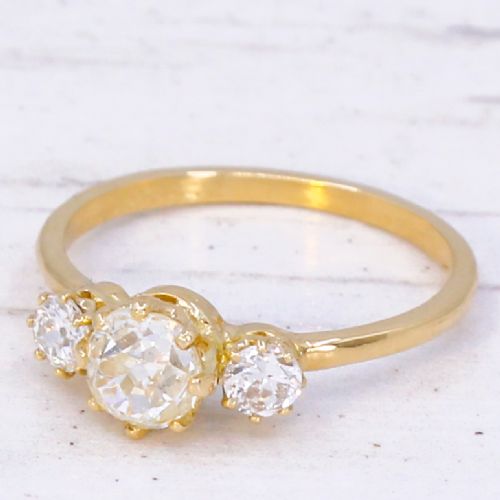
An edwardian trilogy ring brings together three stones symbolising past, present and future in distinctive period mountings.
Edwardian Trilogy Ring
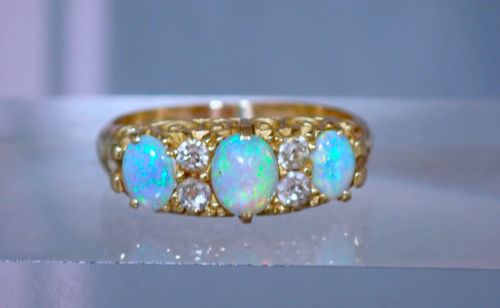
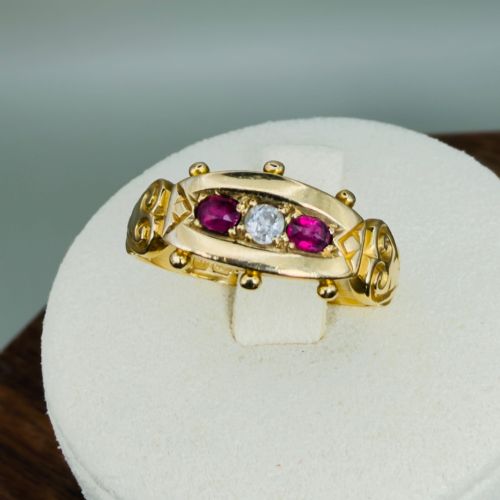
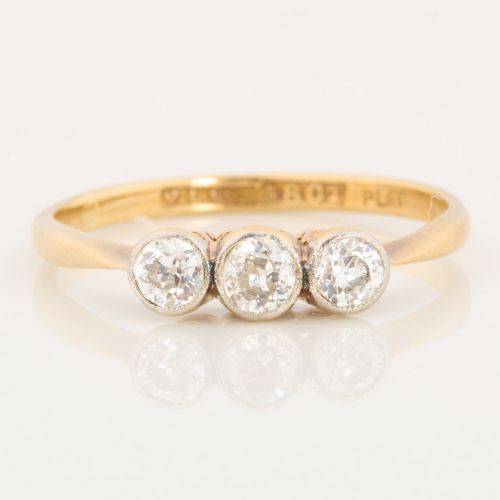
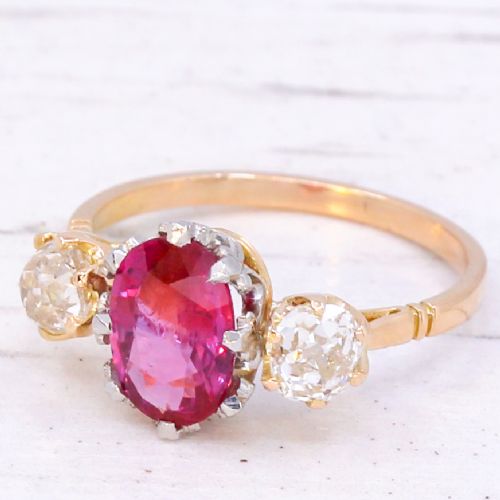
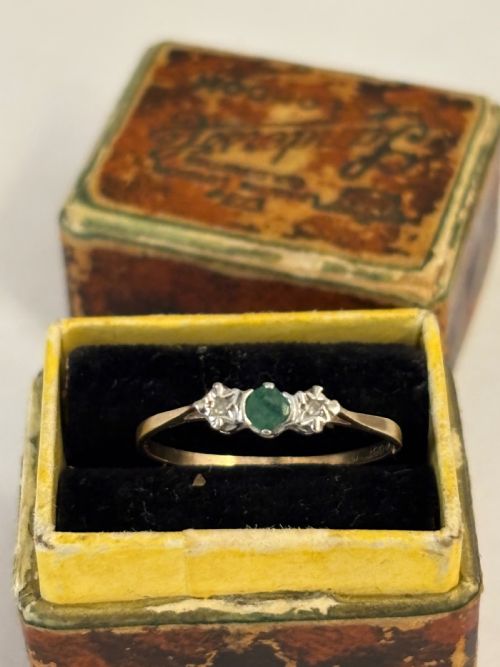
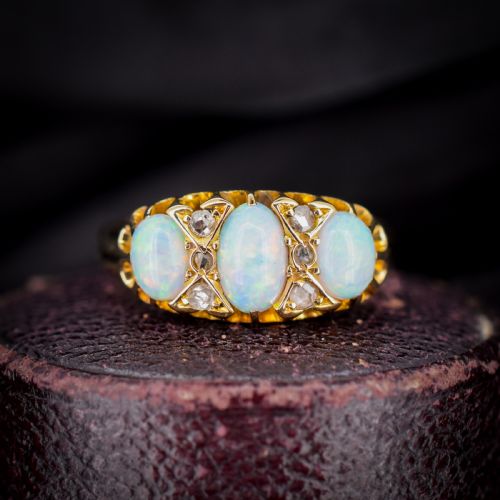
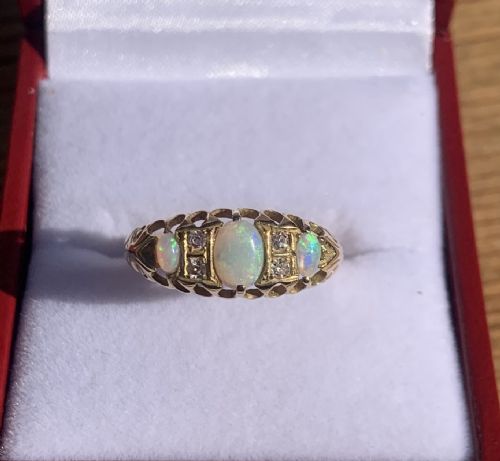
The versions most commonly met combine old cut diamonds with coloured gemstones such as rubies, sapphires, emeralds, opals or pearls. They appear frequently in configurations pairing central diamonds with ruby or sapphire shoulders, or entirely in diamond clusters.
Materials and construction
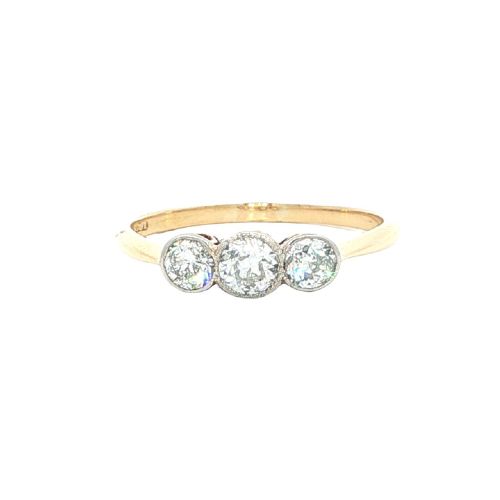
The physical build relies on 18ct gold and platinum, often pairing a yellow gold shank with platinum settings on the stone face to throw the brilliance of the diamonds into relief. French workshops and English assay offices both contributed to the output recorded in the archive.
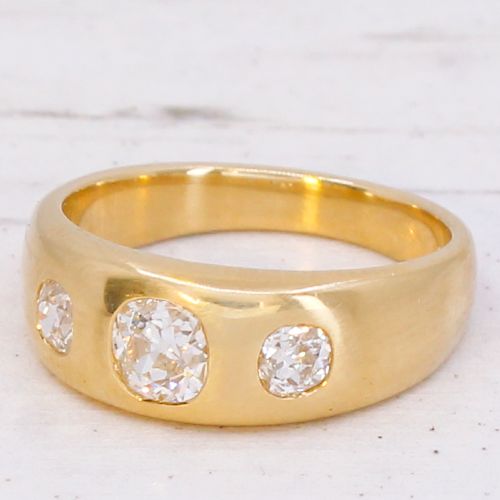
Gems are predominantly old European cut or old cut diamonds, alongside natural rubies, cabochon rubies, sapphires, emeralds, opals and pearls. Settings take the form of standard claw arrangements, gypsy mounts flush to the band, and cross-over or twist styles.
Edwardian Trilogy Ring Retail Price Guide 2026
Typical asking prices for edwardian trilogy ring among the pieces listed under this phrase on Sellingantiques today, from the lower quarter to the upper quarter. They describe what is for sale here now, not the wider market.
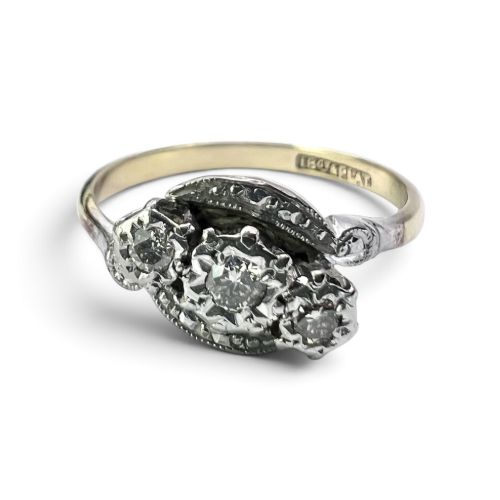
Several rings feature a twist design where the metal bands appear to embrace the stones like friendly arms.
Judging quality and character
Quality rests upon the matching and proportion of the three principal stones, where uniform scale and balanced colour distribution elevate a piece. The presence of certified natural coloured stones alongside crisp old cut diamonds separates standard examples from exceptional ones.
Execution of the metalwork, whether in delicate platinum claw settings or smooth gypsy bands, defines the standard of craftsmanship. Hallmarks indicating assay towns such as Chester or Birmingham also add tangible verification to the origin of the 18ct gold.
The Edwardian Trilogy Ring Glossary
- Trilogy ring
- A ring set with three stones, traditionally representing the past, present and future.
- Old cut
- A vintage diamond cutting style with a small table, high crown and open culet, designed to catch candlelight.
- Gypsy ring
- A style where stones are flush-set directly into the thick metal band rather than held in raised claws.
- Cabochon
- A gemstone cut with a smooth, rounded, convex top rather than faceted planes.
- Platinum
- A dense, white precious metal frequently utilised in Edwardian settings to secure stones securely with minimal bulk.
Edwardian Trilogy Ring: Frequently Asked Questions
What do the three stones mean?
The three stones symbolise the past, the present and the future in traditional jewellery symbolism. This design was frequently chosen for engagement rings during the Edwardian era.
Over time, the configuration adapted to include alternating diamonds and coloured gems like rubies, sapphires or emeralds.
How do I care for an opal trilogy ring?
Opals contain natural water content and require gentle handling to avoid sudden temperature shocks and harsh impacts. Store them separately from harder gemstones like diamonds to prevent scratching.
Clean them with a soft damp cloth rather than ultrasonic jewellery cleaners or harsh chemical solutions.
Are these rings suitable for daily wear?
Many examples utilise sturdy 18ct gold bands and secure platinum settings suited to regular wear. However, softer stones like opals or pearls demand greater caution than all-diamond configurations.
Checking the claws periodically with a jeweller helps ensure the stones remain firmly anchored in their mountings.
How can I tell an Edwardian ring from later periods?
Edwardian pieces display characteristic hand-cut diamonds such as old European cuts, paired with delicate platinum work over yellow gold. The proportions tend towards lightness and intricate gallery wirework.
Assay marks and hallmarks stamped inside the 18ct gold shanks often provide precise date letters corresponding to the early 1900s.