






18ct Gold Gypsy Ring
An 18ct gold gypsy ring brings together flush-set stones and heavy yellow gold for a smooth, low-profile band.

18ct Gold Gypsy Ring
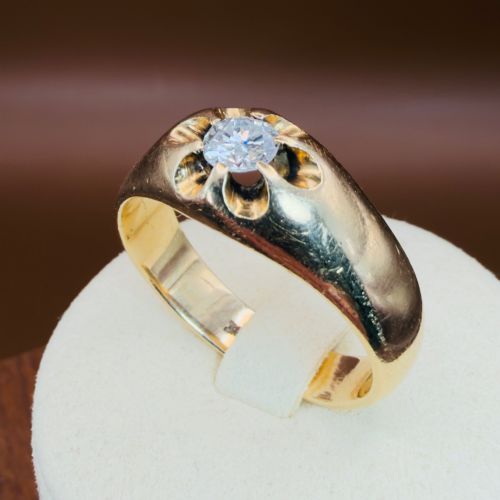
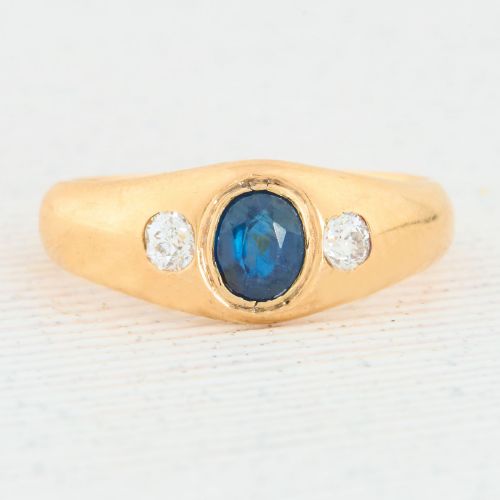
An 18ct gold gypsy ring is defined by its flush mounting, where gemstones sit level with the heavy metal surface rather than in raised claws. This specific construction creates a smooth, rounded profile that tapers towards the back of the band. When exploring this selection, buyers frequently encounter Victorian and Edwardian examples alongside later mid-century pieces.
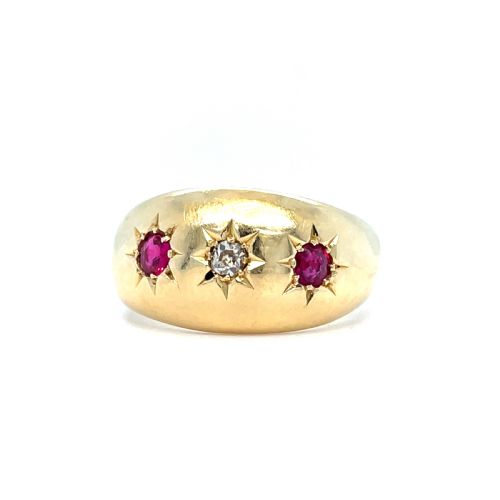
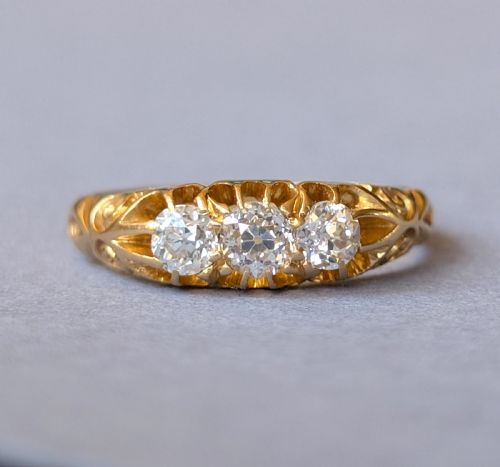
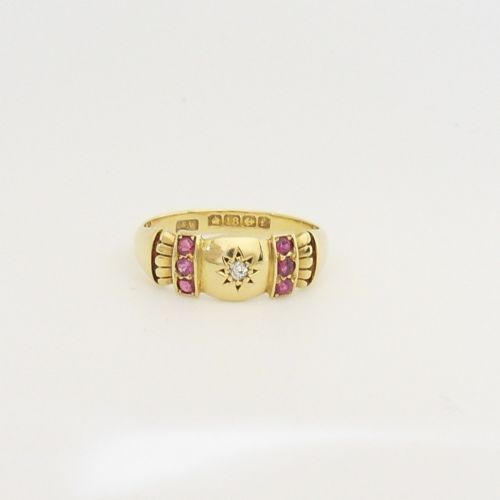
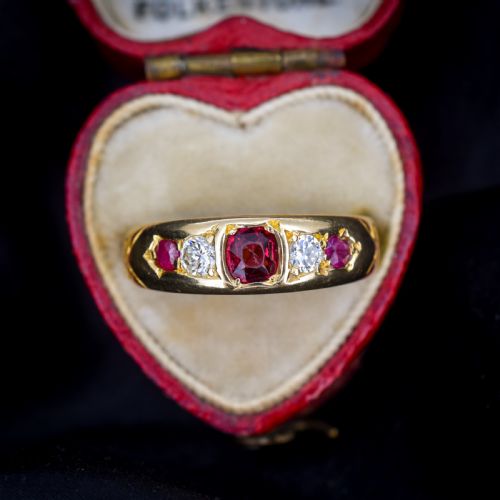
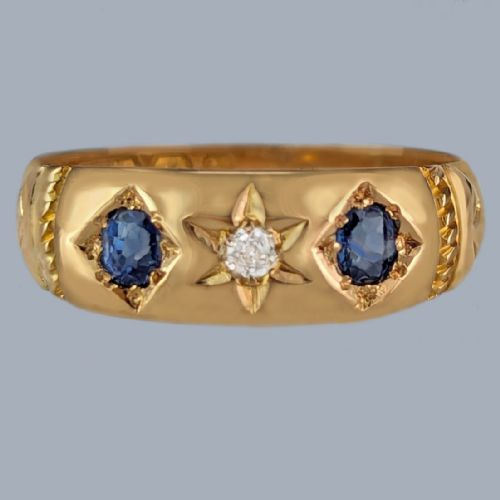
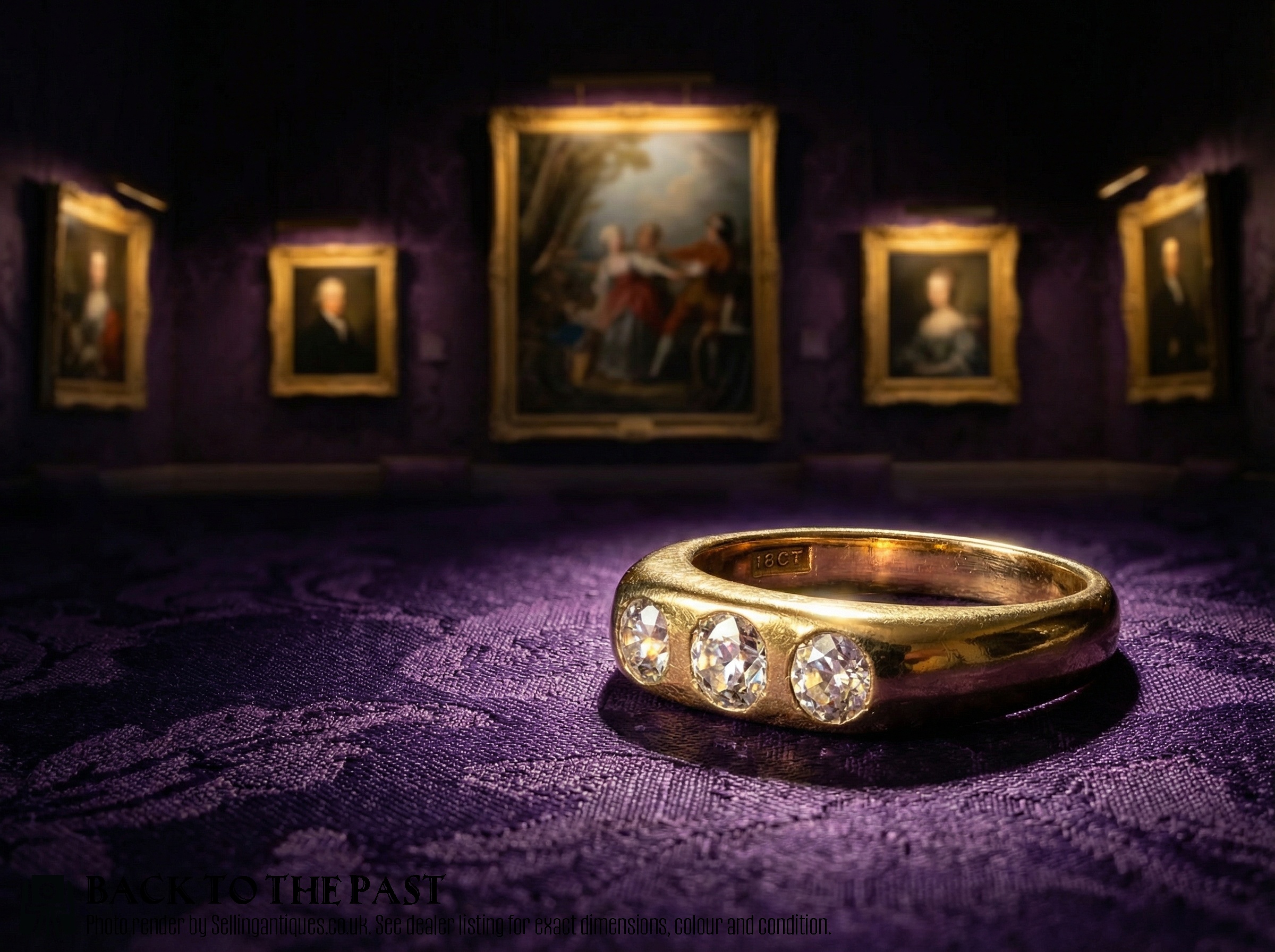
The stones are typically set directly into thick 18ct yellow gold, often arranged as a solitary diamond, a trilogy, or a cluster surrounded by starburst or celestial engravings. Common gem combinations include diamonds paired with rubies, sapphires, emeralds, turquoise, or garnets. These configurations range from simple single-stone bands to multi-stone arrangements set across the finger.
Materials and construction
The foundation of these pieces is robust 18ct yellow gold, selected for its rich colour and durability in heavy bands. Goldsmiths shaped the metal to create a seamless transition between the thick shank and the flush-set stones.
Gemstones, particularly old-cut diamonds, rubies, and sapphires, were secured directly into holes punched or drilled into the gold. The surrounding metal was then pushed over the girdle of the stone or hand-tooled into starburst and boat-shaped settings to hold the gems firmly in place.
18ct Gold Gypsy Ring Retail Price Guide 2026
Typical asking prices for 18ct gold gypsy ring among the pieces listed under this phrase on Sellingantiques today, from the lower quarter to the upper quarter. They describe what is for sale here now, not the wider market.
Listings feature 18ct yellow gold rings spanning the Victorian, Edwardian, and mid-century periods, incorporating diamonds, sapphires, rubies, and turquoise.
Factors that distinguish individual pieces
Quality in these bands relates closely to the weight of the 18ct gold and the crispness of any hand-engraved starburst or celestial motifs. Heavier examples retain structural integrity and thick shanks that resist thinning from decades of wear.
The selection and cut of the gemstones also divide standard examples from finer ones. Old-cut diamonds with lively facets and well-matched rubies, sapphires, or emeralds elevate the overall standard of the mounting.
The 18ct Gold Gypsy Ring Glossary
- Gypsy setting
- A mounting style where gemstones are flush-set into the thick band of the ring so the surface remains smooth. This technique protects the girdle of the stone within the surrounding metal.
- Old-cut diamond
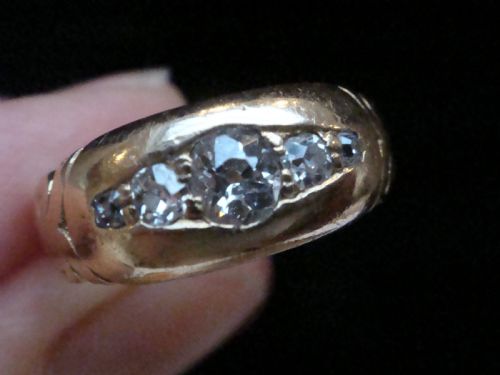
- A diamond cut by hand during the Victorian or Edwardian periods, featuring a smaller table, higher crown, and open culet. These stones display broader, softer flashes of light than modern brilliant cuts.
- Trilogy ring
- A ring featuring three stones set side by side across the finger. In this collection, they frequently combine central diamonds with flanking rubies or sapphires.
- Starburst engraving
- Hand-chased star patterns radiating outwards from a flush-set gemstone into the surrounding gold. This decoration accentuates the stone and creates visual width on the band.
- Belcher setting
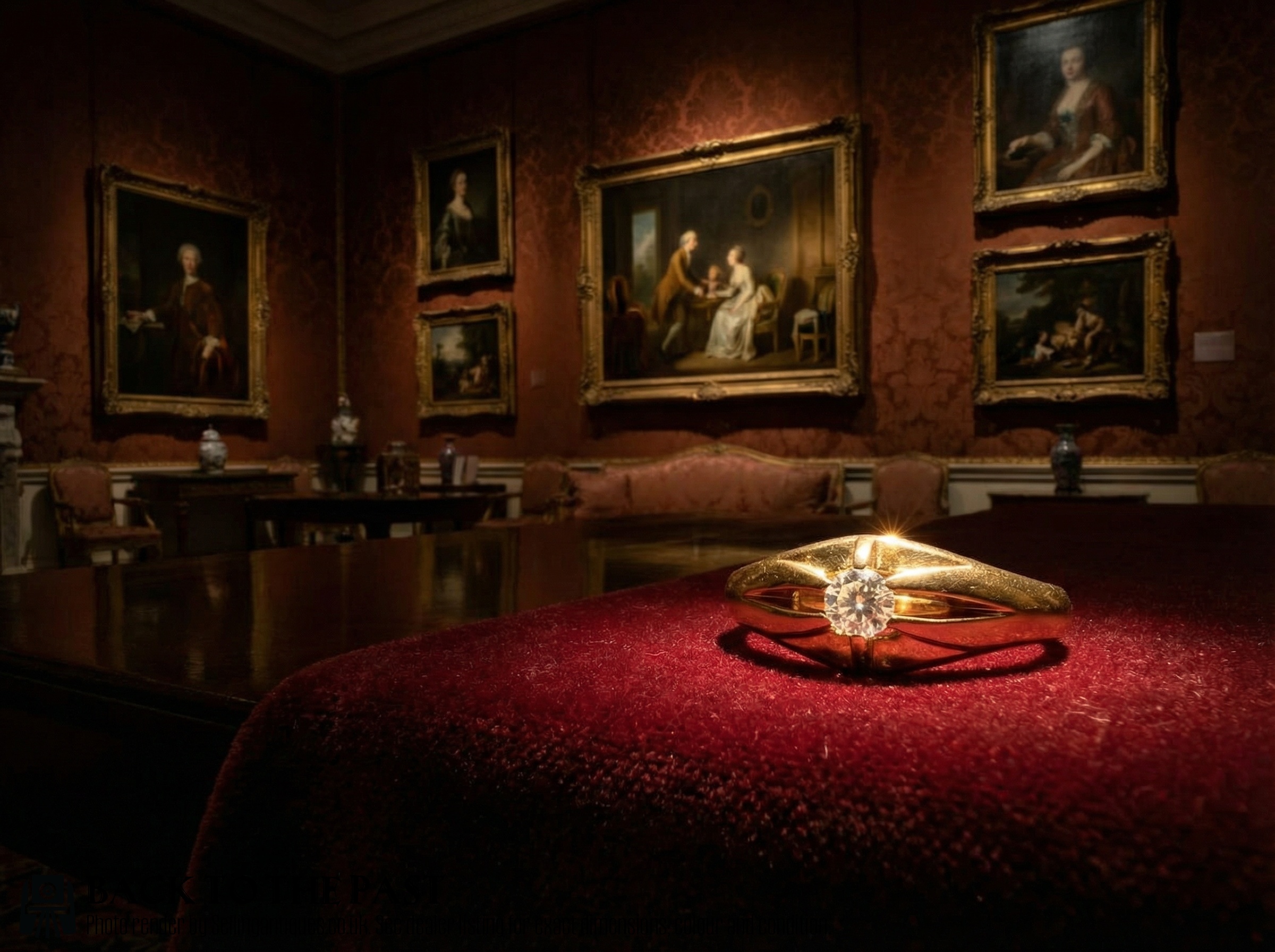
- A specific type of projection or raised collet integrated into a smooth band, holding a stone securely above the shank. It shares the smooth silhouette typical of heavier gold rings.
18ct Gold Gypsy Ring: Frequently Asked Questions
What is an 18ct gold gypsy ring?
An 18ct gold gypsy ring is a solid band of high-carat yellow gold featuring stones that are set flush into the metal rather than held in raised claws. This design creates a smooth, continuous profile around the finger.
Originally popular in the late nineteenth and early twentieth centuries, these bands frequently incorporate old-cut diamonds, sapphires, rubies, or turquoise, sometimes decorated with hand-engraved starburst motifs.
How do I tell Victorian from Edwardian pieces?
Victorian examples generally date from the nineteenth century and often feature heavy gold bands with deep starburst engravings around the stones. They lean towards rich combinations of rubies, sapphires, and old-cut diamonds.
Edwardian pieces, made after nineteen hundred, often showcase lighter or more ornate yellow gold bands, alongside celestial diamond settings and trilogy arrangements. Hallmarks stamped inside the shank can also help confirm the exact assay office and date of manufacture.
Are these rings suitable for daily wear?
The flush-set construction makes these bands remarkably practical for everyday use because the gemstones do not catch on clothing or surfaces. The thick 18ct gold shank provides the structural strength needed for regular wear.
Buyers should ensure the gold band retains adequate thickness around the back and that the metal holding the stones remains secure before wearing them daily.
What stones are typically found in these bands?
Old-cut diamonds are the most frequent choice, appearing either as single solitaires or alongside other gems. Sapphires, rubies, and emeralds are also common.
Less frequently, pieces feature turquoise, garnets, or pearls set into the gold band, often arranged in multi-stone configurations or alternating coloured gemstone patterns.