

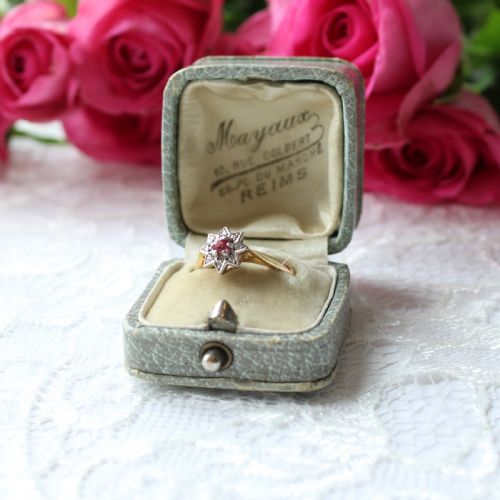
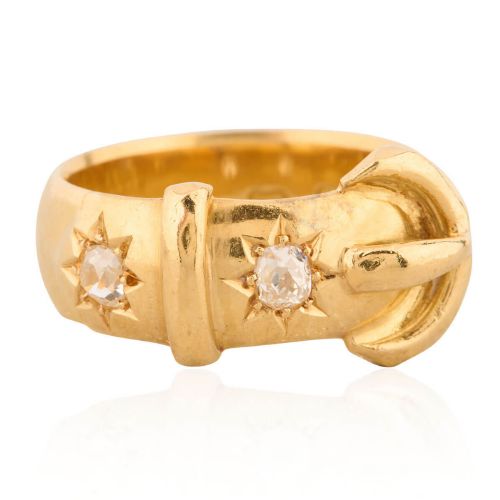


Victorian Star Set Ring
A victorian star set ring brings together deep gold and flush stones, offering an understated silhouette that sits close to the hand.

Victorian Star Set Ring
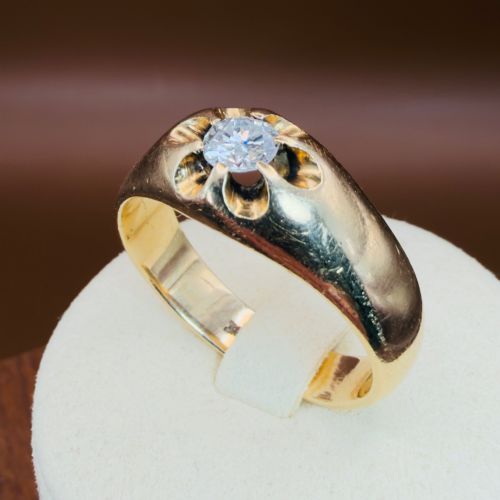
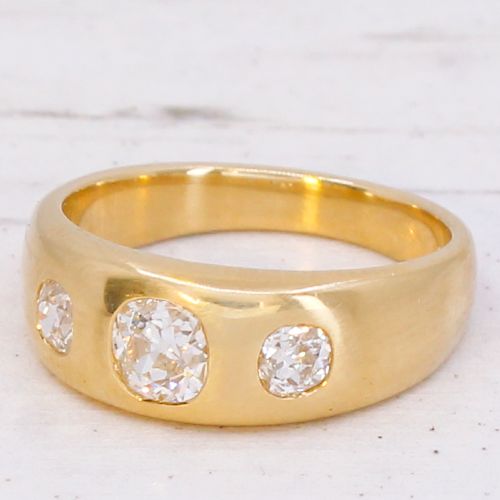
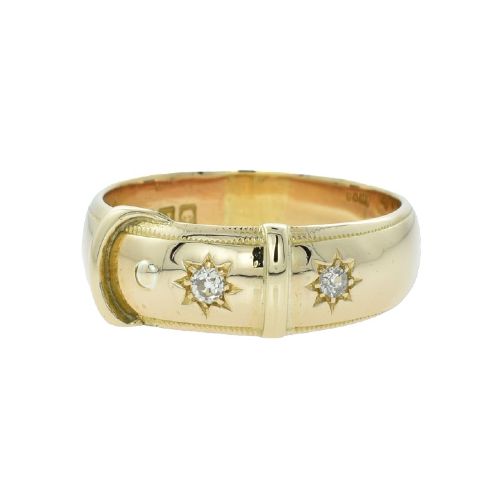
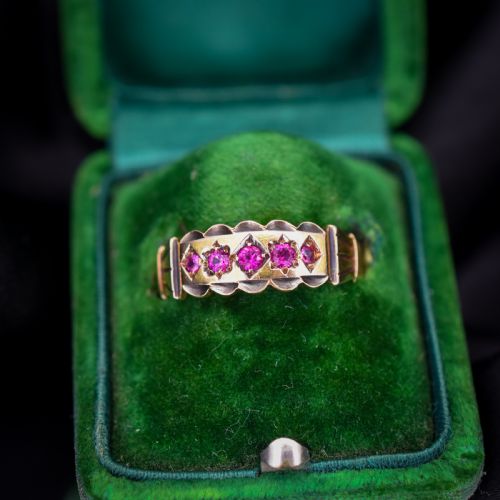
A victorian star set ring is defined by gemstones set flush into the metal surface, surrounded by hand-engraved starburst rays that catch the light. Most examples encountered here hail from the nineteenth century, often appearing as heavy gypsy bands or low-profile dress rings.
The form prioritises daily wear, keeping the stones level with the surrounding gold rather than lifting them in high claws. These pieces range from simple single-stone solitaires to multi-stone arrangements incorporating rubies, sapphires, pearls, and diamonds.
Makers of the period integrated celestial motifs deeply into their work, reflecting a Victorian fascination with astronomy and symbolic jewellery. Such rings emerge in both yellow gold and occasionally higher karat weights, sometimes bearing hallmarks from British assay offices like Chester and Birmingham.

Materials and Construction
Goldsmiths worked primarily in eighteen-carat and nine-carat yellow gold, shaping thick bands capable of securely holding flush-mounted gems. The metal surrounding each stone was pushed over the girdle and hand-graved with sharp triangular facets to form the characteristic star pattern.
Stones selected for these settings were typically old-cut diamonds, rubies, and sapphires, chosen for their ability to sit flat within the heavy gold channel or gypsy mounting. Additional decorative elements such as black onyx, enamel, and seed pearls appear alongside precious gems in specific mourning and multi-stone designs.
Victorian Star Set Ring Retail Price Guide 2026
Typical asking prices for victorian star set ring among the pieces listed under this phrase on Sellingantiques today, from the lower quarter to the upper quarter. They describe what is for sale here now, not the wider market.
The site's inventory spans nineteenth-century Victorian pieces through Edwardian examples, utilising yellow gold alongside diamonds, rubies, sapphires, and pearls.
Distinctions in Quality
Quality rests upon the crispness of the hand-engraved starburst rays and the weight of the gold band itself. Superior examples maintain deep, precise incisions that retain their sharpness despite decades of wear on the hand.
The selection and alignment of the flush-set stones also dictate the tier of the piece. Better rings utilise well-matched old-cut diamonds or vibrant rubies and sapphires that sit perfectly flush with the surrounding metal surface without awkward gaps.
The Victorian Star Set Ring Glossary
- Star set
- A gemstone mounted flush into the metal with hand-engraved radiating lines forming a star shape around it. This technique protects the girdle of the stone while adding decorative brilliance.
- Gypsy ring
- A band style where the metal is thickest in the centre and tapers toward the back, with stones embedded directly into the surface. It gained immense popularity during the late nineteenth century for both men and women.
- Old cut
- A diamond facet style hand-polished before modern brilliant-cut standards were established, typically featuring a smaller table, higher crown, and open culet. These stones display a softer, chunkier light return under candlelight.
- Hallmark
- An official stamp struck into precious metal indicating the purity, origin year, and assay office. British pieces often display these marks inside the shank.
- Trilogy ring
- A ring set with three stones, frequently representing the past, present, and future. In this selection, they often combine diamonds with rubies or sapphires in a star-set arrangement.
Victorian Star Set Ring: Frequently Asked Questions
Are these rings suitable for daily wear?
The flush setting makes a victorian star set ring exceptionally practical for everyday use because the stones do not catch on clothing. The heavy gold bands endure regular handling well.
One should still remove antique jewellery during heavy manual tasks to protect the underlying gold and ancient engravings from undue wear.
How can I tell if a ring is genuine Victorian?
Authentic pieces exhibit hand-engraved starbursts and traditional old-cut stones rather than modern machine-cut gems. British examples frequently carry legible hallmarks corresponding to nineteenth-century date letters.
Examining the interior of the band often reveals subtle signs of hand-shaping and historic wear unique to antique workshops.
What stones are typically found in these bands?
Old-cut diamonds dominate the surviving inventory, frequently paired with natural rubies, sapphires, and pearls. Enamel and black onyx also appear in mourning and commemorative variations.
Coloured gemstones in these pieces display the softer, natural hues characteristic of nineteenth-century sourcing before modern treatments.
Can a star set ring be resized?
Most gold bands can be adjusted by a skilled jeweller experienced in antique pieces. The process requires care to avoid disturbing the flush-set stones or nearby engraved star rays.
Consulting a specialist ensures the structural integrity of the heavy shoulders and any surrounding hallmarks is preserved during adjustment.