
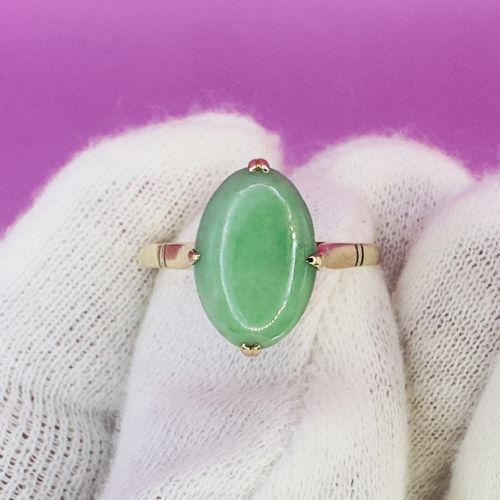


Victorian Solitaire Ring
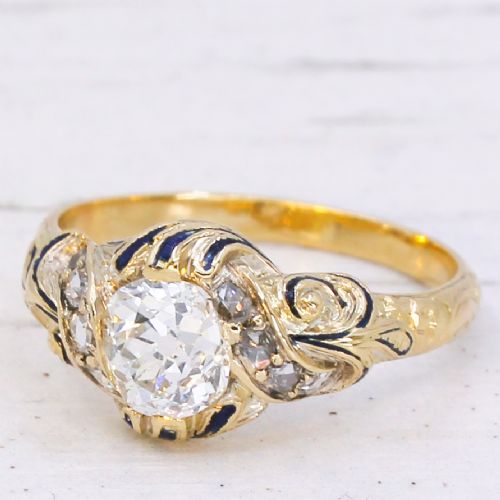
A victorian solitaire ring centres a single gemstone on a gold band, offering a classic expression of nineteenth-century jewellery design.
Victorian Solitaire Ring
A victorian solitaire ring centres a single stone, most frequently a diamond, opal, sapphire or ruby, mounted on a band of yellow gold.
The pieces on this page span the nineteenth century and the Edwardian era, encompassing early, mid, and late Victorian examples alongside later additions.
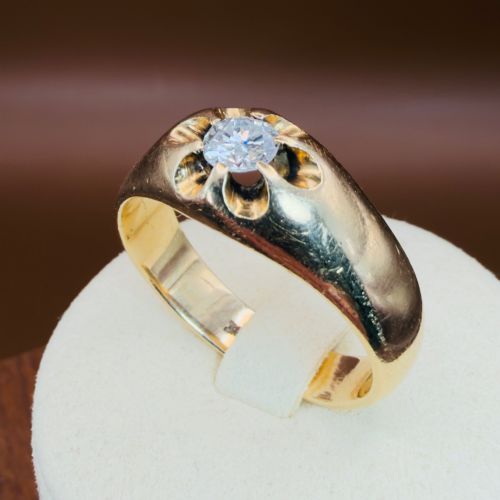
Designs range from traditional claw settings and bezel mounts to flush gypsy settings and star-engraved starburst motifs.
Metals and Stones
Goldsmiths utilised yellow gold in various purities, notably nine carat, fifteen carat, and eighteen carat, to form the shank and mount.
Gemstones feature hand-cut facets, including old mine cuts, old European cuts, and rose cuts, which display softer light reflection than modern brilliant cuts.
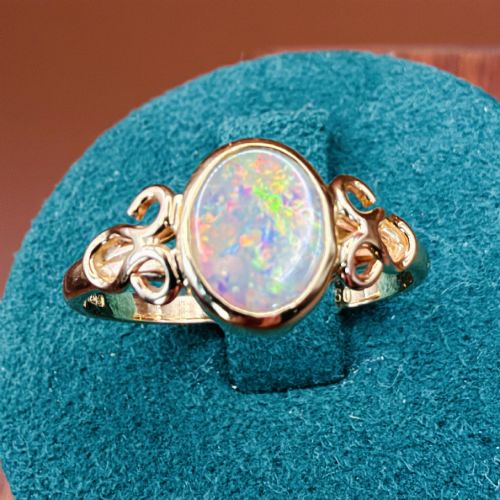
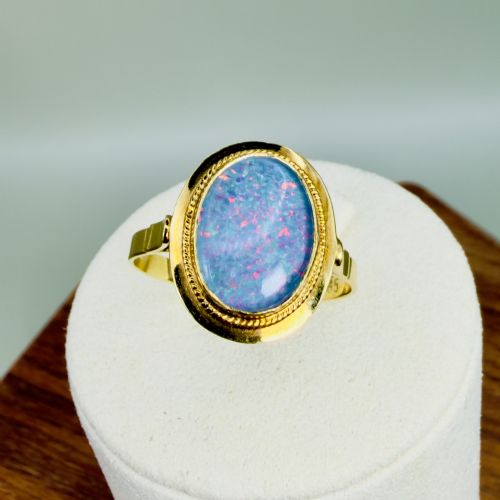
Opals, sapphires, rubies, and emeralds are frequently secured in closed or open bezels, as well as traditional claws.
Listings feature yellow gold ranging from nine to eighteen carats, paired with diamonds, opals, sapphires, rubies, and emeralds.
Craftsmanship and Proportion
Quality rests in the balance between the central stone and the surrounding metalwork, where superior examples exhibit harmonious proportions and secure mounting.
The hand-cut nature of nineteenth-century diamonds and coloured stones introduces individual variation in symmetry, depth, and brilliance.
The integrity of the gold band, the crispness of star engravings, and the smoothness of bezel settings distinguish finer workshop output.
The Victorian Solitaire Ring Glossary
- Old cut
- A diamond facet style hand-cut before the twentieth century, characterised by a high crown, small table, and deep pavilion.
- Gypsy setting
- A mounting style where the gemstone is flush-set directly into the thick metal band, creating a smooth, continuous surface.
- Bezel set
- A stone setting method that uses a narrow metal collar to encircle and secure the outer edge of the gemstone.
- Rose cut
- A vintage diamond or gemstone cut featuring a domed, faceted top and a flat underside without a pavilion.
- Claw set
- A mounting technique utilising small metal prongs to hold the gemstone and permit maximum light entry.
Victorian Solitaire Ring: Frequently Asked Questions
How do I care for antique rings?
Antique rings require gentle handling, particularly pieces set with softer stones like opals or turquoise. These gems are sensitive to moisture, cosmetics, and sudden temperature changes.
It is advisable to remove such jewellery before swimming, gardening, or undertaking strenuous physical work to protect the historic setting.
What is a gypsy set ring?
A gypsy set ring embeds the gemstone flush into a tapered gold band. This technique gained popularity during the late nineteenth century for both men and women.
The smooth profile makes the ring practical for daily wear because the stone has no exposed edges or high prongs to catch on clothing.
How are nineteenth-century diamond cuts different?
Diamonds from this era were shaped entirely by hand under candlelight, resulting in distinctive proportions. They possess smaller table facets and higher crowns than modern stones.
This facet arrangement produces a soft, warm candlelit sparkle rather than the sharp brilliance seen in contemporary brilliant-cut diamonds.