






Starburst Diamond Ring
A starburst diamond ring centres on a brilliant stone arrangement radiating outwards like a celestial flash, offering enduring elegance.
Starburst Diamond Ring
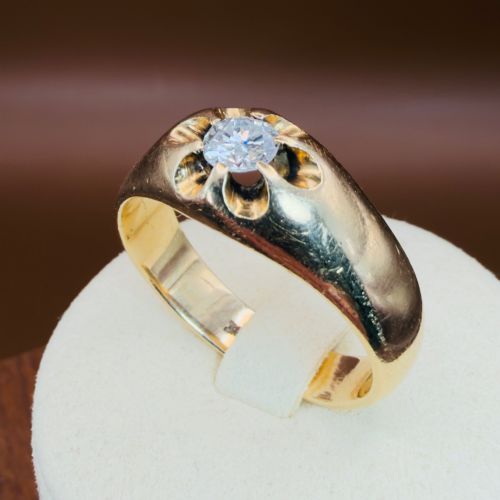
A starburst diamond ring gathers central diamonds within a radiant, star-like setting that mimics celestial geometry. These pieces emerge across periods spanning the Victorian era through to the mid-century, capturing various historical design movements.
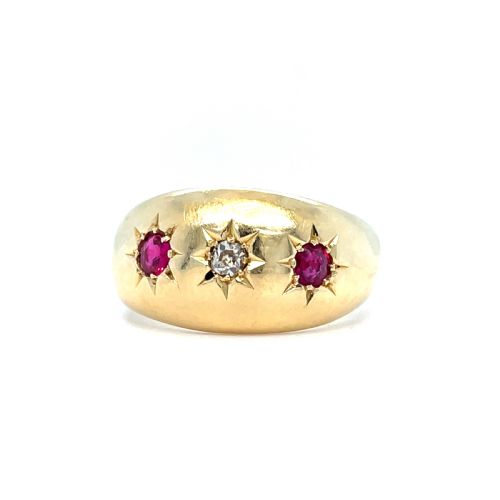
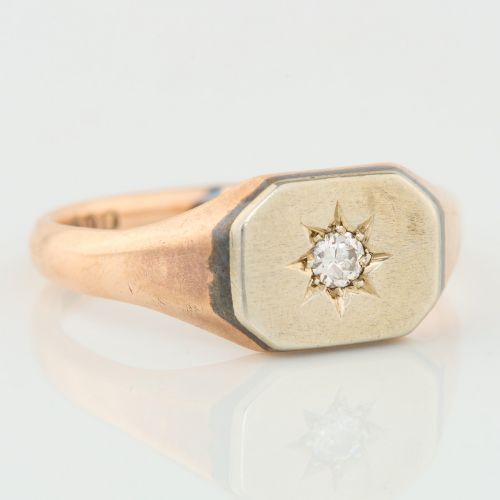
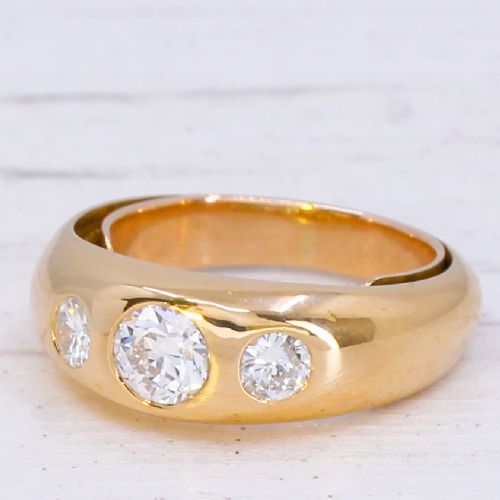
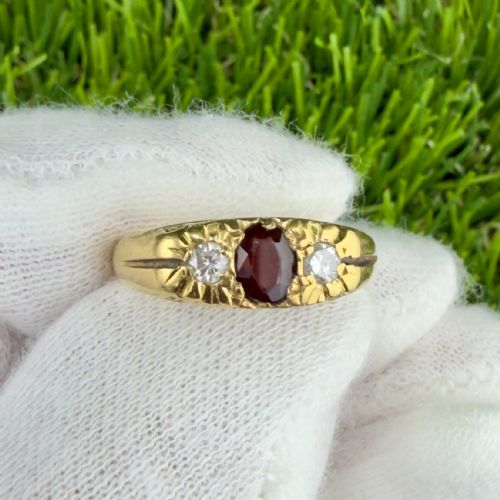
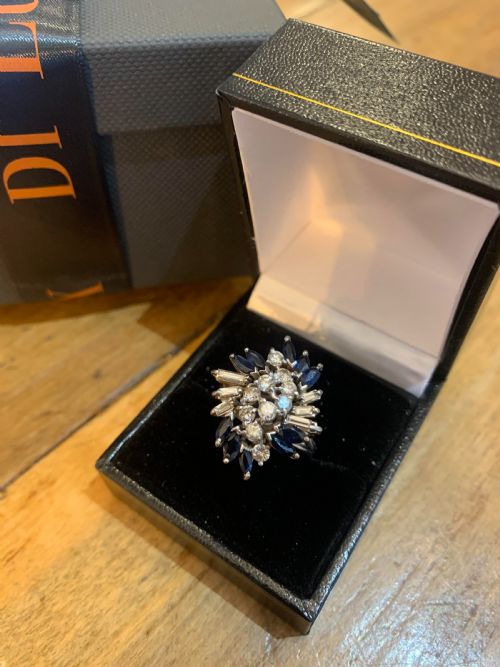
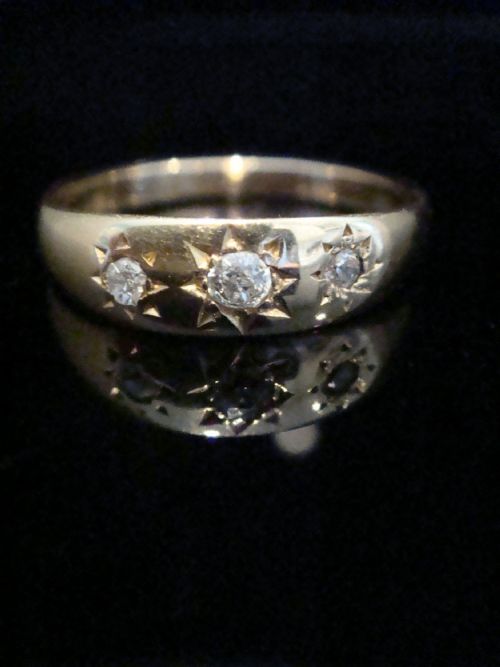
The most common version met on this page is the 18ct yellow gold ring utilising old cut diamonds, often arranged alongside rubies or sapphires in gypsy or cluster formations. Makers from Edwardian workshops to mid-century studios adapted this celestial motif into bands, signets, and trilogies.
Victorian and Edwardian examples lean heavily into star settings and gypsy mounts, whilst 1940s and 1950s pieces introduce bolder clusters and platinum accents. Buyers encounter everything from delicate 9ct gold bands to substantial 18ct yellow gold settings bearing Chester or Birmingham hallmarks.
How starburst diamond rings were made
Goldsmiths constructed these rings using predominantly 18ct yellow gold, 18ct white gold, and 9ct gold, occasionally incorporating platinum settings for specific geometric highlights. Metals were cast or forged into bands, gypsy mounts, and cluster heads designed to hold central and radiating stones securely.
Old cut diamonds and rose cut diamonds provided the distinctive sparkle, frequently paired with rubies, sapphires, garnets, emeralds, or blue enamel cabochons. Setting techniques involved flush gypsy mounting or claw arrangements that emphasised the starburst rays spreading across the finger.
Starburst Diamond Ring Retail Price Guide 2026
Typical asking prices for starburst diamond ring among the pieces listed under this phrase on Sellingantiques today, from the lower quarter to the upper quarter. They describe what is for sale here now, not the wider market.
Celestial motifs let wearers carry their own private constellation on one finger, defying overcast skies with eternal gold sparkle.
What varies in quality
The distinction between tiers rests upon the precision of the star motif's engraving and the harmony of the stone grouping. Superior examples display crisp ray incisions and well-matched old cut diamonds that sit flush and secure within the gold or platinum.
Lesser pieces may show uneven wear around the star points or mismatched stones that disrupt the radial symmetry of the design. The weight of the gold shank and the clarity of hallmarks, such as regional assay stamps, further define the standing of individual rings.
The Starburst Diamond Ring Glossary
- Gypsy ring
- A style where the stones are flush-set into a thick band that tapers towards the back. This setting protects the girdle of the diamond and creates a smooth profile.
- Old cut
- A vintage diamond cutting style characterised by a small table, high crown, and open culet. These stones catch candlelight and low light with a softer, broader flash than modern brilliant cuts.
- Cluster ring
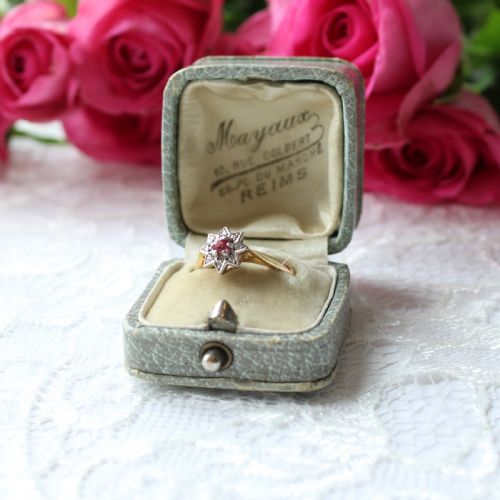
- An arrangement featuring a central stone surrounded by a border of smaller gems. In starburst designs, this cluster mimics the twinkling rays of a star.
- Trilogy ring
- A three-stone ring representing the past, present, and future. These pieces often incorporate side diamonds flanking a central star-set gemstone.
- Cabochon
- A gemstone shaped and polished with a smooth, rounded convex surface rather than faceted. They appear alongside blue enamel in Victorian star designs.
Starburst Diamond Ring: Frequently Asked Questions
How do I date a starburst ring?
Dating relies on examining the metal hallmarks, setting styles, and diamond cuts used in the piece. Victorian and Edwardian examples often feature hand-engraved star motifs and old cut stones in yellow gold.
Later mid-century iterations introduce whiter metals, different cluster arrangements, and distinct assay stamps. Comparing the band construction helps separate nineteenth-century work from later decades.
Are starburst rings comfortable to wear?
Many starburst designs utilise gypsy settings where the stones sit flush with the metal surface. This low profile prevents the gems from catching on clothing during daily tasks.
Raised cluster versions sit higher on the finger but remain practical for regular wear when properly maintained. Choosing between flush bands and raised clusters depends on personal preference for hand feel.
What metals are used in these rings?
These rings predominantly utilise 18ct yellow gold, 9ct gold, and 18ct white gold. Platinum settings also appear in specific geometric pieces from the twentieth century.
Gold purity varies from traditional 9ct alloys to rich 18ct yellow gold bands. Some pieces incorporate mixed metals, pairing yellow gold shanks with white gold or platinum top clusters.
Can I wear a starburst ring daily?
These antique and vintage pieces withstand daily wear provided they receive appropriate care and regular claw or setting checks. Solid gold bands in 18ct provide robust foundations for everyday use.
Delicate antique mountings benefit from occasional professional inspection to ensure the radiating stones remain secure. Owners should remove them during heavy manual tasks to protect the older gold and gemstones.