

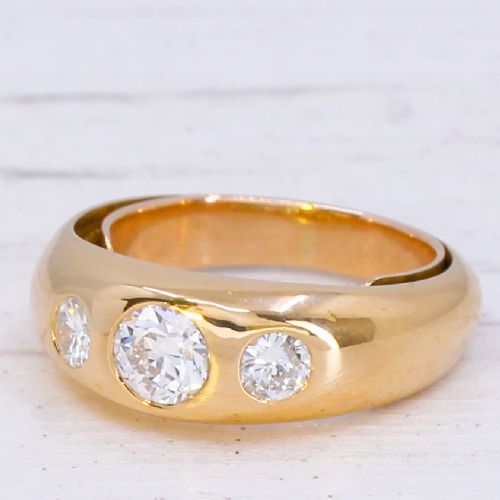


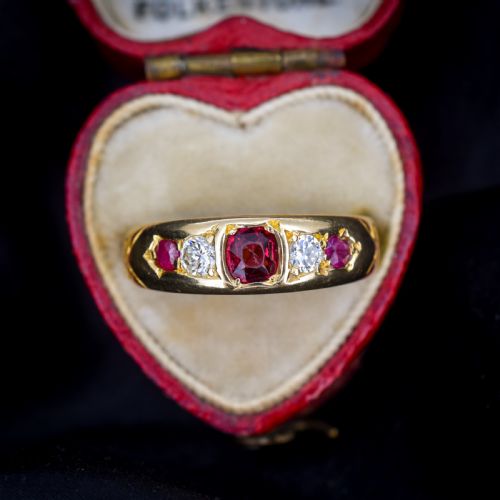


Gold Gypsy Ring
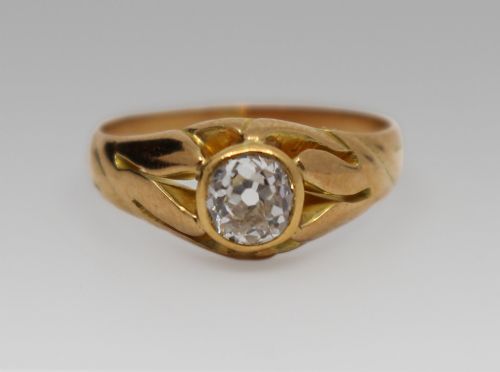
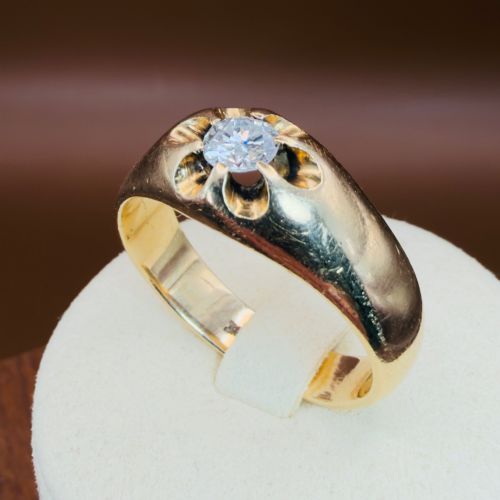
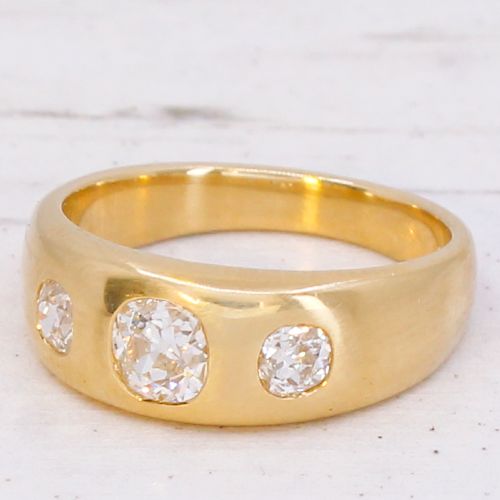
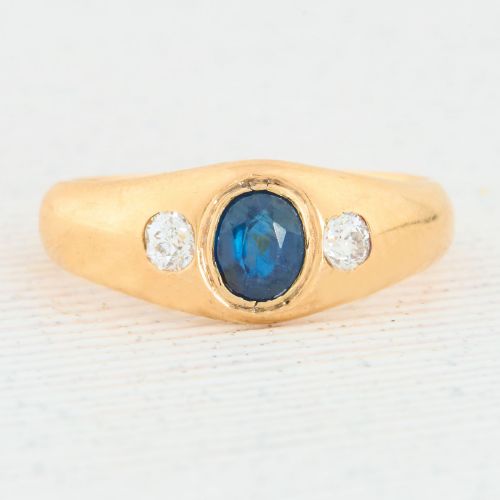
A gold gypsy ring combines flush-set stones with a smooth, tapered band designed to sit comfortably on the hand.
Gold Gypsy Ring
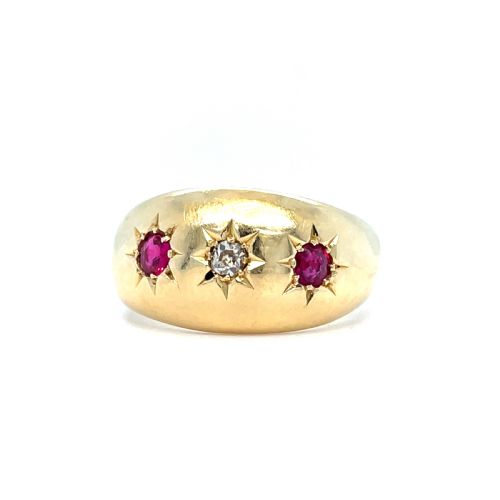
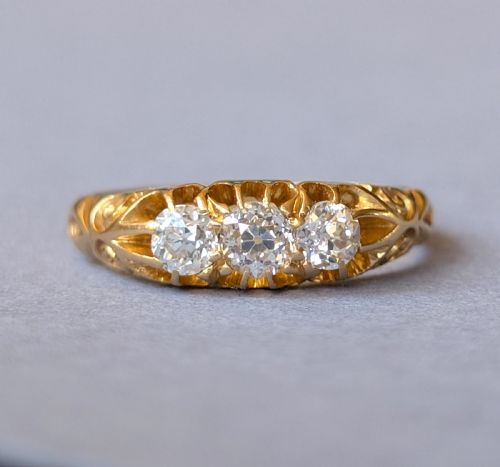
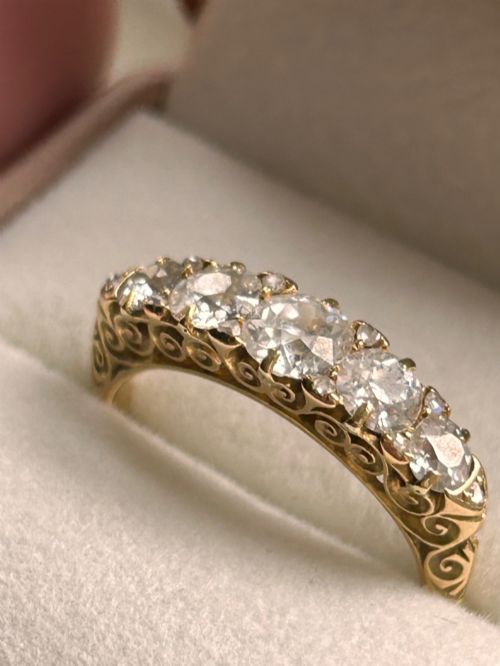
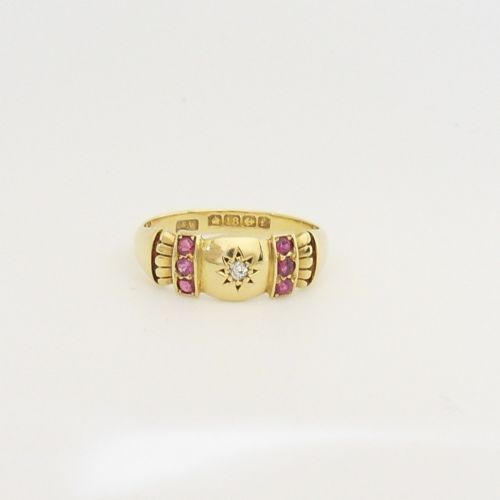
Victorian and Edwardian examples dominate the selection, spanning the late nineteenth and early twentieth centuries, alongside occasional mid-century pieces. These rings appear as simple single-stone solitaires, three-stone trilogy arrangements, or starburst and celestial designs with engraved rays around the gems.
Most pieces utilise rich yellow gold or rose gold in higher purities, frequently hallmarked from British assay offices. The smooth contour and substantial weight define the traditional silhouette sought by collectors of the style.
Materials and Construction
Goldsmiths constructed these bands from heavy yellow or rose gold, predominantly in eighteen carat purity, alongside some fifteen carat and nine carat examples. The high metal content provided the structural depth required to recess stones securely into the shank without modern prongs.
Stones were hand-set using burnishing techniques, where the surrounding gold was pushed tightly over the girdle of the gem. Old cut diamonds, rubies, sapphires, and turquoise were shaped by hand to fit snugly into the flush cavities, occasionally accented with starburst hand-engraving radiating from the setting.
Listings feature yellow gold, rose gold, and various purities including eighteen carat alongside diamond, ruby, and sapphire stones.
Assessing Quality and Substance
Substance and weight separate heavier archival pieces from lighter examples, with robust nineteenth-century shanks retaining their full thickness over generations of wear. The durability of the gold band ensures the flush-set stones remain securely anchored in their bezels.
The cut and clarity of the central gems contribute significantly to the character of each piece, particularly with hand-faceted old cut diamonds and natural rubies or sapphires. Crispness in the surrounding starburst engravings and clear assay hallmarks add distinct documentary value to individual rings.
The Gold Gypsy Ring Glossary
- Gypsy setting
- A mounting style where the gemstone is set flush with the surface of the metal, held by the surrounding band.
- Old cut
- An early diamond-cutting style characterised by a small table, high crown, and large culet, hand-facetted before modern standards.
- Flush set
- A technique where a stone is sunk directly into a hole in the metal so that the top is level with the surrounding surface.
- Trilogy ring
- A ring featuring three stones set side by side, traditionally symbolising the past, present, and future.
- Star burst
- Hand-engraved radiating lines surrounding a flush-set gemstone to resemble a shining star.
Gold Gypsy Ring: Frequently Asked Questions
What is a gold gypsy ring?
A gold gypsy ring is a traditional band with stones set flush into the metal rather than raised in claws. The smooth, tapering profile was designed to prevent snagging on clothing.
First popularised during the Victorian and Edwardian eras, these heavy gold bands remain durable and practical for modern wear.
How do I date a gold gypsy ring?
Dating relies on British hallmarks stamped inside the shank, indicating specific assay offices and years of manufacture. Stylistic clues such as starburst engravings and gemstone cuts also help place pieces within the nineteenth and twentieth centuries.
Heavier shank weights and particular gold purities like eighteen carat further point toward Victorian and Edwardian production periods.
Are old cut diamonds used in these rings?
Many Victorian and Edwardian pieces utilise hand-faceted old cut diamonds with characteristic deep pavilions and small tables. These stones were shaped individually to fit the flush metal settings of each band.
Their soft sparkle differs noticeably from modern brilliant cuts, adding period authenticity to the piece.
Can I wear a gypsy ring daily?
The flush setting protects the stones from knocks and catches, making these rings suitable for everyday wear. The thick gold band offers structural durability that has withstood over a century of use.
Checking the security of the metal around the bezels ensures the stones remain firmly in place.