

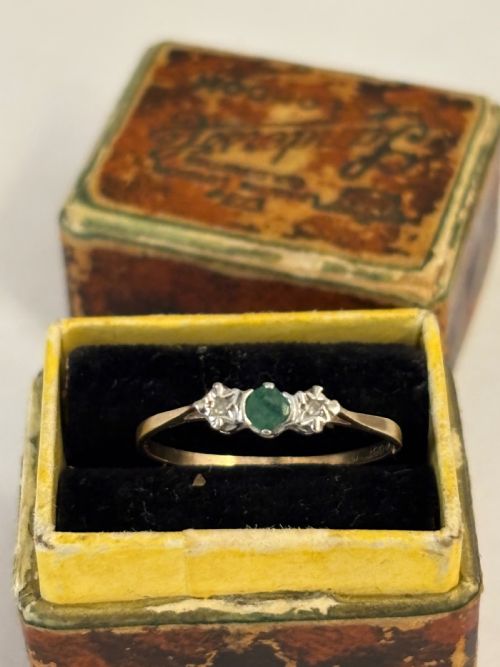
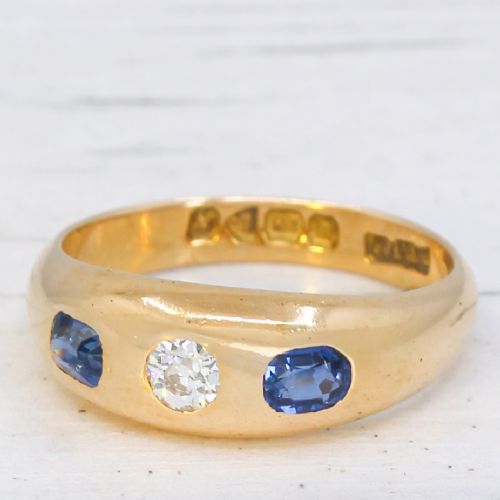
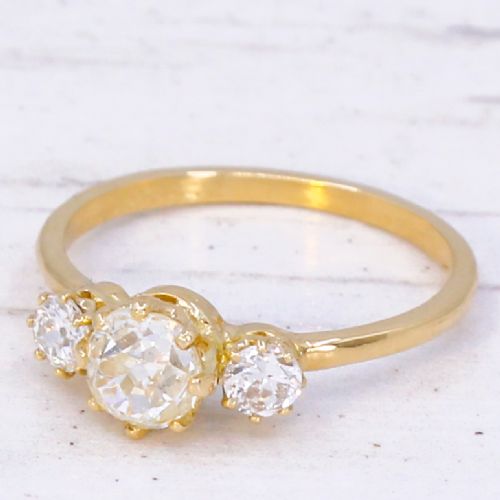
Edwardian Three Stone Ring
An edwardian three stone ring brings together three gems in a single mounting, often symbolising past, present and future.
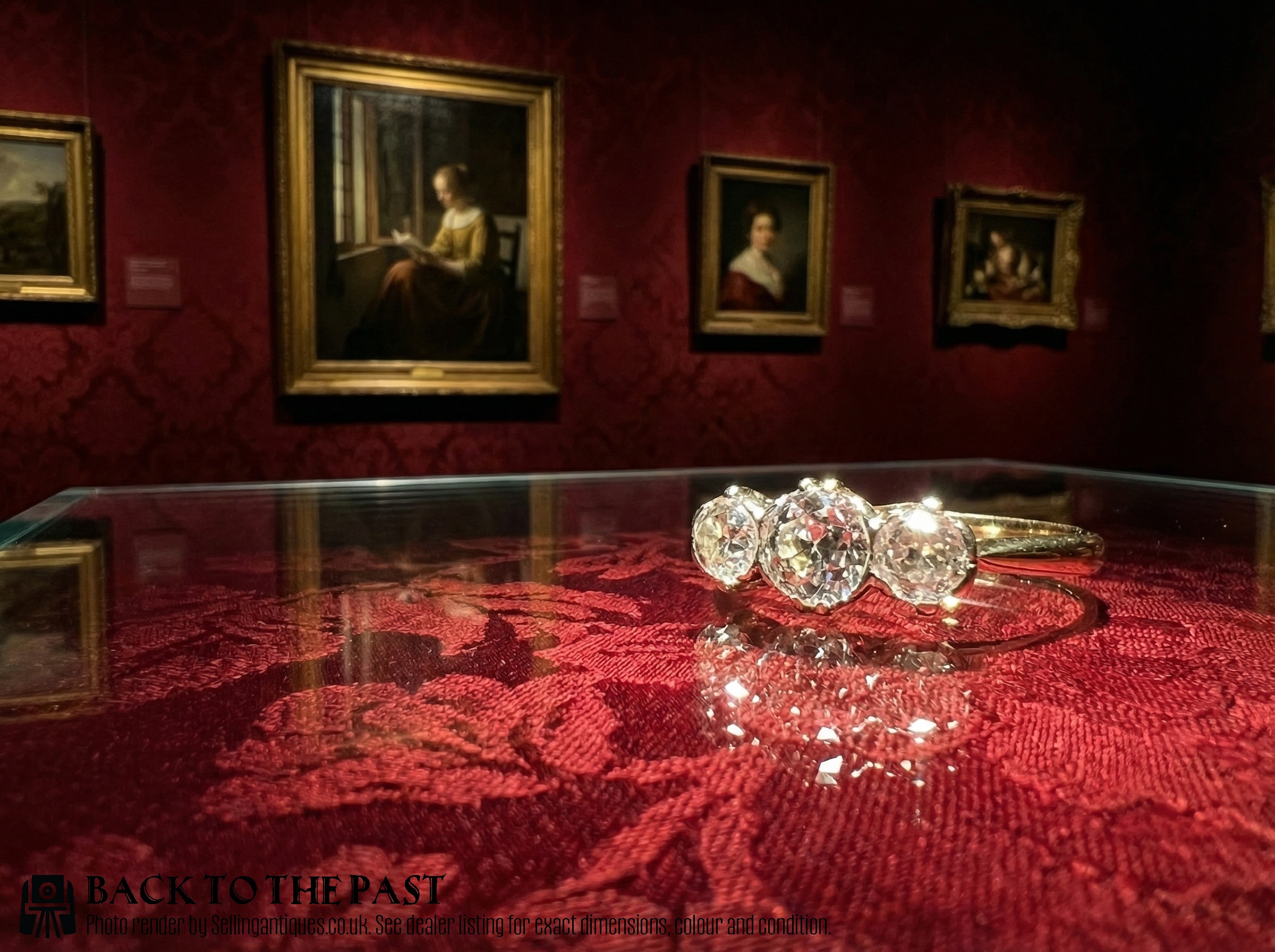
Edwardian Three Stone Ring
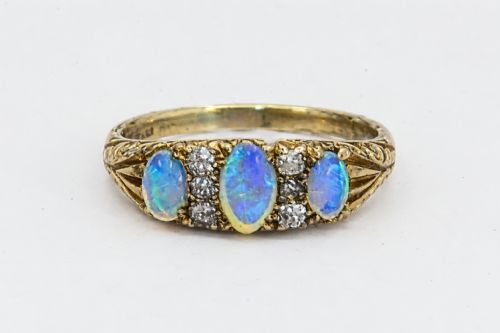
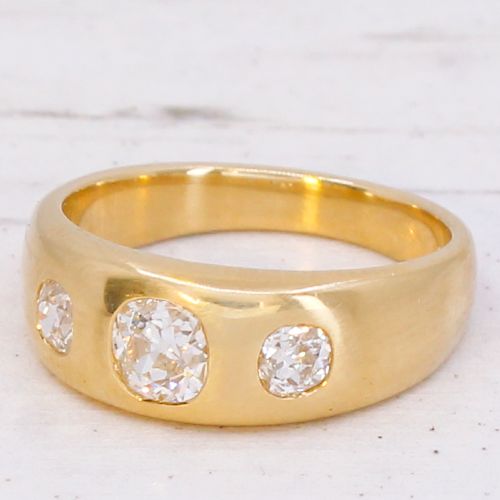
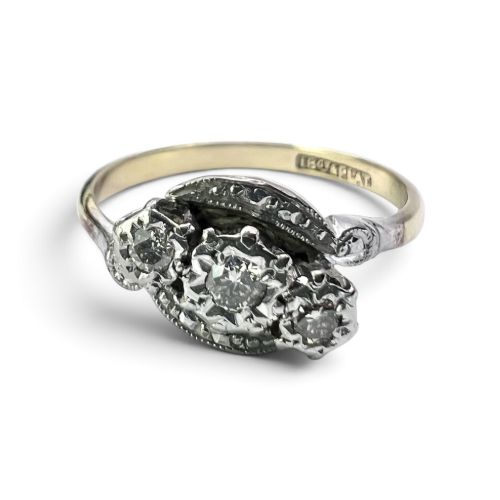
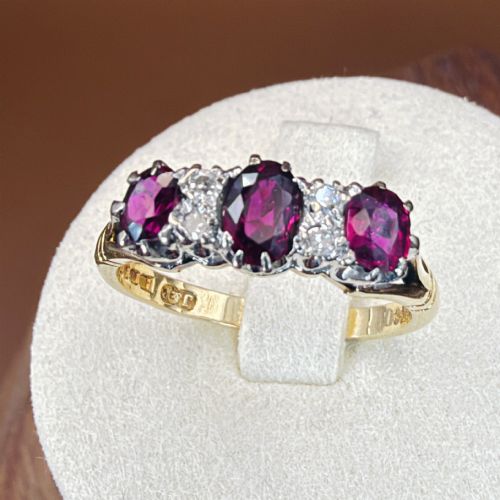
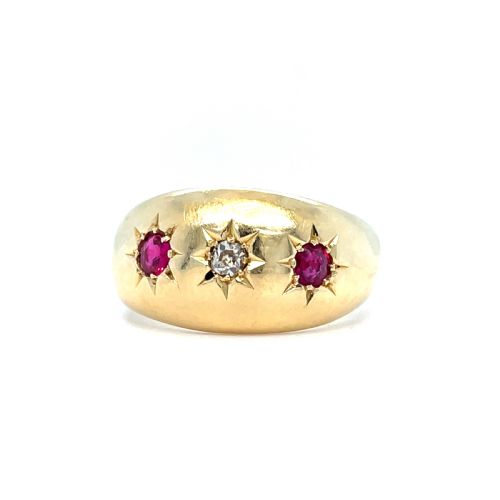
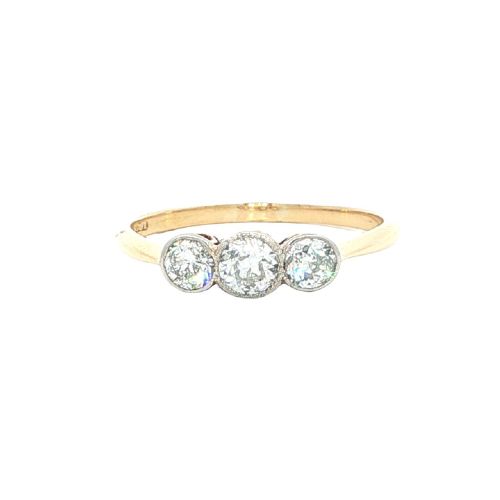
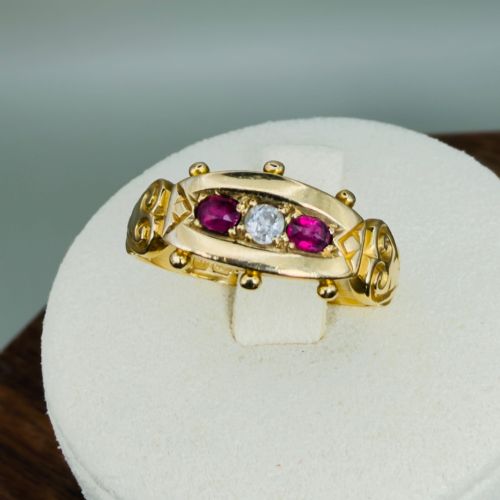
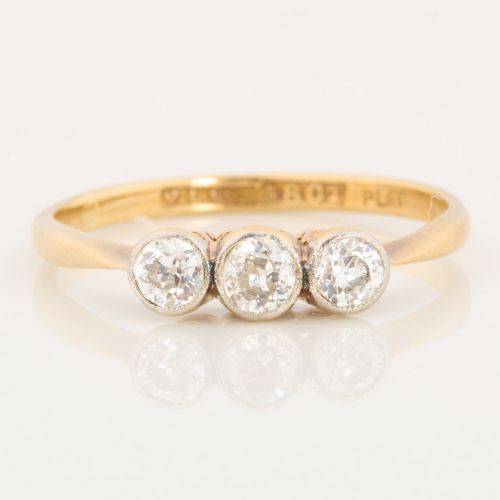
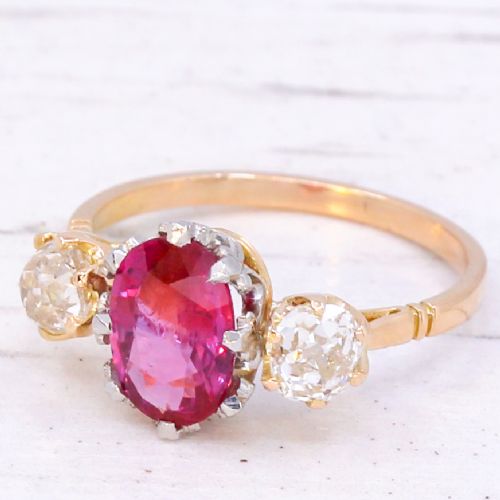
An edwardian three stone ring is an enduring design typically featuring a central gemstone flanked by two smaller stones, a configuration also known as a trilogy ring. The pieces gathered here span the early twentieth century and nearby periods, presenting stones arranged in straight rows across the finger or integrated into gypsy and starburst settings.
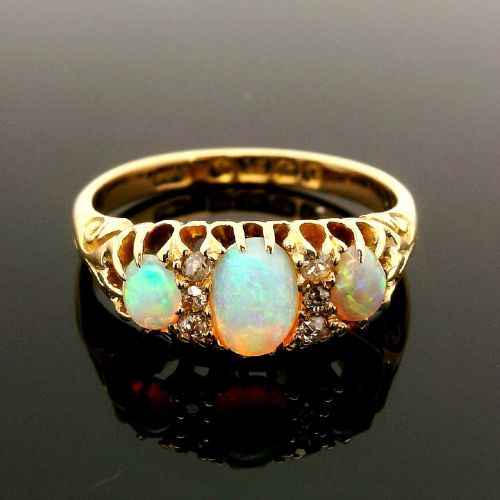
Most examples rely on a combination of diamonds paired with rubies, sapphires, or opals, set in eighteen carat yellow gold or platinum. While many pieces carry hallmarks from Birmingham or Chester dating from the nineteen hundreds, others extend into adjacent Victorian and Art Deco eras with similar stone arrangements.
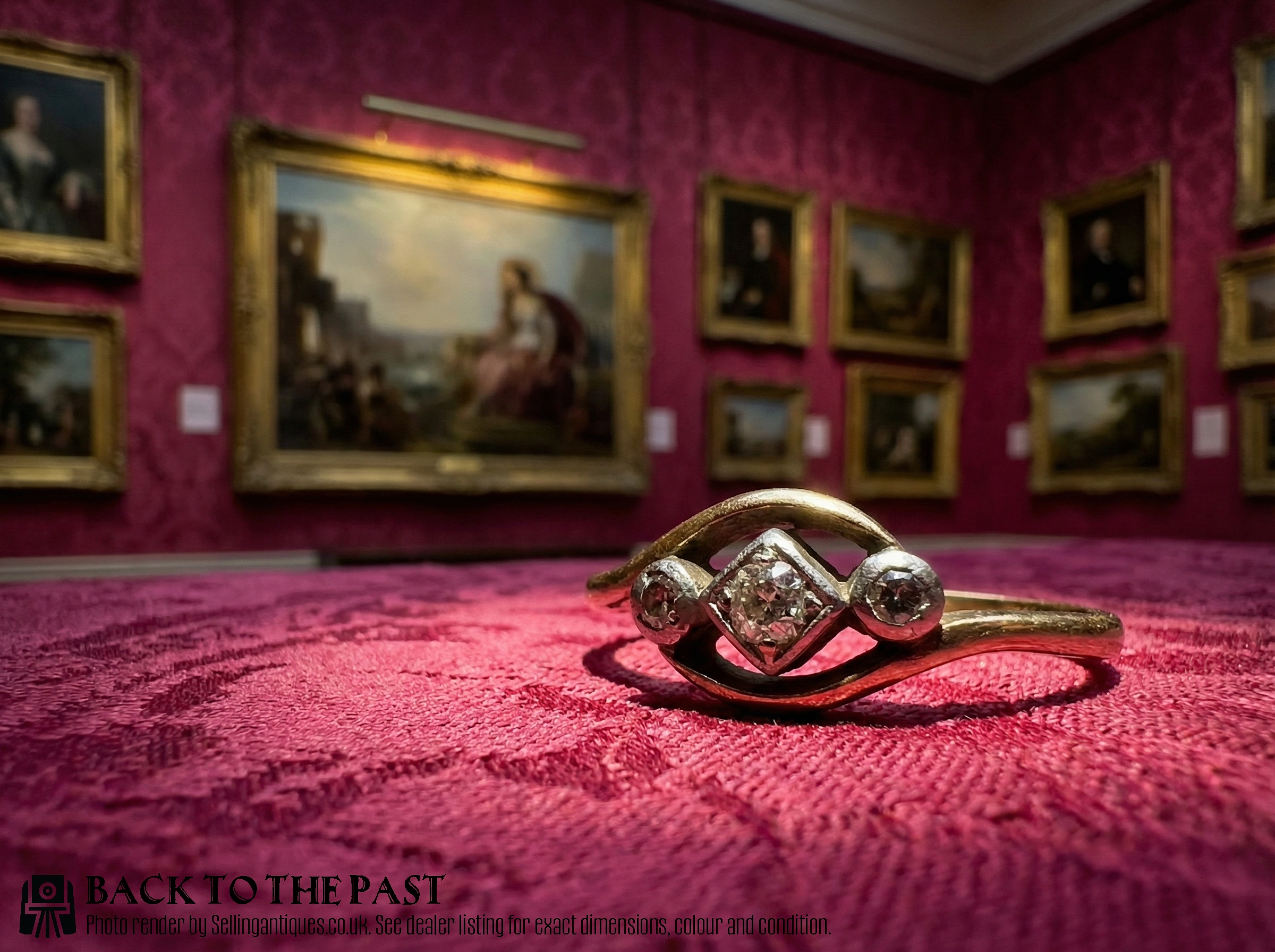
Materials and construction
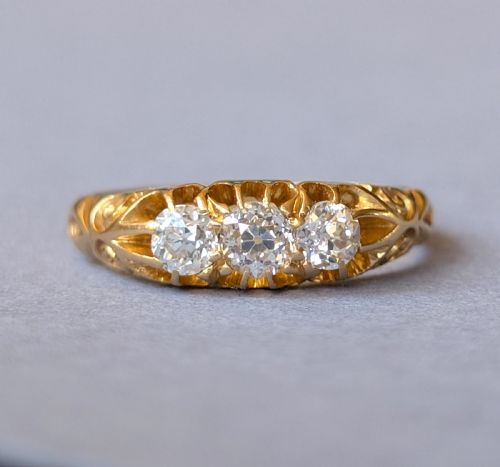
Goldsmiths of the period commonly worked with eighteen carat yellow gold for the shank while increasingly adopting platinum for the settings to keep the white stones bright. Old cut diamonds dominate the stone selection, prized for their soft light under candle or gas illumination.
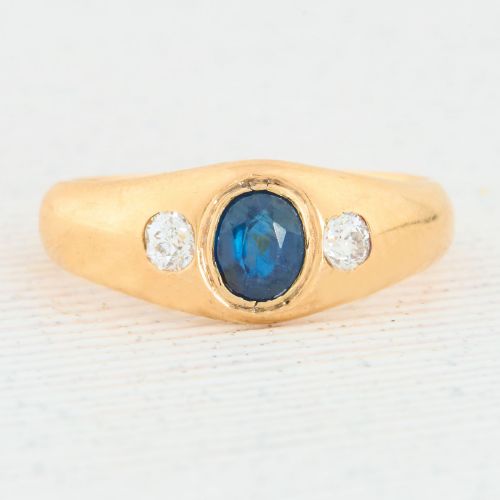
Coloured gemstones such as rubies and sapphires appear alongside natural opals, secured with meticulous claw settings or flush gypsy mounts that sit level with the band.
Edwardian Three Stone Ring Retail Price Guide 2026
Typical asking prices for edwardian three stone ring among the pieces listed under this phrase on Sellingantiques today, from the lower quarter to the upper quarter. They describe what is for sale here now, not the wider market.
Several rings retain their original Birmingham and Chester assay marks, whispering tales of nineteenth-century workshops directly to modern fingers.
Evaluating the craftsmanship
Quality reveals itself in the proportion of the stones and the delicacy of the metalwork surrounding them. Finer examples display carefully matched gem sizes and secure, hand-finished claws that hold the stones without overwhelming their natural contours.
The Edwardian Three Stone Ring Glossary
- Trilogy ring
- A ring featuring three principal gemstones, often symbolising the past, present and future. This term is frequently used interchangeably with three stone rings.
- Old cut diamond
- A hand-faceted diamond shape typical of the nineteenth and early twentieth centuries, featuring a smaller table and a higher crown than modern brilliant cuts. These stones display a distinctive softer glow.
- Gypsy ring
- A style where the gemstones are flush-set directly into the metal band, creating a smooth, rounded surface. It was popular for both men and women during the Victorian and Edwardian periods.
- Hallmark
- An official stamp applied by an assay office, such as those in Birmingham or Chester, indicating the metal purity and the year of manufacture. These marks help verify the period of antique jewellery.
Edwardian Three Stone Ring: Frequently Asked Questions
What is an edwardian three stone ring?
An edwardian three stone ring is a piece of jewellery featuring three gems set in a row across the finger, created during the reign of King Edward VII or the surrounding years. These rings frequently pair diamonds with rubies, sapphires or opals in yellow gold or platinum.
They gained popularity as engagement rings and sentimental tokens, representing enduring relationships through their balanced design.
How do I wear a trilogy ring daily?
Wearing a trilogy ring daily requires gentle care, especially for antique pieces containing softer gems like opals or pearls. It is sensible to remove the ring during heavy manual work or swimming to protect the settings.
Storing the piece in a separate fabric-lined box prevents the stones from scratching other jewellery when not being worn.
Are these rings suitable for engagements?
These rings have served as engagement tokens for over a century, offering a meaningful alternative to modern solitaire designs. The three-stone arrangement carries traditional symbolism that appeals to those seeking history and character.
Buyers should consider the durability of the specific gemstones used when selecting a ring for everyday wear.
How can I tell the period?
Dating these pieces involves examining the hallmarks stamped inside the band, which often reveal the assay office and year of creation. Stylistic clues, such as platinum top-settings paired with yellow gold shanks, also point toward the early twentieth century.
Cut styles of the diamonds, particularly older hand-faceted shapes, further help distinguish Edwardian and Victorian work from later reproductions.