

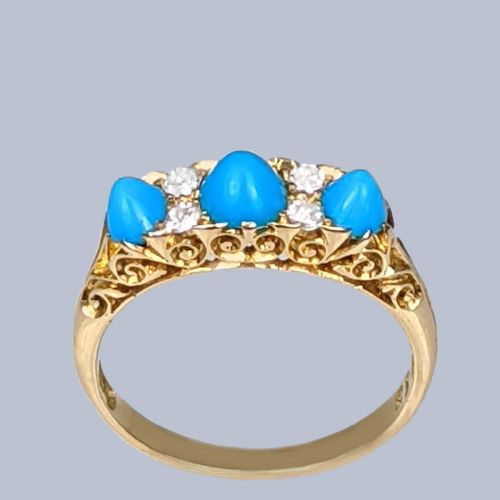
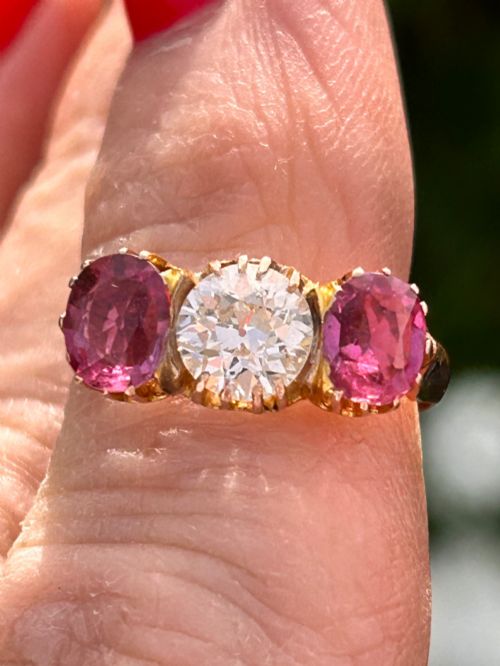
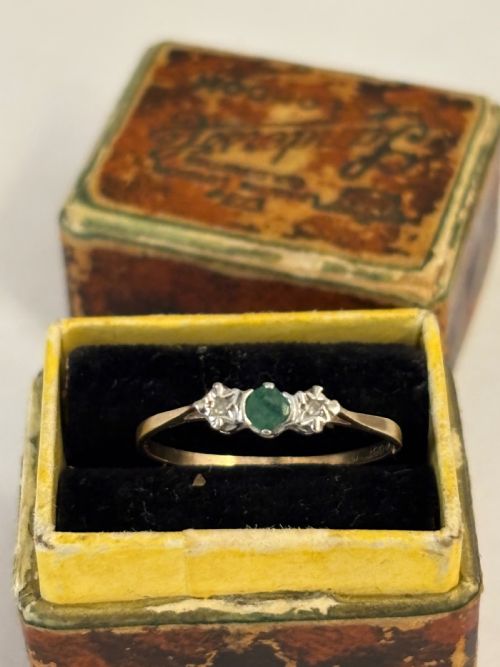
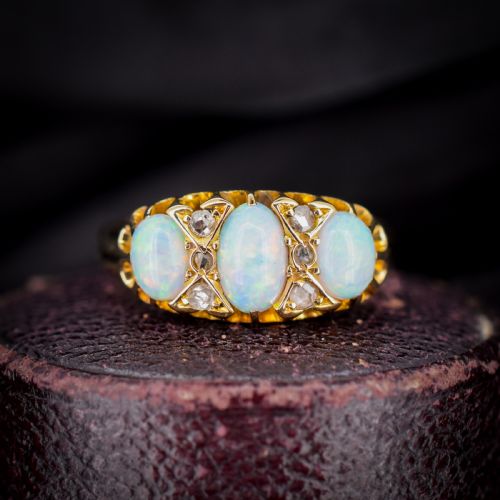
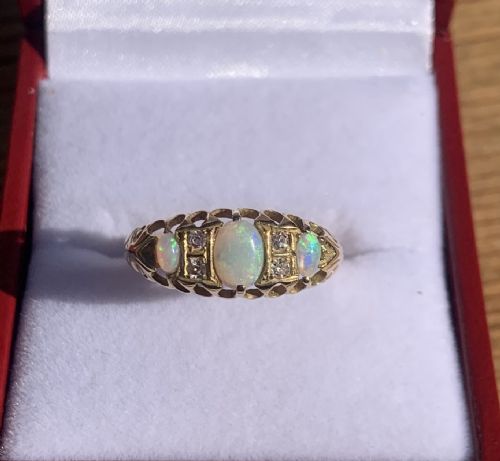
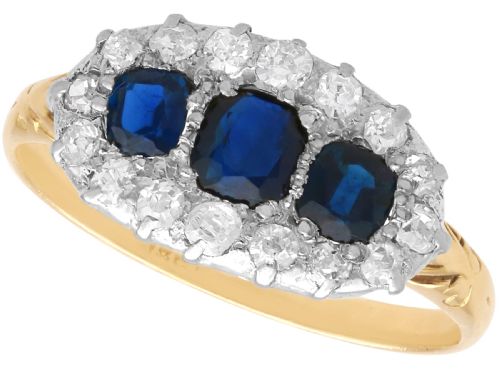


Victorian Diamond Trilogy Ring
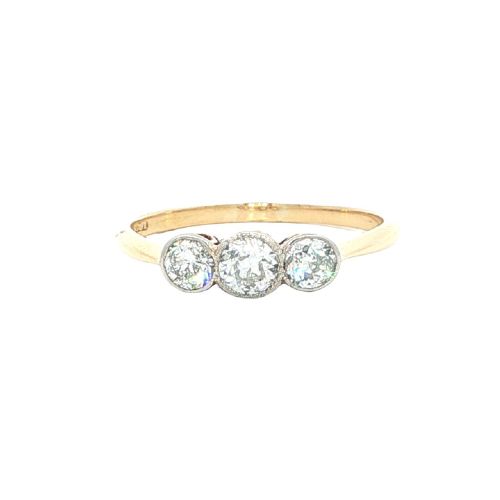
A victorian diamond trilogy ring unites three stones representing past, present, and future in enduring gold settings.
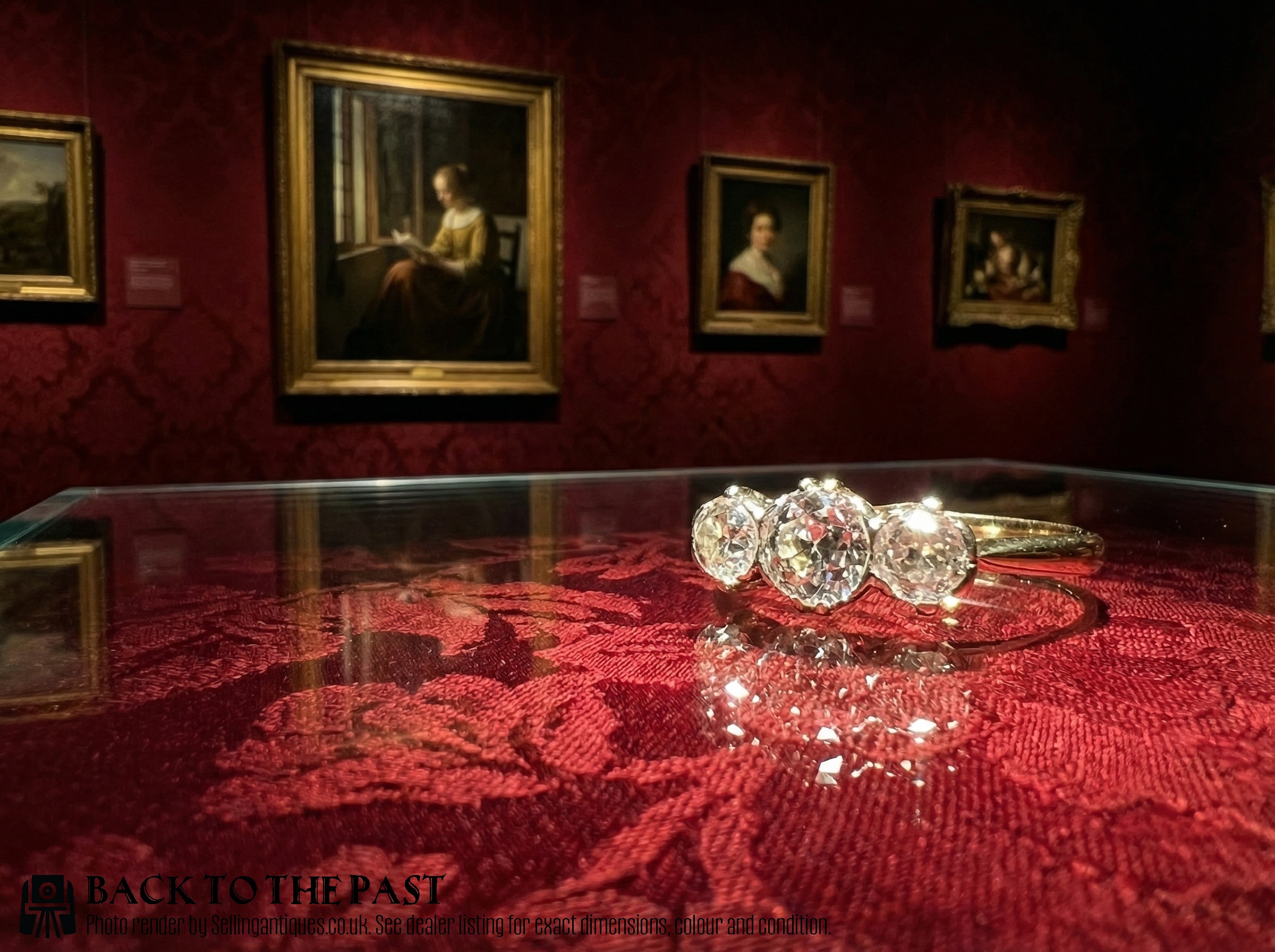
Victorian Diamond Trilogy Ring
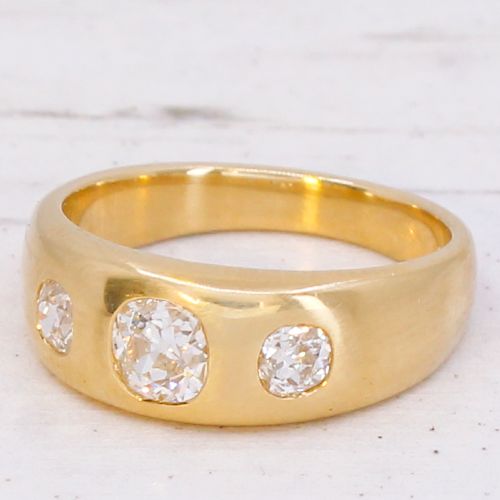
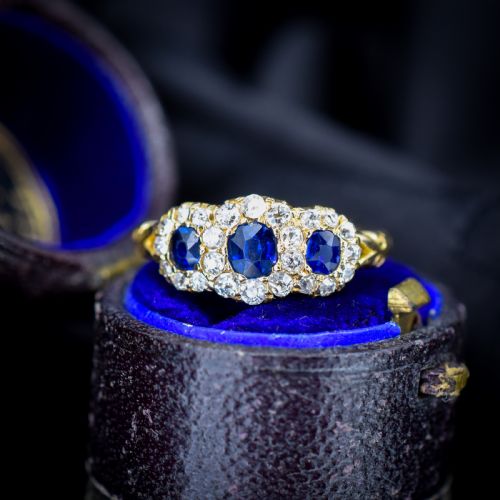
The surviving examples range from delicate gypsy-set bands to ornate carved half-hoop mountings and cluster formats. Most originate from the late Victorian period, alongside similar items spanning the turn of the twentieth century.
How they were made
Goldsmiths constructed these rings primarily using eighteen-carat yellow gold, occasionally incorporating platinum or fifteen-carat yellow gold for specific settings. Stones were secured via traditional claw mountings, flush gypsy settings, or low-profile carved bezels.
Diamonds utilised in these pieces display hand-faceted old cuts, including old mine cuts and old European cuts shaped before modern machinery standardised stone proportions.
Victorian Diamond Trilogy Ring Retail Price Guide 2026
Typical asking prices for victorian diamond trilogy ring among the pieces listed under this phrase on Sellingantiques today, from the lower quarter to the upper quarter. They describe what is for sale here now, not the wider market.
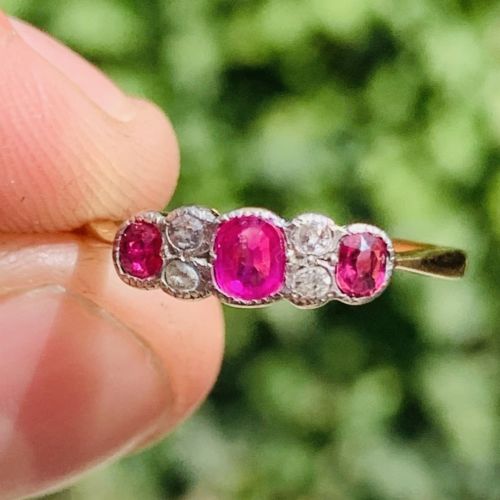
Listings feature yellow gold, platinum, and varied gemstone combinations across late Victorian and Edwardian periods.
What varies in quality
Quality in a victorian diamond trilogy ring depends upon the matching, proportions, and presence of natural inclusions within the gemstones. Stones chosen for symmetry elevate the visual harmony of the three-stone layout.
The crispness of hand-carved shoulders, substantial shank weight, and legible hallmarks indicating assay offices like Birmingham or Chester further distinguish finer examples.
The Victorian Diamond Trilogy Ring Glossary
- Trilogy ring
- A ring set with three stones, traditionally symbolising the past, present, and future. This layout remains a popular choice for historic engagement rings.
- Old cut
- A hand-faceted diamond shape featuring a smaller table, higher crown, and open culet characteristic of nineteenth-century lapidary work. These stones catch candlelight with a distinctive softer glow.
- Gypsy setting
- A mounting style where the gemstone is flush-set directly into the thick gold band, creating a smooth profile. This technique offers robust daily wear.
- Carved half-hoop
- A ring band decorated with carved scrollwork or floral motifs along the upper portion surrounding the stones. Goldsmiths used this method to add texture to the gold structure.
- Culet
- The small flat facet at the base of an antique diamond where the pavilion facets meet. Historic stones often display a visible culet when viewed from above.
Victorian Diamond Trilogy Ring: Frequently Asked Questions
How do I wear an antique ring safely?
Historic gold rings benefit from removal during manual labour, swimming, or heavy lifting to protect the prongs and softer gem materials like opal.
Storing pieces in individual fabric-lined boxes prevents scratching against other jewellery.
Can these rings be resized easily?
Most gold bands allow skilled jewellers to alter the ring diameter by adding or removing a small section of metal from the shank.
Intricate hand-carved shoulders require careful attention to preserve the original patterns near the stones.
What do the hallmarks tell us?
British hallmarks indicate the metal purity, such as eighteen-carat gold, alongside the specific assay office and year of testing.
These stamped marks provide reliable clues for dating the piece alongside stylistic evidence.
Why are old cut stones different?
Historic lapidaries shaped diamonds by hand to maximise weight and sparkle under ambient candlelight rather than mathematical precision.
This method yields unique optical patterns distinct from modern brilliant-cut diamonds.