

Diamond Three Stone Ring
A diamond three stone ring brings together three distinct stones in a single setting, traditionally representing the past, present and future.
Diamond Three Stone Ring
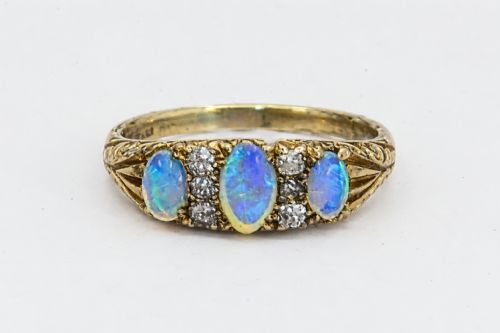
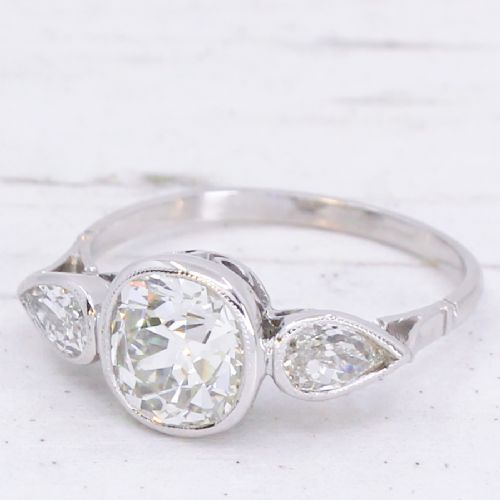
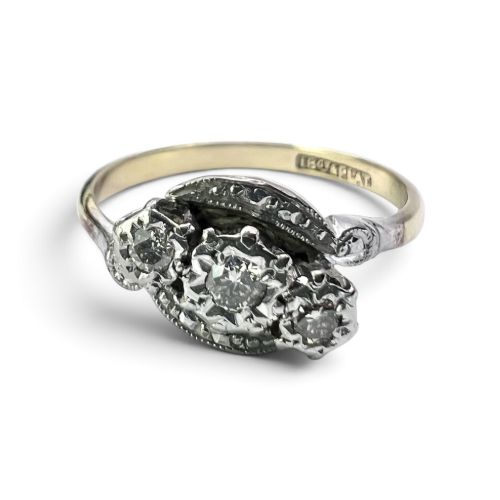
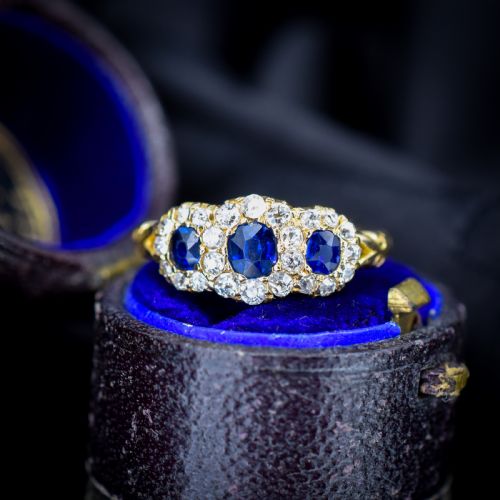
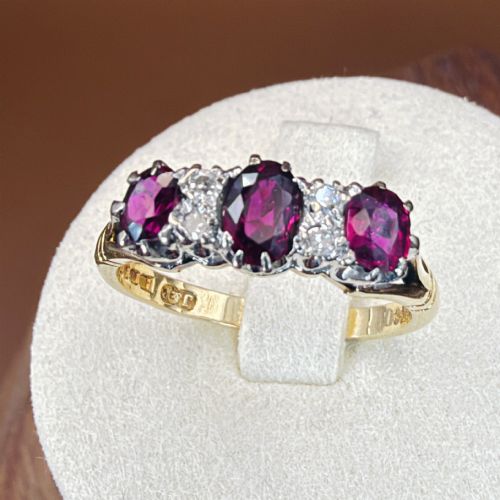
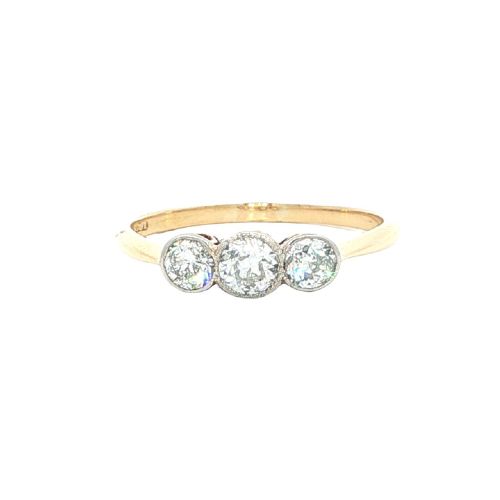
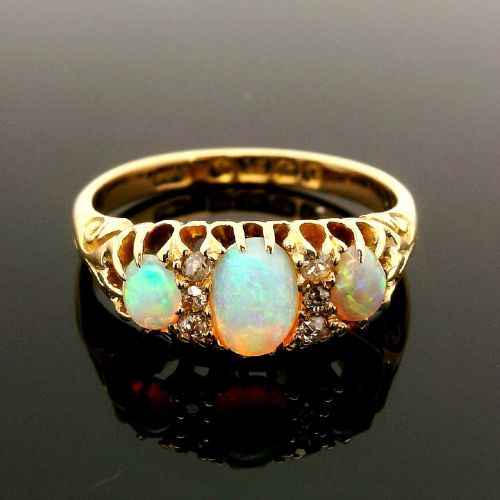
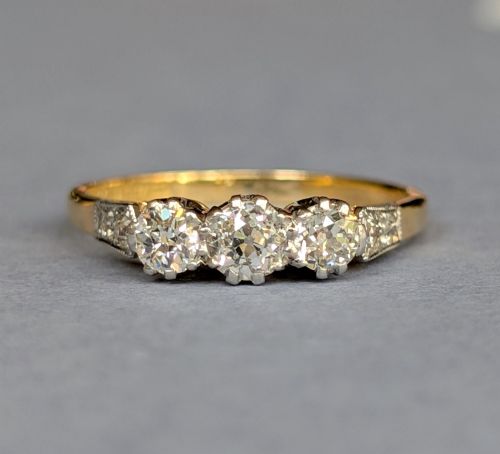
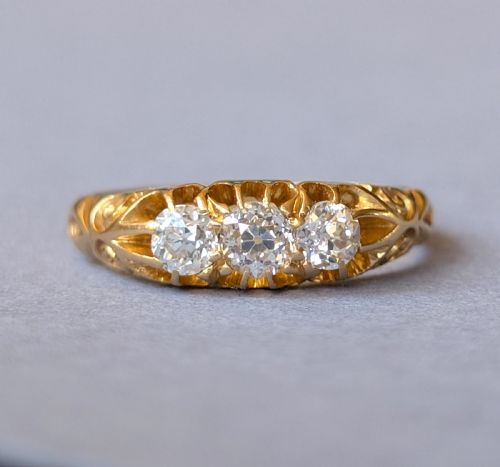
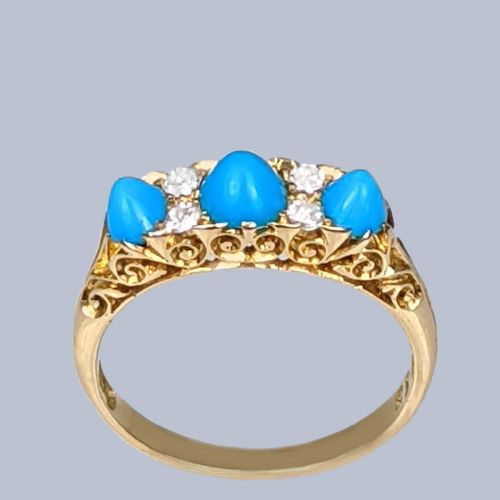
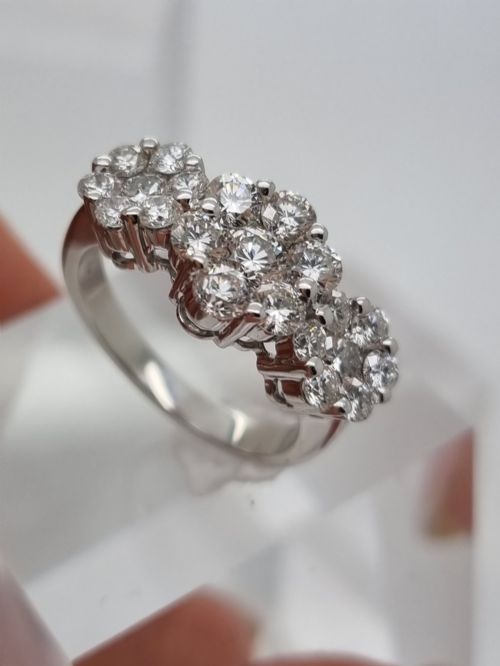
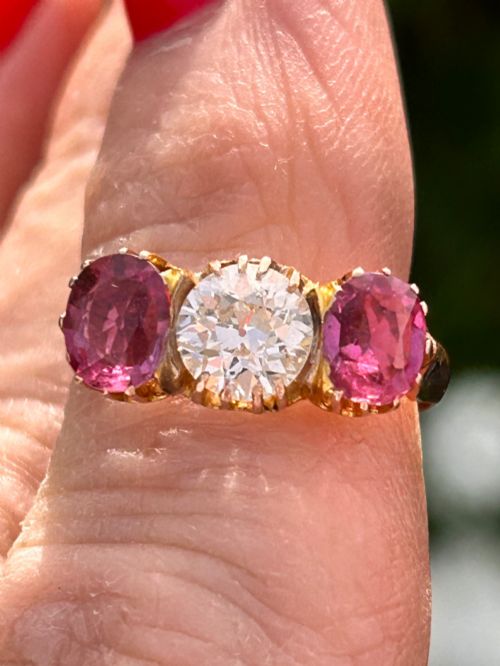
A diamond three stone ring focuses the eye on a trio of gems mounted across the finger, a format frequently encountered with central stones flanked by smaller gems or set as an aligned graduation of similar sizes. These pieces appear in periods spanning the Victorian era through the mid-twentieth century, encompassing styles such as Edwardian, Art Deco and Mid-Century Modern.
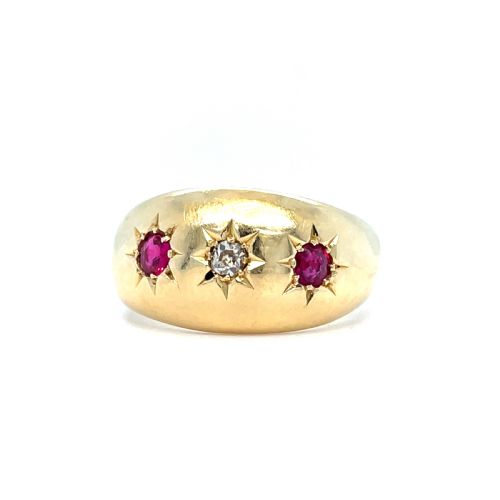
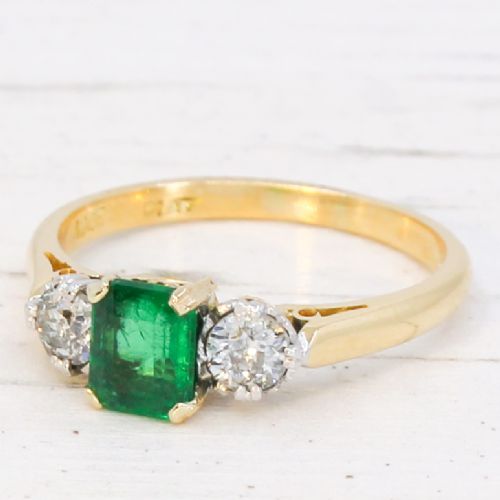
The format accommodates pure diamond configurations alongside combinations where diamonds flank coloured stones like sapphires, rubies, emeralds, opals, tanzanites and amethysts. Examples emerge in forms carrying descriptive titles such as trilogy rings and gypsy rings, reflecting the varied terminology used across different decades.
Materials and construction
Metals employed for the bands and settings include 18ct yellow gold, 18ct white gold, 14ct gold and platinum, often paired together to contrast warm yellow shanks with crisp white metal heads that hold the stones.
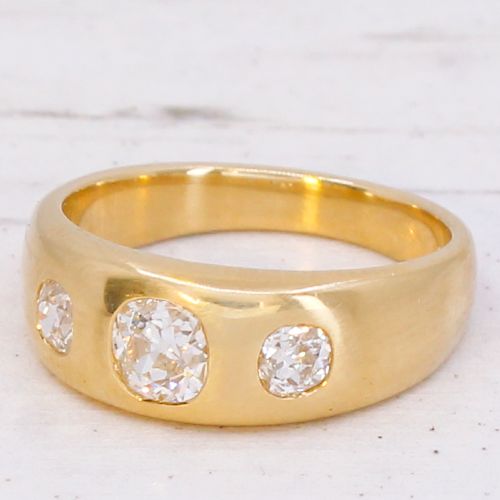
Gemstones are shaped into old cuts, old mine cuts and modern cuts, secured in settings ranging from delicate claw mounts to flush gypsy mountings integrated directly into the metal band.
Diamond Three Stone Ring Retail Price Guide 2026
Typical asking prices for diamond three stone ring among the pieces listed under this phrase on Sellingantiques today, from the lower quarter to the upper quarter. They describe what is for sale here now, not the wider market.
Listings span the Edwardian, Art Deco and Mid-Century Modern styles, utilising 18ct gold, platinum and 18ct white gold.
Judging quality
Quality rests upon the matching and proportion of the stones, where harmony in size, colour and cut grade creates a unified visual rhythm across the finger rather than a disjointed grouping.
The execution of the metalwork defines the construction standard, visible in the precision of claw placement, the crispness of gallery wirework and the weight of the underlying shank.
BRAVINGTONS
The Diamond Three Stone Ring Glossary
- Trilogy ring
- A jewellery piece featuring three principal stones set in a row. This term is frequently used interchangeably with three stone rings.
- Old cut
- A diamond cutting style characterised by a high crown, small table and deep pavilion. These stones display broad facet patterns that catch candlelight effectively.
- Old mine cut
- An early cushion-shaped diamond cut with a near-square girdle and an open culet. These stones date predominantly from the nineteenth and early twentieth centuries.
- Gypsy ring
- A ring style where stones are flush-set directly into a heavy tapered band. The metal surrounds the girdle of each gem securely.
- Platinum
- A dense, durable white metal utilised for fine jewellery settings. It holds delicate claws firmly without adding excessive bulk.
Diamond Three Stone Ring: Frequently Asked Questions
What does a three stone ring mean?
A three stone ring traditionally carries sentimental significance, with the trio of gems symbolising the past, present and future of a relationship. This makes the format a popular choice for engagement rings and significant anniversaries.
Over the decades, jewellers adopted this layout to showcase varied gemstone combinations, pairing diamonds with sapphires, rubies or emeralds to suit personal tastes.
What is the difference between platinum and white gold?
Platinum is a naturally white, dense metal that maintains its colour throughout and offers high durability for delicate settings. White gold is an alloy of yellow gold mixed with white metals, typically plated with rhodium to enhance brightness.
Over time, white gold may require replating to maintain its bright finish, whereas platinum develops a soft patina with wear.
How do I wear an antique ring safely?
Wearing an antique ring safely involves removing it during manual tasks, heavy lifting, swimming or exercising to protect the setting and stones from impact. Regular checks by a professional jeweller help ensure claws remain secure.
Storing the piece separately in a lined box prevents abrasion from other items of jewellery.