

Antique Platinum Engagement Ring
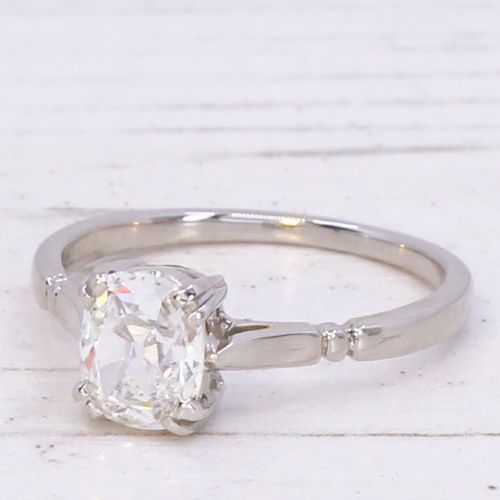
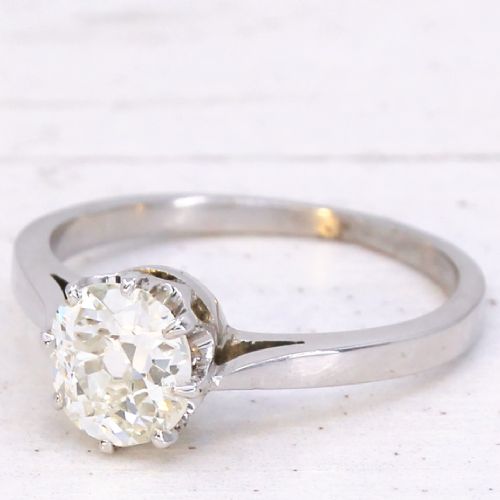
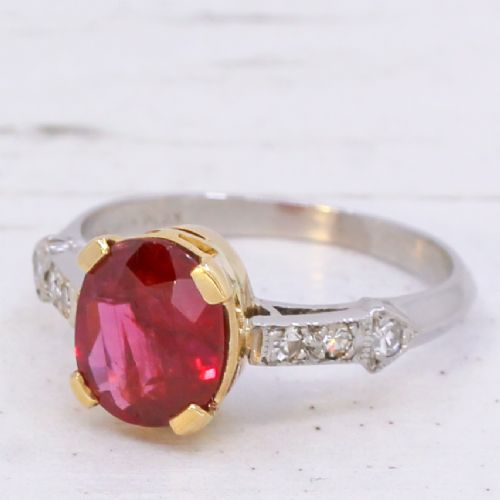
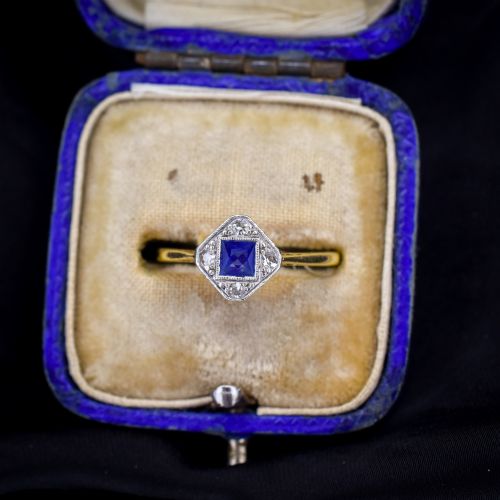
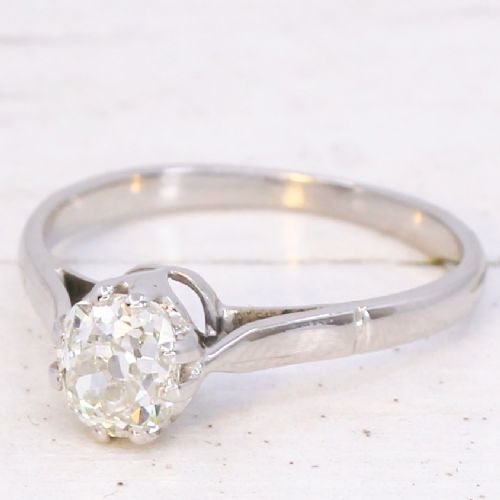
An antique platinum engagement ring captures a century of romance through hand-cut diamonds and geometric mountings.

Antique Platinum Engagement Ring
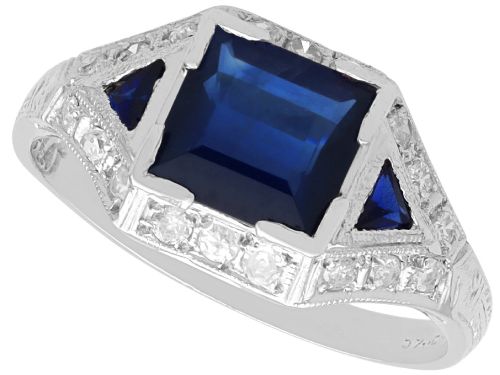
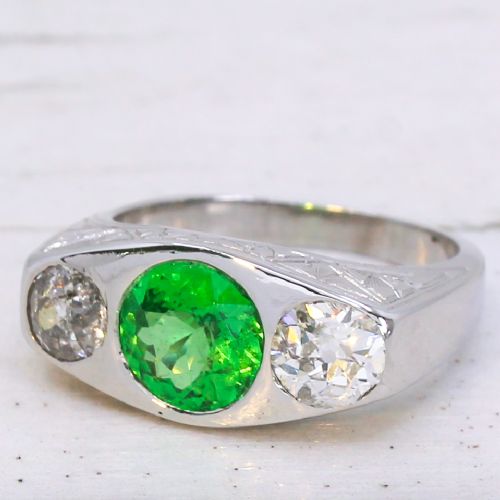
An antique platinum engagement ring brings together durable precious metal and historic gem-cutting traditions from the Edwardian, Art Deco and mid-century eras.
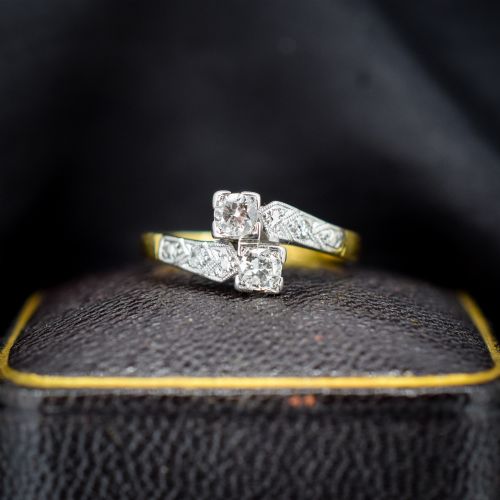
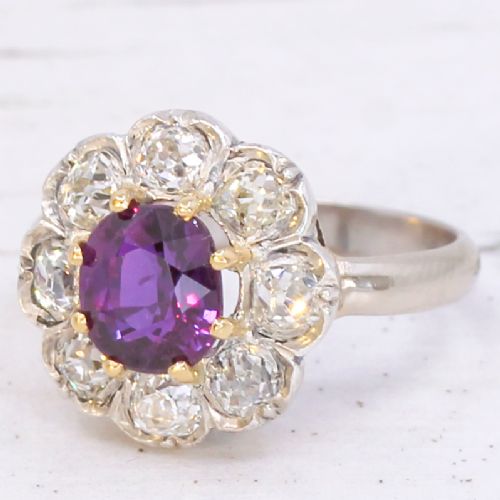
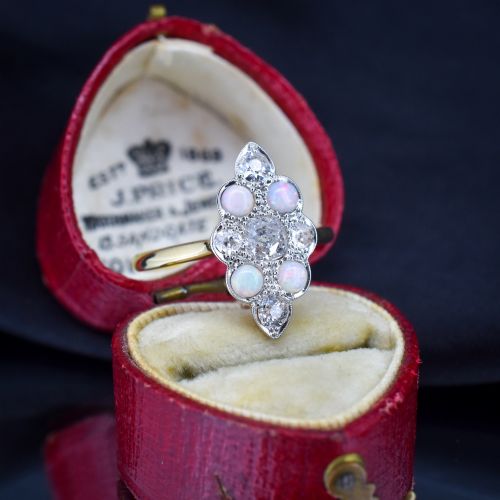
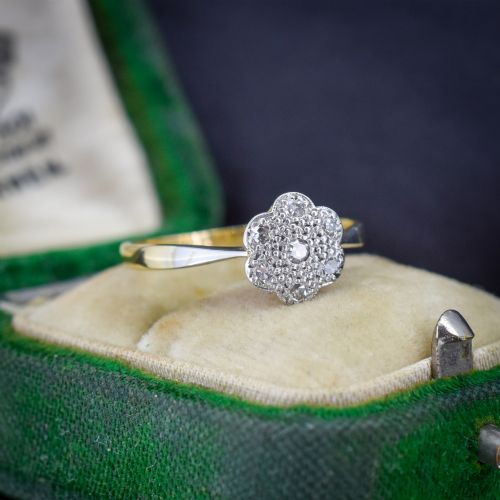
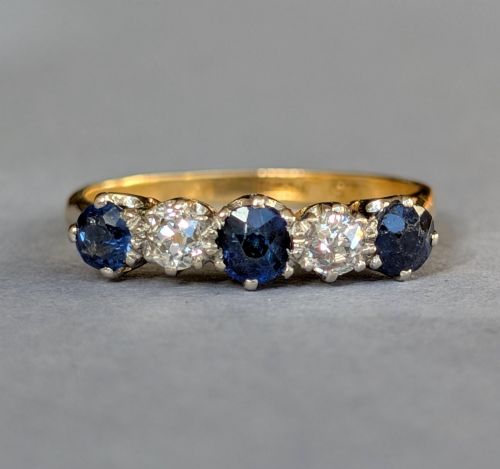
Buyers encountering this phrase most frequently find solitaire, cluster, and multi-stone ring configurations combining platinum settings with either yellow gold or solid platinum bands.
The aesthetic vocabulary spans the delicate lace-like scrollwork of early twentieth-century pieces to the bold geometric lines of the nineteen-twenties and thirties.
How these rings were made
Master metalsmiths utilised dense, strong platinum to create intricate milgrain edges and fine wirework that could hold stones securely with minimal visible metal.
Gems such as old European cut diamonds, unheated sapphires and emeralds were shaped by hand, resulting in softer facets and characteristic deep culets unlike modern brilliant cuts.
Antique Platinum Engagement Ring Retail Price Guide 2026
Typical asking prices for platinum engagement ring among the pieces listed under this phrase on Sellingantiques today, from the lower quarter to the upper quarter. They describe what is for sale here now, not the wider market.
Old-cut diamonds were shaped to catch the flicker of gas lamps and candlelight, meaning your ring spent its youth glowing in the dark.
What varies in quality
The standard of an antique ring depends upon the crispness of the hand-formed platinum milling and the integrity of the original stone settings over decades of wear.
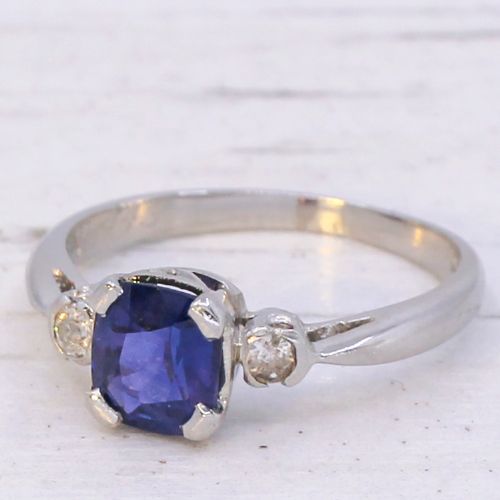
Gemstone selection dictates the upper tier of quality, particularly regarding the natural origin and lack of heat treatment in sapphires, rubies and emeralds.
The Antique Platinum Engagement Ring Glossary
- Platinum
- A dense, naturally white precious metal chosen for its strength and ability to hold fine detail in antique jewellery settings.
- Old European Cut
- A historic diamond cutting style featuring a small table, high crown, and large facets designed to catch candlelight.
- Milgrain
- A decorative border of tiny raised metal beads worked into the edges of platinum settings during the Edwardian and Art Deco periods.
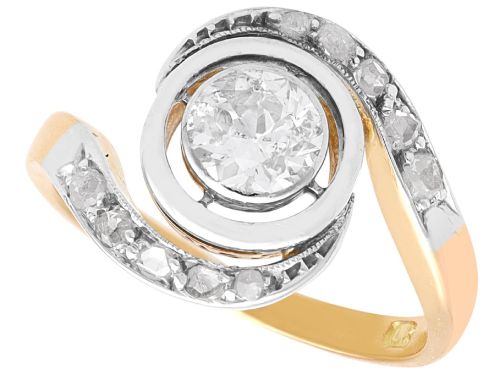
- Toi Et Moi
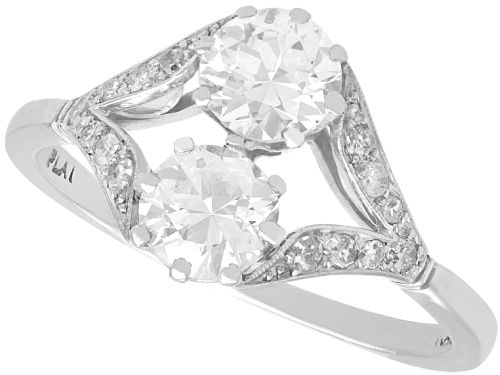
- A French term meaning you and me, describing a two-stone ring style symbolising two souls intertwined.
- Cluster Ring
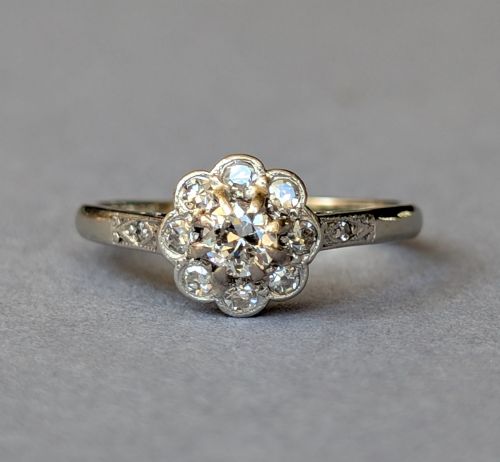
- A design featuring a central gemstone surrounded by a border of smaller accent stones, often shaped as a daisy.
Antique Platinum Engagement Ring: Frequently Asked Questions
What periods do these rings come from?
These rings span several decades from the late Victorian and Edwardian eras through the Art Deco period and into the mid-century years. Each era brings distinct design characteristics, from delicate floral motifs to stark geometric configurations.
Platinum gained widespread favour in jewellery manufacturing during the early twentieth century due to its remarkable durability and bright white finish. This material choice allowed artisans to build lighter, stronger settings that maximised the brilliance of the mounted diamonds and coloured gemstones.
How do I care for an antique ring?
Daily care involves removing the ring during rigorous physical activities to protect the delicate platinum prongs and hand-cut stones from impact. Gentle cleaning with warm soapy water and a soft brush helps maintain the brilliance of old-cut diamonds.
Periodic inspection by a specialist jeweller ensures the security of historic settings and milgrain edges. Avoiding harsh chemical cleaners preserves both the gemstones and the original metal patina built up over generations.
What is an old cut diamond?
An old cut diamond is a historic gemstone shaped entirely by hand before the invention of modern automated sawing and laser techniques. These stones feature smaller tables and deeper pavilions that produce a softer, candlelit sparkle.
Each old cut diamond is unique because the proportions were adjusted by the cutter to retain maximum weight and beauty from the rough crystal. This hand-shaped individuality distinguishes antique rings from contemporary manufactured jewellery.
Are coloured gemstones treated?
Many historic sapphires, rubies and emeralds found in these rings originate from classic sources like Burma, Kashmir, or Colombia and exist in entirely natural, unheated states. Documentation often notes the absence of artificial treatments.
Evaluating coloured stones requires looking for natural inclusions that confirm their geographical origin and geological history. These unique internal characteristics offer proof of authenticity for collectors seeking untouched historic gems.