
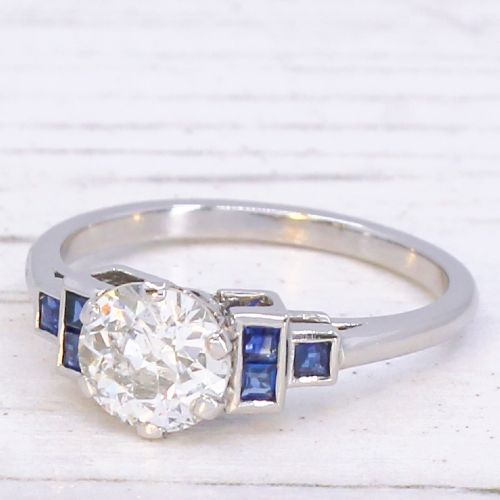


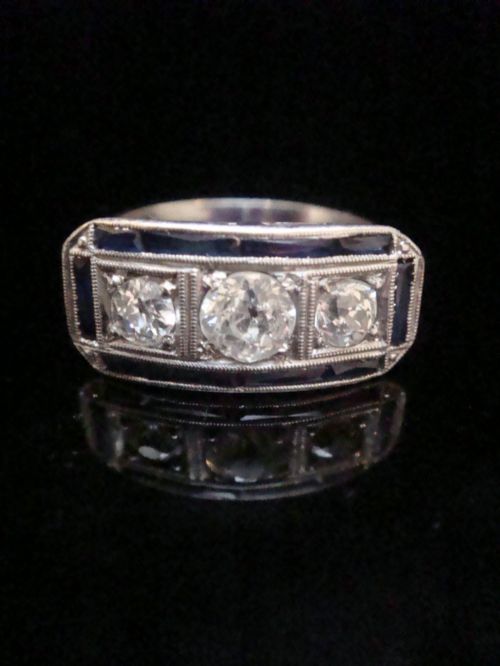


Calibre Cut Sapphire Ring
A calibre cut sapphire ring brings together precisely fitted gemstones and geometric geometry, prized for crisp lines and striking contrast.
Calibre Cut Sapphire Ring
A calibre cut sapphire ring unites closely set blue stones with sparkling diamonds in distinct geometric arrangements. When you search for a calibre cut sapphire ring, you encounter pieces designed with stones shaped individually to fit specific mounting channels without gaps.
The pieces on this page span several decades, with the Art Deco period strongly represented alongside Edwardian, 1940s, and 1960s examples. Rings take various forms including target designs, cluster layouts, marquise shapes, and rectangular configurations.
Origins stretch to French workshops as well as general European production, executed in platinum, 18ct white gold, and combinations of 18ct gold and platinum. Old cut, rose cut, and diamond accents accompany the sapphires across most listings.
Materials and Construction
Goldsmiths constructed these rings primarily in platinum and 18ct white gold, occasionally incorporating yellow gold or tricolour metals. These durable white metals provided the secure settings required for intricate geometric stone arrangements.
The sapphire stones were individually cut and shaped by hand to fit flush against one another in channel or invisible-style settings. This technique demands exact precision from the lapidary to ensure each blue stone aligns perfectly with adjacent diamonds.
Calibre Cut Sapphire Ring Retail Price Guide 2026
Typical asking prices for calibre cut sapphire ring among the pieces listed under this phrase on Sellingantiques today, from the lower quarter to the upper quarter. They describe what is for sale here now, not the wider market.
Some rings manage to squeeze diamonds, rubies, and sapphires into a single platinum mount.
Evaluating Quality and Execution
Quality rests heavily on the precision of the stone cutting and the integrity of the setting work. Stones shaped to fit tightly together without mortar or excessive metal support demonstrate superior bench craftsmanship.
The overall balance of the design, the weight of the precious metal used, and the matching colour saturation of the sapphires separate standard examples from exceptional pieces.
The Calibre Cut Sapphire Ring Glossary
- Calibre cut
- A style of gemstone cutting where small stones are shaped specifically to fit tightly into a geometric channel or pattern. This technique creates continuous lines of colour without visible gaps.
- Target ring
- A concentric ring design featuring a central stone surrounded by one or more geometric halos of contrasting gems. The pattern resembles a traditional archery target when viewed from above.
- Old cut
- A diamond cutting style prevalent before modern brilliant standards, characterised by a smaller table, higher crown, and open culet. These stones display a softer, chunkier light return under candle or ambient light.
- Marquise
- A boat-shaped gemstone cut featuring pointed ends and curved sides. This elongated form maximises carat weight appearance on the finger.
- Tricolour
- Jewellery incorporating three distinct gold colours within a single mounting, such as yellow, white, and rose gold. This combination appeared frequently in French decorative pieces.
Calibre Cut Sapphire Ring: Frequently Asked Questions
How do I identify an Art Deco ring?
Art Deco rings display strict symmetry, sharp geometric motifs, and a preference for white metals like platinum and 18ct white gold. Stone shapes often include baguettes, squares, and custom calibre cuts.
Maker details, French control marks, and specific old cut diamond facets further help distinguish authentic pieces from later reproductions.
Are these rings suitable for daily wear?
Platinum and 18ct gold provide robust mountings for everyday use, but the intricate channel settings of calibre cut stones require care. Hard knocks can dislodge closely fitted gems.
Owners should remove such rings during strenuous manual tasks and schedule periodic professional checks to ensure the tiny stone settings remain secure.
What periods do these rings come from?
The selection includes Edwardian, Art Deco from the 1920s and 1930s, alongside 1940s Retro and later 1960s vintage iterations. Art Deco production forms the majority of the available examples.
French workshops contributed a significant portion of these high-end platinum and white gold dress rings.