

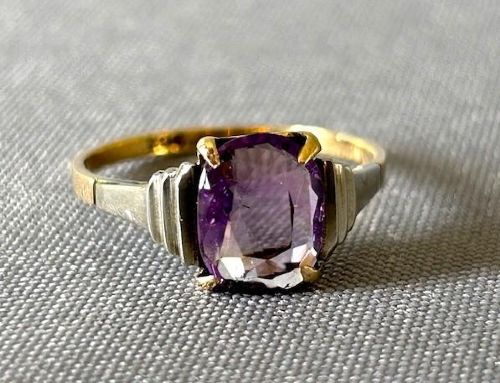
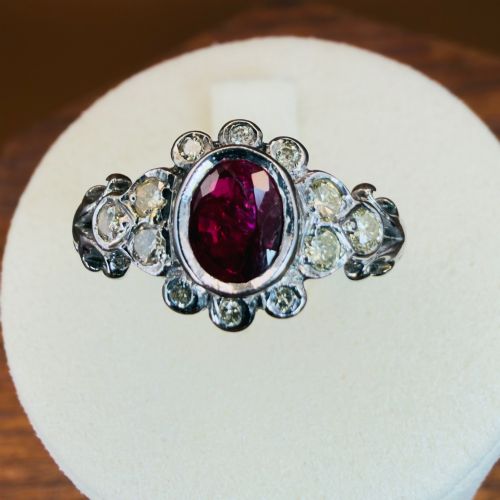
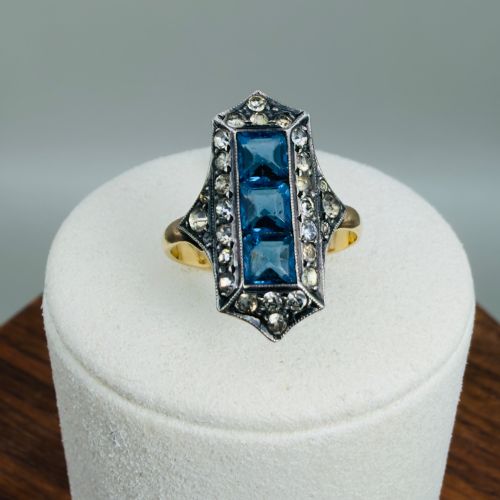
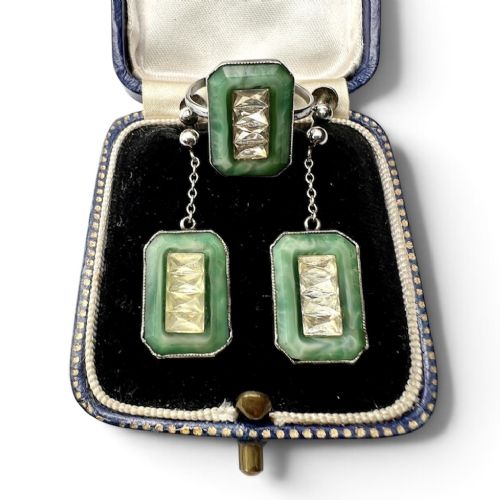
Art Deco Style Ring
An art deco style ring brings geometric precision and bold gemstone contrasts to the hand, drawing on the design grammar of the early twentieth century.
Art Deco Style Ring
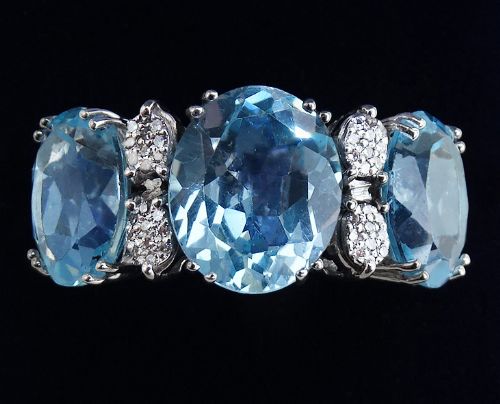
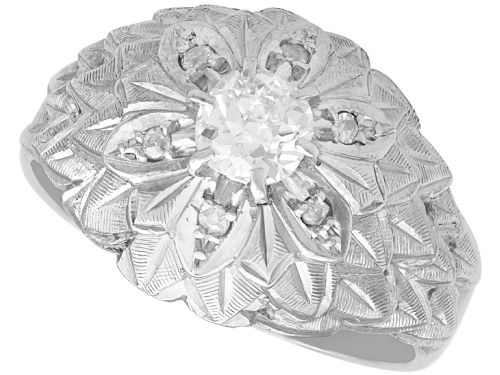
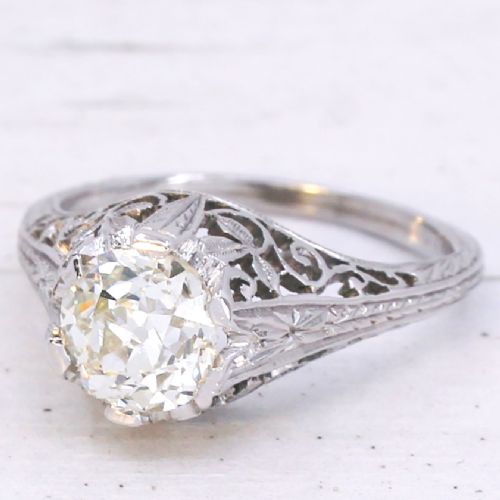
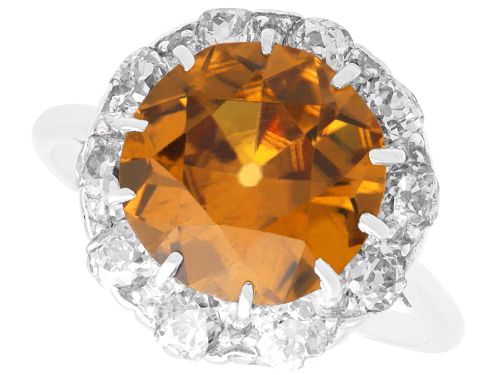
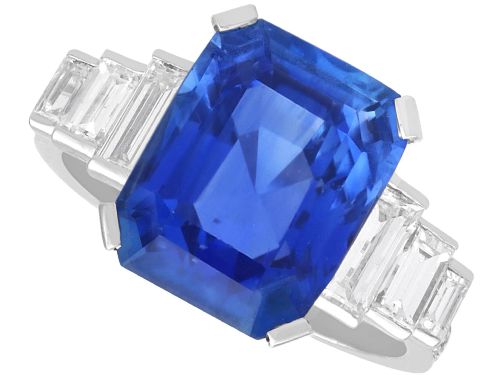
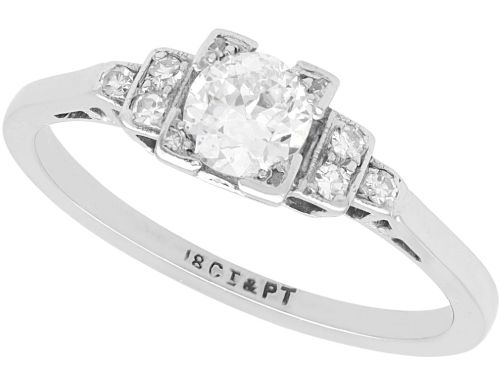
An art deco style ring takes the geometric discipline, linear symmetry and architectural motifs associated with the interwar decades and applies them to fine jewellery. Buyers examining this page encounter pieces spanning original 1920s and 1930s examples alongside later revivals from the mid-century and beyond.
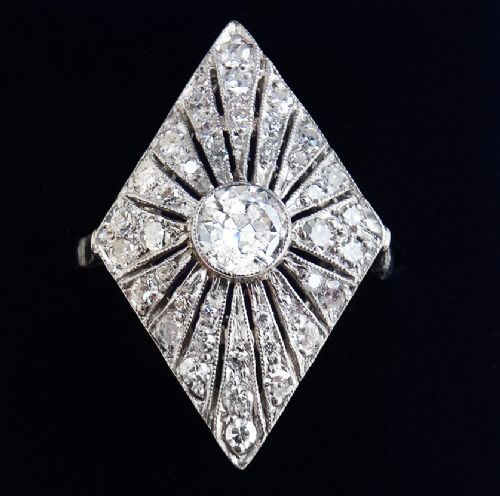
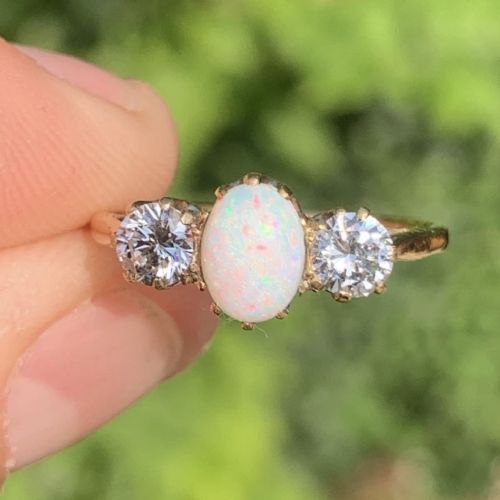
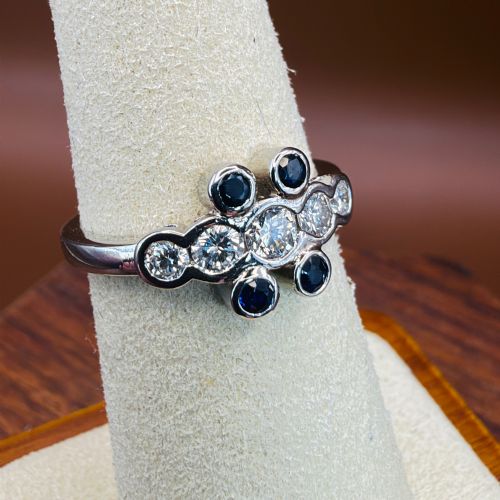
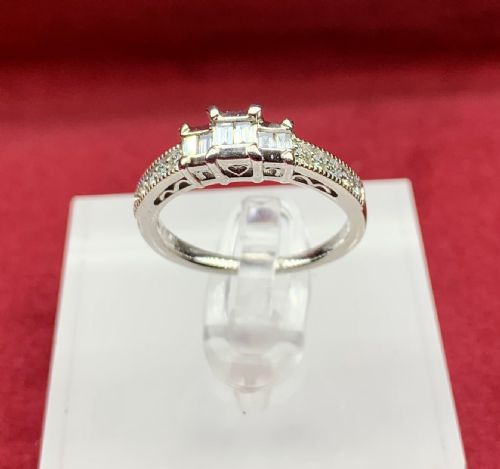
The most common forms on this page are cluster rings, three-stone configurations and plaque rings that stretch across the finger. Platinum and 18ct white gold provide the pale, reflective foundations favoured by makers of the period to showcase diamonds and coloured stones.
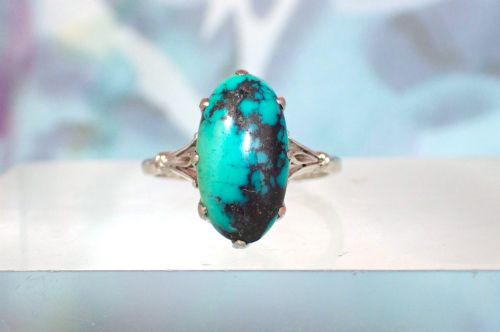
Coloured gemstones feature prominently alongside diamonds, with sapphires, emeralds, rubies, zircons and turquoise creating high-contrast palettes. These rings function equally as historical engagement bands and as statement dress pieces for daily wear.
Materials and construction
Platinum emerged as the dominant metal for high-value jewellery during the period, valued for its strength which allowed workshops to create delicate, knife-edge settings without sacrificing structural integrity. White gold and yellow gold also appear frequently, often paired with millegrain borders that impart a beaded texture to the edges of metal mounts.
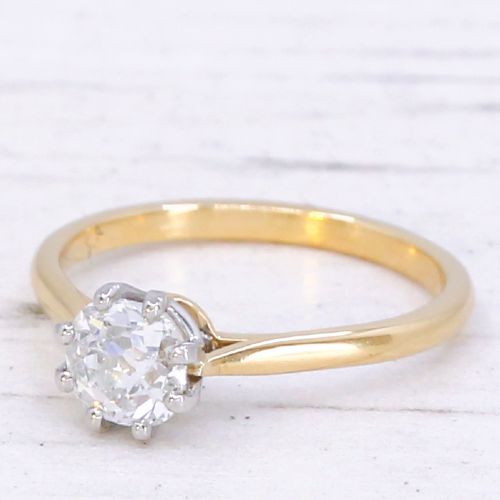
Gemstone cutting was tailored specifically to geometric layouts, utilising old cut diamonds alongside calibré-cut sapphires and emeralds shaped to fit tightly together in channel or pavé arrangements. Hand-fabrication techniques ensured that openwork galleries and pierced metal galleries remained light while securing substantial centre stones.
Art Deco Style Ring Retail Price Guide 2026
Typical asking prices for art deco style ring among the pieces listed under this phrase on Sellingantiques today, from the lower quarter to the upper quarter. They describe what is for sale here now, not the wider market.
Some emeralds in these rings carry geological fingerprints of distant mines, having travelled through time to sit on a twentieth-century finger.
Distinguishing quality across the range
Quality in an art deco style ring rests on the architectural precision of the metalwork and the uniformity of the stone layout. Superior examples display crisp, hand-cut geometric angles, secure prong or bezel work, and meticulous attention to the piercing of the under-gallery.
The choice and matching of gemstones dictate the upper tier of the selection, particularly where unheated sapphires, vivid emeralds or substantial old cut diamonds are integrated into the design. The relationship between the primary stone and its surrounding geometric halo reveals the skill of the original bench jeweller.
The Art Deco Style Ring Glossary
- Millegrain
- A decorative technique involving a row of tiny raised metal beads along the edge of a setting. This finish softens the transition between metal and skin while adding textural detail.
- Plaque ring
- A ring featuring a flat, wide face, often rectangular or marquise in shape, covered in pierced metalwork and pavé-set stones. These designs sit low to the finger and present a broad surface of geometric pattern.
- Calibré cut
- Gemstones specifically shaped and cut to fit a precise, often geometric space within a channel or border setting. This technique requires exceptional lapidary skill to maintain clean lines.
- Old cut diamond
- A diamond cut by hand before modern machine precision, characterised by a smaller table, higher crown and larger culet. These stones catch candlelight and ambient light with a distinctive, softer glow.
- Openwork
- Metalwork pierced through to create an airy, lace-like pattern beneath the gemstone surface. This reduces weight and lets light pass through the stones from behind.
Art Deco Style Ring: Frequently Asked Questions
Are art deco rings suitable for daily wear?
These rings were built to be worn, particularly platinum examples which resist everyday wear and tear effectively. Selecting a robust setting ensures the ring handles regular movement without issue.
Prongs and channel walls benefit from occasional checks by a jeweller to ensure stones remain secure. Removing the ring during heavy manual tasks preserves the delicate millegrain and filigree details.
How do I identify a genuine period piece?
Authentic period pieces show hand-finished touches in the metalwork and utilise diamond cuts typical of the 1920s and 1930s, such as old European or old mine cuts. Maker marks and purity stamps provide further clues to the date of origin.
Later revivals from the mid-century often feature cleaner casting techniques and modern brilliant-cut diamonds. Comparing the construction methods against known historical examples clarifies the age of the ring.
What metals were used in these rings?
Platinum is the most characteristic metal of the era, chosen for its strength and bright white finish. White gold and yellow gold also appear across many designs from the period and subsequent decades.
The choice of metal often dictates the overall aesthetic, with platinum providing a seamless backdrop for diamonds and yellow gold lending warmth to coloured stone clusters.
How should I clean my vintage ring?
Warm soapy water and a soft-bristled brush safely remove everyday oils and debris from the underside of stone settings. Avoiding harsh chemical dips protects fragile gems like emeralds and turquoise.
Professional ultrasonic cleaning is suitable only for durable stones such as diamonds and sapphires. Regular gentle cleaning maintains the brilliance of the stones and the clarity of the metalwork.