
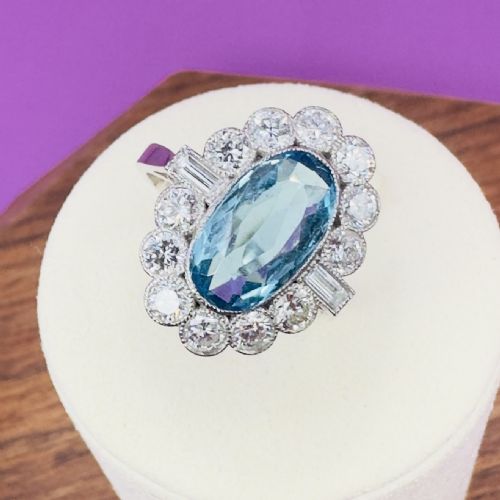


Art Deco Aquamarine Ring
An art deco aquamarine ring brings together pale blue stones and geometric metalwork.
Art Deco Aquamarine Ring
When searching for an art deco aquamarine ring, a buyer meets finger jewellery set with pale blue beryl alongside diamonds, framed in platinum or 18ct gold. The selections here include pieces from the mid twentieth century as well as the geometric period of the nineteen twenties and thirties.
The designs range from single stone solitaires to complex cluster arrangements and trilogy settings. Emerald cuts and oval cuts dominate the central stones, often accompanied by baguette or round diamonds on the shoulders.
What varies in quality
The distinction between tiers rests upon the saturation and clarity of the central aquamarine and the precision of the surrounding diamond work. Larger carat weights and cleaner crystal structures elevate a piece, particularly when paired with substantial platinum weight rather than lighter gold.
Execution of the metalwork defines the finer examples, where hand-formed bezels, crisp claw settings, and delicate millegrain remain sharp and even under magnification. The harmony between the central beryl and the supporting diamond shoulders determines the overall visual balance.
Listings feature platinum, 18ct gold, aquamarine, and diamond across single stone, cluster, and trilogy ring forms.
The Art Deco Aquamarine Ring Glossary
- Aquamarine
- A pale blue variety of beryl mineral used as the primary gemstone in these rings. It derives its name from seawater due to its characteristic translucent cyan coloration.
- Platinum
- A dense, durable, and silvery white precious metal utilised for mounting gems securely. Its strength allows for ultra-fine wirework and claw settings that do not bend easily.
- Emerald cut
- A rectangular gemstone cut featuring cropped corners and stepped facets. This technique emphasises the clarity and depth of the aquamarine crystal.
- Millegrain
- A decorative technique consisting of a raised line of tiny beads along the edge of a metal setting. It adds texture and a refined border to geometric sections.
- Cluster ring
- A design featuring a prominent central stone encircled by a group of smaller accent gems. This arrangement maximises the overall sparkle and visual presence on the hand.
Art Deco Aquamarine Ring: Frequently Asked Questions
How do I care for my ring?
Clean the piece gently using warm soapy water and a soft brush to remove everyday oils from the aquamarine and diamond facets. Avoid harsh chemical dips that might damage vulnerable metal finishes or settings.
Store the ring separately in a lined box to prevent hard diamonds from scratching softer adjacent metals or stones.
Can these rings be resized easily?
Most platinum and 18ct gold bands allow for professional sizing by a skilled jeweller. The complexity of the shoulders and any intricate gallery work dictates the exact limits of adjustment.
Consult a specialist who understands vintage metal structures to ensure structural integrity remains intact after alteration.
What clothes suit these rings?
The geometric lines and cool blue tones pair naturally with tailored evening wear and crisp monochrome garments. They also complement unstructured fabrics like linen and silk by providing a sharp structural contrast.
Wear them as standalone statement pieces on the hand to let the central beryl draw the eye without competing accessories.
Are platinum and white gold different?
Platinum is a naturally white, dense metal that maintains its colour throughout and offers superior durability for fine settings. White gold is an alloy of yellow gold mixed with white metals, often plated with rhodium to enhance brightness.
Over decades, white gold may require replating, whereas platinum develops a quiet patina through daily wear.