

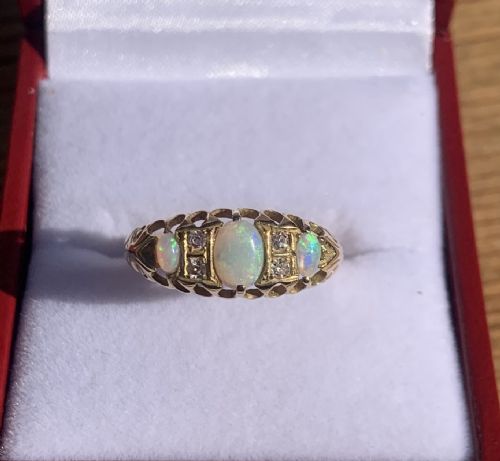


Edwardian Style Cluster Ring
An Edwardian style cluster ring gathers a central stone in a bright perimeter of smaller gems, bringing a concentrated flash of colour and light to the hand.
Edwardian Style Cluster Ring
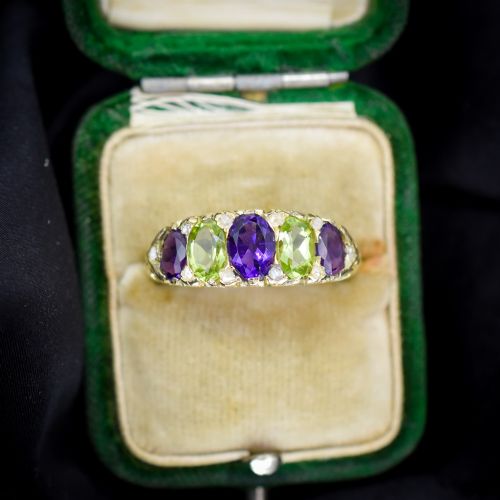
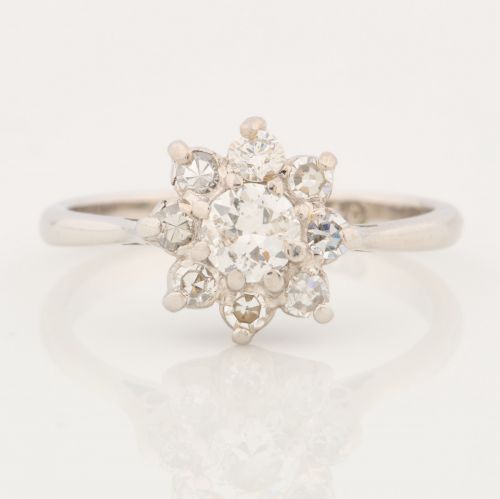
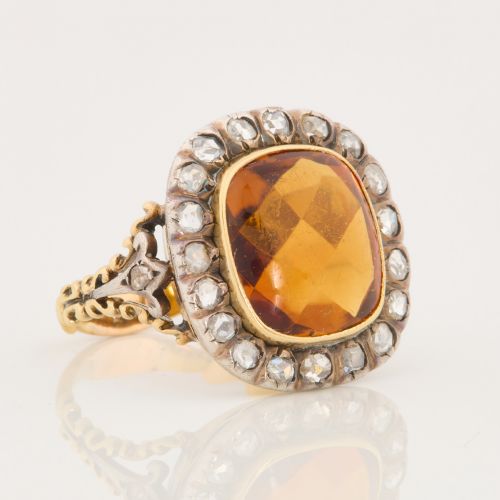
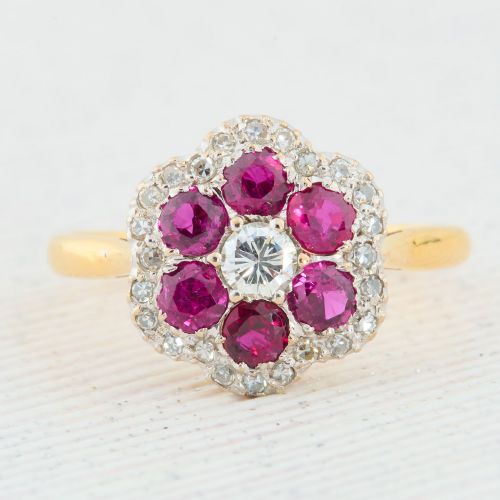
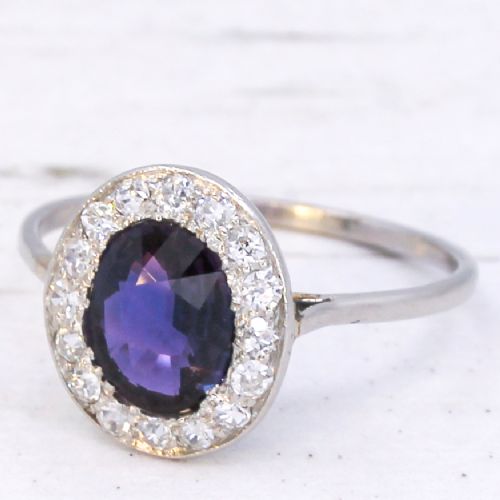
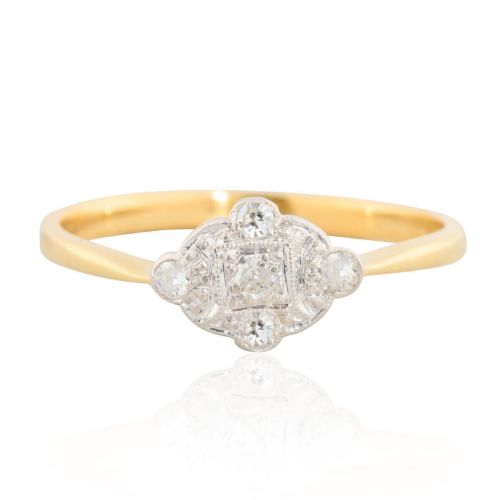
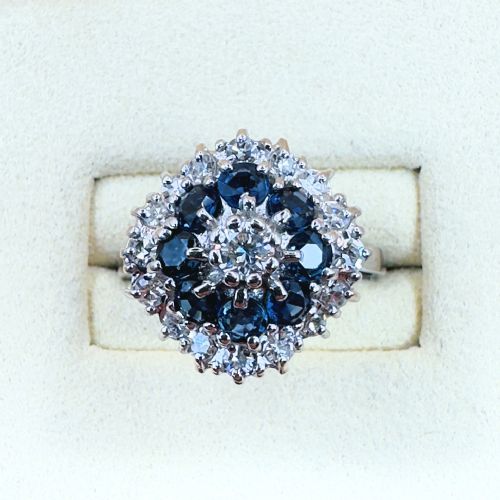
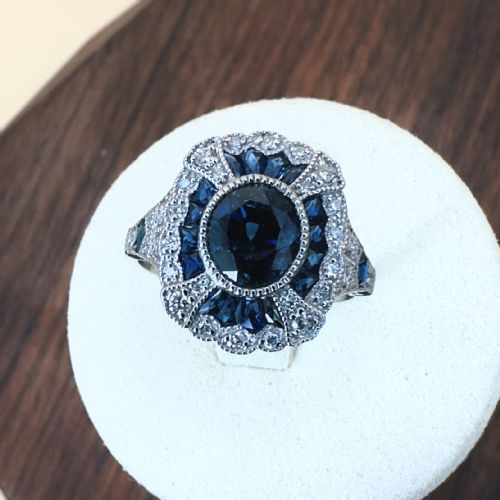
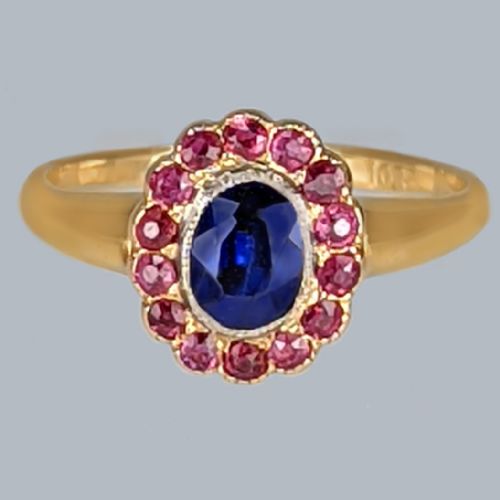
When you search for an edwardian style cluster ring, you encounter pieces that span from the Victorian and Edwardian eras through the Art Deco period and mid-century decades. The selections on this page unite these chronological threads around a central gemstone framed by diamonds or smaller accent stones.
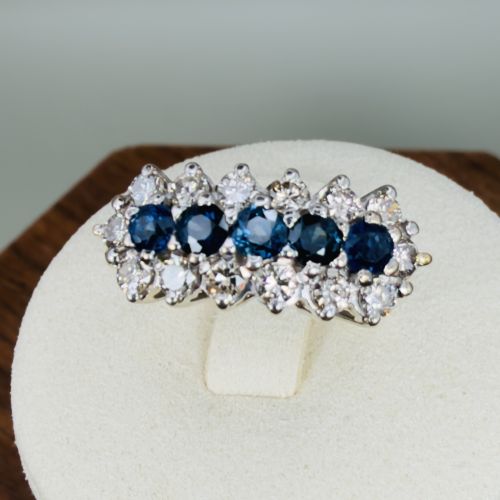
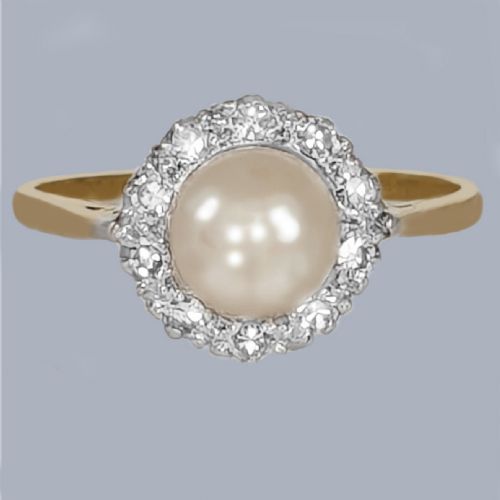
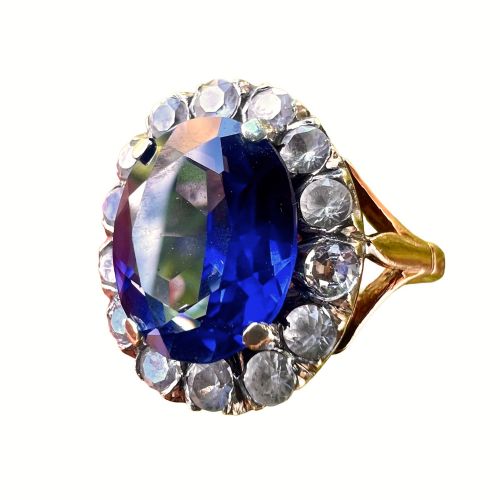
The most common forms you meet include daisy clusters, floral arrangements, boat shapes, and traditional oval or halo designs. These rings draw on periods ranging from the nineteenth century to the 1960s, maintaining a distinct focus on centred geometry and layered gem settings.
Materials and construction
Metals span 18ct gold, 18ct white gold, platinum, and occasional lower gold carats, providing durable backdrops for intricate head settings. Stones combine diamonds with sapphires, rubies, aquamarines, opals, amethysts, and pearls.
Goldsmiths utilised claw settings, bezel mounts, and millegrain edges to secure stones while maximising light entry. Platinum became favoured for its strength in holding delicate diamond clusters during the early twentieth century.
Edwardian Style Cluster Ring Retail Price Guide 2026
Typical asking prices for edwardian style cluster ring among the pieces listed under this phrase on Sellingantiques today, from the lower quarter to the upper quarter. They describe what is for sale here now, not the wider market.
Materials span platinum, 18ct gold, 18ct white gold, alongside sapphires, diamonds, aquamarines, opals, rubies, amethysts, and pearls.
Assessing quality
Quality rests in the harmony of stone proportions and the crispness of the surrounding metalwork. A superior piece exhibits well-matched accent gems that frame the central stone without overwhelming its contour.
The finish of the gallery and the integrity of the prongs dictate longevity. Expert hand-workmanship shows in the even spacing of claw work and the precise alignment of the outer stone border.
The Edwardian Style Cluster Ring Glossary
- Cluster ring
- A ring featuring a prominent central gemstone encircled by a group of smaller stones. This arrangement maximises surface brilliance and visual impact.
- Millegrain
- A decorative technique involving a row of tiny raised metal beads along the edges of a setting. It adds a refined texture typical of Edwardian and Art Deco jewellery.
- Daisy cluster
- A circular ring design where round accent stones radiate evenly around a central gem. The shape resembles the petals of a flower.
- Boat ring
- A horizontally stretched cluster design that tapers towards the ends. It sits across the finger rather than along its length.
- Halo ring
- A setting style where a central stone is enclosed by an uninterrupted ring of smaller pavé or bezel-set diamonds.
Edwardian Style Cluster Ring: Frequently Asked Questions
What defines a cluster ring?
A cluster ring pairs a central focal stone with a surrounding border of smaller gems. This configuration creates a larger visual presence on the finger than a single stone would manage alone.
Designs vary from tight circular daisy patterns to elongated boat shapes and floral motifs. The grouping allows jewellers to mix coloured stones with diamonds effectively.
How do I care for antique cluster rings?
Regular gentle cleaning in warm soapy water keeps these rings bright, though softer stones like opals and pearls require extra caution. Professional inspection of the claws ensures the smaller surrounding stones remain secure in their settings.
Avoiding harsh chemicals and removing the ring during manual tasks protects the delicate millegrain work and metal settings from undue wear.
How can I tell the period of a ring?
Period identification relies on a combination of metal choice, cutting style, and hallmarks. Platinum and white gold often point towards Edwardian or Art Deco phases, while yellow gold frequently anchors Victorian or mid-century pieces.
Gemstone cuts also offer clues, as old cut diamonds and cabochon stones appear more frequently in earlier pieces. Hallmarks stamped inside the band provide definitive dates and assay office locations.
Are these rings suitable for daily wear?
Many cluster rings serve well for everyday wear if constructed in robust metals like platinum or 18ct gold. Rings containing softer gems such as opals or pearls need more mindful handling to prevent surface damage.
Checking the security of the central and peripheral settings periodically ensures the piece withstands regular movement without losing stones.