
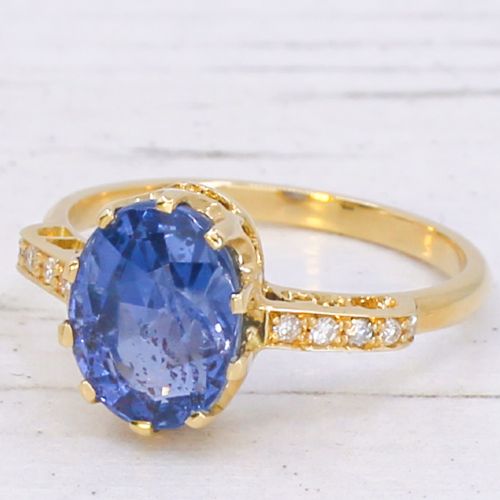
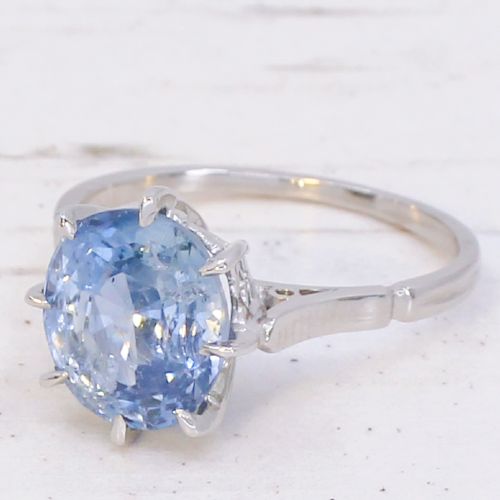
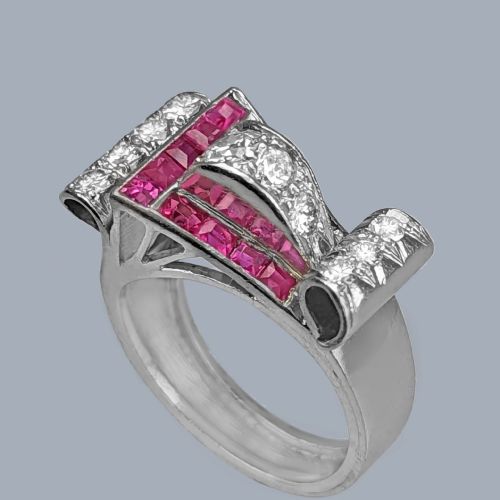
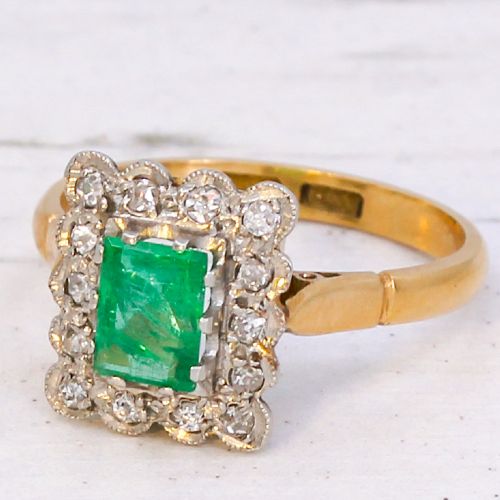
Vintage Gemstone Cocktail Ring
A vintage gemstone cocktail ring makes a bold statement on the hand, built for evening wear with substantial stones and expressive design.
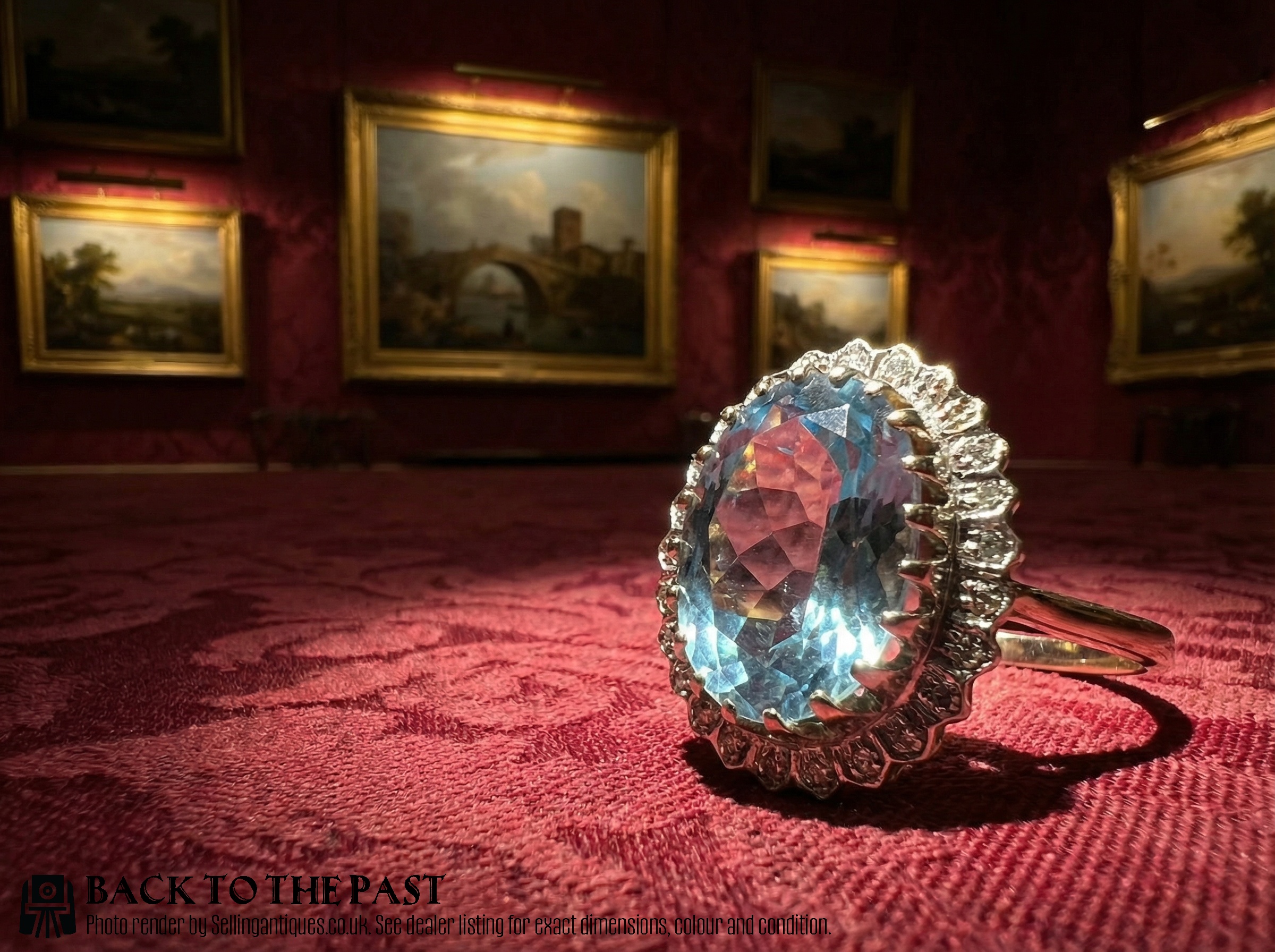
Vintage Gemstone Cocktail Ring
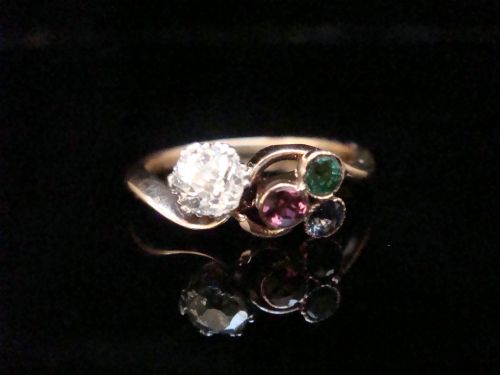
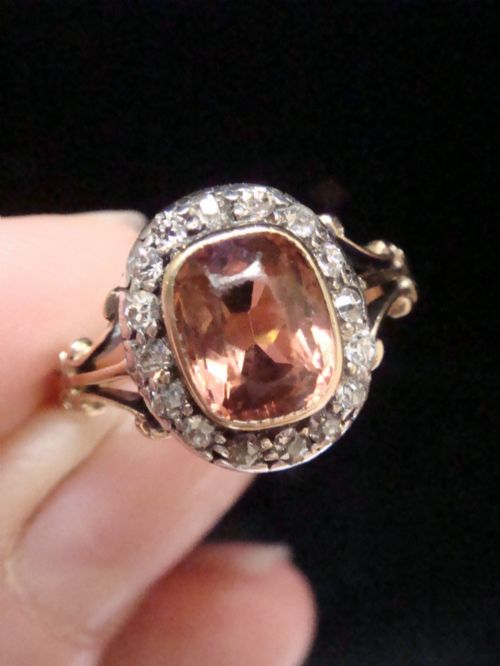
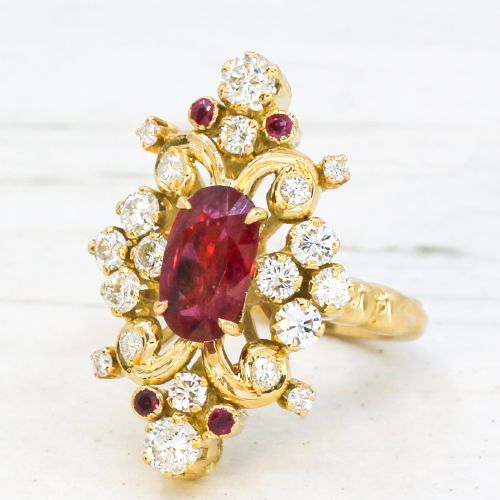
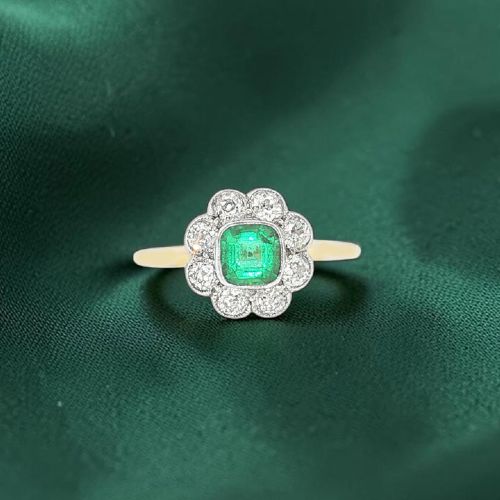
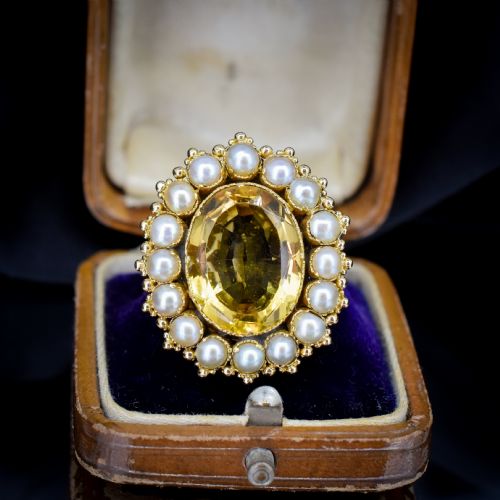
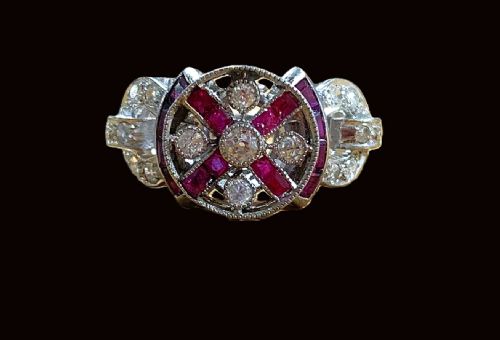
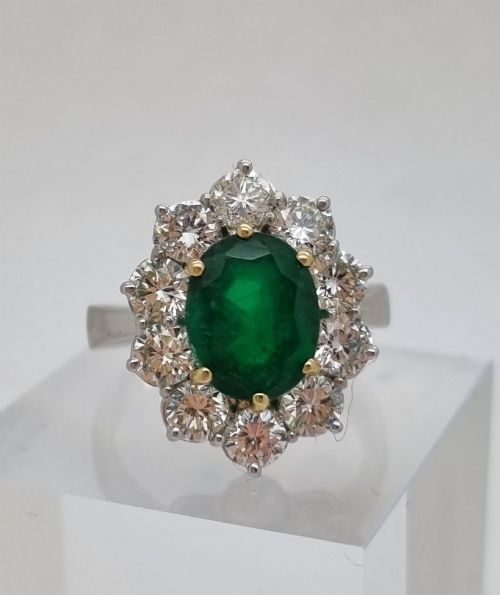
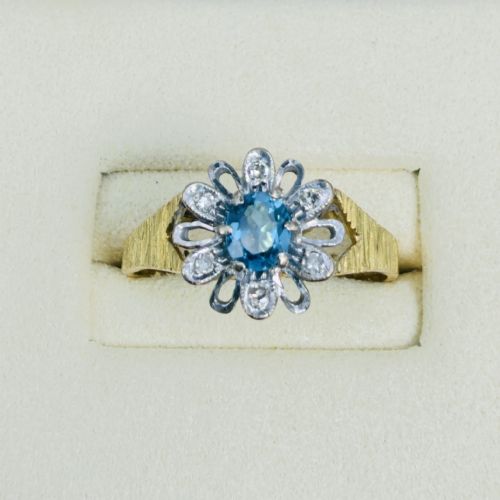
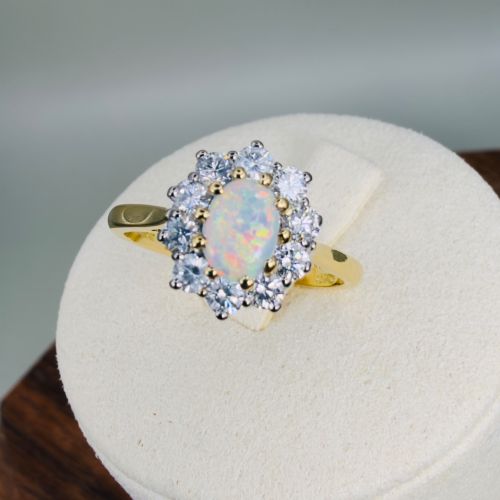
A vintage gemstone cocktail ring brings together prominent central stones and surrounding accent diamonds across several decades of jewellery design. Buyers searching for a vintage gemstone cocktail ring encounter forms ranging from strict geometric Art Deco clusters to organic mid-century flower motifs.
The selections span Edwardian delicacy, 1940s retro mass, and robust later twentieth-century mountings. Cluster rings, floral shapes, and heavy single-stone settings dominate the physical forms available.
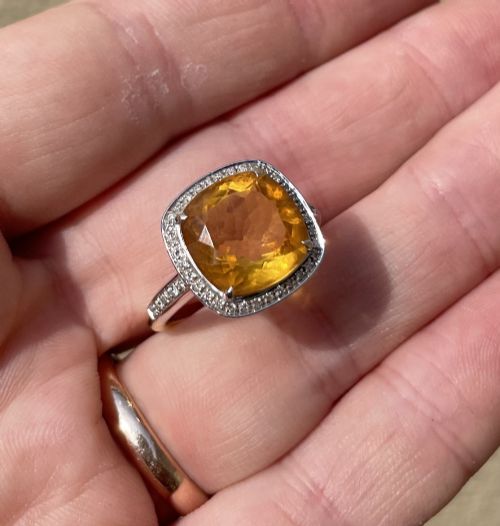
Originating from periods spanning the Victorian era through to the 1970s, these pieces utilise saturated colour from rubies, sapphires, emeralds, citrines, and amethysts.
Materials and construction
Metals span platinum, 18ct white and yellow gold, 14ct gold, and 9ct gold, providing the structural weight necessary to support large central gems. Settings frequently employ claw mounts and flush bezels to secure clusters of diamonds around coloured focal stones.
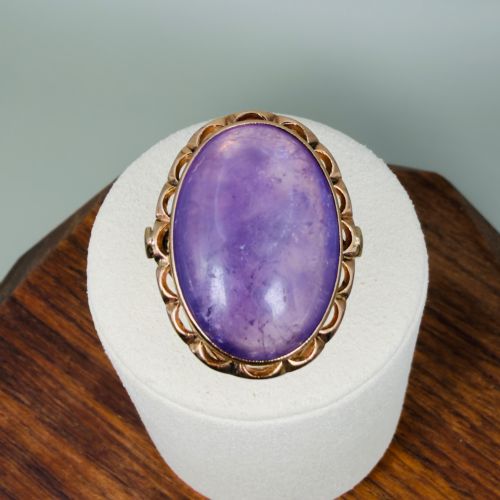
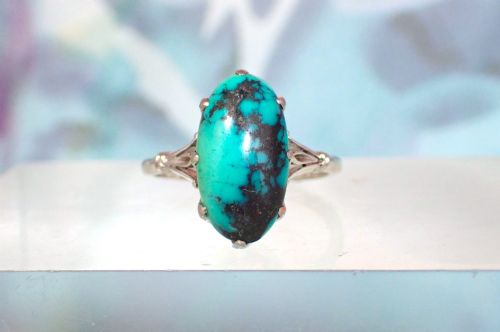
Stone cutting techniques visible across the inventory include old-cut diamonds paired with cushion, oval, pear, and cabochon coloured gems. Platinum and high-karat gold frames distribute the considerable physical weight of stones like aquamarine and jade.
Vintage Gemstone Cocktail Ring Retail Price Guide 2026
Typical asking prices for vintage gemstone cocktail ring among the pieces listed under this phrase on Sellingantiques today, from the lower quarter to the upper quarter. They describe what is for sale here now, not the wider market.
Listings span platinum, yellow gold, white gold, and rose gold across periods from the Victorian era to post-1960.
Distinctions in standard
Quality rests in the natural saturation and unheated state of stones like Ceylon sapphires and Burma rubies, set against the uniform brilliance of old-cut diamonds. Heavier metal weights in the shank and precise stone alignment separate masterwork cluster rings from standard production.
The integrity of the central claw settings and the absence of thermal enhancement in major gemstones dictate the upper tier of the range. Lighter 9ct gold mounts with commercial-grade amethyst or citrine represent more accessible production.
The Vintage Gemstone Cocktail Ring Glossary
- Cluster ring
- A ring featuring a prominent central gemstone encircled by a ring of smaller accent stones, typically diamonds.
- Cabochon
- A gemstone shaped and polished with a smooth convex surface rather than faceted with flat planes.
- Old cut
- An early diamond cutting style characterised by a high crown, small table, and open culet, common in antique pieces.
- Unheated
- A natural gemstone that has undergone no thermal treatments to improve its colour or clarity.
- Buckle ring
- A ring styled to resemble a fastened belt or buckle, frequently found in late Victorian and Retro periods.
Vintage Gemstone Cocktail Ring: Frequently Asked Questions
How do I wear a cocktail ring daily?
These prominent rings suit evening wear or special daytime occasions due to their physical size and height off the finger. Take care when performing manual tasks to protect soft stones like opal or jade from impact.
Pair them simply to let the central gemstone and surrounding diamond cluster remain the focal point of your hand.
What periods do these rings come from?
The pieces span the Victorian era, Edwardian period, 1920s Art Deco, 1940s Retro, and mid-century designs up to the 1970s. Each era brings distinct metal choices and geometric or organic silhouettes.
Art Deco pieces favour platinum and sharp symmetry, while 1950s and 1960s examples often utilise yellow gold and floral cluster arrangements.
How can I tell an Art Deco ring apart?
Art Deco rings rely on platinum or white gold settings featuring strong geometric lines, stepped shoulders, and symmetrical arrangements of calibre-cut stones. They avoid the flowing organic curves seen in earlier Edwardian or later mid-century designs.
Look for contrasting colour pairings like ruby and diamond within strict architectural frameworks.
Which gemstones are most common?
Sapphires, rubies, and emeralds appear frequently as central stones, often accompanied by accent diamonds in cluster formations. Citrines, amethysts, aquamarines, and jade also form substantial focal points.
These stones provide a wide palette ranging from deep blue and red to translucent green and violet.