




Mid Century Ruby Ring
A mid century ruby ring brings together rich red corundum and brilliant diamonds in bold, sculptural settings designed to catch the eye.
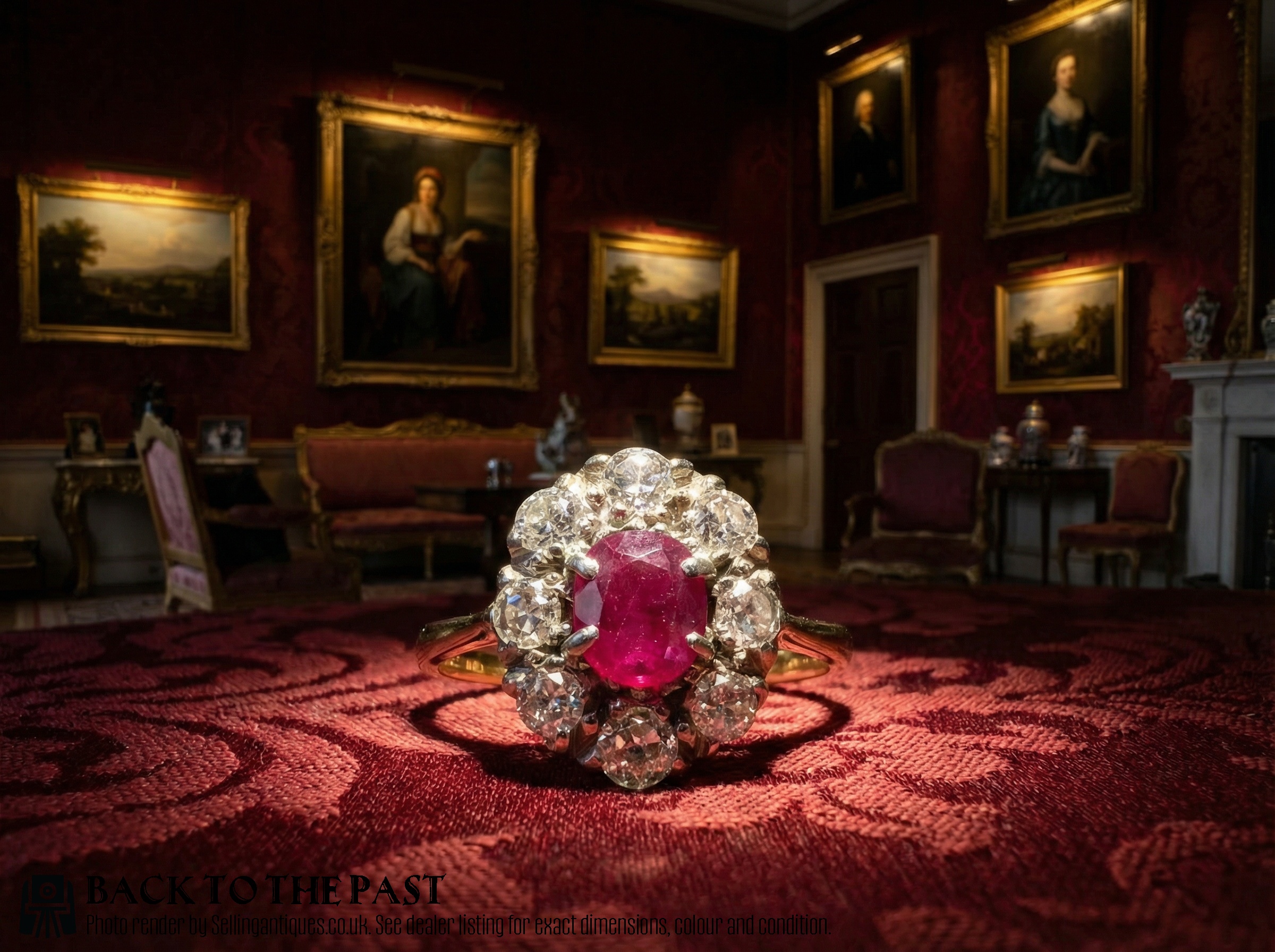
Mid Century Ruby Ring
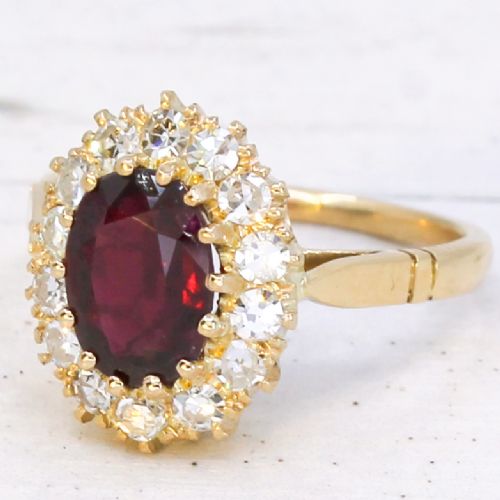
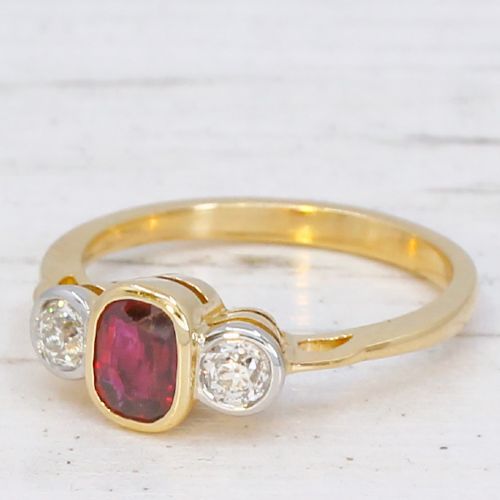
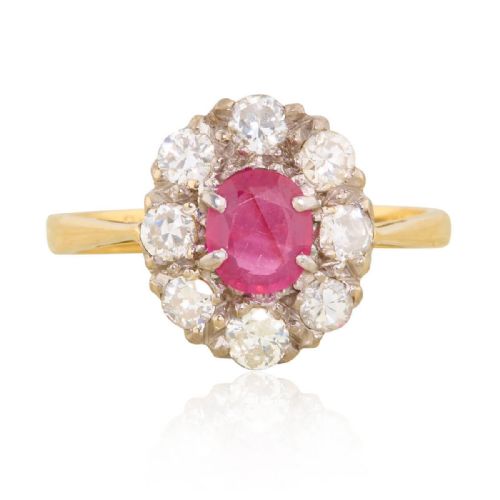
A mid century ruby ring captures the confident design language of the nineteen-forties and nineteen-fifties, spanning versatile dress rings, substantial cocktail pieces, and traditional three-stone configurations. You encounter cluster, halo, and ballerina formats most frequently, often pairing vibrant red stones with old cut or rose cut diamonds.
The aesthetic embraces both geometric precision and sweeping organic curves, utilising yellow gold, white gold, and platinum-hued mountings. Gems range from modest accent stones to prominent Burmese origin centrepieces exceeding twenty carats in weight.
Materials and Construction
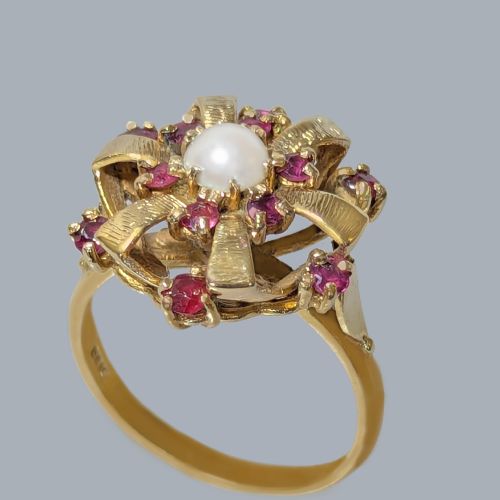
Goldsmiths during this period employed both yellow gold and eighteen-carat white gold to frame their gemstones, frequently incorporating nine-carat yellow gold for specific hallmarked iterations. Settings rely on meticulous claw, bezel, and channel arrangements to secure rubies alongside diamonds and occasional pearls.
Lapidaries cut the corundum into various profiles, including faceted rounds, baguettes, triangles, and smooth cabochons. These stones are supported by carefully forged metal frameworks designed to maximise light passage through the gemstone matrix.
Mid Century Ruby Ring Retail Price Guide 2026
Typical asking prices for mid century ruby ring among the pieces listed under this phrase on Sellingantiques today, from the lower quarter to the upper quarter. They describe what is for sale here now, not the wider market.
One exceptional archive piece featured twenty-six carats of cabochon ruby in a single solitaire mounting.
Distinctions in Quality
Quality rests upon the origin, saturation, and clarity of the ruby, alongside the carat weight and cut grade of accompanying diamonds. Burmese stones with natural saturation command particular attention, while master craftsmanship is evident in the structural integrity of complex cluster and ballerina mounts.
The harmonious scale between the central ruby and its diamond surround dictates visual balance. Finer examples display superior metal finishing, crisp hallmarks, and secure stone placement that withstands daily wear.
The Mid Century Ruby Ring Glossary
- Burmese Ruby
- A natural ruby originating from Myanmar, historically prized for an intense red colouration and internal crystal structure.
- Ballerina Ring
- A distinctive cluster design featuring a central stone encircled by tapering baguette diamonds that mimic a dancer's tutu.
- Old Cut Diamond
- A diamond cut by hand before modern machinery, characterised by a high crown, small table, and deep pavilion.
- Halo Ring
- A setting where a prominent central gemstone is completely encircled by a ring of smaller pavé or claw-set diamonds.
- Cocktail Ring
- A large, dramatic dress ring designed to draw attention during evening social gatherings.
Mid Century Ruby Ring: Frequently Asked Questions
How do I care for a ruby ring?
Rubies rank high on the hardness scale, making them durable for regular wear, though they still require gentle cleaning with warm soapy water and a soft brush.
Avoid exposing vintage settings to harsh chemical cleaners or ultrasonic baths, which can weaken older gold prongs and damage softer accompanying gems like pearls.
Were these rings worn daily?
Many mid-century designs served as engagement rings or significant anniversary gifts, intended for frequent enjoyment rather than preservation in a vault.
Heavier cocktail variations and intricate ballerina clusters were typically reserved for evening events and special occasions.
How can I date a mid century piece?
Dating relies on official metal hallmarks, maker marks, and stylistic indicators such as the transition from nineteen-forties retro bulk to nineteen-fifties refinement.
Stone cut types, particularly old cuts versus later brilliant cuts, also offer clues to the manufacturing window.
What metals are typical for these rings?
Yellow gold and eighteen-carat white gold dominate the surviving inventory from this era, occasionally supplemented by nine-carat yellow gold components.
The choice of metal often reflects the prevailing fashion trends of the specific decade, shifting between warm golden tones and silvery white finishes.