

Art Deco Diamond Cluster
An art deco diamond cluster brings geometric brilliance and enduring elegance directly to the hand or ear.
Art Deco Diamond Cluster
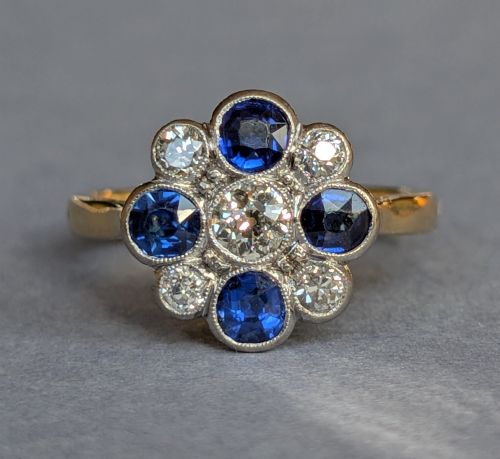
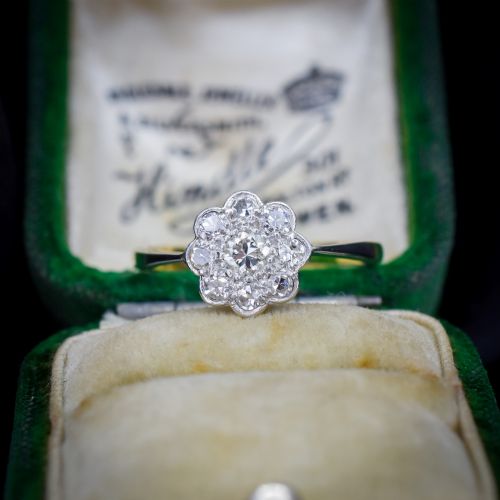
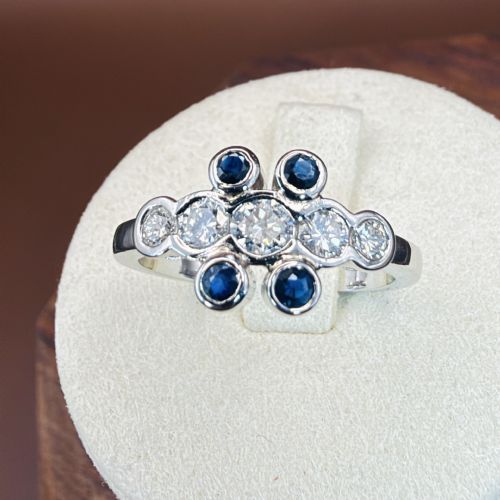
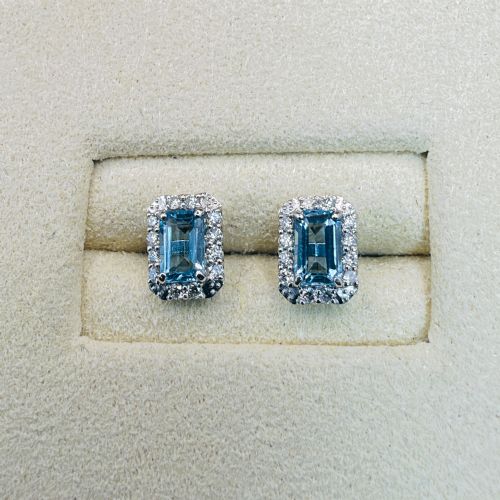
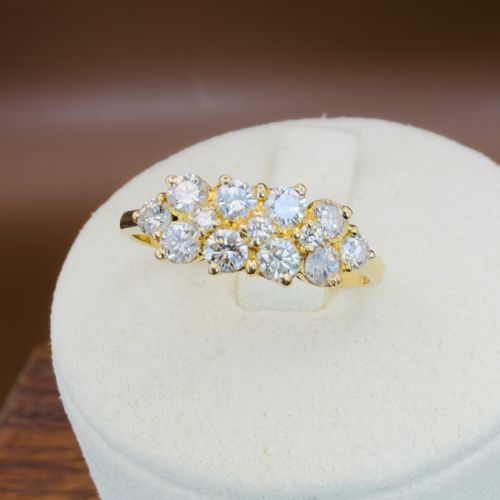
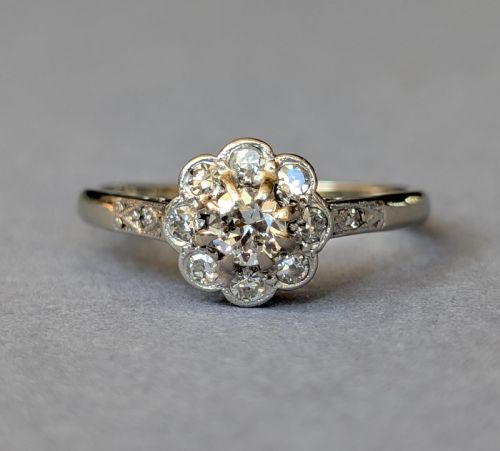
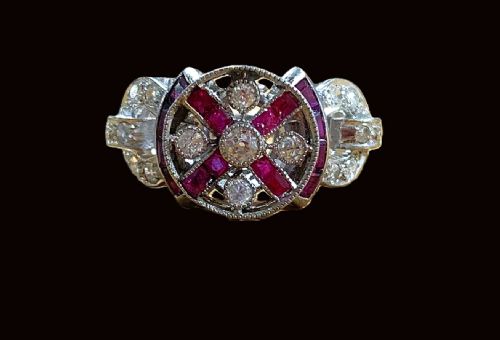
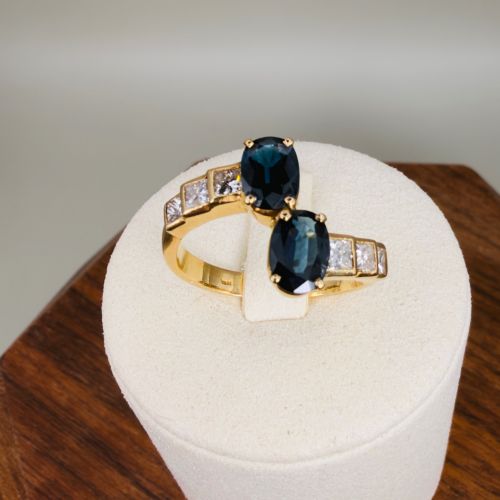
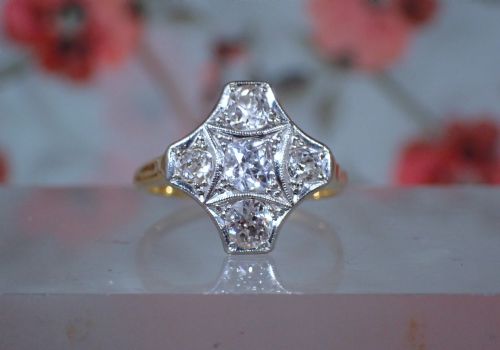
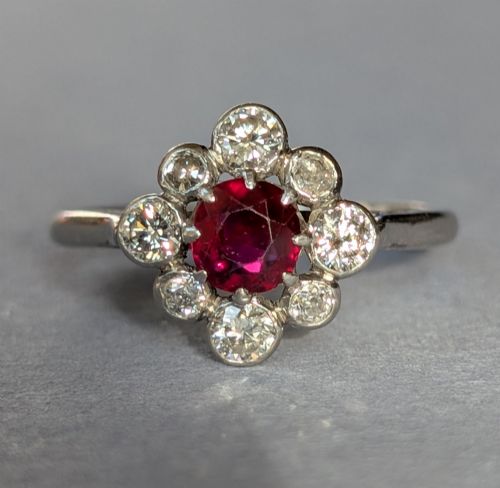
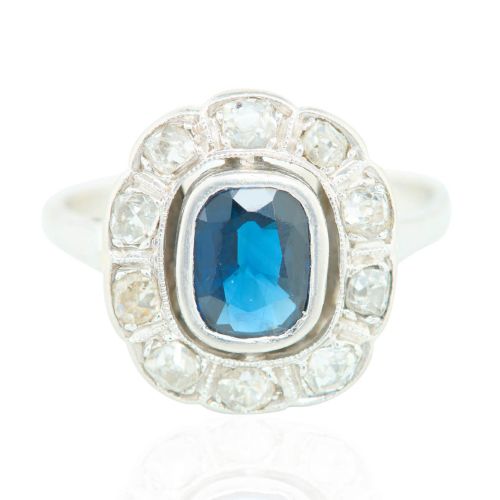
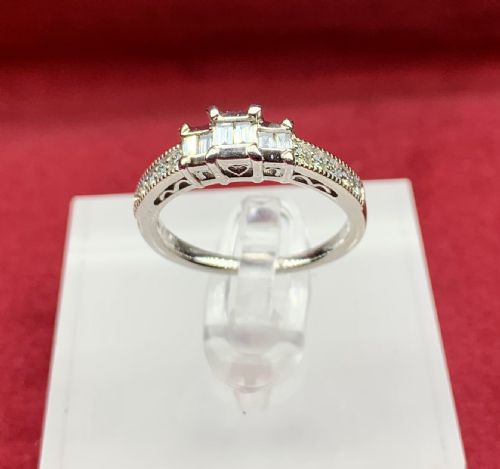
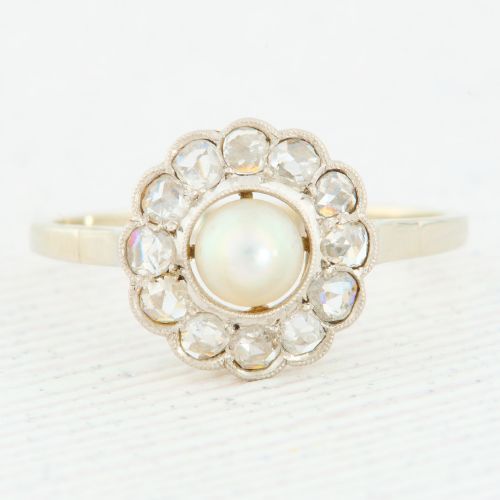
The dominant forms on this page include traditional daisy clusters, target rings, and elongated navette shapes. Platinum and white gold settings predominate, providing a crisp monochromatic contrast to colourful gemstone surrounds. While original period items from the nineteen twenties and nineteen thirties form the core selection, later revival interpretations also appear within the inventory.
Materials and Construction Techniques
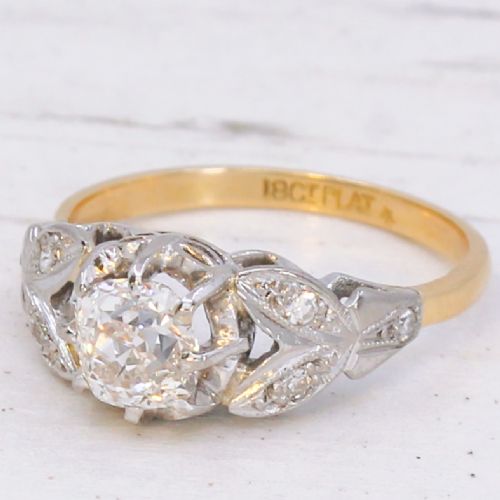
Jewellers of the period relied heavily on platinum for its strength and malleability, allowing for delicate millegrain edges and intricate openwork galleries without risking stone loss. Eighteen carat white gold and yellow gold also served as primary structural metals, frequently combined in a single mounting to hold the diamonds securely.
Gemstones were cut specifically to fit tight geometric channels, utilising old European cuts, emerald cuts, and calibre cuts arranged in strict symmetry. Hand fabrication dominated the workshops, resulting in bezel and prong settings that maximised light entry into every diamond and surrounding coloured stone.
Art Deco Diamond Cluster Retail Price Guide 2026
Typical asking prices for art deco diamond cluster among the pieces listed under this phrase on Sellingantiques today, from the lower quarter to the upper quarter. They describe what is for sale here now, not the wider market.
Some clusters hide secret geometric galleries beneath the stones, engineered so only the wearer knows the intricate metalwork underneath.
Distinctions in Quality and Craftsmanship
Superior examples of an art deco diamond cluster display meticulous hand piercing and precise stone calibration where every surrounding gem sits flush without visible gaps. The fineness of the millegrain work and the symmetry of the geometric basket structure separate master workshop output from simpler mass production.
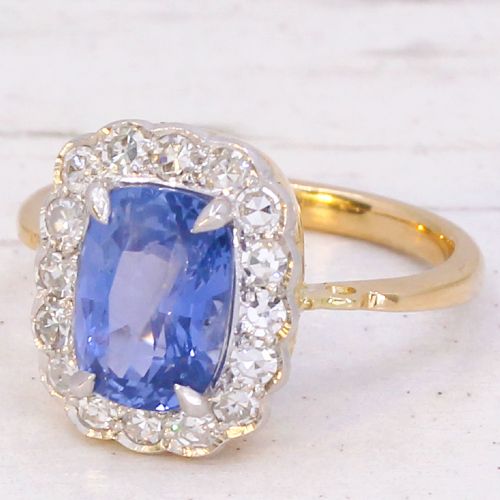
The quality of the central diamond and accompanying coloured gemstones significantly elevates a piece, particularly when paired with certified origin reports for untreated sapphires or emeralds. Original unpolished settings that retain their sharp knife-edge bands and crisp hallmarks command greater appreciation than those worn down by generations of resizing.
The Art Deco Diamond Cluster Glossary
- Old European cut
- A vintage diamond faceting style prevalent before the modern brilliant cut was standardised, featuring a small table, high crown, and large culet that produces a softer, candlelit sparkle.
- Calibre cut
- Gemstones specifically shaped, often square or rectangular, to fit tightly into geometric channels or borders within a jewellery mount.
- Millegrain
- A decorative technique consisting of a row of tiny raised metal beads along the edges of a setting, adding a refined textural border typical of the period.
- Navette
- A boat-shaped gemstone or mounting design that tapers to points at both ends, creating an elongated silhouette on the finger or lapel.
- Target ring
- A circular cluster design featuring a central diamond surrounded by one or more concentric rings of contrasting coloured gemstones or smaller diamonds.
Art Deco Diamond Cluster: Frequently Asked Questions
How do I care for my ring?
Clean your piece gently using warm soapy water and a soft brush to remove everyday oils from beneath the stones. Avoid harsh ultrasonic cleaners, especially if the piece contains softer coloured gems like emeralds or pearls.
Have the claw settings and platinum galleries inspected periodically by a professional jeweller to ensure the diamonds and surrounding stones remain completely secure.
Can these rings be resized easily?
Most gold and platinum mountings can be adjusted by a skilled jeweller, though the geometric shoulders and intricate side engraving require careful handling. Extensive sizing might disrupt symmetrical patterns near the band.
Consult a specialist who understands vintage construction before attempting any alterations to antique gold or platinum shanks.
Are these pieces suitable for daily wear?
Platinum and eighteen carat gold provide robust durability for everyday enjoyment when maintained properly. However, older settings require mindful treatment during active tasks to protect delicate millegrain and calibre cut stones.
Remove your jewellery before swimming, gardening, or heavy lifting to preserve the structural integrity of the original mount.
How do I identify a true period piece?
Examine the construction methods for hand-beveled edges, integrated platinum tops on gold shanks, and authentic old cut diamond faceting. Hallmarks and stamps indicating country of origin provide further clues to the era of manufacture.
Compare the geometric symmetry and bezel styles against documented examples from the nineteen twenties and nineteen thirties to confirm authenticity.