


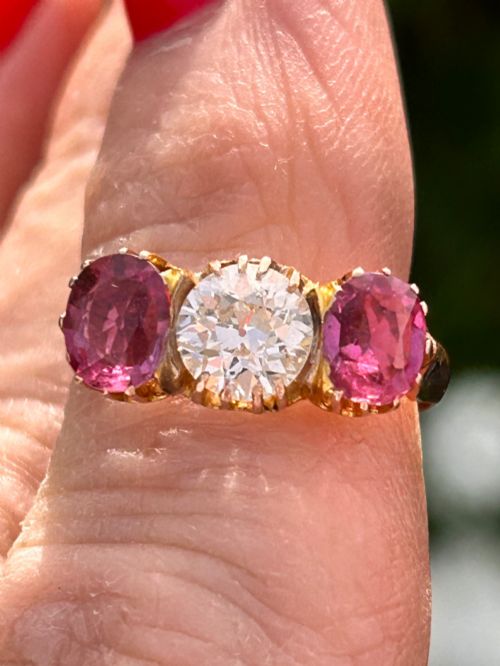
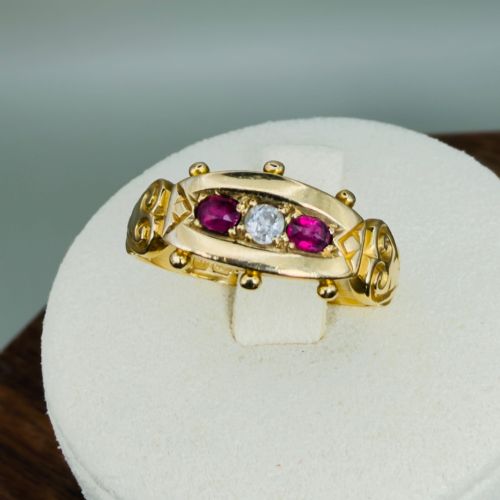
Antique Ruby Diamond Ring
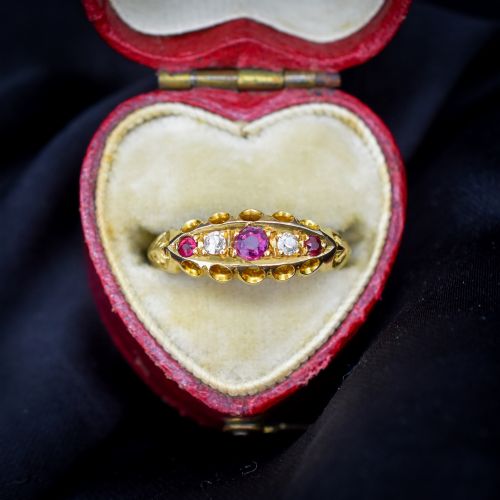
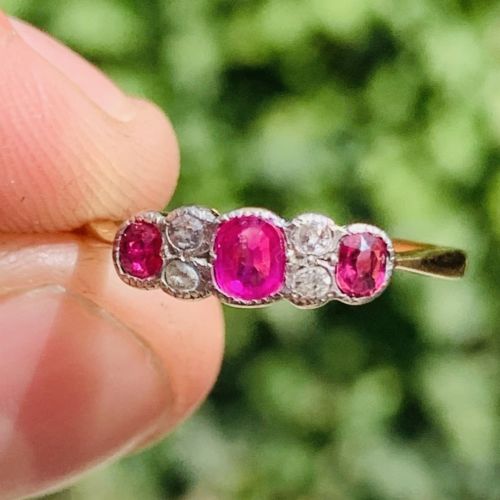
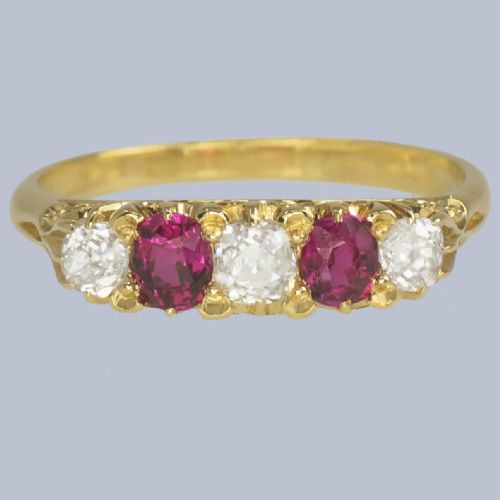
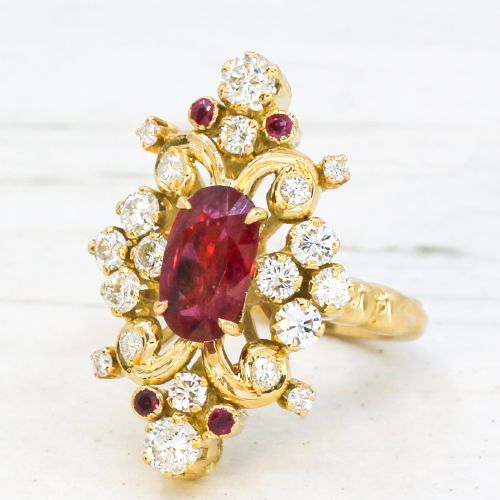
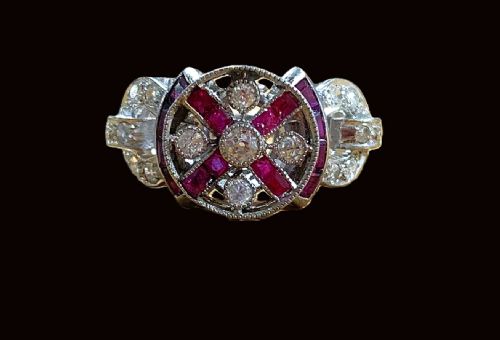
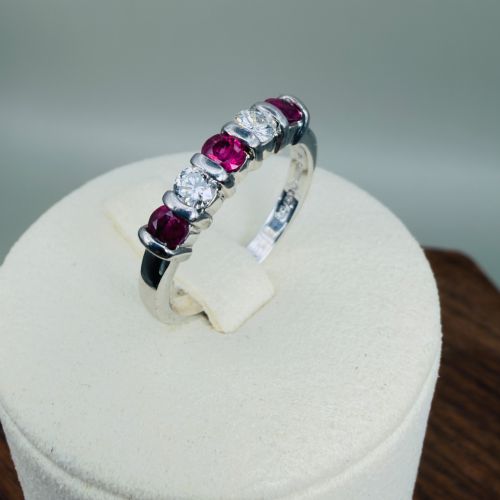
An antique ruby diamond ring brings together fiery red stones and sparkling diamonds in settings shaped by Victorian and Art Deco hands.
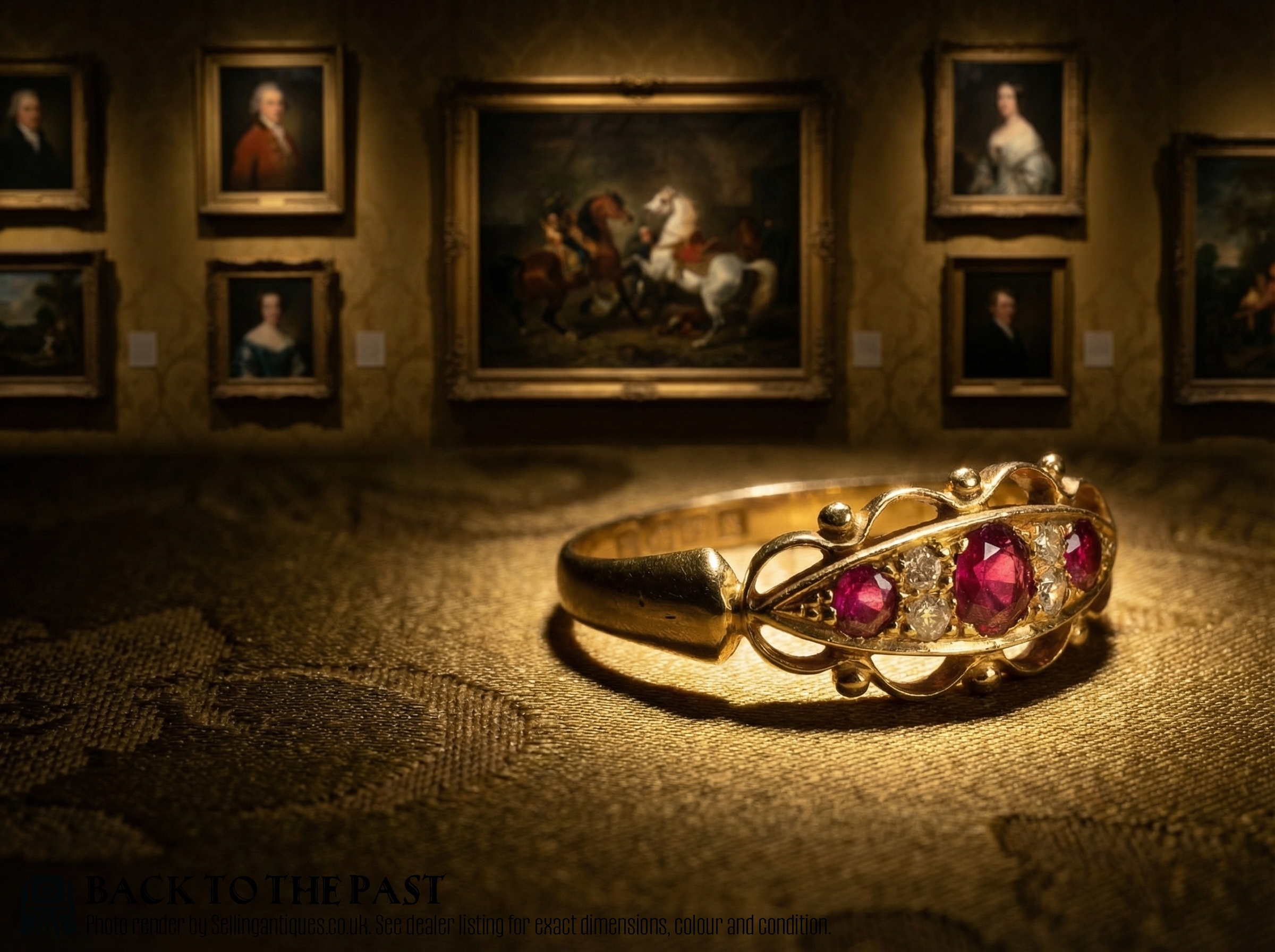
What an antique ruby diamond ring is
An antique ruby diamond ring spans several distinct decades of design, merging the rich warmth of nineteenth-century gold work with the crisp geometry of the early twentieth century. When searching for an antique ruby diamond ring, buyers encounter everything from sturdy band rings to intricate cluster layouts.
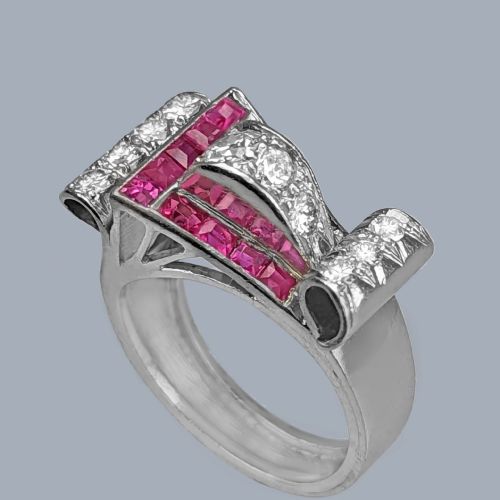
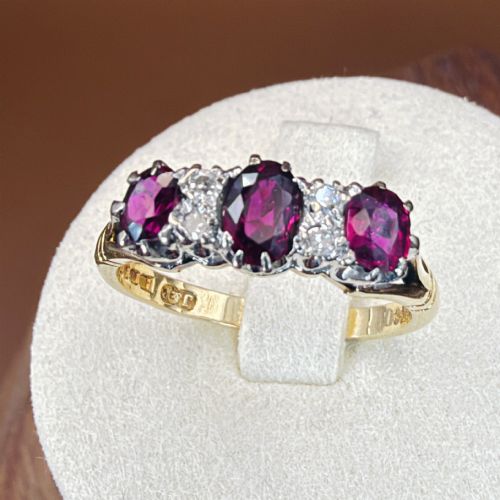
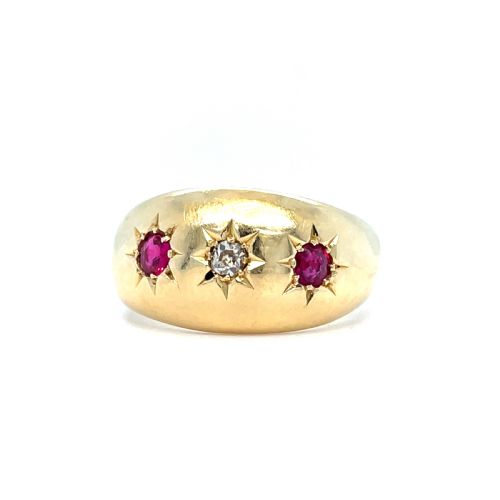
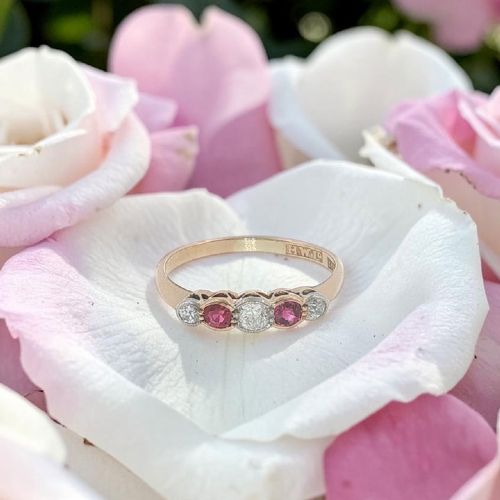
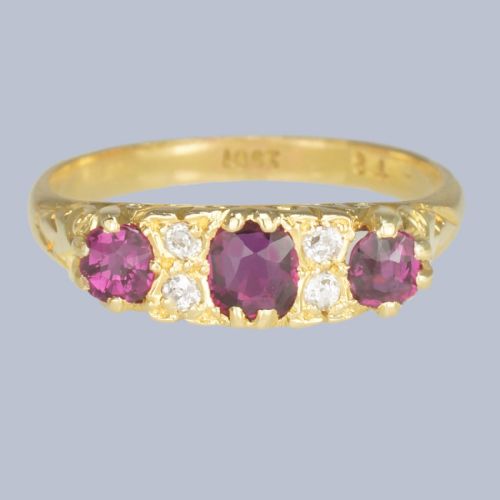
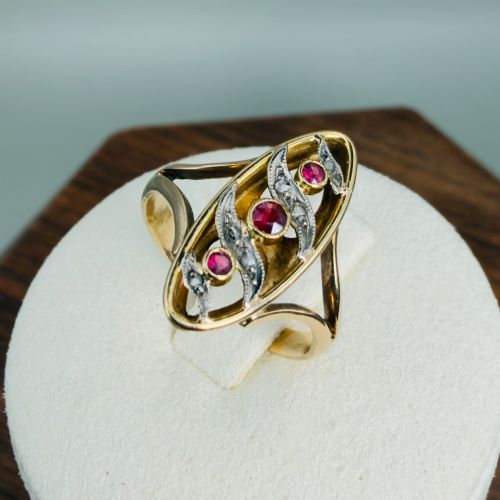
The Victorian and Edwardian examples on this page often take the form of five-stone rings, boat shapes, or flush gipsy settings in 18ct yellow gold. Art Deco variations introduce platinum and white gold, framing rubies alongside old-cut diamonds in targeted, checkerboard, or navette arrangements.
Many of these pieces bear clear hallmarks from British assay offices like Chester and Birmingham, dating the gold and platinum settings precisely to the turn of the twentieth century.
How they were made
Goldsmiths constructed these rings primarily using 18ct yellow gold, 18ct white gold, and platinum, frequently combining yellow gold shanks with platinum-topped settings to brighten the appearance of the diamonds. Stones were hand-set into the metal, utilising claw, bezel, starburst, or flush gipsy techniques depending on the era.
Cut stones include old-cut diamonds paired with natural rubies, Burmese rubies, and occasional synthetic or garnet alternatives, shaped into round, oval, or checkerboard facets. Each ring reflects the manual skill of period bench jewellers working with hand-tools and traditional metal-casting methods.
Retail Price Guide 2026
Typical UK retail prices for ruby diamond ring, calculated from the Sellingantiques database of over a million retail prices indexed since 2003. This retail price guide relies exclusively on Sellingantiques data; no external sources or auction records are used, so the figures do not describe the wider market.
Listings feature 18ct yellow gold, white gold, and platinum combined with rubies, diamonds, and garnets across Victorian and Art Deco styles.
What varies in quality
The distinction between tiers rests upon the origin and clarity of the gemstones and the preservation of the metalwork. Natural Burmese rubies and original old-cut diamonds command greater attention than synthetic stones or later replacement gems.
Hand-finished details such as crisp scrollwork, legible hallmarks, and securely maintained prongs or flush settings separate superior examples from pieces that have undergone heavy repair or excessive polishing over the decades.
The Antique Ruby Diamond Ring Glossary
- Gipsy set
- A style of mounting where the gemstone is flush with the surrounding metal surface, secured within a tapered band popular in the Victorian period.
- Navette
- A boat-shaped or eye-shaped setting that stretches lengthwise along the finger, often filled with multiple small diamonds and rubies.
- Old-cut
- A hand-faceted diamond cut typical of the nineteenth and early twentieth centuries, featuring a smaller table, higher crown, and open culet.
- Trilogy
- A three-stone ring design representing the past, present, and future, frequently seen in Edwardian gold band configurations.
- Target ring
- A concentric cluster design featuring a central ruby or diamond encircled by contrasting bands of smaller gemstones within a geometric frame.
Frequently Asked Questions
How do I wear a gipsy set ring safely?
Gipsy set rings feature stones flush with the band, making them remarkably snag-free and practical for daily wear.
Check the surrounding metal periodically to ensure the edges remain tight against the ruby or diamond.
What is the difference between Victorian and Art Deco styles?
Victorian designs favour warm 18ct yellow gold, ornate scrollwork, and organic shapes like boat and navette cluster layouts.
Art Deco rings embrace platinum, white gold, and sharp geometric checkerboard or target patterns.
Are Burmese rubies common in these rings?
Burmese rubies appear in select antique pieces, prized for their deep natural colour and historical provenance.
They sit alongside other natural ruby varieties and occasional synthetic stones from the early production period.
Can I resize an antique gold band ring?
Many 18ct gold bands can be resized by a skilled jeweller who understands antique metal integrity.
Take care to preserve any visible British hallmarks stamped on the interior of the shank during the process.