


Ruby and Diamond Band
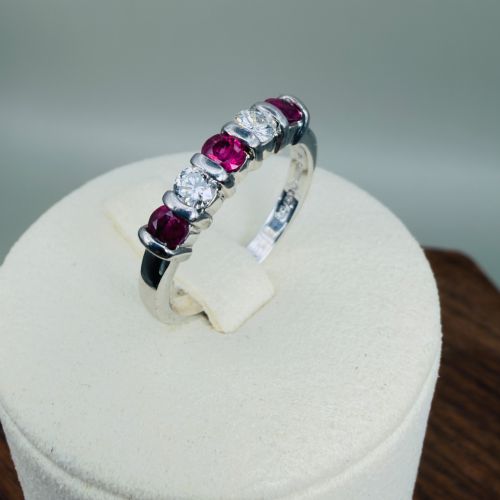
A ruby and diamond band brings together rich red gems and brilliant stones in a setting designed to sit smoothly on the finger.
What They Are
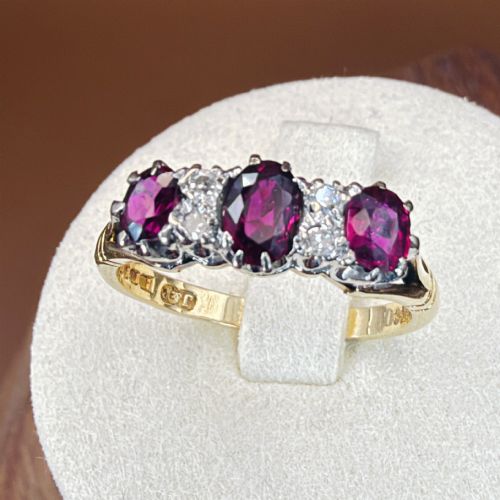
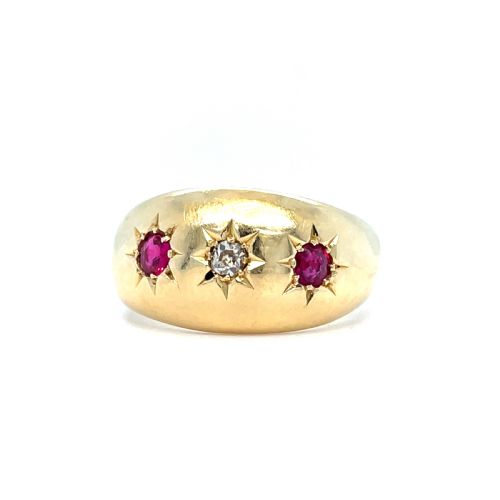
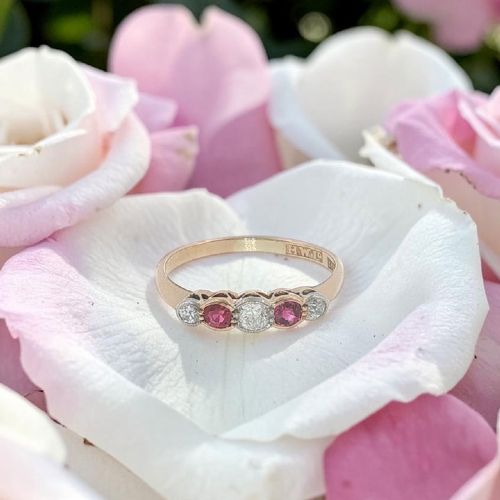
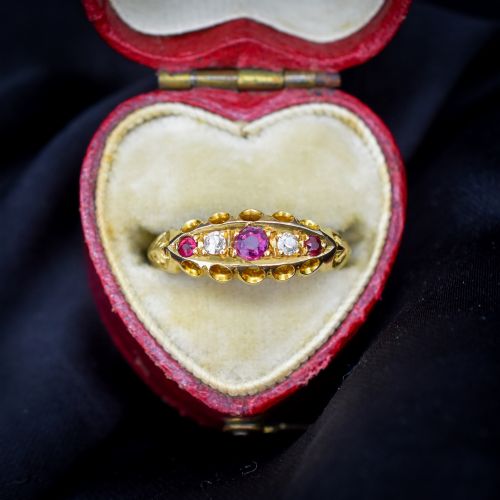
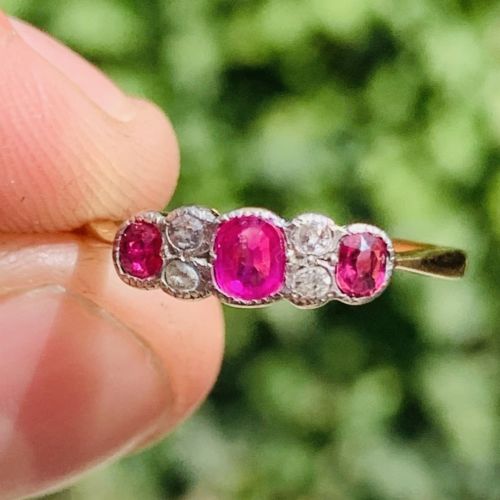
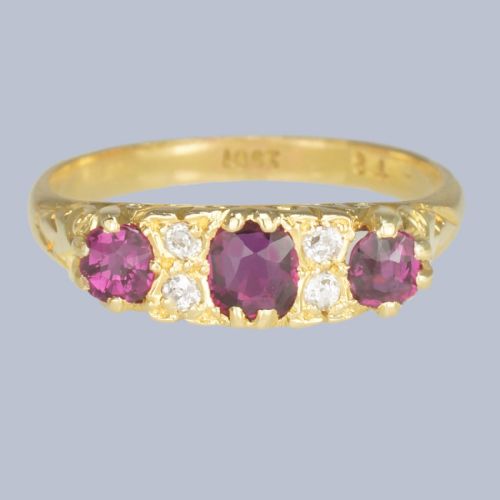
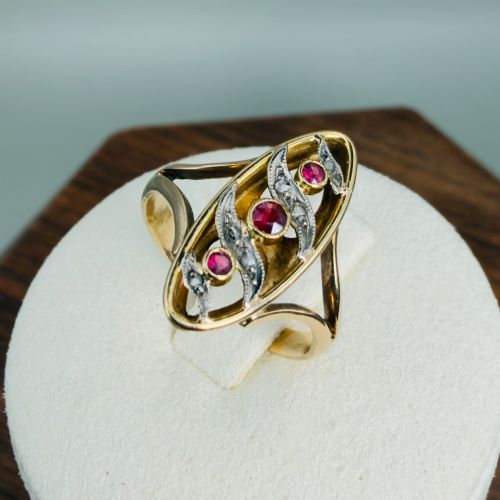
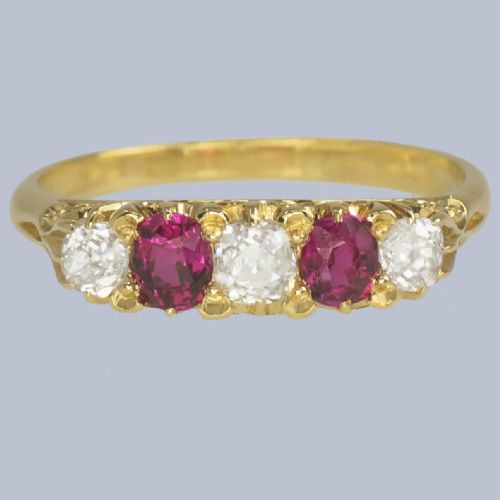
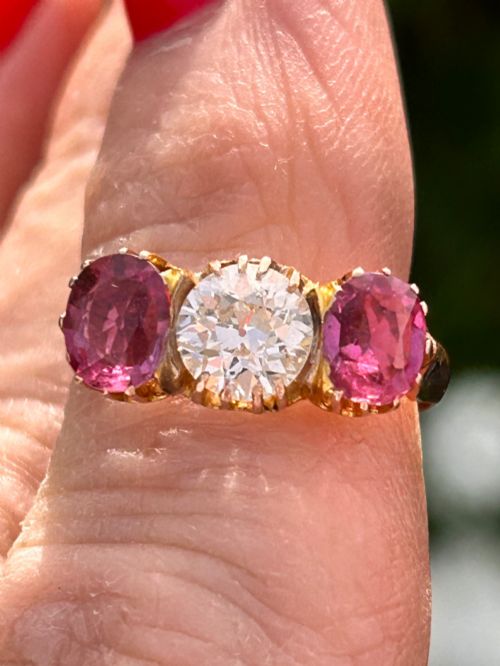
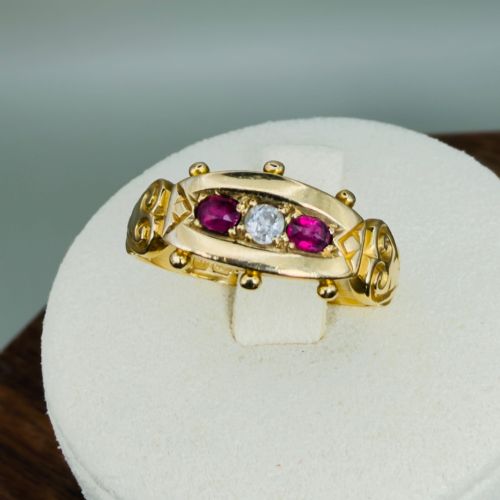
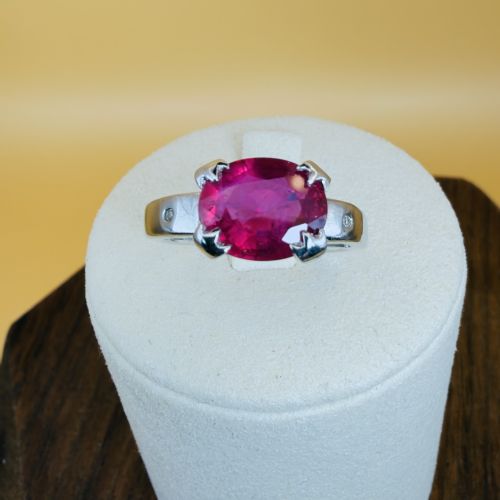
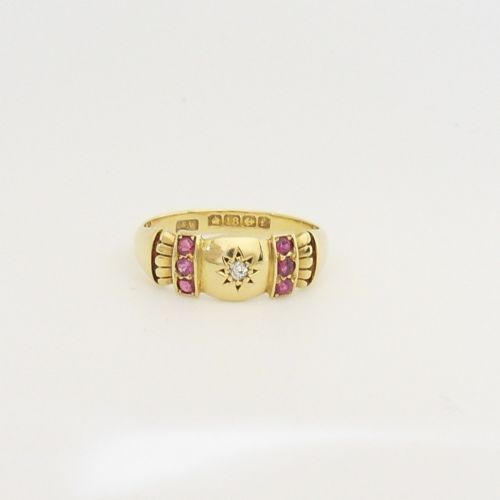
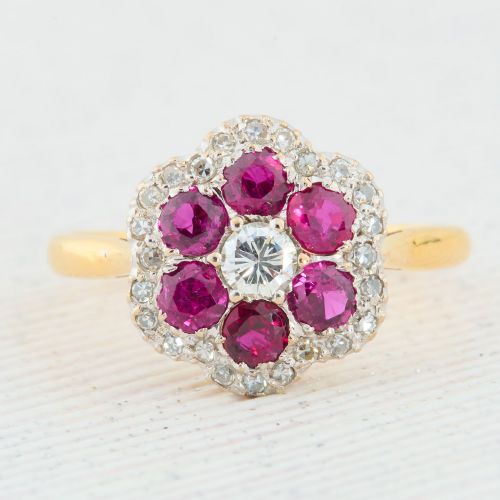
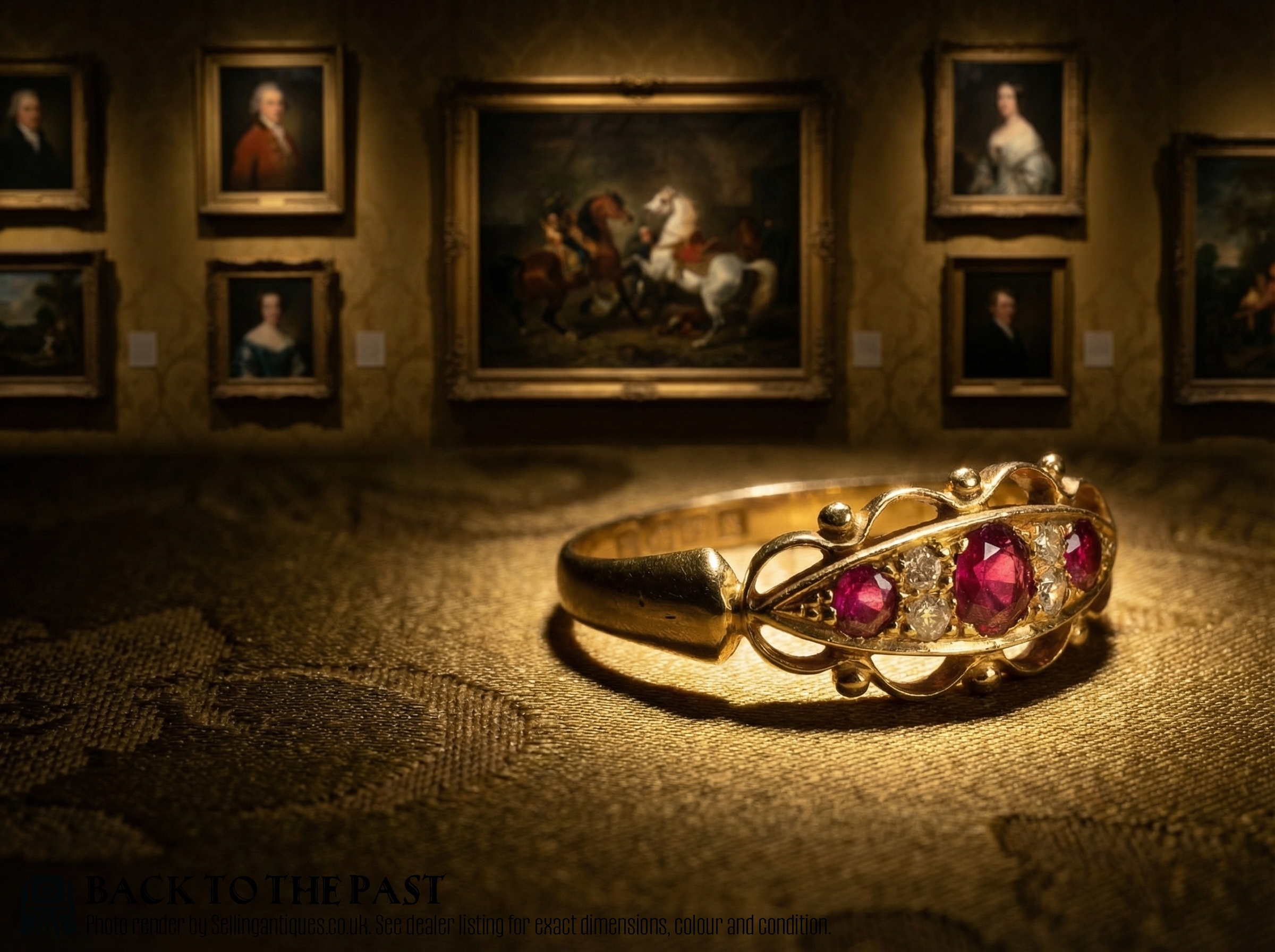
A ruby and diamond band spans several distinct decorative eras, offering collectors pieces from the Victorian, Edwardian, Art Deco, and mid-century periods. These rings appear in traditional multi-stone arrangements, five-stone layouts, gypsy settings, and cluster designs.
The materials used across these listings focus primarily on 18ct yellow gold, 18ct white gold, and platinum, paired with natural rubies and diamonds. Object types are strictly rings, ranging from antique starbursts to twentieth-century oval cut showpieces.
How They Were Made
Goldsmiths shaped precious metals into durable bands, utilising 18ct gold alongside platinum to secure each stone firmly within the mount. Techniques include traditional claw settings, flush gypsy mountings, and intricate starburst engravings.
Gemstones are shaped into various cuts, notably old mine cuts, old European cuts, rose cuts, and oval cuts. These stones are then set side by side or arranged in clusters to maximise light capture across the metal surface.
Retail Price Guide 2026
Typical UK retail prices for ruby and diamond band, calculated from the Sellingantiques database of over a million retail prices indexed since 2003. This retail price guide relies exclusively on Sellingantiques data; no external sources or auction records are used, so the figures do not describe the wider market.
Listings feature items spanning Victorian, Edwardian, Art Deco, and mid-century periods, constructed from 18ct gold, white gold, and platinum.
What Varies in Quality
The distinction between tiers rests upon the saturation and clarity of the rubies alongside the cut and brilliance of the accompanying diamonds. Heavier carat weights and higher purity metals elevate certain examples above standard production.
Fine construction shows in the crispness of starburst engravings, the robustness of gypsy settings, and the harmonious graduation of stones across five-stone and multi-stone layouts.
The Ruby and Diamond Band Glossary
- Gypsy band
- A style where stones are flush-set directly into the thick metal band so the surface remains smooth. This technique protects the girdle of the stone during daily wear.
- Old mine cut
- An early diamond cutting style featuring a square or slightly rounded girdle, high crown, and small table. This shape produces broad, romantic flashes of light rather than modern brilliant sparkle.
- Rose cut
- A historic diamond cut with a flat base and a domed crown faceted into triangles. It gives stones a subtle, translucent glow.
- Cluster ring
- A design grouping a central gemstone surrounded by a tighter formation of smaller stones. This arrangement creates a larger visual presence on the hand.
Frequently Asked Questions
How do I wear a band?
These rings are designed for daily wear on the finger, though antique gypsy settings offer a particularly snag-free profile.
Consider pairing them with plain gold bands or wearing them alone as a statement piece.
What periods are available?
The pieces span from the late Victorian and Edwardian eras through Art Deco designs and mid-century twentieth-century items.
Each period brings distinct mount styles and cutting techniques to the gold and platinum bands.
Are the stones natural?
The rings incorporate natural rubies and diamonds selected by period makers.
Certain pieces include gemmological reports confirming stone characteristics.
What metals are used?
Makers predominantly utilised 18ct yellow gold, 18ct white gold, and platinum.
These durable metals support secure claw, flush, and halo settings.