
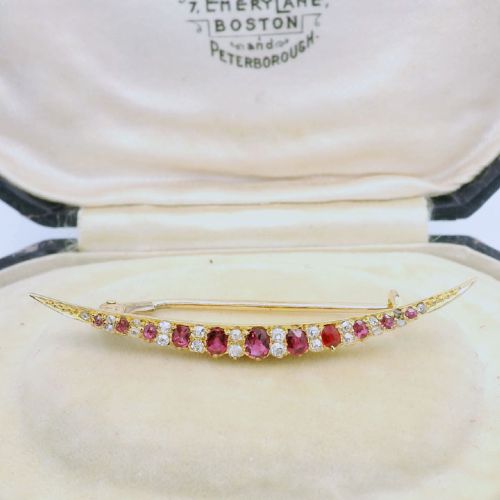


Ruby Crescent Brooch
A ruby crescent brooch is a classic piece of period jewellery shaped like the moon and set with glowing stones that catches the light beautifully.
Ruby Crescent Brooch
A ruby crescent brooch takes the familiar lunar motif of the late nineteenth and early twentieth centuries and fills it with deep red gemstones alongside diamonds or pearls. These pieces emerge predominantly from the Victorian, Late Victorian, and Edwardian eras, spanning from eighteen ninety through to nineteen ten.
The most common formats on this page combine the curved crescent shape with floral, star, or bird motifs like swallows, often incorporating platinum highlights or varying carats of gold. Buyers will frequently encounter pieces fashioned in fifteen carat or nine carat yellow and rose gold, carrying rich stones sourced from locations like Thailand alongside old cut diamonds.
How they were made
Goldsmiths of the period constructed these brooches using cast and fabricated gold bases in nine carat, fifteen carat, and eighteen carat alloys, occasionally pairing yellow gold with platinum for secure stone settings. Stones were hand set by skilled artisans who utilised claw, flush, or collet techniques to secure rubies, diamonds, and pearls tightly into the crescent frame.
The structural integrity relies on traditional pin and c-clasp or safety catch mechanisms soldered firmly to the reverse of the gold body. Metalwork often includes fine millegrain edges and delicate chased details that enhance the floral or avian themes accompanying the moon shape.
Victorian makers occasionally tucked tiny golden swallows into the crescent moon to symbolise safe returns home.
What varies in quality
The distinction between standard examples and exceptional pieces rests primarily on the carat weight, natural origin, and saturation of the rubies, paired with the scale and clarity of the supporting diamonds. Heavier carat weights, particularly those approaching or exceeding three carats of ruby, combined with substantial fifteen carat or eighteen carat gold frames, mark the upper tiers of craftsmanship.
Execution of delicate surrounding motifs, such as feathered swallows or intricate floral settings, demonstrates superior bench work compared to simpler bar brooches. The uniformity of stone sizing, the absence of modern repair solder, and the retention of original gold patination further separate fine collector pieces from everyday examples.
The Ruby Crescent Brooch Glossary
- Crescent brooch
- A piece of body ornamentation curved in the shape of a waxing or waning moon. These designs enjoyed immense popularity during the late Victorian and Edwardian periods.
- Old cut diamond
- A precursor to the modern brilliant cut diamond, featuring a smaller table, higher crown, and open culet. These stones were hand-faceted to catch candle and gas light.
- Millegrain
- A decorative technique involving a row of tiny raised metal beads along the edge of a setting. This adds a soft texture and frames the gemstones securely.
- Bar brooch
- A horizontal pin featuring ornamental elements centred along a narrow metal bar. Several listings on this page combine this format with crescent motifs.
- Natural ruby
- A corundum gemstone formed entirely by geological processes without human laboratory intervention. These stones display distinct natural inclusions and rich red hues.
Ruby Crescent Brooch: Frequently Asked Questions
How do I wear a crescent brooch today?
These pieces pin securely onto heavy winter coats, lapels, knitted scarves, or structured silk blouses. Many collectors also thread a ribbon or chain through the pin stem to wear them as pendants.
Because original pins can be sharp and heavy, ensure the fabric has enough weight to support the gold and gemstone frame without sagging.
How do I tell a Victorian crescent brooch from an Edwardian one?
Victorian brooches generally feature heavier yellow gold settings, often fifteen or eighteen carat, sometimes paired with deep red Thai rubies and chunky old cut diamonds. The overall feel is robust and warm.
Edwardian examples often incorporate lighter nine carat gold, rose gold, or platinum, frequently utilising airy platinum top settings, millegrain work, and pearls alongside diamonds.
Are these rubies treated?
Most rubies from the Victorian and Edwardian eras are natural stones. While thermal enhancement has been utilised in gem-cutting for centuries, modern laboratory treatments differ significantly from period norms.
Examining the internal crystal structures under magnification reveals the untreated inclusions typical of nineteenth and early twentieth century gems.
How should I store my antique brooch?
Store your piece in a dedicated lined jewellery box or a padded drawer away from direct sunlight and humidity. Keep it separate from other hard gems to prevent the diamonds from scratching the softer gold or pearls.
Laying the brooch flat prevents any accidental bending of the pin stem over time.