
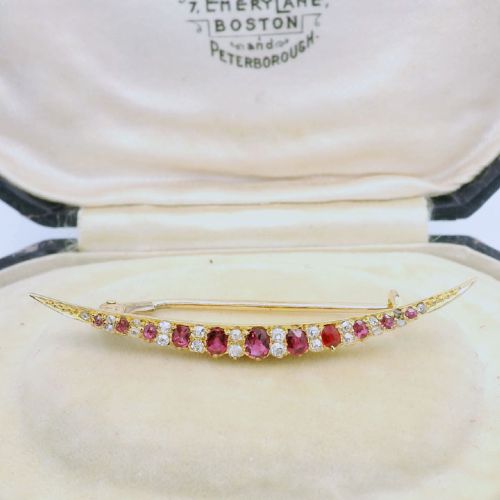


Victorian Crescent Brooch
A Victorian crescent brooch is a graceful crescent-shaped piece of jewellery capturing celestial motifs in gold, gemstones, and pearls.
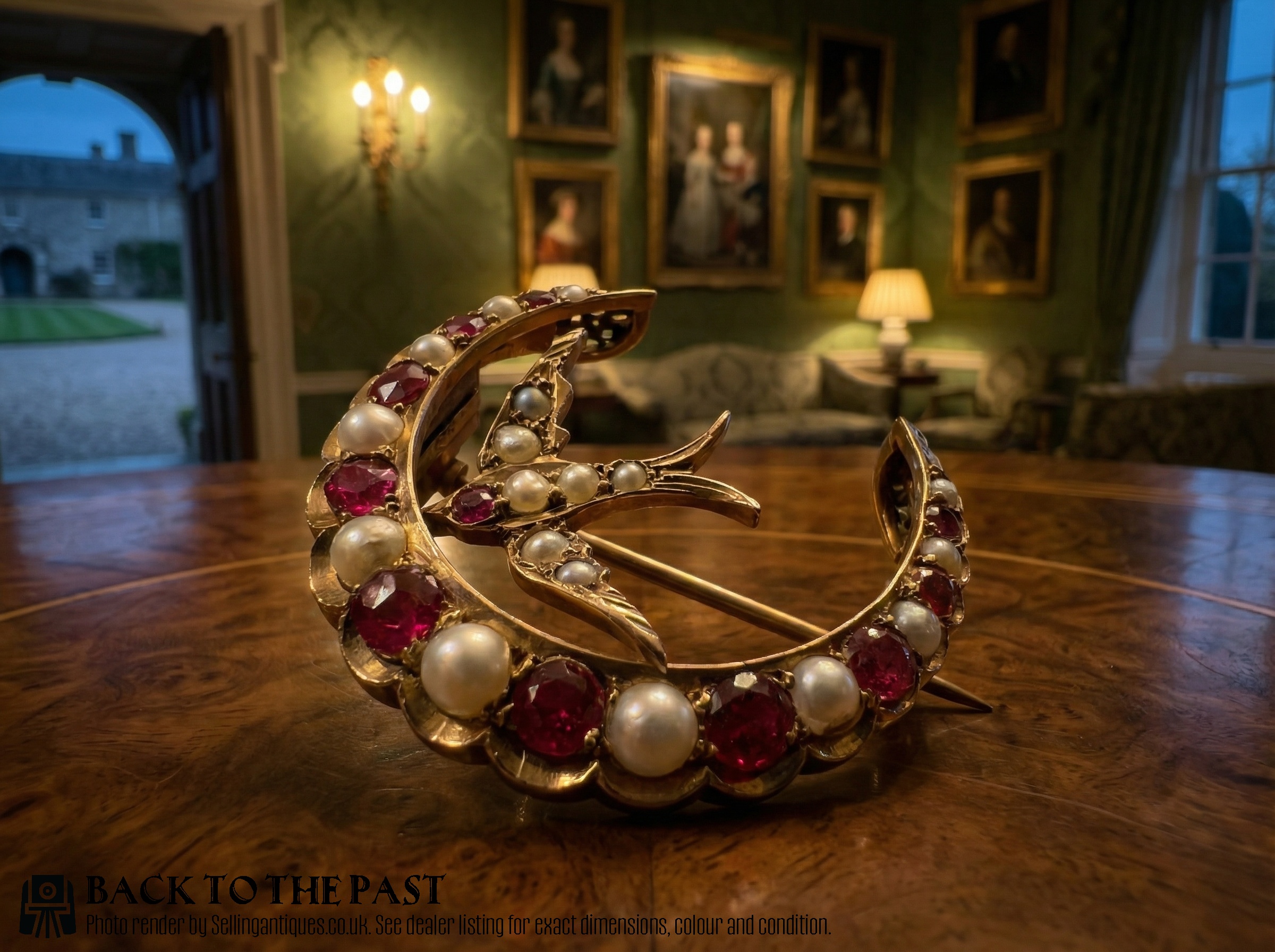
What a Victorian crescent brooch is
A Victorian crescent brooch takes the shape of a curved moon, often enriched with additional motifs like stars, hearts, or swallows. These pieces originate across the Victorian and Edwardian periods, stretching from eighteen eighty into the early nineteen hundreds.
The most common versions encountered on this page combine yellow gold with seed pearls, rubies, or diamonds, sometimes featuring convertible fittings or paired sets. Forms range from simple bar brooch pins holding a single crescent to elaborate gem-set configurations in silver and gold.
How they were made
Maker techniques rely heavily on precious metals including nine carat, fourteen carat, and eighteen carat yellow gold, alongside silver settings for stones. Materials such as unheated sapphires, Thai rubies, moonstones, paste, turquoise, and jet are meticulously set into the curved frames.
Goldsmiths integrate rose-cut and old-cut diamonds alongside delicate seed pearls to trace the sweeping lines of the crescent moon. Construction often includes specialised elements like hair pin conversion cases and secure bar brooch pin mechanisms.
Retail Price Guide 2026
Typical UK retail prices for victorian crescent brooch, calculated from the Sellingantiques database of over a million retail prices indexed since 2003. This retail price guide relies exclusively on Sellingantiques data; no external sources or auction records are used, so the figures do not describe the wider market.
Some crescent brooches come with secret identities, doubling as hair pins tucked neatly away inside their original fitted velvet cases.
What varies in quality
Quality rests upon the selection and weight of the principal stones, distinguishing pieces set with substantial diamonds or unheated sapphires from those utilising paste or modest rubies. The richness of the gold carat, from nine up to eighteen carat, further defines the tier of the object.
Execution shows in the delicacy of the seed pearl work and the precision with which star, heart, or swallow elements integrate into the crescent form. Preservation of original fitted cases and convertible mountings also elevates the standing of a piece.
The Victorian Crescent Brooch Glossary
- Crescent brooch
- A piece of jewellery shaped like a waxing or waning moon, worn pinned to garments during the nineteenth and early twentieth centuries.
- Seed pearl
- A very small, natural or cultured pearl used in clusters or delicate rows to trace decorative patterns on antique jewellery.
- Rose-cut diamond
- An antique diamond cut featuring a flat base and a domed crown with triangular facets, common in nineteenth-century settings.
- Paste
- Hand-cut lead glass used in antique jewellery to imitate gemstones, valued for its own historical craftsmanship.
- Bar brooch pin
- A fastening style featuring a straight metal shaft that supports the decorative crescent element across clothing.
Frequently Asked Questions
How do I wear a crescent brooch?
These pieces pin securely onto lapels, scarves, or collars using their integrated bar brooch pins. Their curved shape sits naturally against the fabric of jackets and heavier garments.
Some examples include conversion fittings allowing them to transition between brooch wear and hair ornaments.
Are these brooches solid gold?
The listings feature various gold purities including nine carat, fourteen carat, fifteen carat, and eighteen carat yellow gold. Some pieces combine gold bodies with silver top settings for stones.
Each metal choice reflects the specific manufacturing standards of the Victorian and Edwardian eras.
What stones are set in them?
Common gemstones include diamonds, rubies, sapphires, moonstones, turquoise, and jet. Seed pearls are frequently paired with these gems to outline the crescent moon.
Paste stones also appear in historical pieces as high-quality simulated gems.
How do I date my crescent brooch?
Dating relies on stylistic clues, metal types, and gemstone cuts associated with the Victorian and Edwardian periods. Pieces often span from circa eighteen eighty through the nineteen tens.
Associated motifs like stars and swallows help place the jewellery within these specific eras.