


Edwardian Heart Brooch
An edwardian heart brooch pairs romantic sentiment with the refined metalwork of the early twentieth century, offering a wearable piece of history that remains endlessly charming.
Edwardian Heart Brooch
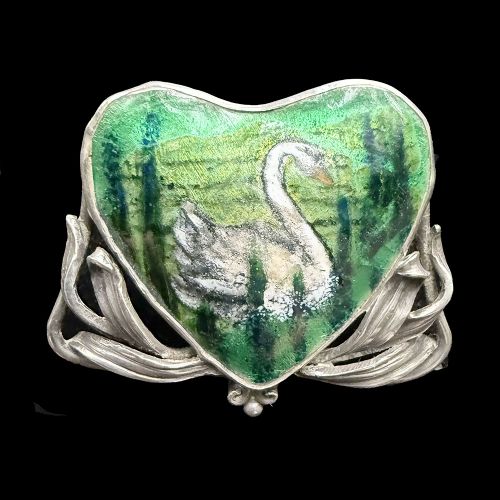
The aesthetic mirrors the prevailing movements of the time, touching upon Arts and Crafts simplicity and Art Nouveau organic curves. Most pieces rely on a delicate balance of precious metals and small gems to achieve their distinctive silhouette.
How they were made
Jewellers worked primarily in yellow gold of various carats alongside silver, frequently mounting stones in combinations that highlighted the contrast between white and yellow metals. Platinum also appears in select mountings, particularly where secure settings for old cut diamonds were required.
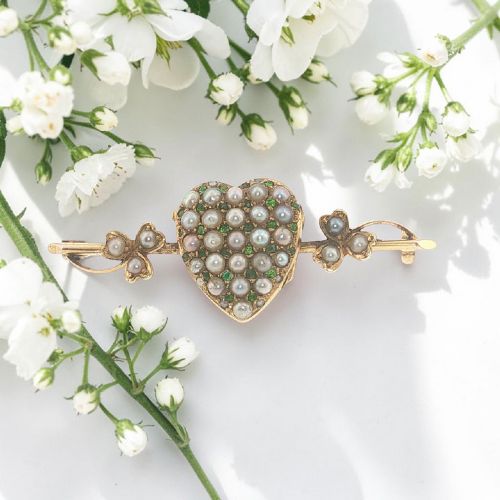
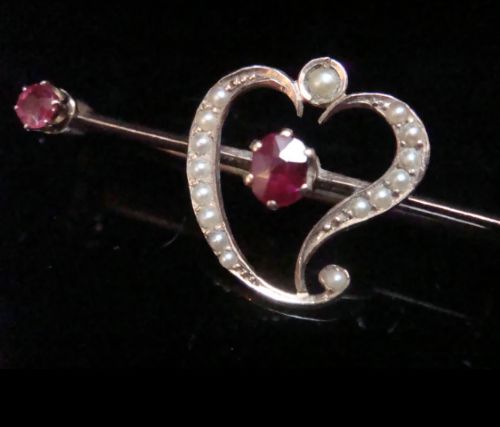
Gemstones such as turquoise, seed pearls, rubies, amethysts, and garnets were carefully selected to accent the gold or silver frameworks. Enamel work, including plique-à-jour techniques, added vibrant patches of colour to the metal designs.
Construction techniques often involved hollow stamped gold components or cast silver frames assembled by hand. Pin stems and catches were soldered directly to the reverse, sometimes accompanied by safety chains or locket hinges.
Edwardian Heart Brooch Retail Price Guide 2026
Typical asking prices for edwardian heart brooch among the pieces listed under this phrase on Sellingantiques today, from the lower quarter to the upper quarter. They describe what is for sale here now, not the wider market.
One past piece featured an ivy motif alongside a heart, whispering botanical loyalty from an era when flowers spoke volumes.
What varies in quality
The standard of a piece rests heavily on the complexity of its design and the quality of its gem setting. Hand-carved details, well-matched seed pearls, and cleanly applied enamel distinguish finer examples from simpler production pieces.
The choice of materials shifts the character of the brooch significantly, with higher carat golds and diamond pavé settings occupying the upper tier of craftsmanship. Simpler silver or lower carat gold pieces rely more on whimsical motifs and proportion than costly stones to secure their appeal.
The Edwardian Heart Brooch Glossary
- Plique-à-jour
- An enamelling technique where the enamel is fired without a backing, creating a translucent, stained-glass effect that lets light pass through the colour.
- Old cut diamond
- A diamond cut popular before modern brilliant standards, characterised by a smaller table, higher crown, and hand-faceted symmetry that glows softly under candlelight.
- Seed pearl
- A very small, naturally formed or early cultured pearl, often drilled and strung or clustered tightly to form delicate floral or geometric shapes.
- Mizpah
- A sentimental token inscribed with a Hebrew biblical verse denoting an emotional bond between people who are separated.
- Witches heart
- A heart-shaped brooch motif featuring a twisted tail at the base, historically given as a love token intended to bewitch the recipient.
Edwardian Heart Brooch: Frequently Asked Questions
How do I wear a heart brooch?
These pieces suit lapels, collars, and heavy scarves where the weight of the gold or silver is fully supported by the fabric.
Many styles also feature loops or pins that allow them to be secured to hats or worn suspended from a chain as a pendant.
Are these brooches made of solid gold?
The evidence shows items fashioned from various carats of yellow gold, alongside silver and combinations of both metals.
Jewellers of the period frequently worked in distinct carats alongside silver-topped gold settings to achieve specific tonal contrasts.
What stones are typically found in them?
Turquoise and seed pearls appear frequently, often paired with garnets, rubies, amethysts, and old cut diamonds.
Enamel work in green and other hues also provides colour alongside the precious stones.
How do I date an edwardian piece?
Dating relies on stylistic clues such as Art Nouveau curves, Arts and Crafts hand-worked silver, and specific hallmarks when present.
The materials and motifs often align closely with the early decades of the twentieth century.