


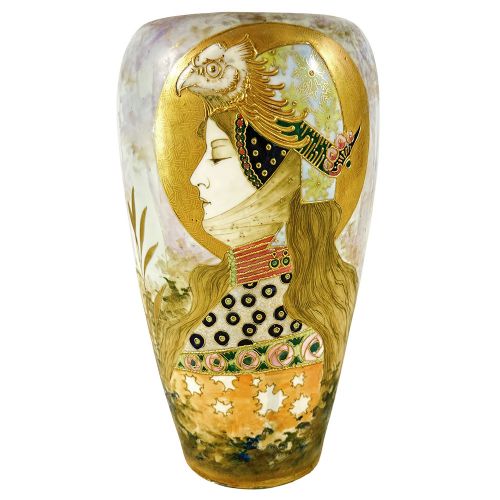
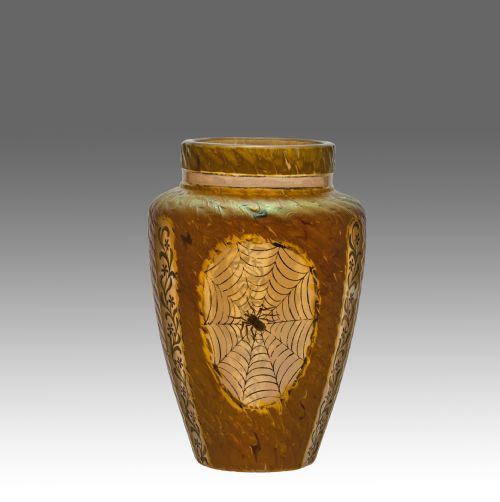
Gold Painted Urn Vase
A gold painted urn vase brings together classical form and rich surface gilding, offering substantial presence for a mantel or side table.
Gold Painted Urn Vase
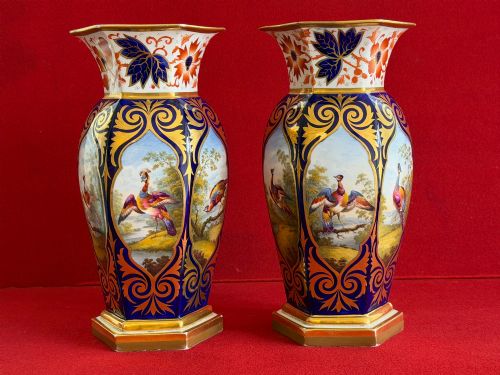
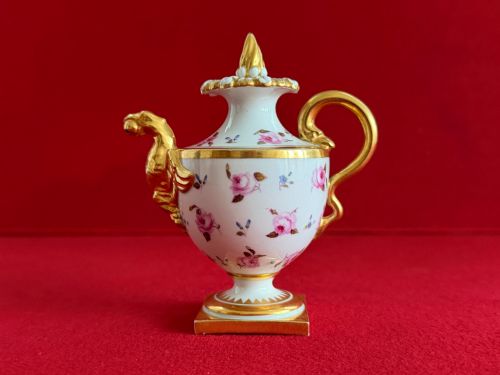
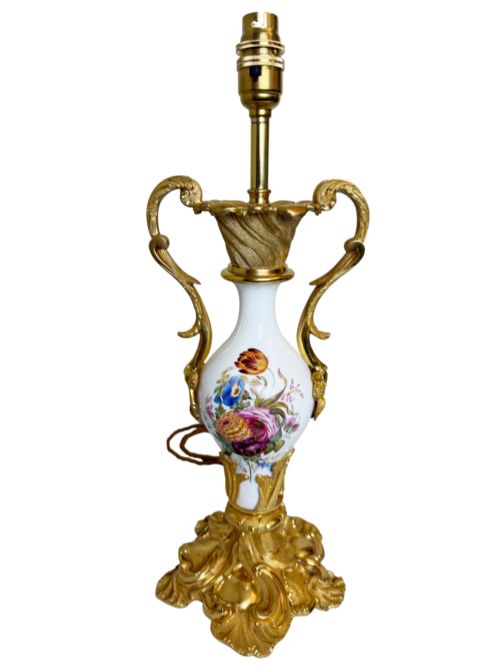
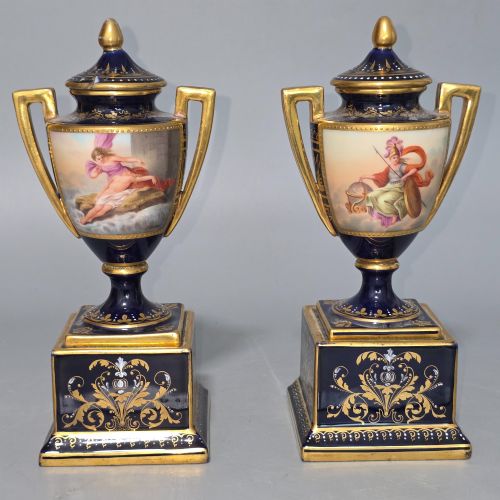
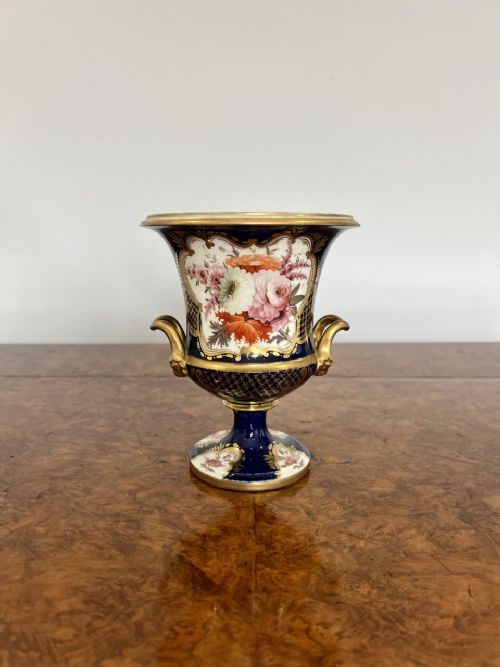
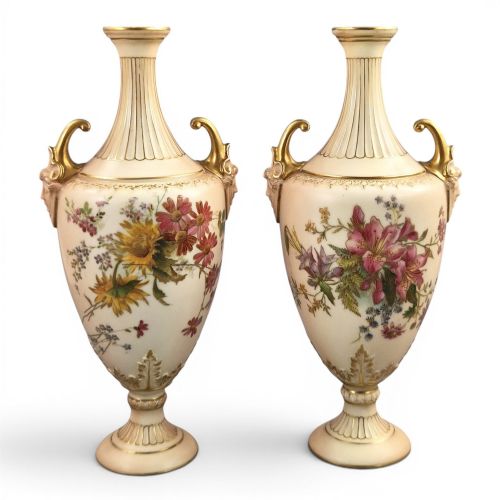
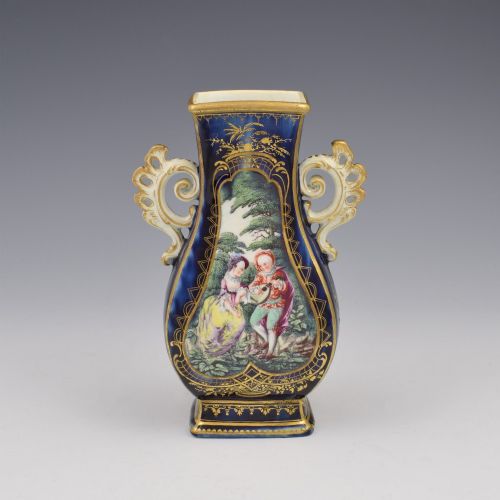
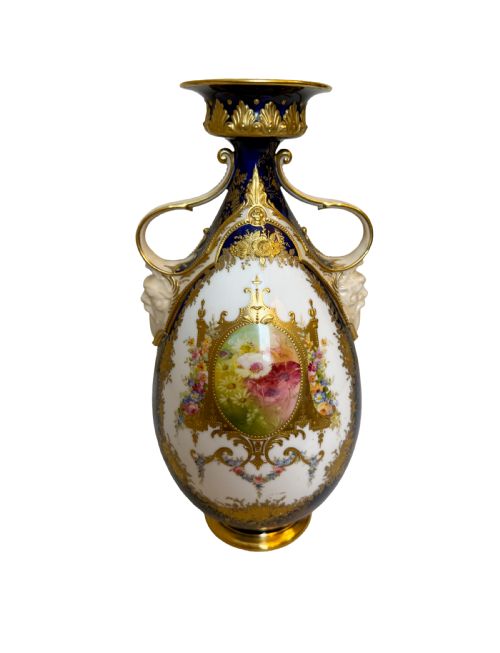
A gold painted urn vase serves as a prominent decorative vessel, taking the shape of classical amphorae, Campagna urns, and pedestal vases. When you examine a gold painted urn vase on this page, you encounter pieces designed primarily for display rather than utility.
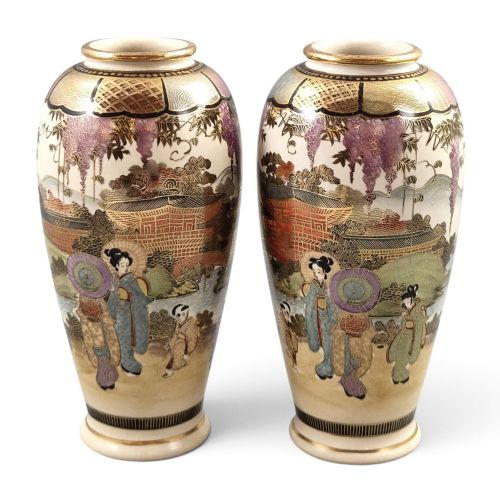
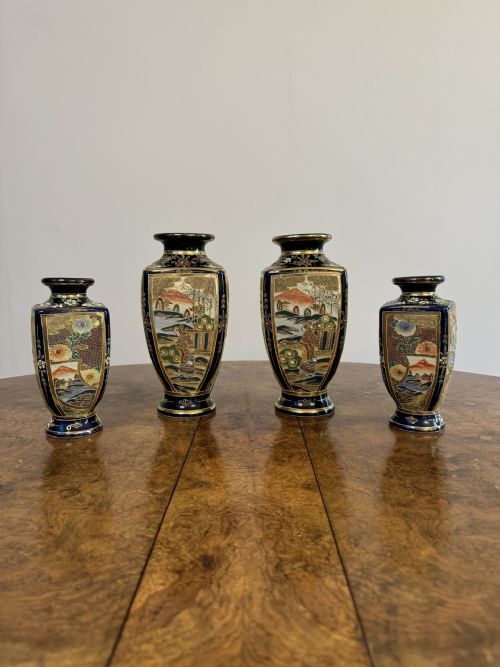
The selections span distinct periods, originating from English porcelain factories of the Georgian and Regency eras, continental houses like Vienna and Paris, and Japanese Satsuma workshops of the Meiji period. Makers utilised porcelain, bone china, earthenware, and glass as foundations for elaborate painted and gilded surfaces.
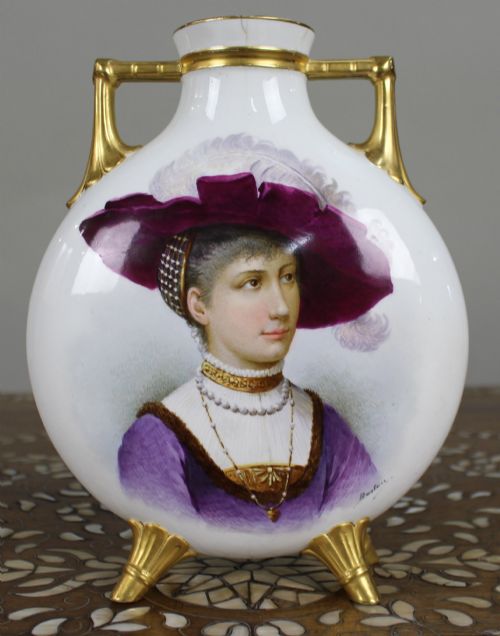
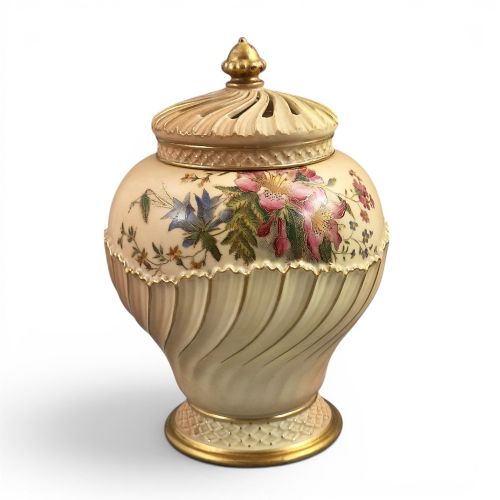
Forms vary from lidded pot-pourri jars and garden urns to slender table lamps and moon flasks. These objects bring together hand-painted scenic or floral panels and metallic lustre decoration.
How They Were Made
Makers shaped porcelain, bone china, and earthenware bodies by hand or in moulds before applying initial ceramic glazes and high-temperature kiln firings. Artisans then painted figurative scenes, birds, and botanical motifs using fine mineral enamels.
Gilding was applied through gold leaf or liquid gold paint, subsequently burnished to achieve varied matte and reflective finishes. Glass versions incorporated iridescent treatments and enamel work directly onto the blown vessel.
Some nineteenth-century pot-pourri jars still retain a faint trace of dried botanical scents locked inside their pierced ceramic covers.
What Varies in Quality
Quality rests in the execution of the hand-painted artistry and the precision of the gilding. Master painters achieved remarkable detail in facial expressions, plumage, and landscape perspective.
The weight and purity of the ceramic body, alongside the depth and durability of the gold leaf or gilding, separate standard production pieces from exceptional signed works.
Flight Barr And Barr·Royal Worcester·Kinkozan·Coalport·Royal Doulton
The Gold Painted Urn Vase Glossary
- Campagna Urn
- A bell-shaped vessel with a footed base and flared rim, popular in classical design and nineteenth-century ceramic production.
- Gilding
- The application of gold leaf or gold powder to a ceramic, metal, or glass surface to create metallic ornamentation.
- Amphora
- A two-handled jar with a narrow neck, originating in antiquity and frequently adopted by nineteenth-century porcelain manufactories.
- Satsuma
- A type of Japanese earthenware featuring a crackle glaze decorated with fine polychrome enamels and extensive gold highlights.
- Pot-Pourri
- A decorative jar or vase pierced with holes in the cover to release the scent of dried flowers held within.
Gold Painted Urn Vase: Frequently Asked Questions
What is a gold painted urn vase?
A gold painted urn vase is a decorative ceramic or glass vessel featuring metallic gold leaf or paint applied over glazes. These pieces were created primarily as ornamental garnitures and display items.
They draw on classical urn shapes such as the Campagna or amphora, incorporating hand-painted panels, floral motifs, or landscapes alongside gilded borders.
Where were these urns made?
These decorative vessels originate from various European and Asian traditions spanning the eighteenth to the twentieth centuries. English factories like Worcester and Coalport produced notable porcelain examples.
Continental makers in Vienna and Paris, alongside Japanese Satsuma workshops, contributed significant earthenware and porcelain pieces to this tradition.
How do I care for gilded porcelain?
Gilded ceramics require gentle handling to preserve the delicate gold leaf and enamel painting on the surface. Dusting with a soft, dry cloth is usually sufficient for routine maintenance.
Avoid using water, chemical cleaners, or abrasive cloths, as these can wear away the hand-applied gold leaf and enamel over time.
How do I distinguish nineteenth-century pieces?
Nineteenth-century pieces often display factory marks, painter signatures, or pattern numbers on the underside. Stylistic cues such as Regency neoclassical lines or Meiji period ornamentation help identify the era.
Examining the weight of the ceramic body and the application technique of the gilding also provides clues to the period of manufacture.