
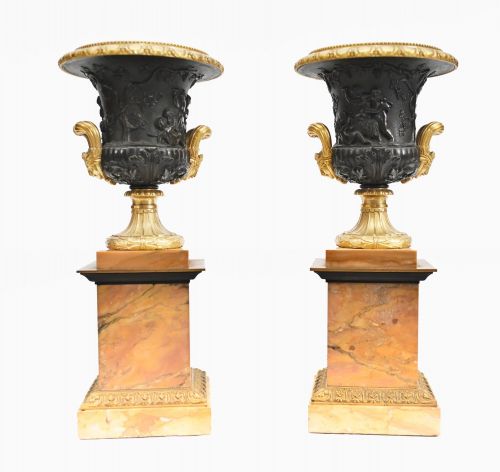


Gold Bronze Vase
A gold bronze vase brings classical weight and refined metalwork to a room, drawing the eye with rich gilding and cast detail.
Gold Bronze Vase
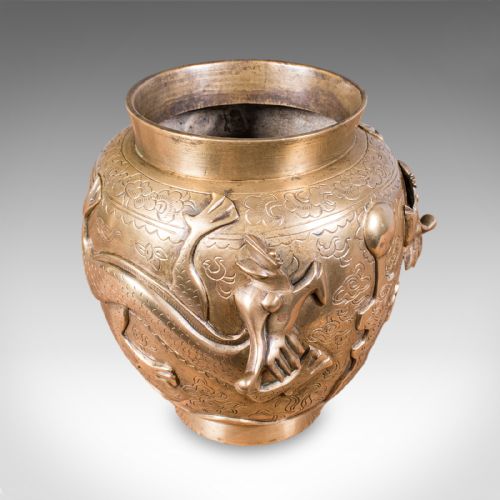
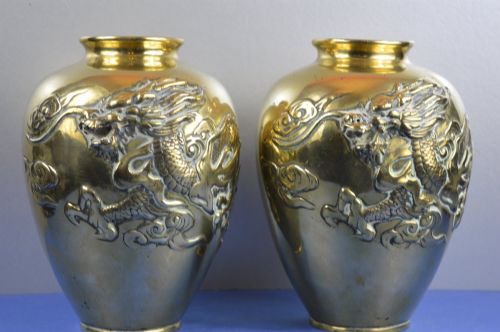
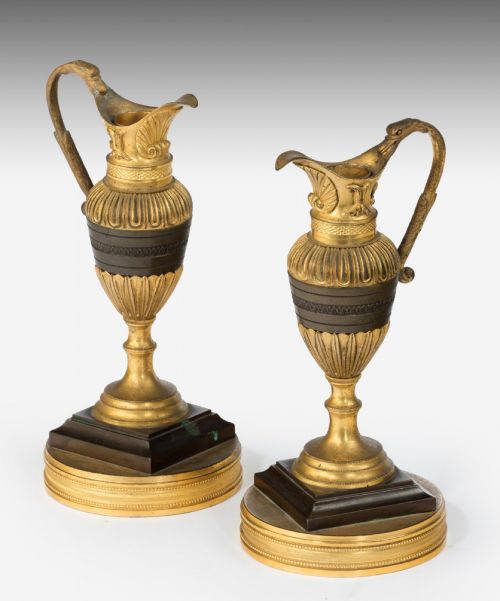
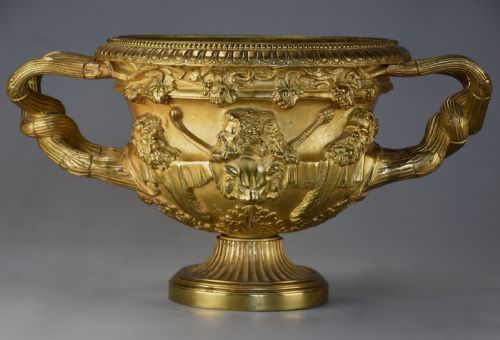
A gold bronze vase combines cast metal with rich gilding, often taking the form of classical urns, ewers, and decorative vessels produced across the nineteenth century.
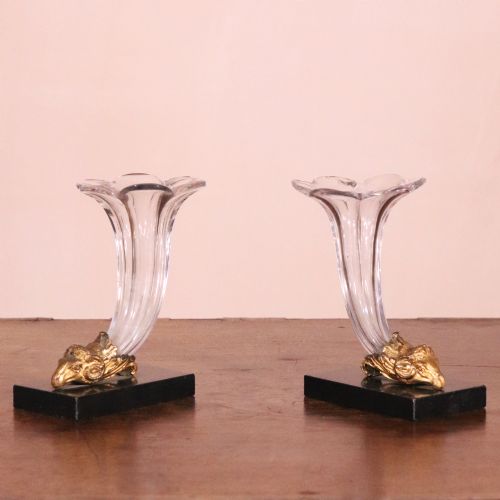
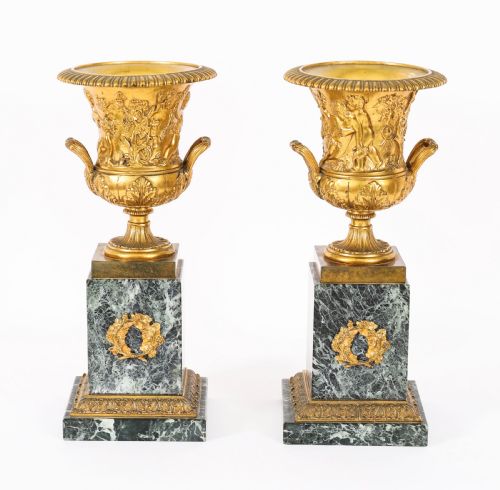
The selections on this page frequently appear as matched pairs, incorporating materials such as porcelain, marble, and glass alongside gilt bronze and ormolu mounts.
Originating from French, Italian Grand Tour, and Asian workshops, these pieces bridge functional vessels and decorative display objects.
How They Were Made
Artisans utilised bronze, brass, and gilt metals cast through traditional foundry methods, frequently finishing surfaces with fine ormolu gilding and hand-chased detail.
Many examples incorporate porcelain bodies from Sevres, Arita, and Chinese kilns, united with metal mounts secured by pins and screws.
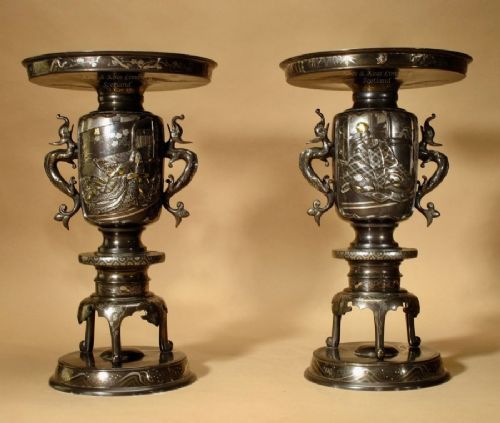
Inlaid decoration in silver and gold appears on Japanese bronzes, while European pieces often integrate carved marble bases and glass inserts.
Listings feature pieces spanning the eighteenth century through to the Art Nouveau and Edwardian eras, utilising bronze, porcelain, marble, and glass.
What Varies in Quality
The crispness of the cast ornamentation dictates the visual success of the piece, separating sharp, hand-finished foliage and figures from soft, commercial moulding.
The depth and preservation of the original gilding or ormolu dictate the surface warmth, where rubbed plating diminishes the contrast of the design.
The integration of mixed media, such as the fit of porcelain bodies within metal mounts and the selection of fine green marble, marks the distinction between standard production and ambitious workshop output.
Paul Dachsel·Henry Dasson·Charles Korschann
The Gold Bronze Vase Glossary
- Ormolu
- Finely ground high-carat gold applied to a bronze base using mercury amalgamation. This technique produced a deep, lasting lustre characteristic of French decorative arts.
- Champleve
- An enamelling technique where troughs are dug into a metal surface and filled with vitreous paste before firing. It creates vibrant colour patterns across the metal body.
- Grand Tour
- A cultural journey undertaken by nineteenth-century travellers who collected classical antiquities and reductions of famous monuments in Italy. These souvenirs heavily influenced European decorative tastes.
- Campana
- A bell-shaped vessel form derived from ancient Roman pottery and stone work. Makers adopted this silhouette widely for decorative bronze and marble urns.
- Cloisonne
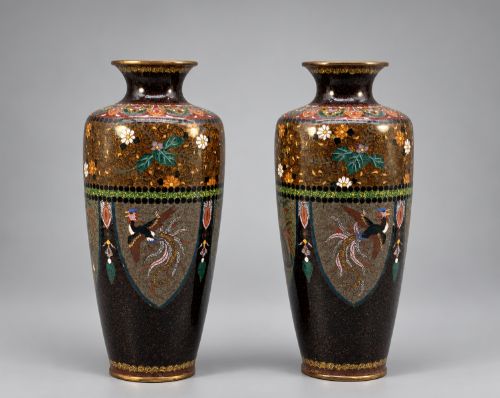
- Enamelling bounded by thin metal wires soldered to a metal base. The technique creates intricate cellular patterns filled with coloured paste.
Gold Bronze Vase: Frequently Asked Questions
How do I clean a gilt bronze vase?
Dust gently with a soft dry brush to protect the delicate gilt surface from abrasion. Avoid all liquid cleaners and chemical polishes that strip historical ormolu.
Keep the piece away from direct sunlight and moisture to prevent the underlying metal from oxidizing or staining adjacent porcelain and marble elements.
Were these vases made for flowers?
Many nineteenth-century examples served purely as decorative objects, garnitures, or centrepieces rather than functional vessels for water and stems. Versions with narrow necks or integrated electrical fittings were designed for display or lighting.
Heavier models incorporating marble bases or delicate champleve enamel are structurally unsuited for holding water.
How do I date a nineteenth-century bronze?
Examine the casting quality, tool marks on the underside, and the composition of the patination or gilding. Nineteenth-century pieces often display hand-chased detailing that differs from later mass-produced casting.
Associated styles like Neoclassical, Art Nouveau, and Japanese Meiji period influences provide comparative benchmarks when combined with material evidence.
Why are some mounted as lamps?
Conversion into table lamps took place both during the period of use and in later decades to adapt antique vessels for modern domestic lighting. Ormolu mounts and Chinese porcelain bodies provided a decorative base for silk shades.
Original ceramic bodies often remain intact beneath the wiring harness, preserving the core vessel structure.