


Antique Warwick Vase
An antique warwick vase brings the sculptural majesty of classical antiquity straight into your interior, capturing the enduring allure of Roman sculpture.
Antique Warwick Vase
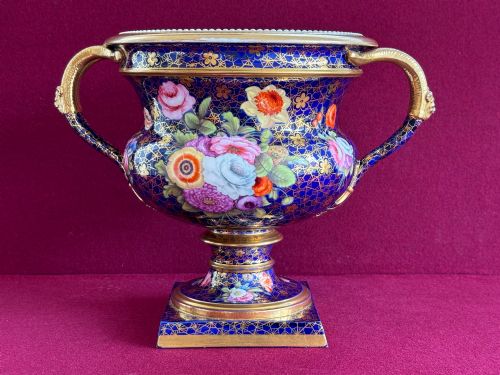
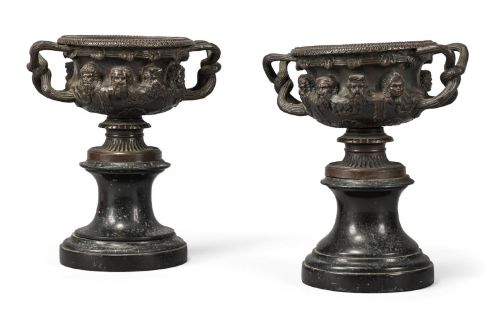
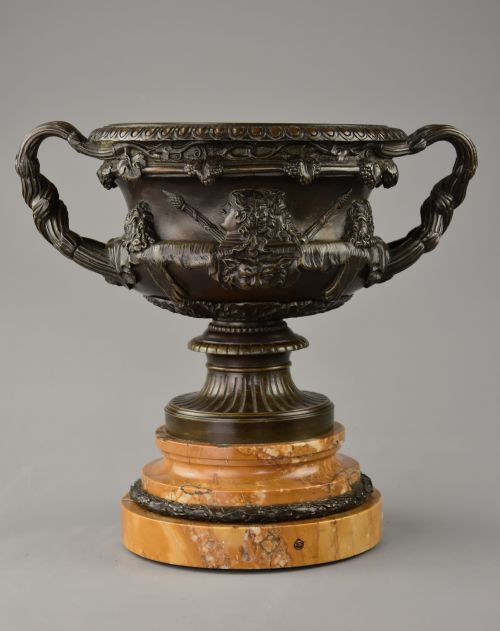
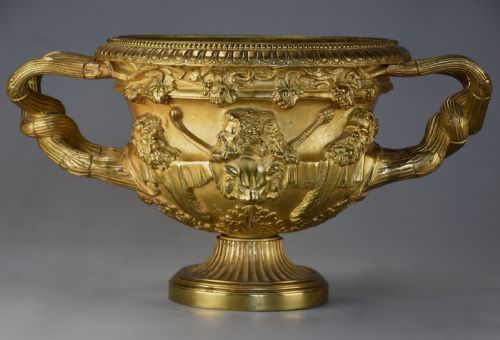
When you search for an antique warwick vase, you are looking at ornamental urns modelled on the celebrated Roman marble crater discovered at Hadrian's Villa in Tivoli. These pieces emerged principally as Grand Tour souvenirs and Regency porcelain editions, capturing the monumental scale of the original in a domestic format. The versions you are most likely to meet on this page include 19th-century bronze reductions and porcelain iterations from English factories.
The decorative vocabulary draws heavily on Neoclassical and Classical Revival styles, incorporating Bacchic masks, vine leaves, and interlaced handles. These vessels functioned primarily as decorative urns and planters in grand interiors, transitioning from Italian souvenirs into British mantelpiece ornaments. The form remains instantly recognisable by its deep, bell-shaped bowl and ornate handles.
How they were made
The metal reductions were cast in bronze or ormolu, utilising traditional foundry methods to capture intricate high-relief details such as facial expressions and foliage. Many of these bronze and gilt bronze examples received a patinated or gilded finish to emulate ancient metalwork. Porcelain versions required specialised throwing and moulding techniques followed by careful enamel decoration applied by factory hands.
Makers employed gold leaf and fine enamel work to highlight the classical motifs on ceramic bodies, contrasting with the heavier cast metal pieces. The combination of marble bases on certain examples provided a stable plinth for the heavy metal vessels, uniting two distinct materials within a single decorative object.
What varies in quality
The fidelity of the cast separates standard souvenir reductions from exceptional foundry work, particularly in the crispness of the Bacchic masks and vine tendrils. Heavier proportions and finer chasing on the bronze surface indicate skilled artisan production rather than hurried mass output.
On porcelain editions, the finesse of the hand-painted enamel decoration dictates the tier of the piece, distinguishing factory-standard output from master decorator work. The richness of the gilding and the weight of the bronze or porcelain body further define the upper end of the range.
Flight Barr and Barr·Spode·Barbedienne·A.D Delafontaine·Thomas Lowe
The Antique Warwick Vase Glossary
- Grand Tour
- A cultural journey undertaken by wealthy young Europeans through France and Italy to study classical antiquities. This travel tradition generated a market for small-scale bronze and marble souvenirs.
- Reduction
- A smaller scale copy of a larger sculpture or monument. Foundry artists created these reduced versions of the original marble vase for domestic display.
- Ormolu
- Finely ground high-carat gold mercury-gilded onto a bronze object. This technique produced a rich, warm metallic lustre popular in Regency and Victorian decorative arts.
- Neoclassical
- A Western cultural movement drawing inspiration from the classical art and culture of ancient Greece or Rome. This aesthetic defined the ornamental motifs seen across 19th-century metalwork and porcelain.
- Patination
- The natural or artificial process of ageing a metal surface to produce a coloured film or sheen. Foundries utilised chemical treatments to create deep brown or greenish tones on bronze.
Antique Warwick Vase: Frequently Asked Questions
What is an antique warwick vase?
An antique warwick vase is a decorative reduction or adaptation of the famous Roman marble vase discovered in the 18th century. These pieces were produced as bronze souvenirs or porcelain display vessels during the Regency and Victorian periods.
They reflect the period fascination with classical antiquity, translating monumental sculpture into ornamental objects suitable for domestic interiors.
How were they used historically?
Historically, these vessels served primarily as ornamental urns and decorative centrepieces in grand homes and libraries. Some metal examples doubled as planters for interior greenery or floral arrangements.
Travellers returning from the Grand Tour displayed them as symbols of classical learning and refined cultural taste.
How do I distinguish bronze from porcelain versions?
Bronze versions are cast metal objects, often showing patinated or gilded surfaces with crisp, high-relief classical masks. Porcelain examples feature ceramic bodies painted with detailed enamel scenes and factory marks.
Both versions replicate the iconic bell shape and looped handles of the original marble monument, utilising entirely different manufacturing traditions.
How do I style an antique warwick vase?
These vessels anchor formal interior schemes when placed on mantelpieces, pedestals, or sideboards. Their classical silhouettes pair well with period furniture and traditional architectural details.
Allowing the piece to stand alone as a focal point highlights its sculptural form and detailed metal or ceramic work.