
French Ormolu Urns
French ormolu urns bring classical elegance and rich gilded detail to interior spaces, combining metalwork and decorative forms.
French Ormolu Urns
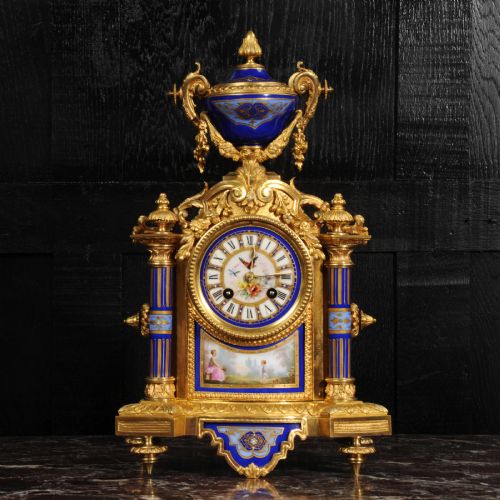
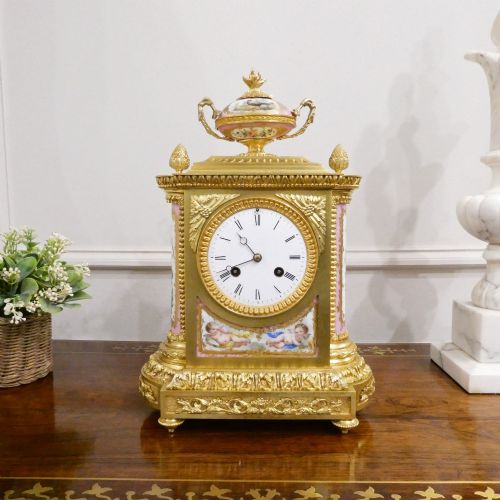
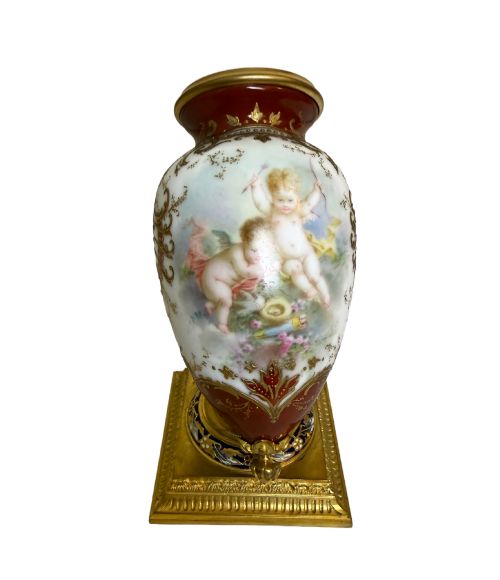
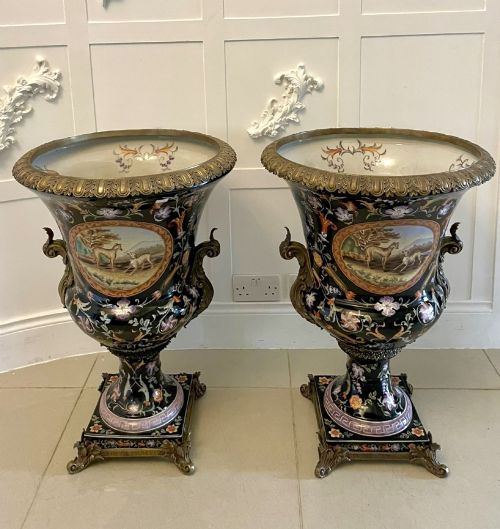
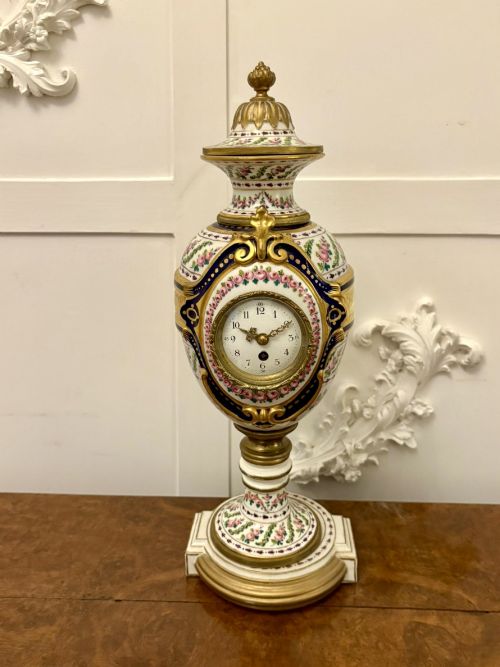
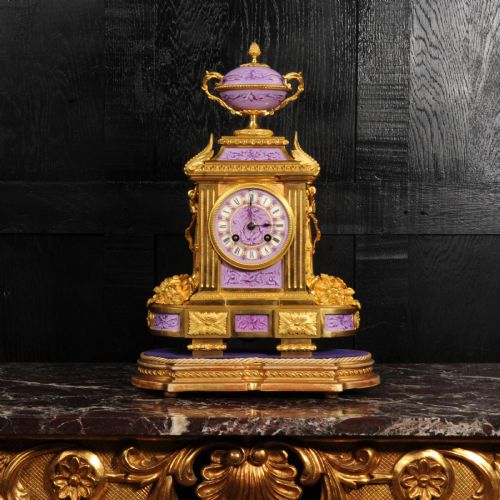
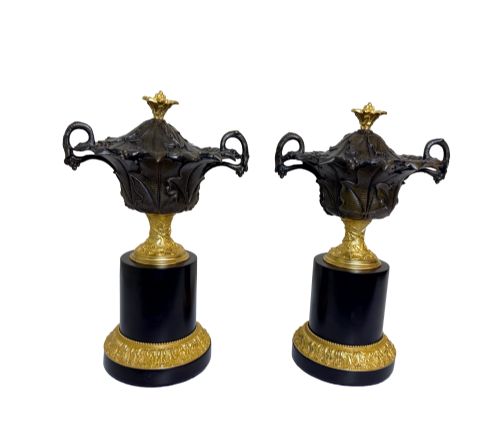
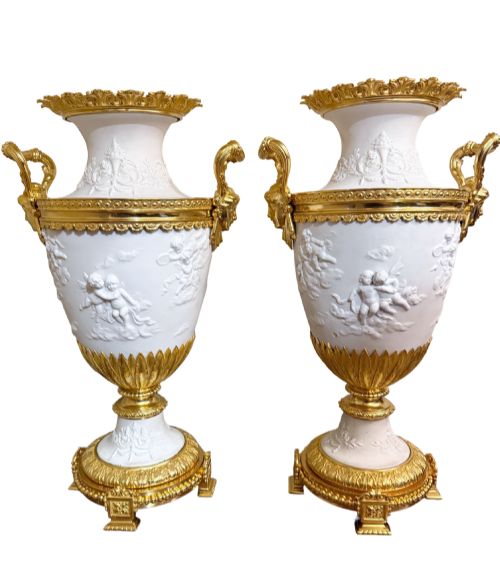
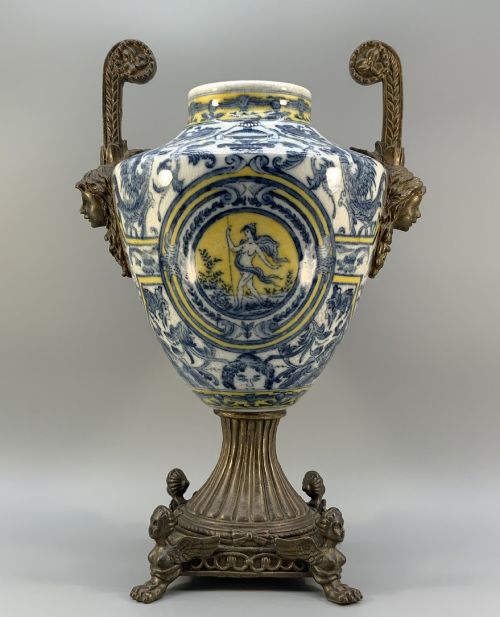
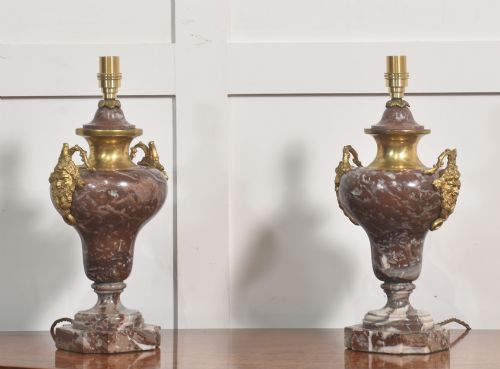
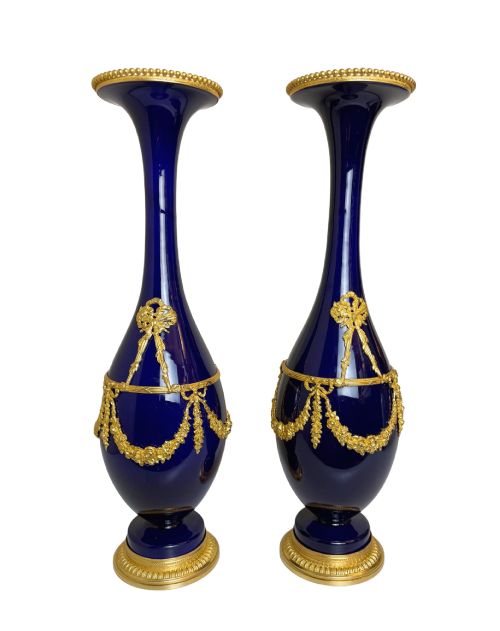
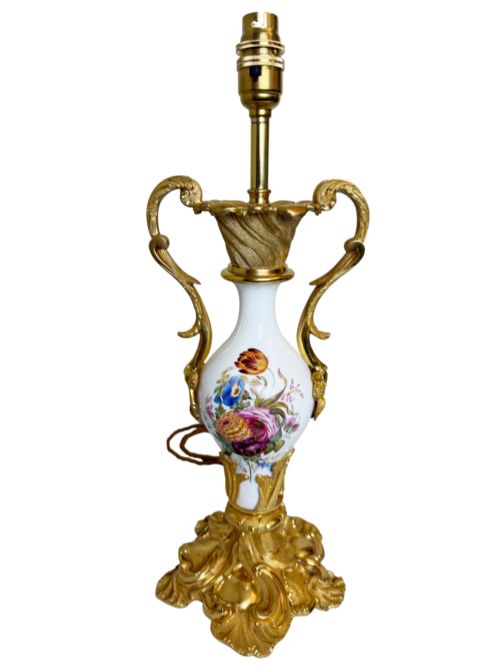
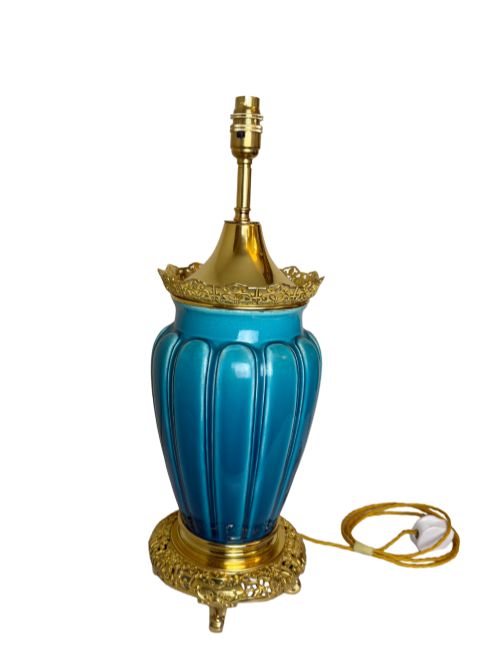
Buyers encountering this selection will frequently find pairs of decorative vases, cassolettes, and mounted vessels designed for display on mantelpieces or tabletops. The forms range from classical Grand Tour reductions to elaborate porcelain bodies decorated with hand-painted details and vibrant blue or white glazes.
The aesthetic bridges architectural dignity with ornamental richness, utilising symmetrical handles, floral swags, and classical mounts. Such objects reflect the enduring nineteenth-century revival of eighteenth-century French interior decoration.
Materials and Construction
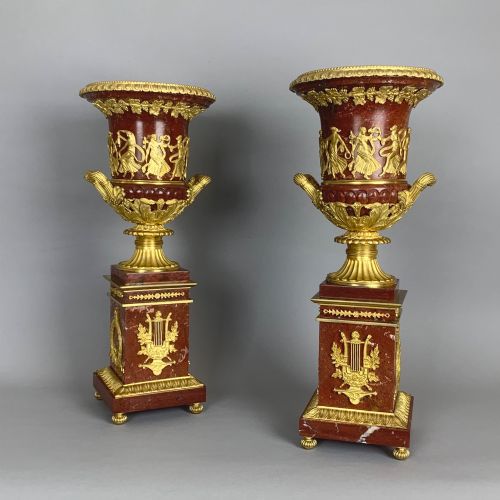
The creation of these objects relies heavily on the mercury gilding or electroplating of bronze and brass to produce the characteristic bright golden surface known as ormolu. Artisans combined these metal mounts with turned marble bases, including rouge and white varieties, alongside fired porcelain and ceramic bodies.
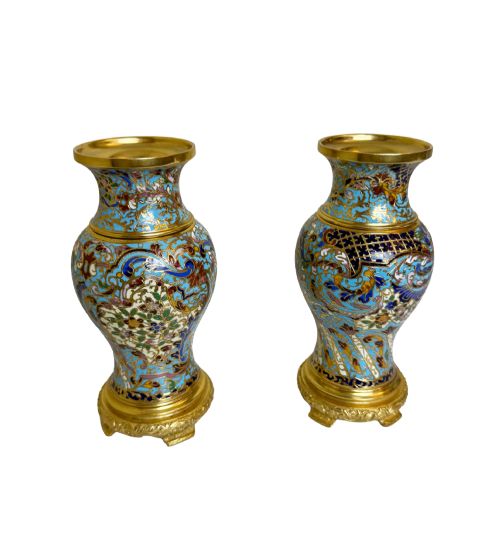
Makers integrated various decorative techniques such as champlevé enamel work and hand-painted porcelain panels set within the cast metal framework. The components were then mechanically secured together, combining stonework, ceramics, and metal into unified decorative compositions.
Listings feature items spanning the 18th century through the 20th century, utilising gilt bronze, marble, porcelain, and enamel.
Assessing Quality and Execution
The distinction between tiers of production lies in the crispness of the bronze chasing and the depth of the gilding applied to the metal surfaces. Finer examples display sharply defined facial masks, acanthus leaves, and geometric borders rather than softened cast details.
Material selection also dictates overall merit, with dense natural marble bases, high-fired porcelain bodies, and intricate champlevé enamel detailing marking superior workshops. The harmony between the ceramic or stone body and the fitted metal mounts determines the success of the finished design.
Achille Brocot·Casier
The French Ormolu Urns Glossary
- Ormolu
- Gilt bronze, derived from the French term meaning ground gold, used for decorative mounts on furniture and objects. This material provides a bright metallic gold finish that resists tarnishing.
- Cassolette
- A decorative vase or urn featuring a reversible lid that functions either as a closed vessel or a container for burning perfumes. These dual-purpose objects frequently incorporate marble and ormolu mounts.
- Champlevé
- An enamelling technique where troughs are dug into a metal surface and filled with vitreous enamel before firing. The resulting coloured patterns sit flush with the surrounding metal frame.
- Grand Tour
- A cultural journey undertaken by wealthy Europeans to study classical antiquities, inspiring nineteenth-century reproductions of ancient vases and urns. These decorative objects replicate famous archaeological finds in miniature form.
French Ormolu Urns: Frequently Asked Questions
What are French ormolu urns?
These pieces are decorative metal and stone vessels produced largely in nineteenth-century France, featuring gilded bronze mounts combined with porcelain, glass, or marble bodies.
They draw heavily on classical design vocabulary, incorporating motifs such as ram heads, floral garlands, and architectural handles derived from antique precedents.
How were these urns used?
Historically, such objects served as decorative centrepieces on mantelpieces, consoles, and tables within formal nineteenth-century drawing rooms and reception spaces.
Certain variations functioned as cassolettes or housed floral displays, though their primary purpose remained purely aesthetic and ornamental.
How do I style them at home?
Placing a pair of these urns on a mantelpiece or sideboard creates symmetrical balance within a traditional or eclectic interior scheme.
They work effectively when set against neutral walls or wood panelling where the contrast between the dark bronze, bright ormolu, and coloured marble can stand out.
How can I tell the period?
Dating relies on observing the casting quality of the bronze, the composition of the marble base, and the style of the ceramic body, which often point to nineteenth-century revival periods.
Examining the internal fixings, screw types, and mounting techniques provides further clues regarding the manufacturing era.