


Antique Ormolu Garniture
When you search for an antique ormolu garniture, you find coordinated sets of mantel clocks flanked by matching urns, vases or candelabra.
Antique Ormolu Garniture
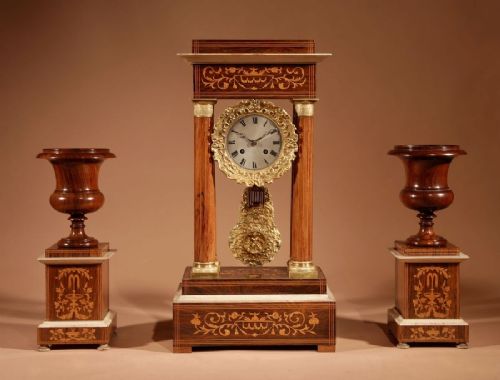
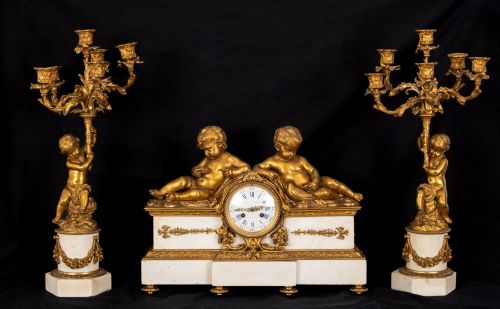
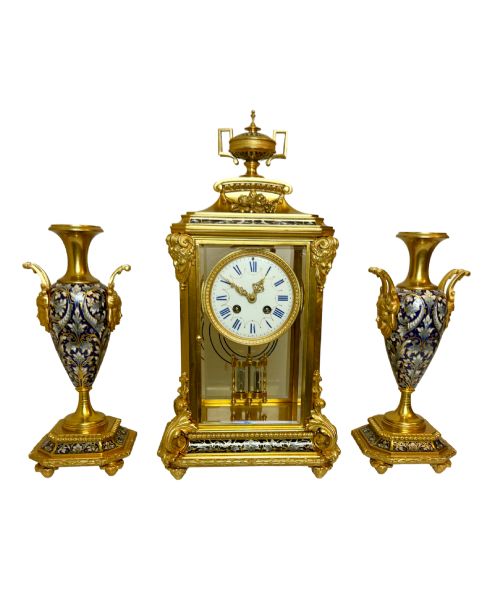
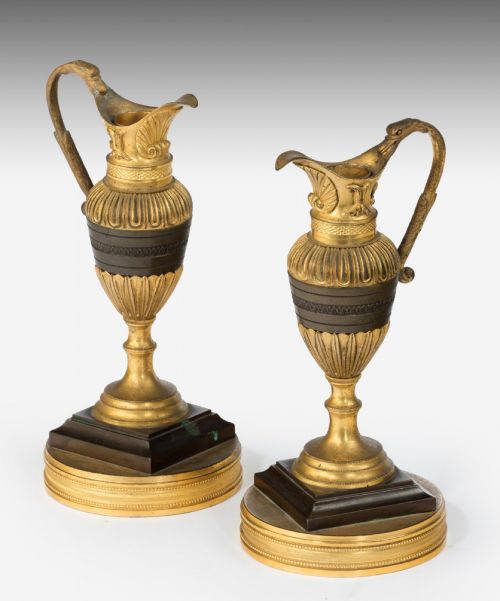
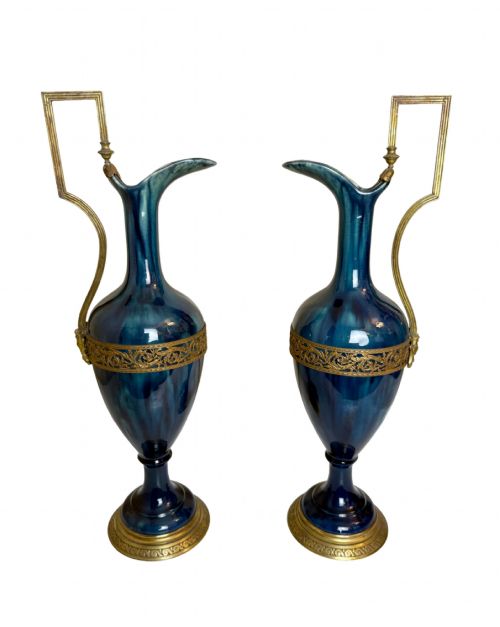
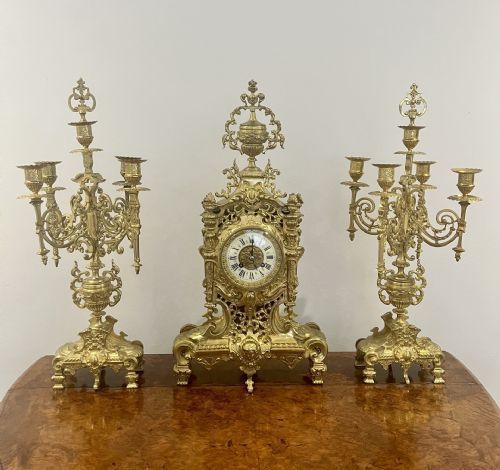
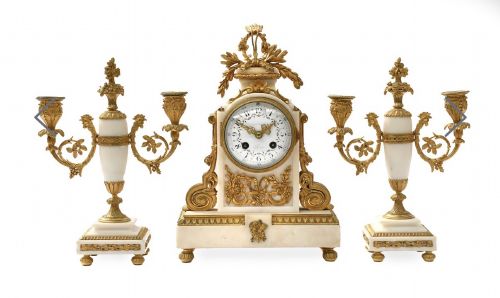
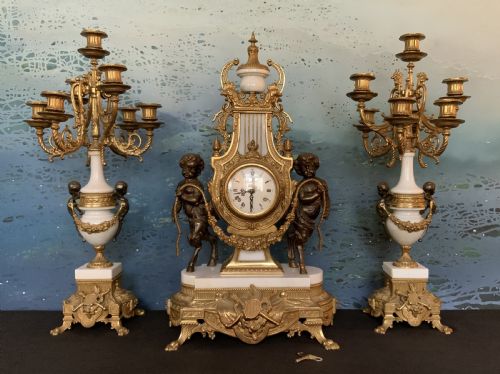
An antique ormolu garniture comprises a central mantel clock accompanied by a matching pair of decorative objects, such as urns, vases or candelabra, designed to display together on a fireplace mantel or console table. These decorative sets originate predominantly from nineteenth-century France, spanning periods from the reign of Louis Philippe through the Victorian era and the turn of the twentieth century.
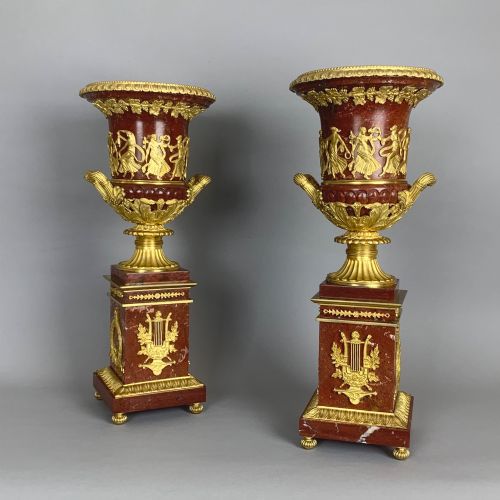
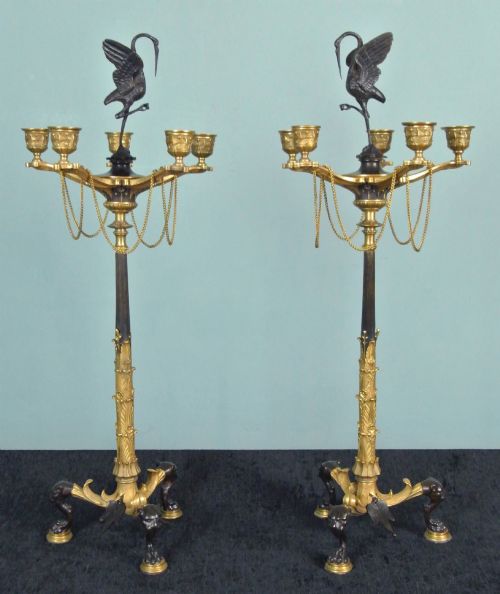
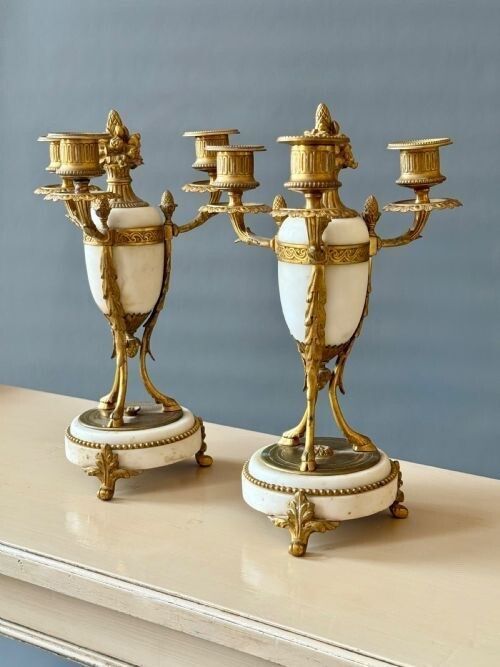
The compositions draw heavily upon historical French design repertoires, featuring styles from the French Empire and Second Empire alongside Louis XVI and Rococo revivals and neoclassical motifs. Mantel clocks, decorative urns, and multi-branch candelabra form the core object types encountered within this category.
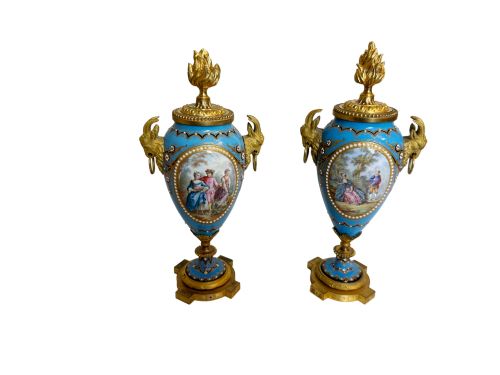
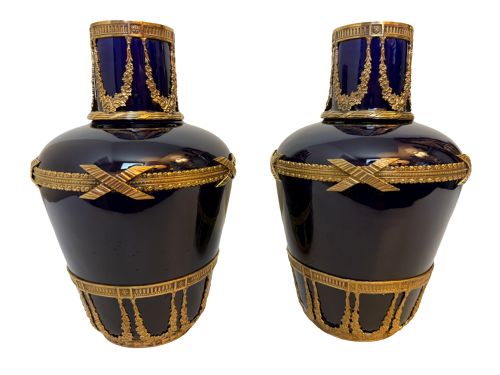
Buyers frequently encounter three-piece sets that combine cast gilt metal with contrasting elements of white marble, onyx, or coloured porcelain bodies. These suites range from modest decorative table accents to large, exhibition-scale clock sets accompanied by ten-light candelabra.
Factors influencing quality
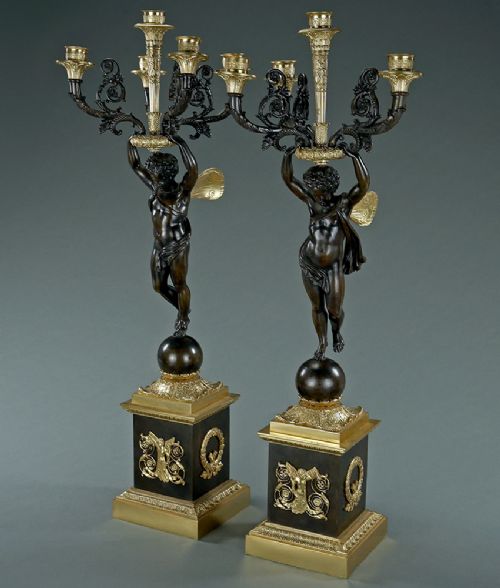
Quality within these sets rests upon the crispness of the bronze casting and the depth of the hand-chased surface detail on the ormolu mounts. Finer examples display sharp relief in figural elements like cherubs and neoclassical scrollwork, whereas lesser pieces exhibit softer contours and shallower tooling.
The selection and integration of materials also divide the range, with superior garnitures employing heavy, unblemished natural marbles and finely hand-painted porcelain panels. Complete, matching sets that retain their original mercury gilding and fully functioning eight-day clock movements command greater distinction than assembled or heavily altered suites.
Many antique clock sets still tick with their original movements, bringing the gentle sound of nineteenth-century timekeeping into the room.
Barbedienne·Henry Dasson·A D Mougin
The Antique Ormolu Garniture Glossary
- Ormolu
- Finely chased gilt bronze mounts applied to furniture, clocks, and decorative objects. The technique involves coating a bronze base with a gold-mercury amalgam and heating it to drive off the mercury.
- Garniture
- A coordinated set of ornamental objects designed to be displayed together on a mantelpiece or sideboard. These suites typically consist of a central clock flanked by two matching vases, urns, or candelabra.
- Candelabra
- Branching candlesticks designed to hold multiple candles simultaneously. In garniture sets, they mirror the decorative motifs of the central clock.
- Cassolette
- A decorative lidded vase or urn designed to function either as a traditional vessel or, when inverted or opened, as a perfume burner. They often feature dual-design bodies with rotating or removable lids.
- Champlevé
- An enamelling technique where troughs or cells are hollowed out of a metal surface and filled with vitreous enamel paste before firing. The resulting surface displays colourful decorative patterns flush with the surrounding metal.
Antique Ormolu Garniture: Frequently Asked Questions
What is an ormolu garniture?
An ormolu garniture is a matched set of decorative mantel ornaments consisting of a central clock paired with two matching urns, vases, or candelabra.
These suites were designed to create a balanced, symmetrical display on nineteenth-century drawing-room mantelpieces.
How do I date a garniture set?
Dating relies on stylistic clues, materials, and movement types characteristic of nineteenth-century French production, such as Victorian-era marble bases or Louis XVI revival motifs.
Signatures from makers like Mougin or Dasson stamped on the clock movements also provide precise manufacturing decades.
Are the clocks mechanical?
Yes, the clocks in these sets generally feature eight-day mechanical movements that require manual winding with a key.
Many strike the hours and half-hours on a bell or gong and may require professional adjustment to maintain accurate timekeeping.
How should I display a garniture?
Garnitures look best arranged symmetrically on a wide mantelpiece, console table, or dedicated pier table where the central clock anchors the composition.
Keep the pieces out of direct sunlight and away from heat sources to protect the delicate marble, enamel, and gilded metal surfaces.