



Blue Porcelain Candelabra
Blue porcelain candelabra bring undeniable presence to a mantelpiece, combining deep cobalt colour with gleaming metal mounts.
Blue Porcelain Candelabra
Blue porcelain candelabra bridge the gap between functional lighting and decorative clock sets, often appearing as matched pairs or part of wider garnitures. These nineteenth-century pieces frequently take inspiration from French Sevres style, French Rococo Revival, Louis XVI Revival, and French Second Empire aesthetics.
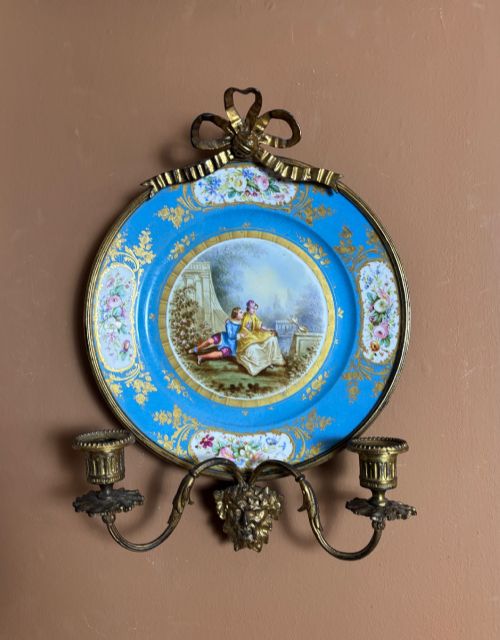
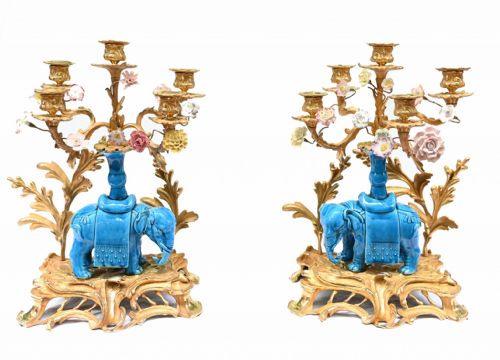
The objects seen here span mantel clocks, wall sconces, clock garnitures, and standalone candelabra. Pieces take diverse forms, from lyre clocks and elephant figures to classic candelabra branches, reflecting the varied output of nineteenth-century workshops.
Nineteenth-century examples dominate this category, featuring dates around 1860, 1880, 1890, and 1900. Buyers encounter distinct regional characteristics, particularly French manufacturing traditions and Victorian interpretations incorporating cobalt blue porcelain.
Materials and construction
Makers combined cobalt blue porcelain and enamel with cast metal mounts, utilising ormolu, gilt bronze, gilded metal, and brass. These metal components were typically chased and gilt to frame the ceramic bodies.
Porcelain sections display rich glazing, sometimes styled after Sevres or Imari traditions, while glass elements occasionally complement the main structure. Metal mounts are securely fastened to the porcelain bases to support multi-armed candelabra branches and clock cases.
Blue Porcelain Candelabra Retail Price Guide 2026
Typical asking prices for blue porcelain candelabra among the pieces listed under this phrase on Sellingantiques today, from the lower quarter to the upper quarter. They describe what is for sale here now, not the wider market.
Materials documented across the inventory include cobalt blue porcelain, ormolu, gilt bronze, brass, enamel, and glass.
Assessing quality and execution
The refinement of the ormolu chasing and the depth of the gilding set superior pieces apart from standard work. Crisp detail in the metal mounts indicates careful hand-finishing rather than mass production.
The richness of the cobalt blue porcelain glaze and the precision of any enamel work dictate the visual impact of the ceramic body. Integrated clock sets display varying levels of sculptural ambition, from simple pairs of candelabra to elaborate garnitures with figurative or architectural elements.
Samson
The Blue Porcelain Candelabra Glossary
- Ormolu
- A method of applying finely ground high-carat gold to a bronze base, producing a rich golden finish. This technique defines the bright metallic mounts seen on many nineteenth-century French pieces.
- Garniture
- A set of decorative objects designed to be displayed together on a mantelpiece, usually comprising a central clock flanked by matching candelabra or vases.
- Sevres Style
- An aesthetic inspired by the famous French royal porcelain manufactory, known for distinctive blue glazes and gilt decoration. Pieces in this style emulate the luxury wares of the eighteenth and nineteenth centuries.
- Bleu de Roi
- A deep, rich cobalt blue glaze developed at the Sevres factory. It provides the striking background colour characteristic of many nineteenth-century French porcelain items.
- Rococo Revival
- A nineteenth-century design movement favouring asymmetrical scrolls, naturalistic plant forms, and flowing lines. This style heavily influences the shape of many candelabra mounts.
Blue Porcelain Candelabra: Frequently Asked Questions
What is a clock garniture?
A clock garniture is a matched set of decorative objects designed to sit together on a mantelpiece or sideboard. It typically consists of a central clock accompanied by two matching candelabra or vases.
These sets created a balanced, symmetrical display popular in nineteenth-century interiors. The individual pieces share identical materials, styles, and decorative motifs.
How do I date these pieces?
Dating relies on stylistic clues, manufacturing techniques, and materials characteristic of the nineteenth century. Revival styles such as Second Empire and Rococo Revival point toward specific decades between 1860 and 1900.
Makers often utilised specific combinations of ormolu, gilt bronze, and cobalt blue porcelain during these periods. Examining the construction of the metal mounts and the quality of the porcelain glazes helps narrow down the timeframe.
Where were these items made?
The majority of these pieces originate from France, reflecting the dominant manufacturing centres of the nineteenth century. Parisian workshops and factories produced elaborate clock sets and candelabra for international markets.
Other pieces reflect Victorian British interpretations or specific aesthetic traditions like Sevres and Imari styles. French influence remains the strongest thread across the available examples.
How do I care for ormolu mounts?
Ormolu mounts require gentle dusting with a soft, dry cloth to prevent the accumulation of dirt. Avoid abrasive cleaners, polishes, or harsh chemicals that can strip the delicate gold gilding from the bronze base.
Preserving the original surface finish ensures the metallic elements retain their intended lustre. Regular, careful maintenance protects both the metal and the adjacent porcelain.
Can candelabra be used for candles?
These candelabra can accommodate standard taper candles, though many owners choose to display them purely as decorative objects. Using candles requires care to prevent wax drips from contacting the antique porcelain or gilt metal surfaces.
If lit, candles should be monitored closely to avoid smoke damage or heat stress. Drip catchers or careful placement can protect the surrounding ormolu and enamel.